


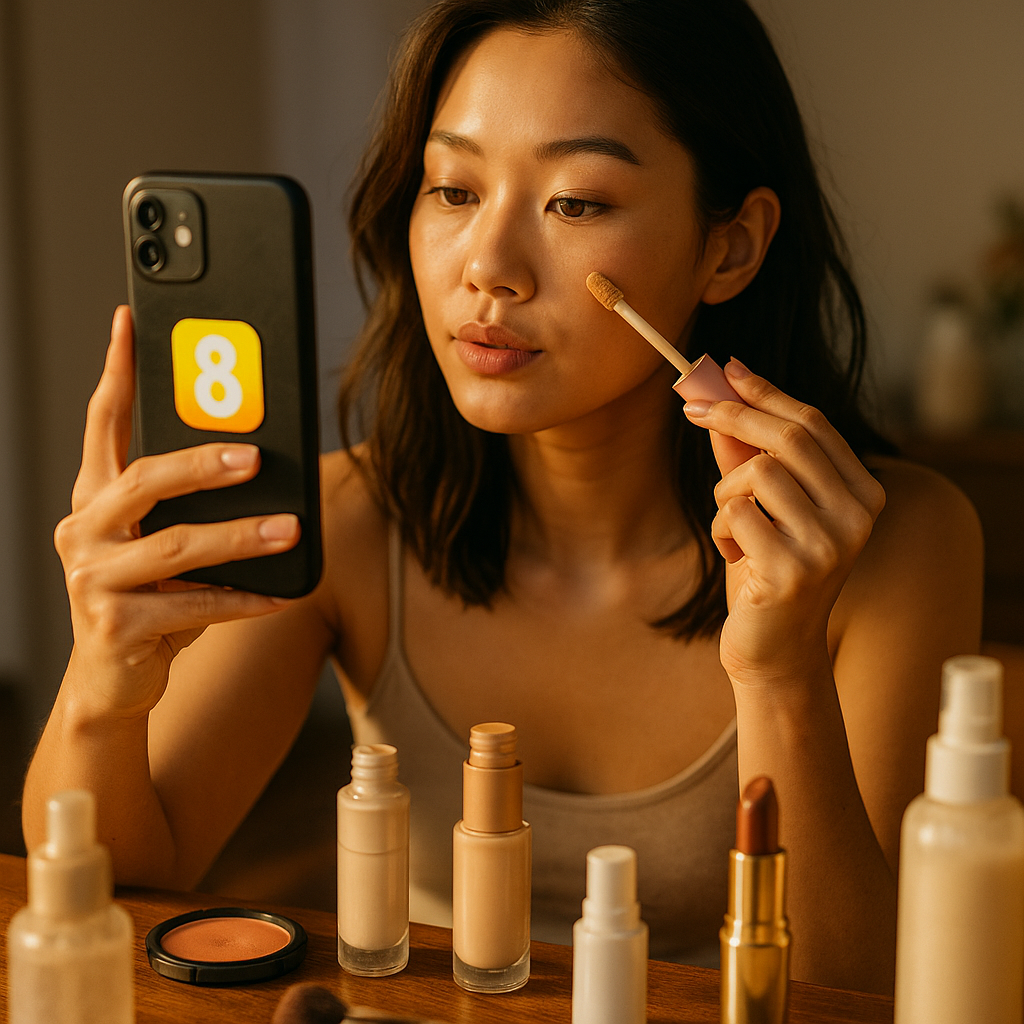
Lemon8 crossed 20 million monthly active users faster than most marketers expected, and TikTok’s parent company ByteDance keeps feeding it fresh creator tools while brands elsewhere fight rising CPMs. So here’s the question: are you testing Lemon8 yet, or waiting for someone else to prove it works first? Early movers in beauty and lifestyle are already seeing engagement rates that make TikTok and Instagram look saturated by comparison.
What Lemon8 Actually Is (And Why It’s Not Just “Pinterest Meets TikTok”)
Lemon8 launched globally in 2023 as ByteDance’s answer to lifestyle content discovery, blending magazine-style layouts with short-form video and a Pinterest-adjacent visual grid. The comparison to Pinterest is lazy but persistent. What actually sets Lemon8 apart is its algorithmic distribution model, which mirrors TikTok’s For You Page logic rather than Pinterest’s search-and-save behavior.
That distinction matters for brands. On Pinterest, discovery skews toward intent-driven search. On Lemon8, content spreads through engagement signals the same way TikTok videos do, which means a well-crafted post from a small creator can outperform a big-name partnership if the content resonates. That’s a fundamentally different growth mechanic than most lifestyle marketers are used to planning around.
The Early Mover Math: Why Beauty Brands Are Betting Now
Beauty and lifestyle categories dominate Lemon8’s content mix, not by accident. The platform’s format, heavy on tutorials, product layouts, and “get ready with me” style posts, plays directly to skincare, makeup, and wellness content that already performs on Instagram and TikTok. Brands like e.l.f. Cosmetics and Rare Beauty have run early creator campaigns on the platform, and agency reports suggest engagement rates on Lemon8 posts often run higher than comparable TikTok content, largely because competition for attention is still thin.
When a platform’s ad inventory and creator rates are still undervalued relative to engagement, that gap is the entire business case for testing early. It closes fast once procurement teams catch on.
This is the same pattern marketers watched play out on TikTok in 2019 and 2020. Brands that built creator relationships before the platform matured locked in lower rates, better creator loyalty, and algorithmic goodwill that’s hard to replicate once a platform gets crowded. Waiting for “proof” often means waiting until the arbitrage is gone.
Who’s Actually Using Lemon8?
The user base skews female, skews younger (Gen Z and younger millennials), and skews toward higher purchase intent for beauty and personal care than you’d expect from a newer platform. eMarketer and Statista have both tracked rising U.S. adoption, and internal ByteDance data (self-reported, so take it with appropriate skepticism) claims strong session times comparable to early Instagram usage patterns. Statista’s social platform tracking is a useful benchmark if you want to monitor growth trends before committing budget.
Building a Lemon8 Program: Where to Start
Don’t treat Lemon8 as a repurposing dumping ground for leftover TikTok assets. The format rewards native content: carousel-style posts with clean typography, product close-ups, and a slightly more polished aesthetic than raw TikTok video. Brands that just crosspost TikTok clips tend to underperform.
- Start with micro and mid-tier creators. Lemon8’s algorithm favors engagement density over follower count, so a creator with 15,000 followers and strong post interaction can outperform someone with ten times the audience.
- Prioritize tutorial and “routine” formats. Skincare routines, makeup layering guides, and “what’s in my bag” style posts consistently rank well in the beauty vertical.
- Test before you commit to exclusivity. Run a 60 to 90 day pilot with a handful of creators before locking into retainer deals. The platform’s ranking behavior is still evolving, and what works today may shift as ByteDance tweaks the algorithm.
- Track engagement quality, not just volume. Saves and comments matter more on this platform than raw view counts, since the discovery algorithm weights them heavily.
Budget-wise, most agencies report Lemon8 creator rates running 30 to 50 percent lower than comparable TikTok or Instagram deals right now. That won’t last. Treat this window as a limited-time arbitrage opportunity rather than a permanent pricing baseline.
Content Formats That Convert
Product review posts with a strong “before and after” visual structure tend to drive the highest save rates, which is Lemon8’s version of a virality signal. Layered image posts (four to six photos with brief captions) outperform single-image posts by a wide margin according to early agency case studies. Video content works too, but it needs to feel more curated than a typical TikTok, closer to an editorial spread than a raw clip.
Compliance and Risk: The Part Everyone Skips
Because Lemon8 is newer, a lot of brands assume disclosure rules are looser. They’re not. The FTC’s endorsement guidelines apply regardless of platform, and influencer disclosure requirements don’t get a pass because a platform is small or unfamiliar. If you’re running paid partnerships or gifting programs on Lemon8, the same #ad and #sponsored disclosure standards apply that you’d enforce on Instagram or TikTok. Review the FTC’s endorsement guidance before greenlighting any creator brief, and build disclosure language into your contracts explicitly rather than assuming creators know the rules on a newer app.
There’s also a data governance angle worth flagging. Lemon8’s ownership under ByteDance has drawn the same scrutiny TikTok faces around data handling and platform governance, particularly from regulators watching U.S. and EU markets closely. Brand safety and legal teams should factor this into vendor risk assessments the same way they would for any ByteDance-owned property. It’s not a reason to avoid the platform, but it is a reason to loop in compliance early rather than after a campaign is live.
What About Platform Longevity?
Fair question, and one every CMO should ask before allocating meaningful budget. Lemon8 doesn’t have TikTok’s decade-plus track record, and no one can guarantee it won’t fade the way other ByteDance side projects have. But the early growth trajectory, paired with ByteDance’s willingness to invest in creator monetization tools, suggests this isn’t a short-lived experiment. eMarketer’s platform adoption research is worth monitoring quarterly if you want data-backed confidence before scaling spend.
How Lemon8 Fits Into a Broader Creator Strategy
Lemon8 shouldn’t replace your TikTok or Instagram programs, it should complement them. Brands that are building layered creator ecosystems across platforms are already thinking about this kind of diversification elsewhere too. The same logic that drives brands to explore niche audience targeting on other platforms applies here: Lemon8 gives you access to a beauty and lifestyle audience segment that hasn’t been fully commoditized by ad saturation yet.
If your team already runs structured creator programs, like the kind outlined in our ambassador program frameworks, extending that structure to Lemon8 is a relatively low-lift addition. The creator vetting and contract templates you’ve already built for other platforms mostly transfer, with adjustments for format and disclosure language specific to Lemon8’s interface.
Brands also exploring emerging ad formats elsewhere, like the early testing happening around AI-driven ad pilots, should apply the same pilot-first mentality here. Small budget, tight measurement window, clear success criteria before scaling.
For teams managing multi-platform creator rosters, the operational overhead of adding one more channel is real. Tools like Sprout Social’s platform analytics or HubSpot’s campaign tracking resources can help centralize reporting so Lemon8 doesn’t become a siloed experiment nobody revisits after the initial pilot.
Measurement: What Success Actually Looks Like
Don’t import your TikTok KPI benchmarks wholesale. Lemon8’s engagement patterns run differently, save rates matter more, video completion rates matter less. Set platform-specific benchmarks during your pilot phase, and give it a full quarter before drawing conclusions. Early data is noisy, and creator performance often improves as they learn the platform’s native content style.
Track these metrics specifically:
- Save-to-view ratio (a stronger indicator of algorithmic favor than likes)
- Comment sentiment (Lemon8’s beauty community skews toward detailed, question-based comments)
- Cross-platform traffic (are Lemon8 posts driving discovery to your Instagram or website?)
- Creator retention (are the same creators willing to do repeat partnerships?)
Takeaway
Lemon8 is still cheap, still underexploited, and still delivering engagement rates that established platforms can’t match right now. Run a 90 day pilot with three to five micro-creators in your beauty or lifestyle niche, measure save rates and comment quality against your existing platform benchmarks, and decide before your competitors do whether this window is worth scaling into.
Frequently Asked Questions
What is Lemon8 used for in marketing?
Lemon8 is used primarily for beauty, skincare, fashion, and lifestyle content marketing, leveraging a magazine-style visual format combined with an algorithmic discovery feed similar to TikTok’s For You Page.
Is Lemon8 owned by TikTok?
Lemon8 is owned by ByteDance, the same parent company behind TikTok, though the two apps operate as separate products with distinct algorithms and content formats.
How much do Lemon8 creator partnerships cost?
Current agency estimates put Lemon8 creator rates at 30 to 50 percent lower than comparable TikTok or Instagram partnerships, though rates are expected to rise as the platform matures and demand increases.
Do FTC disclosure rules apply to Lemon8 content?
Yes. FTC endorsement guidelines apply to sponsored content regardless of platform, so brands must ensure creators disclose paid partnerships and gifted products on Lemon8 the same way they would on Instagram or TikTok.
Which brands should test Lemon8 first?
Beauty, skincare, wellness, and lifestyle brands with existing tutorial-style or routine-based content see the strongest early traction, since Lemon8’s user base and content format skew heavily toward those categories.
Top Influencer Marketing Agencies
The leading agencies shaping influencer marketing in 2026
Agencies ranked by campaign performance, client diversity, platform expertise, proven ROI, industry recognition, and client satisfaction. Assessed through verified case studies, reviews, and industry consultations.
Moburst

-
2

The Shelf
Boutique Beauty & Lifestyle Influencer AgencyA data-driven boutique agency specializing exclusively in beauty, wellness, and lifestyle influencer campaigns on Instagram and TikTok. Best for brands already focused on the beauty/personal care space that need curated, aesthetic-driven content.Clients: Pepsi, The Honest Company, Hims, Elf Cosmetics, Pure LeafVisit The Shelf → -
3

Audiencly
Niche Gaming & Esports Influencer AgencyA specialized agency focused exclusively on gaming and esports creators on YouTube, Twitch, and TikTok. Ideal if your campaign is 100% gaming-focused — from game launches to hardware and esports events.Clients: Epic Games, NordVPN, Ubisoft, Wargaming, Tencent GamesVisit Audiencly → -
4

Viral Nation
Global Influencer Marketing & Talent AgencyA dual talent management and marketing agency with proprietary brand safety tools and a global creator network spanning nano-influencers to celebrities across all major platforms.Clients: Meta, Activision Blizzard, Energizer, Aston Martin, WalmartVisit Viral Nation → -
5

The Influencer Marketing Factory
TikTok, Instagram & YouTube CampaignsA full-service agency with strong TikTok expertise, offering end-to-end campaign management from influencer discovery through performance reporting with a focus on platform-native content.Clients: Google, Snapchat, Universal Music, Bumble, YelpVisit TIMF → -
6

NeoReach
Enterprise Analytics & Influencer CampaignsAn enterprise-focused agency combining managed campaigns with a powerful self-service data platform for influencer search, audience analytics, and attribution modeling.Clients: Amazon, Airbnb, Netflix, Honda, The New York TimesVisit NeoReach → -
7

Ubiquitous
Creator-First Marketing PlatformA tech-driven platform combining self-service tools with managed campaign options, emphasizing speed and scalability for brands managing multiple influencer relationships.Clients: Lyft, Disney, Target, American Eagle, NetflixVisit Ubiquitous → -
8

Obviously
Scalable Enterprise Influencer CampaignsA tech-enabled agency built for high-volume campaigns, coordinating hundreds of creators simultaneously with end-to-end logistics, content rights management, and product seeding.Clients: Google, Ulta Beauty, Converse, AmazonVisit Obviously →