


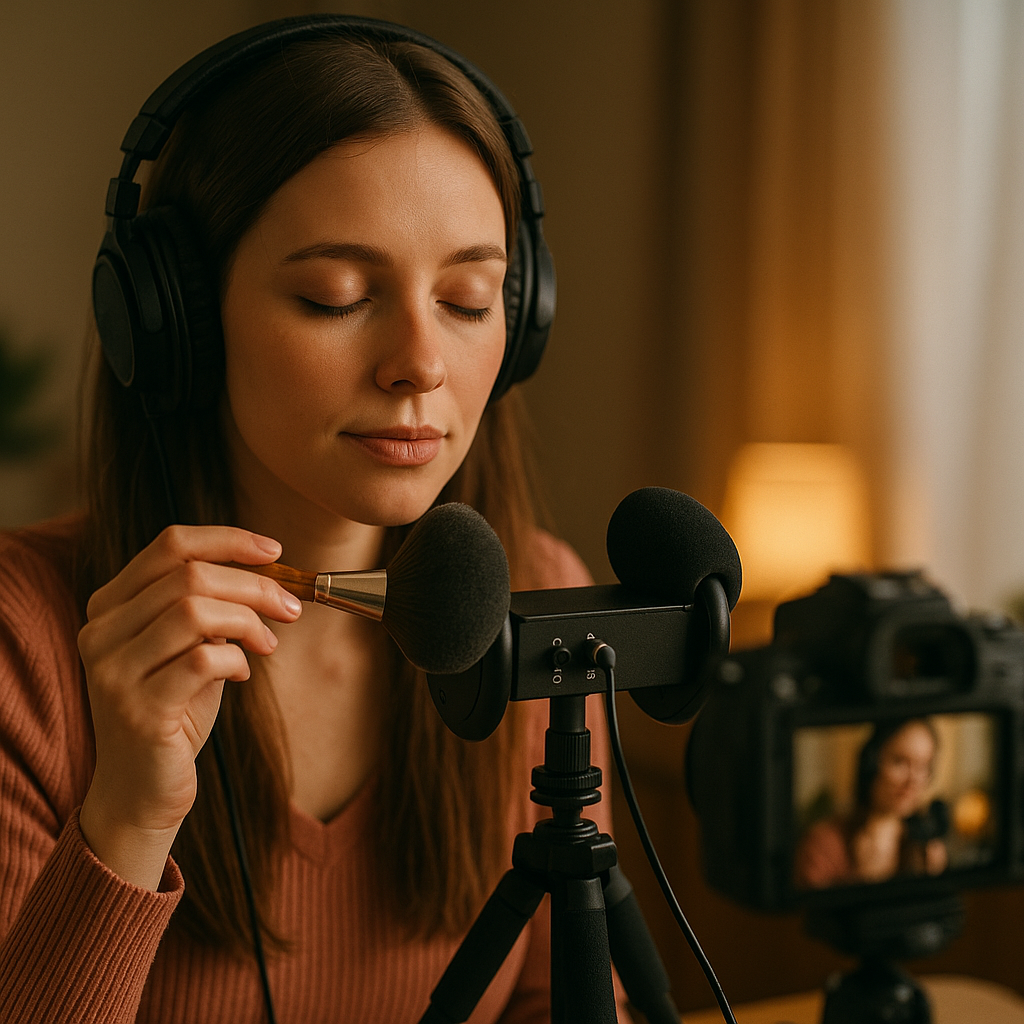
A crinkling snack bag gets 40 million views. A whispered skincare review outperforms a celebrity endorsement on watch time. ASMR content has moved from niche YouTube corner to a legitimate line item in brand media plans, and the reason isn’t novelty. It’s trust. When a viewer hears every crackle, click, and pour in real time, their brain registers something a voiceover script can’t fake: this product is real, and someone is actually using it.
What Is ASMR Content, and Why Is It Suddenly a B2B Line Item?
ASMR (autonomous sensory meridian response) content leans on close-mic’d sound design, tight framing, and slow, deliberate motion to trigger that tingling, calming sensation some viewers report. Tapping, whispering, unboxing, pouring, snapping. For years it lived in wellness and sleep-aid corners of YouTube. Now it’s showing up in beauty demos, food unboxings, tech reveals, and even B2B SaaS onboarding videos (yes, really, someone made a whispered spreadsheet tutorial and it worked).
Brands are paying attention because the format solves a problem paid media can’t: skepticism. Consumers have been trained by a decade of polished ad creative to distrust anything that looks too produced. ASMR content, by design, can’t be overproduced. The whole appeal is unedited sensory realism. That’s a strange kind of leverage for a brand strategist to have, but it’s real.
The Trust Mechanics Behind the Tingles
Here’s the mechanism worth understanding before you brief a single creator. ASMR works because it removes the persuasion layer. There’s no aspirational lifestyle shot, no urgent call to action, no scripted testimonial. Just a product, a sound, and a person interacting with it in close, almost intimate detail. That absence of overt selling is exactly what makes viewers lower their guard.
When a creator whispers through a product unboxing instead of hard-selling it, viewers process the content as documentation, not advertising, and that shift changes how much they trust what they see.
This isn’t just a vibe. HubSpot’s consumer trust research has repeatedly found that perceived authenticity is now a stronger purchase driver than production value for younger buying cohorts. ASMR content sits at the extreme end of that authenticity spectrum. It’s the format equivalent of letting someone watch you use the product with zero filter, which is precisely why it pairs so well with categories like beauty, food, and home goods where texture and sound are part of the purchase decision anyway.
Where ASMR Format Fits in the Funnel
Don’t mistake ASMR for a top-of-funnel awareness play only. Its real strength is mid-funnel trust-building, the gap between “I’ve seen this product” and “I believe this product works as described.” A whispered ingredient breakdown or a tactile unboxing does more to reduce purchase anxiety than a 15-second brand ad ever will, because it answers the unspoken question every shopper has: does this actually feel/sound/work the way the packaging claims?
- Beauty and skincare: texture, application sound, and packaging feel are core to the buying decision. ASMR format lets creators demonstrate that without narration overselling it.
- Food and beverage: crunch, pour, and fizz sounds function as proof of freshness or quality, similar to how recipe carousels drive saves by showing process over polish.
- Tech and gadgets: click sounds, unboxing rituals, and tactile feedback (think mechanical keyboards, packaging quality) translate surprisingly well to sensory formats.
- Home and lifestyle goods: fabric texture, product weight, and material sound cues reduce return anxiety before purchase.
If your category doesn’t have an obvious sound or texture component, ASMR probably isn’t your format. That’s fine. Not every brand needs to whisper.
Building a Brief That Doesn’t Sound Like a Sensory Deprivation Tank
Most brands get the ASMR brief wrong by over-scripting it. The format’s power comes from restraint, not direction. A good brief specifies the sensory beats you need captured (the unboxing rip, the product click, the texture close-up) and leaves pacing, sound choice, and framing to the creator’s judgment. Over-direct it and you kill the exact authenticity that makes the format work.
For a deeper breakdown of how to structure this without losing creative control, our sensory brief framework for ASMR product demos covers the specific shot list and mic setup guidance most brands skip. Pair that with lessons from caption-heavy formats if you need to add product claims without breaking the whisper track, since on-screen text is the cleanest way to layer in compliance language without ruining the audio experience.
Timing matters too. Attention spans on sensory content are longer than typical short-form video, but only if the pacing stays slow and deliberate. If you’re used to briefing 15-second creator drops for retention, ASMR content needs the opposite instinct: let the moment breathe.
Risk, Compliance, and the Limits of Whispering
ASMR content isn’t exempt from disclosure rules just because it’s quiet. The FTC’s endorsement guidelines still apply in full: paid partnerships need clear, conspicuous disclosure regardless of whether the creator is whispering or shouting. Brands sometimes assume the intimate, unscripted feel of ASMR content gives them cover to skip disclosure language. It doesn’t, and regulators have shown no patience for that argument.
There’s also a compliance wrinkle specific to sensory content: claims made through sound or visual implication (crunch equals freshness, thick pour equals quality) can still trigger substantiation requirements if they imply a performance claim. Legal review should treat a sensory demo the same way it would treat a spoken claim. If your creator’s tapping on a jar implies “this product is heavier duty than competitors,” that’s a claim, even without a single word said.
Platform risk is smaller but real. TikTok and YouTube both have specific audio content policies worth checking before scaling a campaign; review TikTok’s ad policies if you’re running paid amplification behind organic ASMR posts, since sound-heavy content sometimes triggers different moderation review than standard video ads.
Measuring What You Can’t Always Hear
Standard engagement metrics undersell ASMR content’s actual performance. Views and likes matter less here than watch time, replay rate, and audio completion (did the viewer keep sound on through the full video). eMarketer’s short-form video benchmarks consistently show sensory and slow-paced formats posting above-average watch-through rates compared to fast-cut content, even though top-line view counts sometimes look modest by comparison.
A 30-second ASMR unboxing with a 90 percent watch-through rate is doing more trust-building work than a 15-second ad with 5x the views and a 20 percent completion rate.
Track sound-on rate specifically if your platform reports it. It’s the closest proxy you have for “did this person actually experience the sensory hook I paid for.” Pair that with post-view survey data or brand lift studies where budget allows; Sprout Social’s benchmarking tools can help contextualize engagement rate against category norms so you’re not comparing ASMR content performance against unrelated video formats.
For brands running sensory content alongside other quiet-format experiments, it’s worth reading how silent vlogs are reshaping expectations around brand voice, since both formats share the same underlying bet: less narration, more perceived authenticity, higher trust payoff.
Sourcing Creators Who Actually Get the Format
Not every creator can do this well, and that’s the part brands underestimate most. ASMR requires specific technical skill: mic placement, room acoustics, editing restraint. A lifestyle influencer with a great aesthetic can still produce flat, unlistenable ASMR content if they don’t understand the audio fundamentals. Vet for portfolio examples with actual sound quality, not just visual polish.
If you’re building a roster of niche-format creators from scratch, the vetting principles in our faceless creator sourcing guide translate well here, since many top ASMR creators are faceless or near-faceless by design, letting the product and sound carry the content instead of a personal brand.
ASMR content isn’t a trend to chase for novelty points. It’s a trust mechanism you deploy when your product has a sensory story worth telling. Start with one category-fit SKU, brief for restraint instead of scripted claims, and measure sound-on completion before you scale spend behind it.
Frequently Asked Questions
What makes ASMR content different from a standard product demo video?
Standard demos are built around narration and persuasion. ASMR content strips out most narration and relies on close-mic’d sound, texture, and unscripted pacing to let the product speak for itself, which is why viewers tend to perceive it as more authentic.
Which product categories benefit most from ASMR-style content?
Beauty, skincare, food and beverage, tech gadgets, and home goods perform best because texture, sound, and tactile quality are already part of how consumers evaluate those products before buying.
Do FTC disclosure rules still apply to whispered or sound-focused content?
Yes. Paid partnerships require clear disclosure regardless of format or tone. Whispering doesn’t exempt a creator or brand from standard endorsement guidelines.
How should brands measure ASMR content performance?
Prioritize watch time, replay rate, and sound-on completion rate over raw view counts. These metrics better reflect whether viewers experienced the sensory hook the content was built around.
Can ASMR content make implied performance claims that require legal review?
Yes. A sound or visual cue (like a thick pour implying premium quality) can function as a claim even without spoken words, so legal and compliance teams should review sensory content the same way they review scripted claims.
Top Influencer Marketing Agencies
The leading agencies shaping influencer marketing in 2026
Agencies ranked by campaign performance, client diversity, platform expertise, proven ROI, industry recognition, and client satisfaction. Assessed through verified case studies, reviews, and industry consultations.
Moburst

-
2

The Shelf
Boutique Beauty & Lifestyle Influencer AgencyA data-driven boutique agency specializing exclusively in beauty, wellness, and lifestyle influencer campaigns on Instagram and TikTok. Best for brands already focused on the beauty/personal care space that need curated, aesthetic-driven content.Clients: Pepsi, The Honest Company, Hims, Elf Cosmetics, Pure LeafVisit The Shelf → -
3

Audiencly
Niche Gaming & Esports Influencer AgencyA specialized agency focused exclusively on gaming and esports creators on YouTube, Twitch, and TikTok. Ideal if your campaign is 100% gaming-focused — from game launches to hardware and esports events.Clients: Epic Games, NordVPN, Ubisoft, Wargaming, Tencent GamesVisit Audiencly → -
4

Viral Nation
Global Influencer Marketing & Talent AgencyA dual talent management and marketing agency with proprietary brand safety tools and a global creator network spanning nano-influencers to celebrities across all major platforms.Clients: Meta, Activision Blizzard, Energizer, Aston Martin, WalmartVisit Viral Nation → -
5

The Influencer Marketing Factory
TikTok, Instagram & YouTube CampaignsA full-service agency with strong TikTok expertise, offering end-to-end campaign management from influencer discovery through performance reporting with a focus on platform-native content.Clients: Google, Snapchat, Universal Music, Bumble, YelpVisit TIMF → -
6

NeoReach
Enterprise Analytics & Influencer CampaignsAn enterprise-focused agency combining managed campaigns with a powerful self-service data platform for influencer search, audience analytics, and attribution modeling.Clients: Amazon, Airbnb, Netflix, Honda, The New York TimesVisit NeoReach → -
7

Ubiquitous
Creator-First Marketing PlatformA tech-driven platform combining self-service tools with managed campaign options, emphasizing speed and scalability for brands managing multiple influencer relationships.Clients: Lyft, Disney, Target, American Eagle, NetflixVisit Ubiquitous → -
8

Obviously
Scalable Enterprise Influencer CampaignsA tech-enabled agency built for high-volume campaigns, coordinating hundreds of creators simultaneously with end-to-end logistics, content rights management, and product seeding.Clients: Google, Ulta Beauty, Converse, AmazonVisit Obviously →