


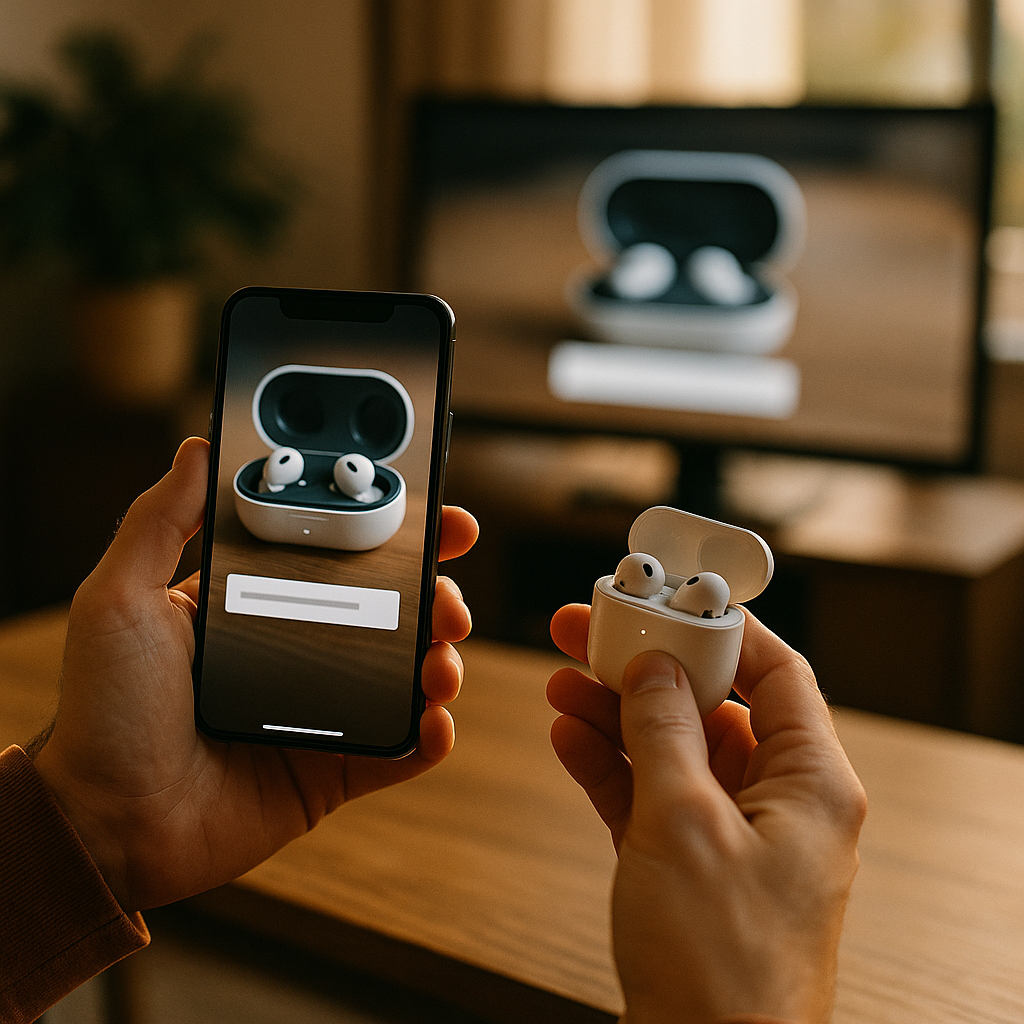
85% of video on some social platforms gets watched with the volume off, yet most creator briefs still describe a product’s “sound” as part of the sell. That mismatch is quietly costing brands conversions. The silent product demo, built around captioned video from the first frame, isn’t a nice-to-have anymore. It’s the format that’s rewriting how briefs get written.
Why Silence Became the Default Viewing Mode
Think about where people actually watch branded video: on a train, in a waiting room, at a desk with a boss two feet away. Sound is a liability in most of those contexts. Platforms know this. Meta and TikTok have both leaned hard into auto-captioning tools precisely because engineers can see the watch data, and the data says muted is normal, not exceptional.
For product demo content specifically, this matters more than for lifestyle or comedy clips. A demo lives or dies on the viewer understanding what the product does, in what order, and why it solves their problem. If that explanation depends on a voiceover nobody hears, the demo has already failed before the CTA even loads.
A product demo that only works with sound on is a demo built for a minority of your actual audience.
What Changes in the Brief Itself
Here’s where most brand teams get tripped up. They treat captions as a post-production accessibility checkbox, something added after the creator delivers a cut. That approach guarantees clunky, auto-generated text slapped over footage that was never designed to carry meaning visually. Silent-first demos require the opposite workflow: captions and on-screen text get scripted before the shoot, not bolted on after.
That means the brief needs to specify:
- Exact on-screen text for each beat of the demo, not just a general talking-point outline
- Visual sequencing that shows the product’s function without relying on narrated explanation
- Text hierarchy (what’s a headline overlay versus a smaller supporting caption)
- Pacing cues so text doesn’t outrun what a viewer can read in two seconds
This is a fundamentally different creative document than a traditional script. It’s closer to a storyboard with copywriting baked in at every frame. Brands that have already made this shift report it forces tighter creative thinking generally, because you can’t hide a weak product story behind a charismatic voiceover. Our earlier breakdown of caption-only silent content covers the mechanics of this shift in more depth, and it’s worth pairing with this piece if you’re building a brief template from scratch.
The Creator’s Role Shifts From Performer to Editor
In a traditional influencer demo, the creator’s voice does a lot of heavy lifting. Tone, enthusiasm, comedic timing, all of it rides on delivery. Strip out sound and the creator’s job changes. Now they’re directing attention with gesture, framing, and cut timing. The best creators for this format think like silent-film editors: every cut has to communicate on its own.
That’s a skill not every creator has, and it’s worth screening for in casting. Ask to see a portfolio piece with sound off before greenlighting a silent-demo brief. If the content still makes sense, you’ve found someone who understands visual storytelling rather than performance alone.
Does Captioned Video Actually Improve Conversion?
Short answer: yes, and the mechanism is fairly intuitive once you see it. Captions increase watch time because they reduce the cognitive load of following along, and increased watch time correlates directly with higher completion rates on product demos specifically. eMarketer has tracked rising mobile video consumption in low-sound environments for several years running, and platform-level data from Meta’s ad resources has consistently shown accessibility features like captions correlating with longer view durations.
There’s also a trust dimension. Captioned demos read as more deliberate, more produced, more “this brand thought about how I’d actually watch this.” That’s a subtle but real trust signal, similar to the credibility bump documented in myth-busting carousel formats, where clarity itself becomes a persuasion tool rather than just a delivery mechanism.
Captions aren’t a compliance afterthought anymore. They’re a conversion lever brands are still underusing.
Brief Templates: What Actually Works in Practice
Brands running high-volume creator programs need a repeatable structure, not a bespoke brief every time. Here’s a working template that’s held up across multiple product categories:
- Hook frame (0 to 2 seconds): One line of on-screen text that states the problem, no voiceover needed to understand it.
- Demo sequence (3 to 12 seconds): Product in use, with short caption fragments timed to each visual beat, three to six words max per card.
- Proof beat (13 to 18 seconds): A close-up or result shot with a text overlay stating the outcome plainly.
- CTA card (final 2 seconds): Static text, no ambiguity, tells the viewer exactly what to do next.
Notice what’s missing: any instruction that assumes a viewer heard something. That’s intentional. If sound happens to be on, great, it’s a bonus layer. But the demo has to stand alone without it. This mirrors the logic in caption-heavy TikTok formats, where text carries narrative weight that voiceover used to own.
A Quick Note on ASMR and Sound-On Formats
None of this means sound is dead as a creative tool. ASMR-driven product content, for instance, depends entirely on audio texture, the crinkle of packaging, the click of a cap. That’s a legitimate and growing format covered in our piece on ASMR product demos. The distinction is intent. If sound is central to the sell, brief for sound-on viewing and accept a smaller addressable audience. If sound is incidental, default to silent-first and let captions do the work.
Where Brands Get This Wrong
The most common mistake is treating auto-generated captions as good enough. Platform auto-captioning has improved, but it still mangles brand names, product SKUs, and technical terms with embarrassing regularity. A demo for a skincare brand that auto-captions “retinol” as “red in all” isn’t just sloppy, it undermines the exact credibility the format is supposed to build.
The second mistake is caption fatigue: cramming too much text onto screen because the brief writer defaulted to a script-first mentality instead of thinking visually. Silent demos need restraint. If a viewer can’t absorb the caption in the time it’s on screen, you’ve lost them, and no amount of clever editing recovers that.
Compliance teams should also flag captioned demos for the same disclosure standards as any sponsored content. The FTC’s endorsement guidance applies regardless of whether sound is present, and on-screen disclosure text (not just a spoken “this is sponsored”) is actually the more defensible approach for platforms where sound is routinely off anyway.
Measuring What Matters
Standard video metrics don’t always tell the right story for silent-first content. Watch time still matters, but pair it with caption-specific signals: drop-off points mapped against caption card changes, and completion rate compared against identical content with voiceover-only captioning. Brands running A/B tests between auto-captioned and pre-scripted silent demos typically see completion rate gaps of ten to twenty percentage points in favor of the pre-scripted version, based on internal agency benchmarking many teams are now sharing informally at industry panels.
Tools like Sprout Social and native platform analytics dashboards can help isolate these patterns if you’re tagging content correctly at upload. Don’t skip the tagging step. Without it, you’re guessing which format variable actually drove the lift.
The Takeaway for Brief Writers
Stop writing scripts and start writing storyboards with copy attached. If your next creator brief for a product demo still opens with “the creator will explain,” rewrite it so the explanation happens on screen, in text, timed to the visual. That single change is the difference between a demo built for sound-on viewers and one built for the 85% who’ll never turn the volume up.
FAQs
What is a silent product demo?
A silent product demo is a video format designed to communicate a product’s value entirely through visuals and on-screen text, with no dependency on voiceover or spoken narration for the viewer to understand the content.
Why are brands moving away from voiceover-led demos?
Because the majority of social video is watched with sound off, voiceover-dependent demos lose most of their intended message before the viewer ever reaches a call to action. Captioned, sound-off-first formats close that gap.
How is a silent demo brief different from a standard video script?
A standard script writes what the creator will say. A silent demo brief writes what the viewer will read, timed to specific visual beats, functioning more like a storyboard with copy attached than a traditional script.
Do silent demos hurt engagement if a viewer has sound on?
No. A well-built silent demo works with sound on as well as off. Ambient audio or light music can layer in without contradicting the caption-driven narrative, so brands aren’t sacrificing the sound-on audience by prioritizing captions.
Are auto-generated captions good enough for branded content?
Generally, no. Auto-captioning frequently misreads brand names, product terms, and technical language, which can undermine credibility. Pre-scripted captions reviewed before publishing produce more accurate and higher-converting results.
What metrics should brands track for silent-first creator content?
Beyond standard watch time, track completion rate against caption timing, drop-off points mapped to specific caption cards, and comparative performance against voiceover-only versions of the same content to isolate what’s actually driving results.
Top Influencer Marketing Agencies
The leading agencies shaping influencer marketing in 2026
Agencies ranked by campaign performance, client diversity, platform expertise, proven ROI, industry recognition, and client satisfaction. Assessed through verified case studies, reviews, and industry consultations.
Moburst

-
2

The Shelf
Boutique Beauty & Lifestyle Influencer AgencyA data-driven boutique agency specializing exclusively in beauty, wellness, and lifestyle influencer campaigns on Instagram and TikTok. Best for brands already focused on the beauty/personal care space that need curated, aesthetic-driven content.Clients: Pepsi, The Honest Company, Hims, Elf Cosmetics, Pure LeafVisit The Shelf → -
3

Audiencly
Niche Gaming & Esports Influencer AgencyA specialized agency focused exclusively on gaming and esports creators on YouTube, Twitch, and TikTok. Ideal if your campaign is 100% gaming-focused — from game launches to hardware and esports events.Clients: Epic Games, NordVPN, Ubisoft, Wargaming, Tencent GamesVisit Audiencly → -
4

Viral Nation
Global Influencer Marketing & Talent AgencyA dual talent management and marketing agency with proprietary brand safety tools and a global creator network spanning nano-influencers to celebrities across all major platforms.Clients: Meta, Activision Blizzard, Energizer, Aston Martin, WalmartVisit Viral Nation → -
5

The Influencer Marketing Factory
TikTok, Instagram & YouTube CampaignsA full-service agency with strong TikTok expertise, offering end-to-end campaign management from influencer discovery through performance reporting with a focus on platform-native content.Clients: Google, Snapchat, Universal Music, Bumble, YelpVisit TIMF → -
6

NeoReach
Enterprise Analytics & Influencer CampaignsAn enterprise-focused agency combining managed campaigns with a powerful self-service data platform for influencer search, audience analytics, and attribution modeling.Clients: Amazon, Airbnb, Netflix, Honda, The New York TimesVisit NeoReach → -
7

Ubiquitous
Creator-First Marketing PlatformA tech-driven platform combining self-service tools with managed campaign options, emphasizing speed and scalability for brands managing multiple influencer relationships.Clients: Lyft, Disney, Target, American Eagle, NetflixVisit Ubiquitous → -
8

Obviously
Scalable Enterprise Influencer CampaignsA tech-enabled agency built for high-volume campaigns, coordinating hundreds of creators simultaneously with end-to-end logistics, content rights management, and product seeding.Clients: Google, Ulta Beauty, Converse, AmazonVisit Obviously →