


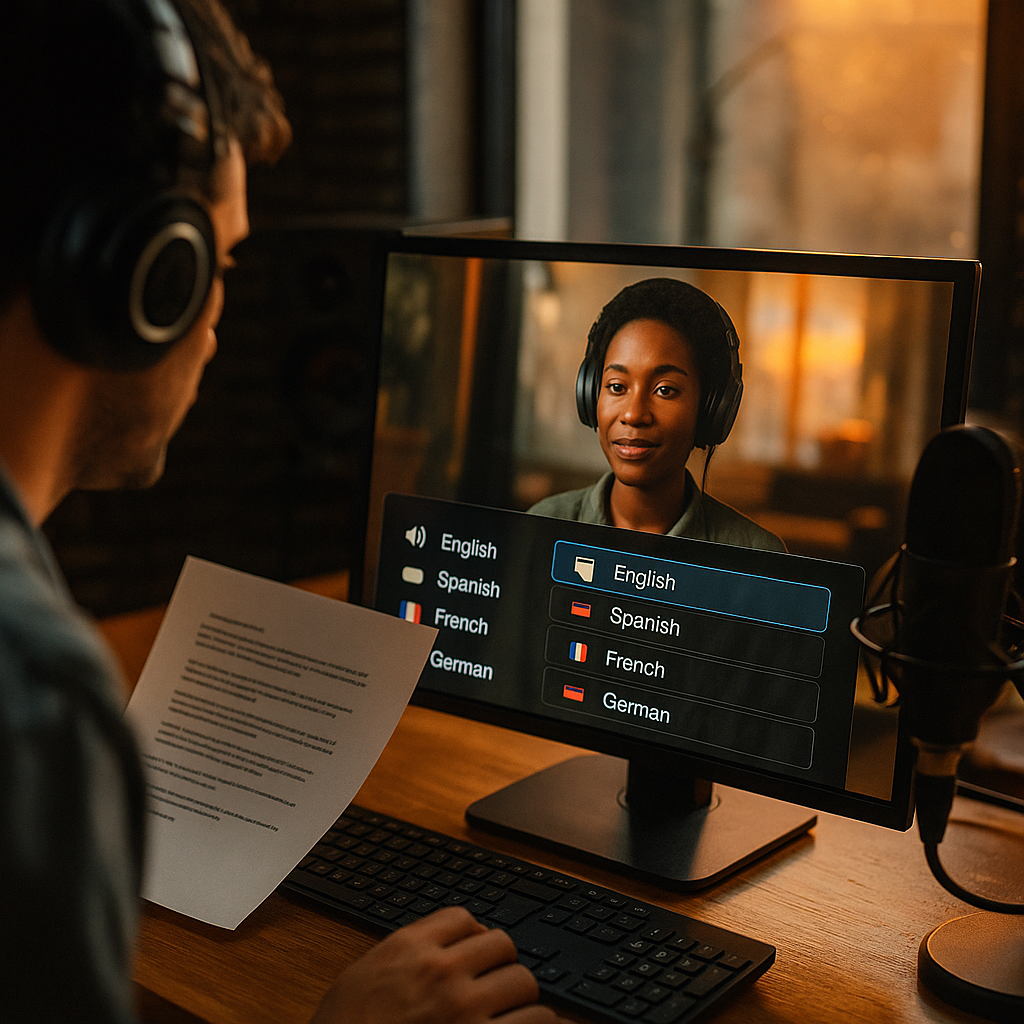
Brands localizing creator content into five or more languages report production timelines dropping from weeks to days, according to platform data from tools like HeyGen and ElevenLabs. Yet most marketing teams still write a single English brief and hope translation “figures itself out” downstream. It doesn’t. A multi-language AI dubbing brief is now the difference between a campaign that scales cleanly across markets and one that generates twelve versions of the same compliance headache.
Why the Old Localization Playbook Doesn’t Scale Anymore
For years, localizing creator video meant hiring regional agencies, booking voice talent studios, and waiting two to three weeks per language. That model worked when brands ran three or four markets. It collapses the moment a brand wants to test messaging in fifteen languages simultaneously, which is now standard practice for global product launches.
AI dubbing changed the math. Tools can now clone a creator’s voice, match lip movements, and adjust pacing for language-specific syllable density, all within hours rather than weeks. But speed without a brief is just chaos moving faster. The brief is what keeps fifteen simultaneous productions consistent in tone, compliant with local disclosure rules, and recognizable as the same campaign.
A dubbing brief isn’t a translation document. It’s a production spec that governs voice, timing, compliance, and brand voice across every market simultaneously.
What Actually Belongs in a Dubbing Brief
Most creative briefs stop at “translate this script.” That’s not enough. A working multi-language dubbing brief needs to answer questions a translator alone can’t:
- Voice matching parameters: Does the AI clone the original creator’s voice across all languages, or does each market get a native voice actor’s tone profile?
- Lip sync tolerance: How much visual mismatch between mouth movement and dubbed audio is acceptable before it reads as “obviously AI”?
- Cultural adaptation rules: Which phrases, jokes, or claims need full rewrites rather than direct translation?
- Disclosure language per market: What does “sponsored content” legally need to say in each region, and where does it need to appear on screen?
- Brand terminology glossary: Product names, taglines, and legal disclaimers that must stay untranslated or use approved local equivalents.
- Approval workflow: Who signs off in-market, and how long does that review take before the localized asset ships?
Skip any of these and you’ll find out the hard way, usually when a legal team in Germany flags a claim that passed fine in the US version. If you’re building your first multi-language sprint, our breakdown of running twelve languages in one sprint covers the production sequencing in more depth.
Lip Sync and the Uncanny Valley Problem
Here’s the uncomfortable truth nobody puts in the pitch deck: AI dubbing still looks slightly off in a meaningful percentage of outputs. Mouth shapes don’t always match phonemes perfectly, especially across language families with very different consonant structures (English to Japanese is harder than English to Spanish, for instance).
A good brief sets explicit tolerance thresholds. Some brands accept visible lip sync drift for cost efficiency on lower-tier markets. Others require full re-shoot flags when mismatch exceeds a defined threshold, particularly for hero content running in paid media. Neither approach is wrong, but the brief has to specify which one applies, market by market, so editors and QA reviewers aren’t guessing.
Tools like Papercup, Rask AI, and Deepdub each handle this differently, with varying degrees of manual touch-up available. Whichever vendor you choose, the brief should name the acceptable failure rate before production starts, not after a client review flags forty clips as “weird.”
Compliance Doesn’t Localize Itself
This is the section most teams underweight, and it’s the one that creates real legal exposure. Disclosure requirements for sponsored or branded content vary by jurisdiction. What satisfies the FTC’s guidance in the US doesn’t automatically satisfy the UK’s ICO expectations or EU-specific advertising transparency rules.
A multi-language dubbing brief needs a compliance matrix, not a single disclaimer line. That matrix should specify:
- The exact disclosure wording required per market (not a direct translation of the English version, but the legally correct local phrasing)
- On-screen placement and duration requirements, since some regulators require disclosures to be visible for a minimum time
- Whether AI-generated or AI-voiced content requires additional labeling under emerging regional AI transparency rules
This is also where live and semi-live formats create extra risk. If you’re running dubbed content alongside live creator segments, it’s worth reviewing how livestream disclosure scripting handles real-time compliance, since the same logic applies to pre-recorded dubbed assets running across multiple regional feeds.
Build, Buy, or Blend: Choosing a Dubbing Workflow
Three models dominate right now, and most enterprise brands end up blending all three depending on content tier.
Full AI pipeline. Voice cloning plus automated lip sync, minimal human touch. Fast and cheap, best for high-volume, lower-stakes content like product demos or UGC-style testimonials. This is where hybrid AI and human UGC workflows tend to shine, since they let brands reserve human review for the assets that carry the most brand risk.
AI plus native voice talent. The AI handles timing and lip sync, but a native speaker records the actual voice track for authenticity. Slower and pricier, but it solves the “uncanny AI voice” problem that erodes trust, especially in founder-led or testimonial content where talking head trust signals matter most.
Full human production per market. Reserved for hero campaigns, broadcast-adjacent placements, or markets with strict regulatory scrutiny. Expensive, slow, but zero uncanny valley risk.
The brief should assign each piece of content to one of these three tiers before production starts. Otherwise, teams default to the cheapest option for everything, and quality complaints show up three weeks later.
Does AI Dubbing Actually Move the ROI Needle?
Short answer: yes, but only when volume justifies the setup cost. Brands running campaigns across ten or more markets see the clearest payback, since the per-language marginal cost of AI dubbing drops steeply after the first two or three languages absorb the brief-writing and glossary-building overhead.
Industry data from eMarketer and Statista both point to rising creator marketing budgets earmarked specifically for international expansion, which tracks with what agencies are seeing on the ground: clients want the same creator content localized, not re-shot, for each region.
The real ROI story isn’t cost savings on translation. It’s the ability to test the same creative hook across fifteen markets in the time it used to take to localize three.
Measurement still matters here. Don’t just track completion rate per language. Track engagement rate against the original-language baseline, and flag any market where dubbed content underperforms by more than 20 percent, since that’s usually a signal the brief’s cultural adaptation guidance was too thin. For platform-specific measurement standards, TikTok’s ads platform and Meta Business Suite both offer language-segmented performance breakdowns worth building into your reporting template.
Sourcing the Right Creators for Multi-Language Programs
Not every creator’s voice or delivery style dubs cleanly. Fast talkers with dense wordplay or heavy regional slang create more lip sync drift and translation loss than slower, clearer speakers. When building a roster for a multi-market program, factor dubbing compatibility into creator vetting the same way you’d factor in engagement rate or audience fit. Programs sourcing faceless creator content often have an easier time here, since voice cloning and dubbing carry less risk when there’s no on-camera lip sync to match.
Build your creator brief and your dubbing brief together, not sequentially. Asking a creator to slow their delivery by 15 percent during the original shoot saves enormous headache three languages downstream.
Start with one campaign, three languages, and a compliance matrix before scaling to fifteen. The brands winning at this aren’t the ones with the most AI tools, they’re the ones with the tightest brief.
Frequently Asked Questions
What is a multi-language AI dubbing brief?
It’s a production document that specifies voice matching rules, lip sync tolerance, cultural adaptation guidance, disclosure compliance requirements, and approval workflows for localizing creator video into multiple languages using AI dubbing tools.
How is an AI dubbing brief different from a standard translation brief?
A translation brief focuses on converting script text accurately. A dubbing brief also governs voice cloning parameters, lip sync quality thresholds, on-screen compliance text, and market-specific approval processes, all of which affect the final video, not just the words.
Which AI dubbing tools are commonly used for creator content?
HeyGen, ElevenLabs, Papercup, Rask AI, and Deepdub are widely used across brand and agency workflows, each with different strengths in voice cloning fidelity, lip sync accuracy, and turnaround speed.
Do disclosure requirements change across languages and regions?
Yes. Disclosure wording, placement, and duration requirements vary by jurisdiction. A brief needs a compliance matrix per market rather than a single translated disclaimer, since regulators like the FTC and the ICO have different expectations.
How many languages should a brand start with before scaling further?
Most teams start with two to three languages to test the brief, workflow, and vendor quality before expanding to ten or more markets. This limits risk while the compliance matrix and glossary are still being refined.
Does AI dubbing work for all creator content formats?
It works best for talking head, testimonial, and demo-style content with clear, moderate-paced speech. Fast-talking or slang-heavy creators tend to produce more lip sync drift and require heavier human review.
Top Influencer Marketing Agencies
The leading agencies shaping influencer marketing in 2026
Agencies ranked by campaign performance, client diversity, platform expertise, proven ROI, industry recognition, and client satisfaction. Assessed through verified case studies, reviews, and industry consultations.
Moburst

-
2

The Shelf
Boutique Beauty & Lifestyle Influencer AgencyA data-driven boutique agency specializing exclusively in beauty, wellness, and lifestyle influencer campaigns on Instagram and TikTok. Best for brands already focused on the beauty/personal care space that need curated, aesthetic-driven content.Clients: Pepsi, The Honest Company, Hims, Elf Cosmetics, Pure LeafVisit The Shelf → -
3

Audiencly
Niche Gaming & Esports Influencer AgencyA specialized agency focused exclusively on gaming and esports creators on YouTube, Twitch, and TikTok. Ideal if your campaign is 100% gaming-focused — from game launches to hardware and esports events.Clients: Epic Games, NordVPN, Ubisoft, Wargaming, Tencent GamesVisit Audiencly → -
4

Viral Nation
Global Influencer Marketing & Talent AgencyA dual talent management and marketing agency with proprietary brand safety tools and a global creator network spanning nano-influencers to celebrities across all major platforms.Clients: Meta, Activision Blizzard, Energizer, Aston Martin, WalmartVisit Viral Nation → -
5

The Influencer Marketing Factory
TikTok, Instagram & YouTube CampaignsA full-service agency with strong TikTok expertise, offering end-to-end campaign management from influencer discovery through performance reporting with a focus on platform-native content.Clients: Google, Snapchat, Universal Music, Bumble, YelpVisit TIMF → -
6

NeoReach
Enterprise Analytics & Influencer CampaignsAn enterprise-focused agency combining managed campaigns with a powerful self-service data platform for influencer search, audience analytics, and attribution modeling.Clients: Amazon, Airbnb, Netflix, Honda, The New York TimesVisit NeoReach → -
7

Ubiquitous
Creator-First Marketing PlatformA tech-driven platform combining self-service tools with managed campaign options, emphasizing speed and scalability for brands managing multiple influencer relationships.Clients: Lyft, Disney, Target, American Eagle, NetflixVisit Ubiquitous → -
8

Obviously
Scalable Enterprise Influencer CampaignsA tech-enabled agency built for high-volume campaigns, coordinating hundreds of creators simultaneously with end-to-end logistics, content rights management, and product seeding.Clients: Google, Ulta Beauty, Converse, AmazonVisit Obviously →