


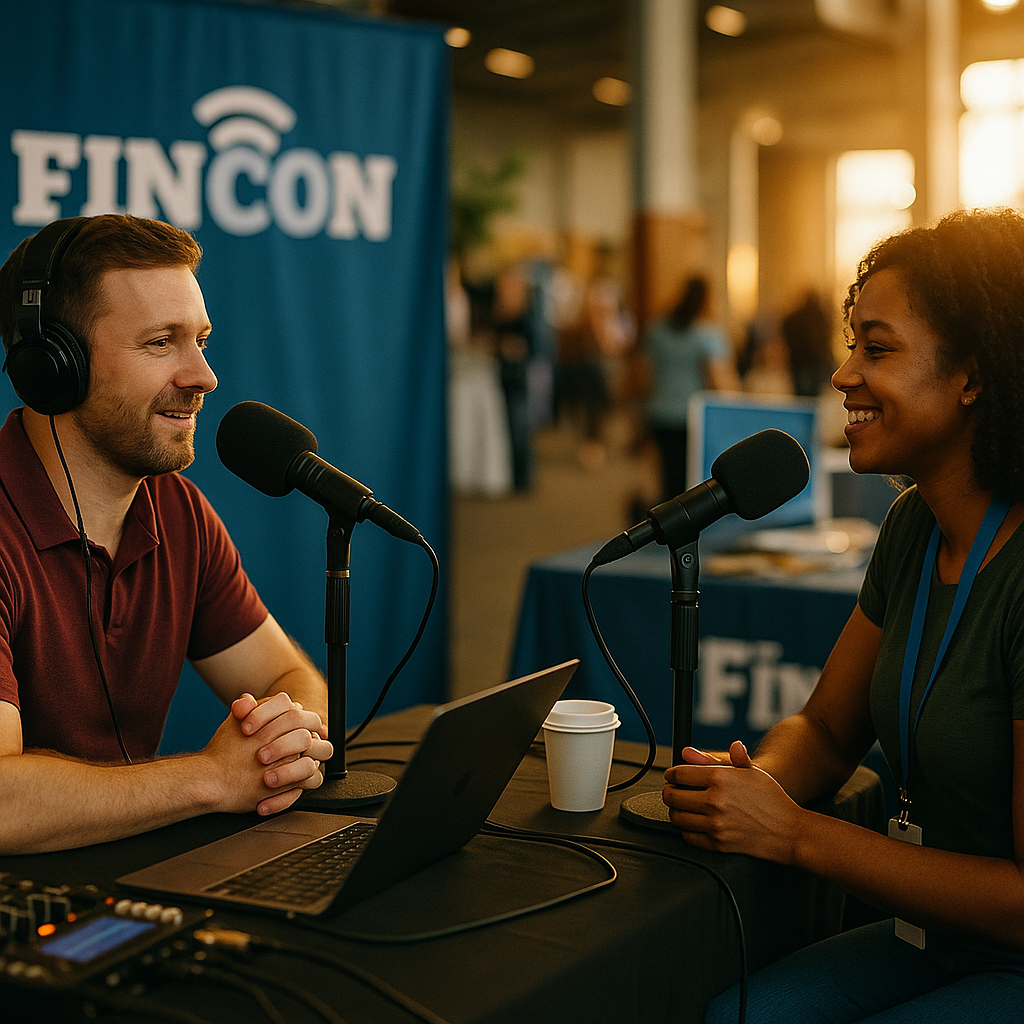
Podcast ad recall runs as high as 4.4x higher than display, according to eMarketer benchmarks on audio engagement. So why did most finance brands walk into FinCon 2026 still treating podcast sponsorships like an afterthought bolted onto a video budget? Audio first creator activations stole the show this year, and the brands that showed up unprepared learned some expensive lessons.
The Room Changed, and Most Sponsors Didn’t Notice
FinCon has always been podcast heavy. That’s not new. What shifted is who’s buying the mic time and why. Fintech brands, robo advisors, and insurtech sponsors used to treat audio as a discovery channel, a top of funnel awareness play with soft attribution. This year’s sponsor panels told a different story: audio first activations are closing loops that video can’t, particularly for high consideration financial products where trust takes longer to build.
Several sponsors on the exhibitor floor admitted their media plans still routed budget toward YouTube pre roll and TikTok UGC first, with podcast ad reads as a line item tacked on late. The creators pushing back weren’t being difficult. They were pointing at their own download data showing completion rates north of 80% on sponsored segments, numbers that make most short form video sponsors jealous.
Podcast hosts at FinCon reported that listeners who convert from audio ads have 30% higher retention after 90 days compared to listeners acquired through paid social, a gap large enough to reshape budget allocation for any brand selling subscriptions or long term financial products.
Why Audio Converts Differently for Financial Products
Money decisions are slow. Nobody impulse buys a Roth IRA rollover after watching a 15 second reel. Audio’s advantage is dwell time: a listener commuting for 40 minutes hears the same host explain a concept, weave in a sponsor mention, and return to it later in the episode. That repetition builds familiarity that a single video impression can’t replicate.
Brands sponsoring FinCon adjacent shows this year leaned into longer form integrations, sometimes 90 seconds of host read copy instead of the standard 30. That’s a risk. Longer reads cost more and demand tighter scripting, but multiple sponsors reported it paid off in landing page conversion, particularly when the host personalized the read with their own product experience rather than reciting boilerplate.
What Brands Got Wrong Before They Fixed It
- Treating audio as a video afterthought. Several sponsors built creative briefs for video first, then asked creators to “just read something similar” for the podcast version. Hosts pushed back hard, and rightly so. Audio scripting needs its own brief, its own pacing, its own disclosure placement.
- Ignoring FTC disclosure timing for audio. A verbal disclosure buried three minutes into a segment doesn’t meet the same bar as an on screen tag. The FTC’s endorsement guidance applies regardless of medium, and several sponsors got called out publicly on stage for sloppy compliance.
- Underpricing host read segments. Brands used to CPM based video deals tried applying the same math to podcast integrations and got laughed out of negotiations. Established finance podcasts command premium rates precisely because their audience trust is harder won.
- No measurement plan beyond promo codes. Promo codes work, but they undercount. Brands that layered in brand lift surveys and post campaign search volume tracking got a much clearer read on incrementality.
The Disclosure Problem Nobody Wants to Talk About
Audio disclosure is genuinely harder to get right than video. There’s no on screen tag, no caption overlay, nothing visual to anchor compliance. A host has to say it, clearly, at a point where the listener is actually paying attention, not buried after a sponsor read has already ended. Brands that got this wrong at FinCon weren’t being malicious. They just didn’t think it through, and the FTC doesn’t grade on intent.
The fix several agencies landed on: front load the disclosure in the same sentence as the sponsor name, then repeat it once more at the segment’s close. It’s a small scripting change with real legal weight. If your team is already building disclosure into livestream formats, the logic carries over directly, similar to how livestream cohost scripts handle real time disclosure without killing the flow.
Format Lessons Worth Stealing
A few tactical patterns emerged across the sponsor panels that any brand running or planning audio activations should note.
- Segment sponsorships beat pre roll. A branded recurring segment, “The Money Question of the Week” sponsored by X, built more recall than a generic pre roll slot because listeners started associating the format itself with the sponsor.
- Guest appearances outperform straight ad reads. When a brand’s spokesperson or founder appeared as an actual guest for 10 minutes, conversion on the follow up ad read jumped noticeably. Context matters. Listeners trust an ad more when they’ve just heard the sponsor speak like a human, not a script.
- Cross posting audio clips to video platforms extends reach without extra production. Several sponsors clipped their best host read moments into short vertical videos for TikTok and Reels, essentially getting a second campaign out of one recording session.
That last point connects to a broader trend Influencers Time has covered before: brands squeezing more value from a single production. The logic mirrors what we outlined in one shoot, ten markets versioning math, just applied to audio instead of video.
Measurement: Stop Relying Only on Promo Codes
Promo codes are easy to set up and easy to report, which is exactly why brands over rely on them. But they miss the listener who hears the ad, doesn’t use the code, and converts three weeks later through organic search. Sponsors who ran matched market brand lift studies at FinCon found incrementality numbers 20 to 35% higher than promo code attribution alone suggested.
Tools like Sprout Social and podcast specific measurement platforms are starting to close this gap, but the honest answer is attribution in audio is still messier than in video or social. Brands that accept that upfront and build multi touch measurement into the campaign plan avoid the postmortem argument about whether the spend actually worked.
One recurring theme across FinCon sponsor sessions: brands that measured only direct response undervalued audio by roughly a third compared to brands that layered in brand lift and search lift data.
Budget Reallocation Is Already Happening
Several mid size fintech sponsors told Influencers Time they’re shifting 10 to 15% of next year’s creator budget from short form video toward long form audio integrations, specifically recurring host relationships rather than one off reads. That’s a meaningful reallocation for brands that have spent the last three years pouring almost everything into TikTok and Reels.
It’s not a wholesale abandonment of video. It’s a rebalancing based on what the funnel actually needs. Top of funnel awareness still leans video, because reach and shareability favor short clips. But mid funnel trust building and consideration, especially for anything involving money, insurance, or long term commitments, is where audio first activations are proving their worth. This mirrors a pattern seen in shoppable video podcasts, where host trust does the heavy lifting that a cold ad never could.
Agencies are adjusting their creator briefs accordingly. Instead of a single universal brief distributed across formats, several FinCon sponsors described building format specific briefs, one for audio, one for short video, one for livestream, each with its own scripting logic and disclosure placement. That extra work up front saved rework later, according to more than one panelist.
What This Means for Brand Safety and Vetting
Audio first creators are harder to vet than video creators using standard social listening tools, simply because there’s less visual metadata to scan. Brands need to actually listen to back catalog episodes, not just check subscriber counts and average download numbers. A host with strong numbers but sloppy compliance history on past sponsor reads is a bigger risk than the download stats suggest.
Some brands at FinCon are now requiring creators to submit sample scripts or read throughs before locking a contract, similar to how founder style talking head videos get coached before filming. It adds a step to the workflow, but it catches disclosure and tone problems before they become public compliance issues.
Platforms like Meta Business and TikTok Ads have built in disclosure tooling for video and social, but audio still relies heavily on host discipline and brand oversight. That gap is exactly where FinCon sponsors got burned, and exactly where the smart ones are now investing in tighter briefs and pre approval workflows.
Takeaway
Audio first creator activations aren’t a video budget leftover anymore. Build a dedicated audio brief, front load disclosure language, and measure beyond promo codes before your next campaign, or you’ll be relearning FinCon’s lessons the hard way next season.
FAQs
What makes audio first creator activations different from standard podcast sponsorships?
Audio first activations treat the podcast format as the primary campaign vehicle rather than a secondary placement, with dedicated scripting, longer integrations, and measurement built specifically around listener behavior instead of borrowed video metrics.
How should brands handle FTC disclosure in audio ad reads?
Disclosure should appear at the start of the sponsor mention, stated clearly in plain language, and repeated at the segment’s close. Relying on a single buried mention doesn’t meet current FTC endorsement guidance.
Why did FinCon 2026 sponsors shift budget toward audio?
Sponsors reported higher completion rates, stronger 90 day listener retention, and better mid funnel conversion for financial products compared to short form video, prompting a reallocation of budget toward recurring host relationships.
How do brands measure ROI on podcast sponsorships beyond promo codes?
Layering brand lift surveys and post campaign search volume tracking alongside promo code attribution gives a more accurate incrementality picture, since many conversions happen without a tracked code.
Can audio content be repurposed for video platforms?
Yes. Clipping strong host read moments into short vertical videos extends reach on platforms like TikTok and Reels without requiring a separate production shoot.
Top Influencer Marketing Agencies
The leading agencies shaping influencer marketing in 2026
Agencies ranked by campaign performance, client diversity, platform expertise, proven ROI, industry recognition, and client satisfaction. Assessed through verified case studies, reviews, and industry consultations.
Moburst

-
2

The Shelf
Boutique Beauty & Lifestyle Influencer AgencyA data-driven boutique agency specializing exclusively in beauty, wellness, and lifestyle influencer campaigns on Instagram and TikTok. Best for brands already focused on the beauty/personal care space that need curated, aesthetic-driven content.Clients: Pepsi, The Honest Company, Hims, Elf Cosmetics, Pure LeafVisit The Shelf → -
3

Audiencly
Niche Gaming & Esports Influencer AgencyA specialized agency focused exclusively on gaming and esports creators on YouTube, Twitch, and TikTok. Ideal if your campaign is 100% gaming-focused — from game launches to hardware and esports events.Clients: Epic Games, NordVPN, Ubisoft, Wargaming, Tencent GamesVisit Audiencly → -
4

Viral Nation
Global Influencer Marketing & Talent AgencyA dual talent management and marketing agency with proprietary brand safety tools and a global creator network spanning nano-influencers to celebrities across all major platforms.Clients: Meta, Activision Blizzard, Energizer, Aston Martin, WalmartVisit Viral Nation → -
5

The Influencer Marketing Factory
TikTok, Instagram & YouTube CampaignsA full-service agency with strong TikTok expertise, offering end-to-end campaign management from influencer discovery through performance reporting with a focus on platform-native content.Clients: Google, Snapchat, Universal Music, Bumble, YelpVisit TIMF → -
6

NeoReach
Enterprise Analytics & Influencer CampaignsAn enterprise-focused agency combining managed campaigns with a powerful self-service data platform for influencer search, audience analytics, and attribution modeling.Clients: Amazon, Airbnb, Netflix, Honda, The New York TimesVisit NeoReach → -
7

Ubiquitous
Creator-First Marketing PlatformA tech-driven platform combining self-service tools with managed campaign options, emphasizing speed and scalability for brands managing multiple influencer relationships.Clients: Lyft, Disney, Target, American Eagle, NetflixVisit Ubiquitous → -
8

Obviously
Scalable Enterprise Influencer CampaignsA tech-enabled agency built for high-volume campaigns, coordinating hundreds of creators simultaneously with end-to-end logistics, content rights management, and product seeding.Clients: Google, Ulta Beauty, Converse, AmazonVisit Obviously →