


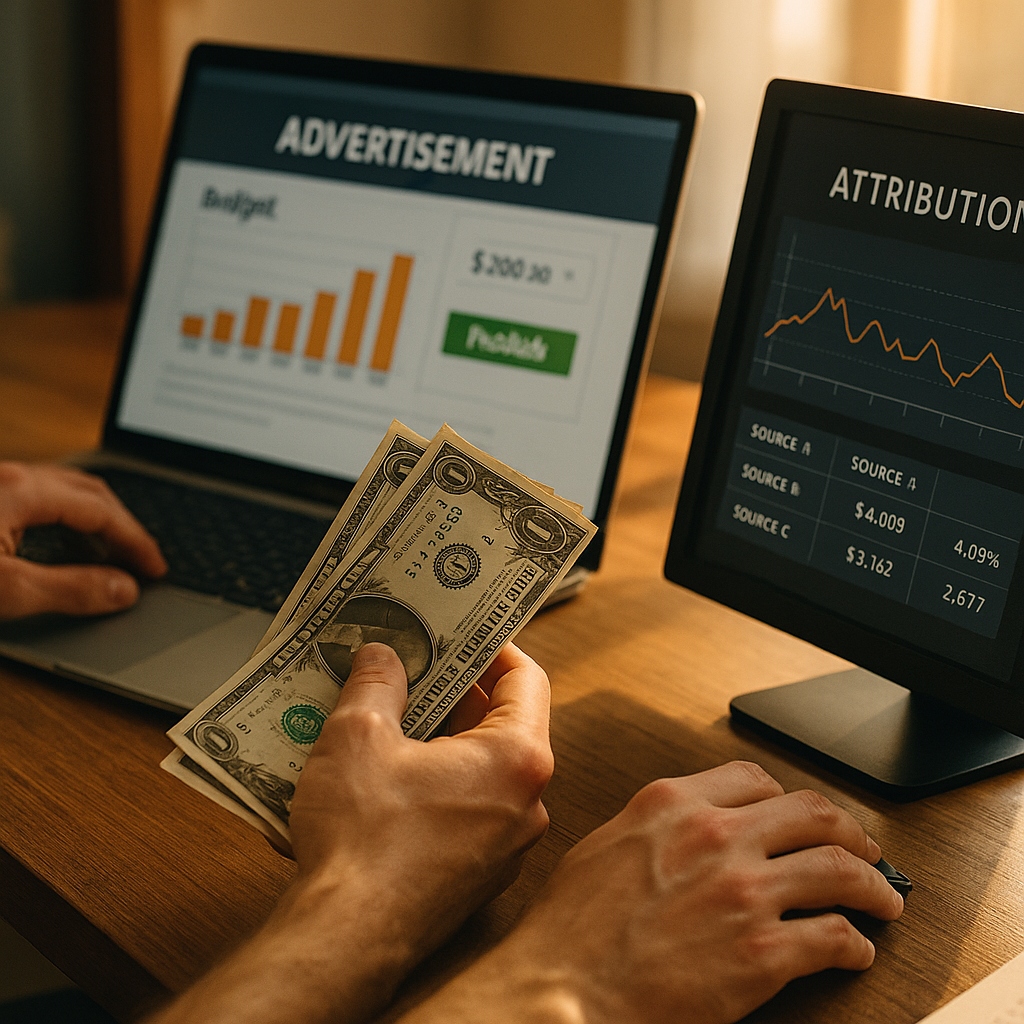
Self serve ad platforms promised marketers cheap reach and full control. Nobody mentioned the invisible line item: attribution. Brands running programmatic and social self serve campaigns are quietly spending 15 to 30 percent more on measurement tooling, clean rooms, and reconciliation than they budgeted a year ago. The self serve ad channels pitch was always “do it yourself, pay less.” Turns out the DIY part got expensive.
The Pitch Versus the Invoice
Meta, TikTok, and Google self serve interfaces exist to remove friction. No account manager, no minimum spend, no waiting on a media buyer to build your campaign. That’s the appeal, and it works, especially for lean teams stretching budget across a dozen creator partnerships. But every platform’s dashboard shows you its own version of success. Click through Meta’s numbers and you’ll see one attribution story. Pull TikTok’s and you’ll see another. Layer in a creator’s own reported engagement, and you’ve got three sources that rarely agree.
The fix used to be simple: trust the walled garden, move on. That era is over. Privacy changes, cookie deprecation, and multi touch customer journeys mean brands now need third party attribution layers just to know if a self serve campaign actually worked. That layer isn’t free. Clean room access, identity resolution vendors, and multi touch attribution platforms all carry subscription costs that scale with data volume, not with ad spend efficiency.
Brands that once treated attribution as a reporting afterthought are now budgeting for it as a core campaign cost, sometimes 20 percent of total media spend on mid sized influencer programs.
Why Self Serve Made This Worse, Not Better
Here’s the uncomfortable part. Self serve channels were supposed to democratize media buying. Instead, they fragmented it. When a single agency managed all your buys through negotiated contracts, attribution was bundled into the relationship. Now a mid sized brand might run self serve campaigns across Meta, TikTok, Pinterest, and a handful of creator platform ad extensions, each with its own pixel, its own conversion window, and its own definition of an “assisted” conversion.
Multiply that fragmentation across ten or fifteen creator partners running boosted content through their own self serve accounts, and you get a measurement mess no spreadsheet can untangle manually. Marketing teams are discovering that the tool stack needed to make sense of it all costs more per quarter than the ad spend savings they got from cutting out agency fees in the first place.
This isn’t a hypothetical. eMarketer has tracked rising martech spend allocations tied directly to measurement and attribution tooling, even as overall ad budgets stay flat. The money didn’t disappear. It moved from media to measurement.
The Dark Funnel Problem Compounds It
Self serve attribution gaps get worse when you factor in dark social. A creator posts organically, someone screenshots it, shares it in a group chat, and a purchase happens three days later with zero trackable path back to the original post. Our coverage of the dark funnel’s invisible signals found brands chasing budget allocation decisions with almost 7 percent of conversions happening outside any measurable channel. Self serve platforms can’t see that activity. Neither can most bolt on attribution tools, which is exactly why brands are paying premiums for probabilistic modeling that tries to approximate what deterministic tracking can no longer capture.
What “Attribution Premium” Actually Costs
Let’s put numbers on this instead of vague hand waving. A brand running a $50,000 monthly creator and self serve ad program might now allocate:
- $4,000 to $8,000 for a multi touch attribution platform subscription
- $1,500 to $3,000 for clean room data access fees (Meta Advanced Analytics, Google’s ads data hub equivalents)
- $2,000 to $5,000 for a marketing mix modeling layer to sanity check platform reported numbers
- Analyst or agency hours to reconcile conflicting reports, often 10 to 20 hours a month at blended rates
That’s easily $10,000 to $20,000 a month in overhead just to know whether the previous $50,000 worked. Some finance teams are balking, and rightly so. But the alternative, flying blind on self serve platform numbers alone, has its own cost: wasted spend on channels that look good in a dashboard but don’t move revenue.
Marketing Mix Modeling Is Making a Comeback for a Reason
This is part of why marketing mix modeling is returning as platform trust collapses. MMM doesn’t rely on platform pixels at all. It works from aggregate spend and outcome data, sidestepping the self serve attribution premium entirely. It’s not perfect, MMM has its own lag and granularity limits, but it gives brands a channel agnostic reality check against what Meta or TikTok’s self serve dashboard claims. More CFOs are asking for this cross check before approving next quarter’s self serve budget increases.
Is This a Platform Problem or a Data Hygiene Problem?
Honestly, it’s both. Self serve platforms have every incentive to report generously. They’re grading their own homework. But brands make it worse with sloppy internal data. If your CRM has duplicate contacts, mismatched UTM conventions, or inconsistent customer IDs across systems, no attribution tool can reconcile that mess no matter how much you pay for it. Our reporting on how dirty CRM fields sabotage creator attribution found that a huge share of “platform measurement failures” trace back to internal data hygiene, not platform limitations.
This matters because brands sometimes throw more attribution budget at a problem that a data cleanup project would solve for a fraction of the cost. Before signing another attribution vendor contract, audit your own pipeline. Where do conversion events originate? Are your UTMs standardized across every self serve account, or does each creator manager set their own naming convention? Small inconsistencies compound into six figure measurement gaps at scale.
Attribution tooling can’t fix what dirty data breaks. Brands paying premium prices for measurement platforms often need a CRM audit more than a new subscription.
Practical Moves for Budget Owners
So what do you actually do with this information? A few things, in order of priority.
First, separate media budget from measurement budget in your planning, explicitly. Too many teams bury attribution tooling costs inside general “ad tech” line items, which hides the real premium from stakeholders who need to see it. Give attribution its own line. That transparency alone changes negotiating leverage with vendors.
Second, run a quarterly reconciliation between platform reported numbers and your MMM or third party attribution numbers. If the gap between Meta’s self reported conversions and your independent modeling exceeds 20 percent, that’s a signal to renegotiate self serve spend allocation, not just accept the dashboard at face value.
Third, standardize tracking parameters across every self serve account before adding new tools. This is cheap, it’s tedious, and almost nobody does it consistently. Consistent UTM structures and consistent conversion event naming across Meta Ads Manager, TikTok Ads Manager, and creator platform boost tools will save more attribution headache than any new software purchase.
Fourth, consider unified data infrastructure rather than stacking point solutions. Brands building toward a unified audience ledger for creator attribution report fewer reconciliation headaches because the data model is consistent from the start, rather than bolted together after the fact from five disconnected platforms.
Where AI Attribution Tools Fit In
AI powered attribution modeling is genuinely useful here, when applied correctly. Adoption is climbing fast, and our research on why AI attribution adoption is nearing 60 percent shows brands moving toward machine learning models that weight touchpoints probabilistically rather than relying on last click or platform default rules. That’s a meaningful upgrade over trusting a single self serve dashboard. But AI attribution tools still need clean input data and still cost money to license and maintain. They’re not a shortcut around the premium, they’re another expense inside it, just a smarter one than what most teams were using before.
It’s also worth checking how your analytics stack credits AI driven discovery. GA4 now credits AI chatbots in assisted conversion paths, which changes how you should read multi touch reports involving self serve social spend paired with organic AI search discovery. If your attribution stack isn’t updated to reflect that, you’re working from an incomplete picture regardless of how much you’re paying for it.
How Much Should You Actually Budget?
There’s no universal formula, but a reasonable planning rule for mid sized brands running active self serve campaigns across three or more platforms: budget 15 to 20 percent of total paid media spend for attribution and measurement infrastructure. That includes software subscriptions, clean room fees, and the analyst time to interpret it all. Brands spending less than 10 percent are probably flying on platform reported vanity numbers. Brands spending north of 30 percent should audit whether they’re overbuying redundant tools, because at that point you’re likely paying for three platforms that do overlapping jobs.
Industry benchmarks from sources like Statista and platform documentation from Meta Business and TikTok Ads Manager can help you benchmark expected conversion reporting variance by channel, which gives you a sanity check for whether your attribution premium is buying real accuracy or just more dashboards to ignore.
The Bottom Line for Budget Owners
Self serve ad channels didn’t get more expensive on paper. The media buy line item looks the same as it did two years ago, maybe even cheaper thanks to platform competition. What changed is everything wrapped around it: the tools needed to trust what those platforms tell you. Brands that ignore this reality keep making budget decisions based on inflated platform reported numbers, which eventually shows up as disappointing revenue that the dashboard never predicted. Build attribution costs into your planning explicitly, clean your internal data before buying new tools, and cross check every self serve platform’s claims against an independent model at least once a quarter.
FAQs
Why are attribution costs rising specifically because of self serve ad channels?
Self serve platforms let brands run campaigns across many channels simultaneously without centralized agency oversight, which fragments tracking. Each platform reports conversions differently, forcing brands to buy third party tools to reconcile the data, and those tools carry their own subscription costs on top of media spend.
What percentage of media budget should go toward attribution tooling?
A reasonable planning range for brands running multiple self serve channels is 15 to 20 percent of total paid media spend allocated to attribution, clean room access, and measurement analyst time. Spending significantly less usually means relying too heavily on platform reported numbers.
Can marketing mix modeling replace platform attribution entirely?
Not entirely, but it serves as an independent cross check. MMM works from aggregate spend and outcome data rather than platform pixels, which makes it useful for verifying whether self serve platform reported conversions match real world revenue impact.
Is dirty CRM data really a factor in attribution costs?
Yes. Duplicate records, inconsistent UTM naming, and mismatched customer IDs across systems undermine even the best attribution software. Cleaning internal data pipelines often reduces measurement gaps more effectively than purchasing additional attribution tools.
Do AI attribution tools reduce the overall premium brands are paying?
They can improve accuracy by weighting touchpoints probabilistically instead of relying on last click models, but they still require licensing fees and clean input data. They’re a smarter expense, not a free alternative to the attribution premium.
Top Influencer Marketing Agencies
The leading agencies shaping influencer marketing in 2026
Agencies ranked by campaign performance, client diversity, platform expertise, proven ROI, industry recognition, and client satisfaction. Assessed through verified case studies, reviews, and industry consultations.
Moburst

-
2

The Shelf
Boutique Beauty & Lifestyle Influencer AgencyA data-driven boutique agency specializing exclusively in beauty, wellness, and lifestyle influencer campaigns on Instagram and TikTok. Best for brands already focused on the beauty/personal care space that need curated, aesthetic-driven content.Clients: Pepsi, The Honest Company, Hims, Elf Cosmetics, Pure LeafVisit The Shelf → -
3

Audiencly
Niche Gaming & Esports Influencer AgencyA specialized agency focused exclusively on gaming and esports creators on YouTube, Twitch, and TikTok. Ideal if your campaign is 100% gaming-focused — from game launches to hardware and esports events.Clients: Epic Games, NordVPN, Ubisoft, Wargaming, Tencent GamesVisit Audiencly → -
4

Viral Nation
Global Influencer Marketing & Talent AgencyA dual talent management and marketing agency with proprietary brand safety tools and a global creator network spanning nano-influencers to celebrities across all major platforms.Clients: Meta, Activision Blizzard, Energizer, Aston Martin, WalmartVisit Viral Nation → -
5

The Influencer Marketing Factory
TikTok, Instagram & YouTube CampaignsA full-service agency with strong TikTok expertise, offering end-to-end campaign management from influencer discovery through performance reporting with a focus on platform-native content.Clients: Google, Snapchat, Universal Music, Bumble, YelpVisit TIMF → -
6

NeoReach
Enterprise Analytics & Influencer CampaignsAn enterprise-focused agency combining managed campaigns with a powerful self-service data platform for influencer search, audience analytics, and attribution modeling.Clients: Amazon, Airbnb, Netflix, Honda, The New York TimesVisit NeoReach → -
7

Ubiquitous
Creator-First Marketing PlatformA tech-driven platform combining self-service tools with managed campaign options, emphasizing speed and scalability for brands managing multiple influencer relationships.Clients: Lyft, Disney, Target, American Eagle, NetflixVisit Ubiquitous → -
8

Obviously
Scalable Enterprise Influencer CampaignsA tech-enabled agency built for high-volume campaigns, coordinating hundreds of creators simultaneously with end-to-end logistics, content rights management, and product seeding.Clients: Google, Ulta Beauty, Converse, AmazonVisit Obviously →