


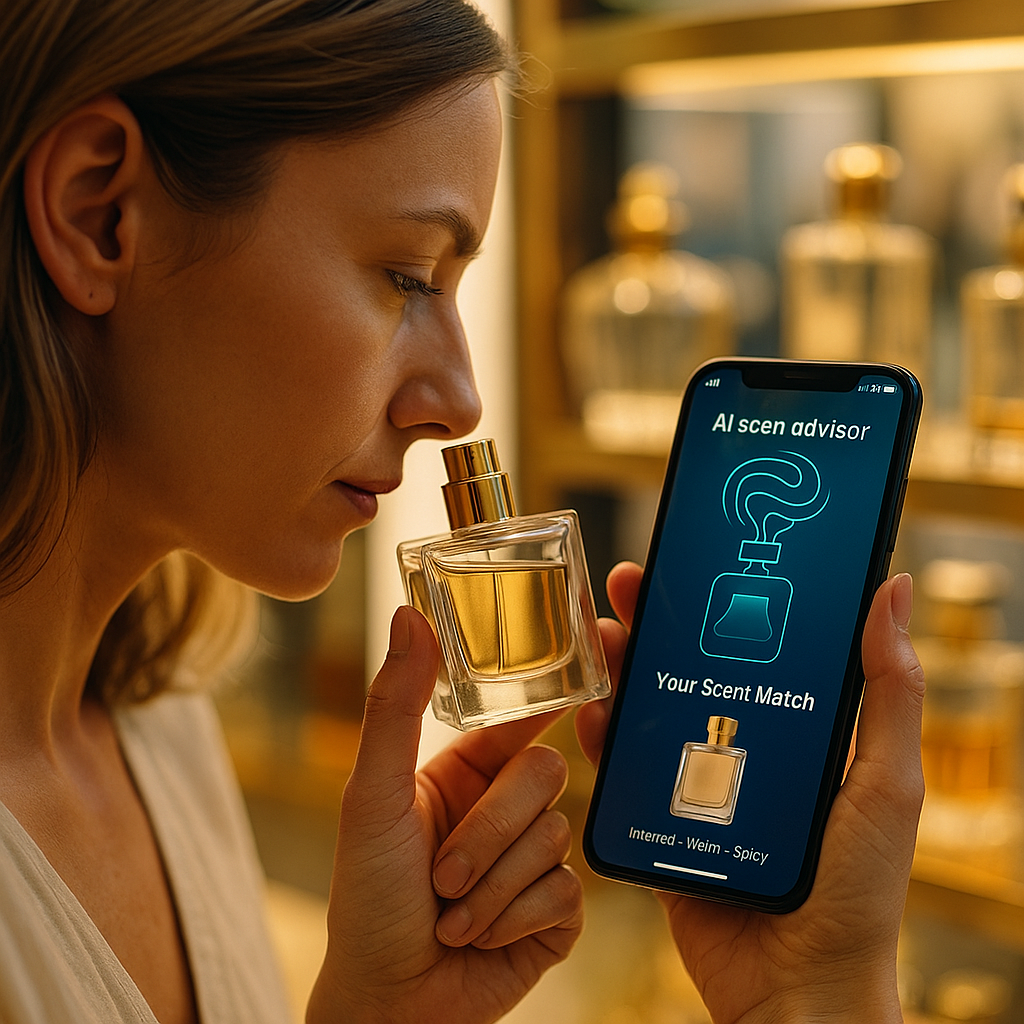
Can an algorithm tell you which perfume matches your personality? Estee Lauder is betting yes, and the beauty giant’s new AI scent advisor is the clearest signal yet that sensory AI is moving from novelty to core brand infrastructure. For marketers who still treat “experience” as a synonym for pop-up activations, this is a wake-up call: the next battleground for brand differentiation is multisensory, data-driven, and running on machine learning.
What Estee Lauder Actually Built
Estee Lauder’s AI scent advisor works like a conversational stylist, except it recommends fragrance instead of outfits. Shoppers answer a handful of questions about mood, occasion, and preference (think: “citrus or amber,” “morning meeting or evening date”), and the tool generates personalized recommendations pulled from the brand’s fragrance portfolio. It’s deployed across e-commerce and in select retail environments, blending natural language processing with a structured scent taxonomy that maps ingredients to emotional and situational triggers.
This isn’t Estee Lauder’s first swing at AI-driven personalization. The company has invested heavily in beauty tech over the past several years, from virtual try-on tools to skin diagnostics. But scent is different. Unlike color matching or shade finding, fragrance has no visual proxy. You can’t screenshot a smell. That’s exactly why an AI layer matters here: it translates something inherently non-digital into a recommendation engine that can scale personalization without a human sales associate on every corner.
Sensory categories like fragrance, food, and home goods have historically resisted digital personalization because the core product experience can’t be captured in pixels. AI recommendation layers are closing that gap, and that changes the ROI math for experiential marketing budgets.
Why Sensory AI Is Different From Standard Recommendation Engines
Most brands already run some flavor of AI recommendation, whether it’s Amazon-style “customers also bought” logic or Netflix-style content matching. Sensory AI tools operate on murkier data. There’s no universal standard for describing a scent, a texture, or a flavor the way there is for a product SKU or a genre tag. Estee Lauder had to build (or license) a proprietary framework for translating subjective sensory language into structured data the model can act on.
That’s a meaningful lift, and it’s why sensory AI has lagged behind other personalization categories. Building the taxonomy is only step one. Training the model to make accurate recommendations at scale, across a diverse customer base with wildly different scent vocabularies, requires ongoing data collection and refinement. Every interaction with the tool is training data. Every “I didn’t like this recommendation” click is a signal that needs to feed back into the model.
For brand strategists watching this space, the operational lesson is clear: sensory AI isn’t a plug-and-play SaaS purchase. It’s closer to building a proprietary data asset, similar to how first-party data quality now determines whether shopping recommendation engines perform well or poorly across categories.
The CX Argument: Reducing Friction in High-Consideration Purchases
Fragrance is a notoriously high-return category in e-commerce. Industry estimates from beauty retailers have long put online fragrance return rates well above the average for other beauty products, largely because customers can’t smell before they buy. An AI advisor that narrows the field before purchase, based on stated preferences and behavioral data, directly attacks that return problem.
This is where the ROI case gets concrete for brand leaders. If a sensory AI tool reduces returns by even a few percentage points on a high-volume SKU line, that’s a direct hit to the bottom line, not just a “nice CX touch.” Marketing teams evaluating similar tools should push vendors and internal data teams for hard numbers: return rate deltas, conversion lift, average order value changes. Vague claims about “enhanced personalization” don’t survive a budget review.
What This Signals for Brand Experience Marketing More Broadly
Estee Lauder isn’t operating in a vacuum. Sephora has experimented with AI-driven skin diagnostics for years. Coca-Cola has run generative AI flavor and packaging experiments. Home goods and food and beverage brands are quietly testing similar sensory matching tools for everything from candle scents to snack flavor profiles. The pattern is consistent: brands are using AI not to replace the sensory experience, but to make it discoverable and personalized at digital scale.
This matters for experience marketing budgets because it reframes what “experience” even means. For a decade, brand experience marketing meant physical activations: pop-ups, sampling events, immersive retail. Those tactics still matter, but they’re expensive and hard to scale. Sensory AI offers a hybrid model: a digital front door that personalizes the path to a physical, sensory product. It’s not a replacement for in-store sampling; it’s a qualification layer that makes every sampling interaction more likely to convert.
Marketing leaders should think of this as an extension of the same trend reshaping search and discovery. Just as zero-click search behavior is forcing brands to rebuild attribution models around AI-mediated discovery, sensory AI tools are forcing brands to rebuild the customer journey around AI-mediated preference matching. The customer no longer browses a shelf or a scroll. They answer a few questions and get a curated shortlist. That shortlist logic will increasingly determine which products even get considered.
The Data and Compliance Questions Nobody Wants to Ask
Here’s the part brand teams tend to skip past in the excitement of a shiny new tool: sensory AI advisors collect intimate behavioral and preference data. Mood, occasion, personal style cues, sometimes even inferred emotional states. That’s rich data for personalization, and it’s also a compliance exposure if handled sloppily.
Questions every brand should be answering before launch:
- Where is preference data stored, and is it tied to identifiable customer profiles?
- Does the tool’s data collection comply with regional privacy frameworks, and has legal reviewed the consent flow?
- Who owns the training data generated by customer interactions, the brand or the AI vendor?
- Is there a documented process for correcting biased or inaccurate recommendations?
These aren’t hypothetical concerns. Regulatory bodies including the Federal Trade Commission and the UK’s Information Commissioner’s Office have both signaled increased scrutiny of AI systems that make personalized recommendations based on inferred personal characteristics. If your sensory AI tool infers mood or emotional state to drive recommendations, that’s arguably more sensitive than a standard purchase history model, and it deserves proportionate governance.
This connects directly to broader friction points marketing teams are hitting across AI adoption. As covered in compliance and data handoff bottlenecks, the gap between a working AI prototype and a production-ready, legally defensible tool is often where these projects stall. Sensory AI is not exempt from that reality just because it feels lower-stakes than, say, financial recommendation engines.
Should Your Brand Build, Buy, or Wait?
Not every category needs a sensory AI advisor. Before greenlighting a build, brand strategists should run a simple filter:
- Is the product category high-consideration and hard to evaluate remotely? Fragrance, food, textiles, and home fragrance all qualify. A standard apparel SKU probably doesn’t need this layer.
- Do you have enough transaction and preference data to train a useful model? Sensory AI is data-hungry. Smaller brands may be better served partnering with a platform vendor than building proprietary tech.
- Can your team operationalize the feedback loop? A recommendation engine that never gets retrained on new preference data will degrade in accuracy within months.
This build-versus-buy calculus mirrors what’s playing out across the martech stack more broadly, where brands are weighing proprietary AI studio builds against off-the-shelf tools, as seen in the ongoing build or buy AI decision facing enterprise marketing teams. Sensory AI just adds another category to that decision matrix, with the added complexity of subjective, hard-to-quantify data.
For most mid-market brands, the near-term move isn’t to build a proprietary scent advisor from scratch. It’s to watch how Estee Lauder, Sephora, and other early movers handle the data governance and ROI reporting, then license or adapt proven frameworks once the category matures. Being second isn’t always a disadvantage when the first movers are still working out the compliance kinks.
Industry research from eMarketer and Statista continues to track rising consumer comfort with AI-driven product recommendations across categories, which suggests the appetite for sensory personalization will only grow. Brands that wait too long risk ceding the “discovery layer” of their category to whichever competitor builds the trusted recommendation engine first.
The Bigger Picture for Marketing Leaders
Sensory AI tools like Estee Lauder’s scent advisor aren’t really about fragrance. They’re about who controls the moment of product discovery in categories that have historically resisted digital disruption. Every brand experience marketer should be asking: what’s the “unsmellable, untastable, untouchable” friction point in my category, and is there an AI layer that could remove it?
The brands that answer that question well over the next few product cycles will own a disproportionate share of high-consideration purchase decisions. The ones that treat this as a gimmick will be explaining to their CFOs why return rates didn’t budge.
Frequently Asked Questions
What is Estee Lauder’s AI scent advisor?
It’s a conversational AI tool that recommends fragrance products based on customer inputs about mood, occasion, and scent preference, using natural language processing paired with a structured fragrance data taxonomy.
How does sensory AI differ from standard product recommendation engines?
Sensory AI has to translate subjective, non-visual experiences like smell or taste into structured data the model can process, whereas standard recommendation engines typically rely on clearer signals like purchase history or category tags.
Can sensory AI tools reduce e-commerce return rates?
Yes, in theory. By narrowing product choices before purchase based on stated and inferred preferences, these tools aim to reduce the mismatch between expectation and product experience that drives high return rates in categories like fragrance.
What compliance risks should brands consider before launching a sensory AI tool?
Brands should evaluate data storage practices, consent flows, regional privacy compliance, data ownership terms with AI vendors, and processes for auditing or correcting biased recommendations before launch.
Is sensory AI worth building for smaller or mid-market brands?
Not always. Smaller brands often lack sufficient transaction and preference data to train an effective model in-house and may be better served waiting for proven platform solutions rather than building proprietary tools from scratch.
Top Influencer Marketing Agencies
The leading agencies shaping influencer marketing in 2026
Agencies ranked by campaign performance, client diversity, platform expertise, proven ROI, industry recognition, and client satisfaction. Assessed through verified case studies, reviews, and industry consultations.
Moburst

-
2

The Shelf
Boutique Beauty & Lifestyle Influencer AgencyA data-driven boutique agency specializing exclusively in beauty, wellness, and lifestyle influencer campaigns on Instagram and TikTok. Best for brands already focused on the beauty/personal care space that need curated, aesthetic-driven content.Clients: Pepsi, The Honest Company, Hims, Elf Cosmetics, Pure LeafVisit The Shelf → -
3

Audiencly
Niche Gaming & Esports Influencer AgencyA specialized agency focused exclusively on gaming and esports creators on YouTube, Twitch, and TikTok. Ideal if your campaign is 100% gaming-focused — from game launches to hardware and esports events.Clients: Epic Games, NordVPN, Ubisoft, Wargaming, Tencent GamesVisit Audiencly → -
4

Viral Nation
Global Influencer Marketing & Talent AgencyA dual talent management and marketing agency with proprietary brand safety tools and a global creator network spanning nano-influencers to celebrities across all major platforms.Clients: Meta, Activision Blizzard, Energizer, Aston Martin, WalmartVisit Viral Nation → -
5

The Influencer Marketing Factory
TikTok, Instagram & YouTube CampaignsA full-service agency with strong TikTok expertise, offering end-to-end campaign management from influencer discovery through performance reporting with a focus on platform-native content.Clients: Google, Snapchat, Universal Music, Bumble, YelpVisit TIMF → -
6

NeoReach
Enterprise Analytics & Influencer CampaignsAn enterprise-focused agency combining managed campaigns with a powerful self-service data platform for influencer search, audience analytics, and attribution modeling.Clients: Amazon, Airbnb, Netflix, Honda, The New York TimesVisit NeoReach → -
7

Ubiquitous
Creator-First Marketing PlatformA tech-driven platform combining self-service tools with managed campaign options, emphasizing speed and scalability for brands managing multiple influencer relationships.Clients: Lyft, Disney, Target, American Eagle, NetflixVisit Ubiquitous → -
8

Obviously
Scalable Enterprise Influencer CampaignsA tech-enabled agency built for high-volume campaigns, coordinating hundreds of creators simultaneously with end-to-end logistics, content rights management, and product seeding.Clients: Google, Ulta Beauty, Converse, AmazonVisit Obviously →