


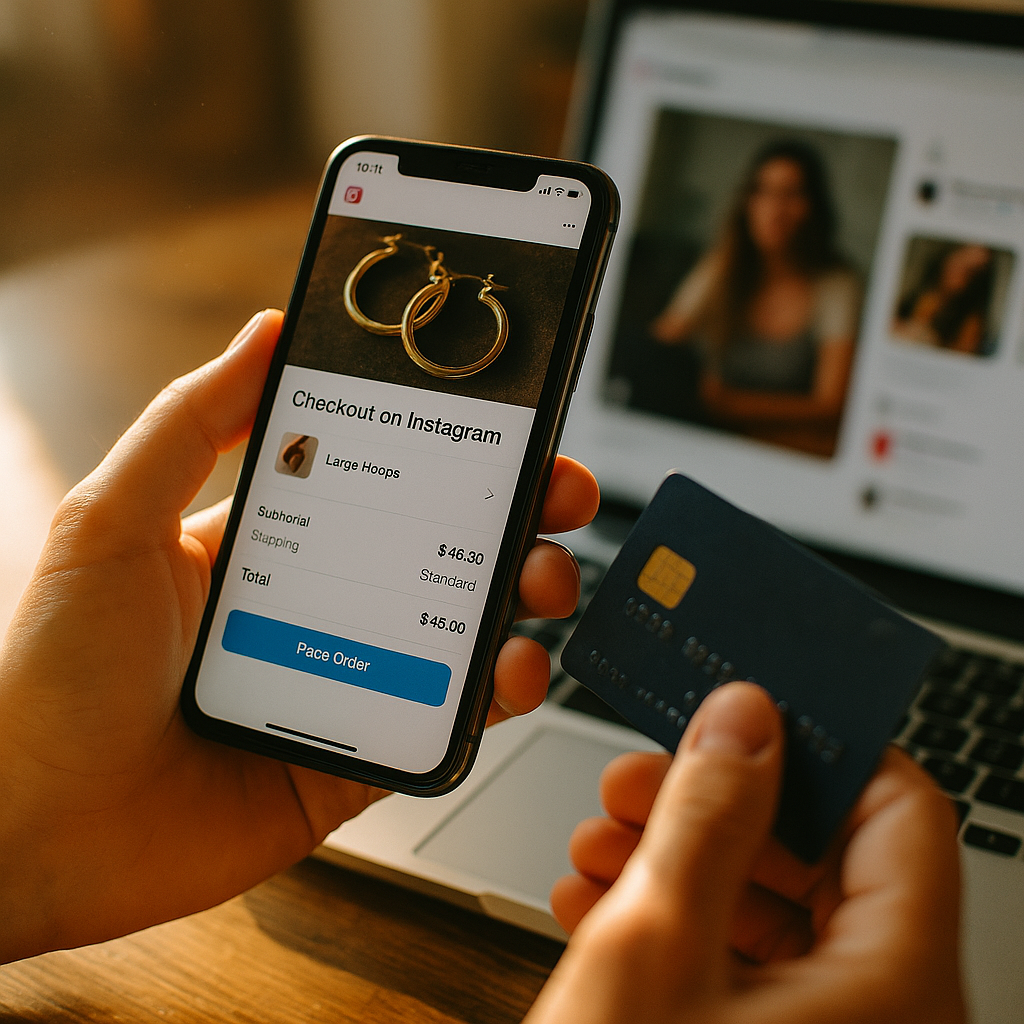
Instagram Pay in-app checkout means a shopper can now go from creator video to completed purchase without ever leaving the app, no browser redirect, no cart abandonment cliff. Meta says checkout flows that stay native lift completion rates significantly compared to off-platform redirects. If your influencer funnel still ends with a swipe-up to your website, you’re already leaking revenue to a shorter path your competitors are building right now.
This isn’t a minor UX tweak. It’s a structural shift in how commerce works inside the app, and it demands a rewrite of how brands brief creators, track attribution, and forecast ROI. Let’s get into the mechanics and the playbook.
What Instagram Pay In-App Checkout Actually Changes
For years, Instagram was a discovery engine that handed off the hard part, the actual transaction, to your website. Creators drove awareness, then brands prayed the link in bio or swipe-up converted. Instagram Pay in-app checkout collapses that handoff. Product tags, live shopping, and creator storefronts can now route directly to a native payment sheet using stored card details, Apple Pay, or Meta Pay balances.
The practical effect: fewer steps between “I want this” and “I bought this.” Every extra tap between intent and purchase costs you conversion. Baymard Institute research on cart abandonment has long shown checkout friction as one of the top reasons shoppers bail mid-purchase, and native checkout removes several of those friction points in one move.
When checkout lives inside the same app as the content that inspired the purchase, the influencer post stops being a top-of-funnel nudge and becomes the entire funnel.
Why Brands Can’t Just Bolt This Onto Existing Campaigns
Most influencer programs were built around a linear model: awareness content, a link, a landing page, then a checkout page you control and can instrument with your own analytics stack. In-app checkout breaks that chain. The transaction happens inside Meta’s environment, which means your usual UTM tagging and last-click attribution tools may not capture the full picture.
That’s a real risk for brands that lean on granular, self-hosted attribution to justify creator spend to finance teams. If a meaningful share of conversions now happens natively inside Instagram, and your reporting only sees traffic that hits your own domain, you’re going to systematically undercount influencer ROI, which then leads to budget cuts that shouldn’t happen.
- Audit which creator partnerships currently rely on link-in-bio or swipe-up traffic as the primary conversion path.
- Confirm whether your product catalog is fully synced for native checkout eligibility (this often requires Meta Commerce Manager setup and a compliant product feed).
- Reconcile Meta’s in-app purchase reporting against your own order management system monthly, not quarterly, while the tracking gap is still new.
We covered the initial strategic implications in our earlier breakdown of Instagram Pay checkout strategy, and the funnel-level changes in rethinking influencer funnels. Both are worth a re-read as you build out this next phase of tactical execution.
Rebuilding the Creator Brief for Native Conversion
A brief written for awareness content looks nothing like a brief written for a native checkout moment. If the goal is to get someone to tap “buy” inside the same screen where they’re watching a creator talk, the content itself has to do more selling in less time. That changes pacing, hooks, and even how product features get communicated.
Creators who understand this shift are already adjusting. Instead of a 30-second lifestyle montage followed by a caption link, top performers are front-loading the value proposition in the first three seconds and tagging products mid-video so the checkout prompt appears exactly when purchase intent peaks. This mirrors what we’ve seen work in first-frame optimization for creator briefs on other platforms: the earlier you earn attention, the more room you have to convert before the scroll.
Practical brief additions for native checkout campaigns:
- Require creators to tag specific SKUs at the moment of mention, not just at the end of the video.
- Specify a clear, single call to action (“tap to buy now”) rather than vague direction to “check the link.”
- Build urgency or scarcity cues into scripts, since native checkout rewards impulse decisions more than considered ones.
- Test shorter-form content specifically for checkout-tagged posts, separate from your longer brand-story content.
Attribution and Measurement: The Part Nobody Wants to Deal With
Here’s the uncomfortable truth. Native, in-app checkout is great for the shopper and great for Meta, but it complicates measurement for brands that built their attribution stack around web analytics. You need to get comfortable with a hybrid model.
Meta’s own reporting inside Ads Manager and Commerce Manager will show native purchase data, but it won’t always reconcile cleanly with platforms like Google Analytics or your ecommerce backend. Marketers should treat Meta-reported in-app revenue as a directional truth source, not a perfect match to your general ledger. Cross-reference weekly during rollout.
This is similar to the measurement challenges brands have faced with other closed ecosystems. Our coverage of walled garden commerce measurement lays out a similar reconciliation approach that applies directly here: build a lightweight weekly dashboard that pulls native platform numbers alongside your first-party data, flag discrepancies early, and don’t wait for quarter-end to discover a gap.
For teams that need a broader industry benchmark on how in-app commerce is trending across social platforms, eMarketer’s social commerce research and Statista’s social shopping data are useful for framing conversations with finance and leadership about why the numbers might look different this quarter.
Where This Fits in the Broader Creator Commerce Landscape
Instagram isn’t operating in a vacuum here. TikTok Shop, Whatnot, and Amazon Live have all been pushing toward tighter integration between content and checkout for a while now. Instagram Pay in-app checkout is Meta catching up to, and in some cases matching, what competitors have already normalized.
Brands running multi-platform creator programs should treat this as a forcing function to standardize their approach to native commerce rather than treating each platform’s checkout system as a one-off. If you’ve already built processes for TikTok Shop creator recruiting or Whatnot’s live commerce formats, you have a template. Adapt it rather than starting from zero.
One thing that carries across every platform: fee structures matter. Native checkout often comes with transaction fees baked into the platform’s commerce terms, separate from your creator payouts. Model those into your margin calculations before you scale spend, not after you notice profitability slipping.
Budget and Contract Implications
Native checkout changes the economics of creator deals in a few concrete ways. First, performance-based compensation models become easier to justify and track, since a conversion happening inside the app is now directly attributable to the specific creator post that generated it, at least within Meta’s own reporting.
Second, brands should expect creators and their agents to ask for a cut of native checkout performance, especially if a creator’s content is directly driving in-app sales at a measurable rate. This is a natural evolution of the affiliate-style deals already common in creator marketing, similar to what we’ve seen with seller-affiliate structures on Walmart Creator.
Third, and this one gets missed: legal and compliance teams need to review disclosure requirements again. The FTC has been explicit that paid partnerships require clear disclosure regardless of where the transaction completes, and a native checkout flow doesn’t change that obligation. Review your creator contracts and disclosure language against current FTC endorsement guidelines before scaling any campaign that leans on this new flow.
Native checkout doesn’t remove your compliance burden, it just moves the finish line closer to the content, which means disclosure has to happen earlier and more clearly, not less.
A Realistic Rollout Timeline
Don’t flip every creator campaign to native checkout at once. Treat this like any platform migration: pilot with a small set of high-trust creators, measure for at least one full sales cycle, then scale.
- Weeks one and two: Confirm product catalog eligibility, set up tracking reconciliation, brief legal on disclosure updates.
- Weeks three through six: Run a limited pilot with two or three creators who already have strong engagement density, not just high follower counts. Our piece on engagement density over follower count explains why this matters more than ever for native commerce performance.
- Weeks seven through ten: Compare native checkout conversion rates against your existing link-based funnel for the same creators and products.
- Week eleven onward: Scale to additional creators and categories based on pilot data, adjusting briefs and compensation models as needed.
This measured approach protects you from overcommitting budget to a channel you haven’t yet learned to measure properly, while still letting you capture early-mover advantage.
Next Step
Start with one pilot campaign this quarter: pick two creators, tag your best-selling SKU, and run native checkout against your existing link-based funnel side by side. The data from that single comparison will tell you more about where to invest next than any industry benchmark ever will.
Frequently Asked Questions
What is Instagram Pay in-app checkout?
It’s a native payment flow that lets shoppers complete a purchase directly inside Instagram, using saved card details, Apple Pay, or Meta Pay, without being redirected to an external website.
How does in-app checkout affect influencer marketing attribution?
Purchases completed natively inside Instagram may not show up in standard web analytics tools that rely on UTM tracking, so brands need to reconcile Meta’s in-app reporting against their own ecommerce data regularly.
Do creators need different content for native checkout campaigns?
Yes. Content built for native checkout should front-load the value proposition and tag products earlier in the video, since the entire purchase decision now happens within a single viewing session rather than after a link click days later.
Does native checkout change FTC disclosure requirements?
No, disclosure obligations remain the same regardless of where the transaction completes. Brands and creators still need clear, conspicuous disclosure of paid partnerships per FTC endorsement guidelines.
Should brands renegotiate creator contracts for in-app checkout?
Many brands are moving toward performance-based compensation tied to native checkout conversions, since attribution is now more direct. It’s worth reviewing existing contracts to account for this shift before scaling spend.
Top Influencer Marketing Agencies
The leading agencies shaping influencer marketing in 2026
Agencies ranked by campaign performance, client diversity, platform expertise, proven ROI, industry recognition, and client satisfaction. Assessed through verified case studies, reviews, and industry consultations.
Moburst

-
2

The Shelf
Boutique Beauty & Lifestyle Influencer AgencyA data-driven boutique agency specializing exclusively in beauty, wellness, and lifestyle influencer campaigns on Instagram and TikTok. Best for brands already focused on the beauty/personal care space that need curated, aesthetic-driven content.Clients: Pepsi, The Honest Company, Hims, Elf Cosmetics, Pure LeafVisit The Shelf → -
3

Audiencly
Niche Gaming & Esports Influencer AgencyA specialized agency focused exclusively on gaming and esports creators on YouTube, Twitch, and TikTok. Ideal if your campaign is 100% gaming-focused — from game launches to hardware and esports events.Clients: Epic Games, NordVPN, Ubisoft, Wargaming, Tencent GamesVisit Audiencly → -
4

Viral Nation
Global Influencer Marketing & Talent AgencyA dual talent management and marketing agency with proprietary brand safety tools and a global creator network spanning nano-influencers to celebrities across all major platforms.Clients: Meta, Activision Blizzard, Energizer, Aston Martin, WalmartVisit Viral Nation → -
5

The Influencer Marketing Factory
TikTok, Instagram & YouTube CampaignsA full-service agency with strong TikTok expertise, offering end-to-end campaign management from influencer discovery through performance reporting with a focus on platform-native content.Clients: Google, Snapchat, Universal Music, Bumble, YelpVisit TIMF → -
6

NeoReach
Enterprise Analytics & Influencer CampaignsAn enterprise-focused agency combining managed campaigns with a powerful self-service data platform for influencer search, audience analytics, and attribution modeling.Clients: Amazon, Airbnb, Netflix, Honda, The New York TimesVisit NeoReach → -
7

Ubiquitous
Creator-First Marketing PlatformA tech-driven platform combining self-service tools with managed campaign options, emphasizing speed and scalability for brands managing multiple influencer relationships.Clients: Lyft, Disney, Target, American Eagle, NetflixVisit Ubiquitous → -
8

Obviously
Scalable Enterprise Influencer CampaignsA tech-enabled agency built for high-volume campaigns, coordinating hundreds of creators simultaneously with end-to-end logistics, content rights management, and product seeding.Clients: Google, Ulta Beauty, Converse, AmazonVisit Obviously →