


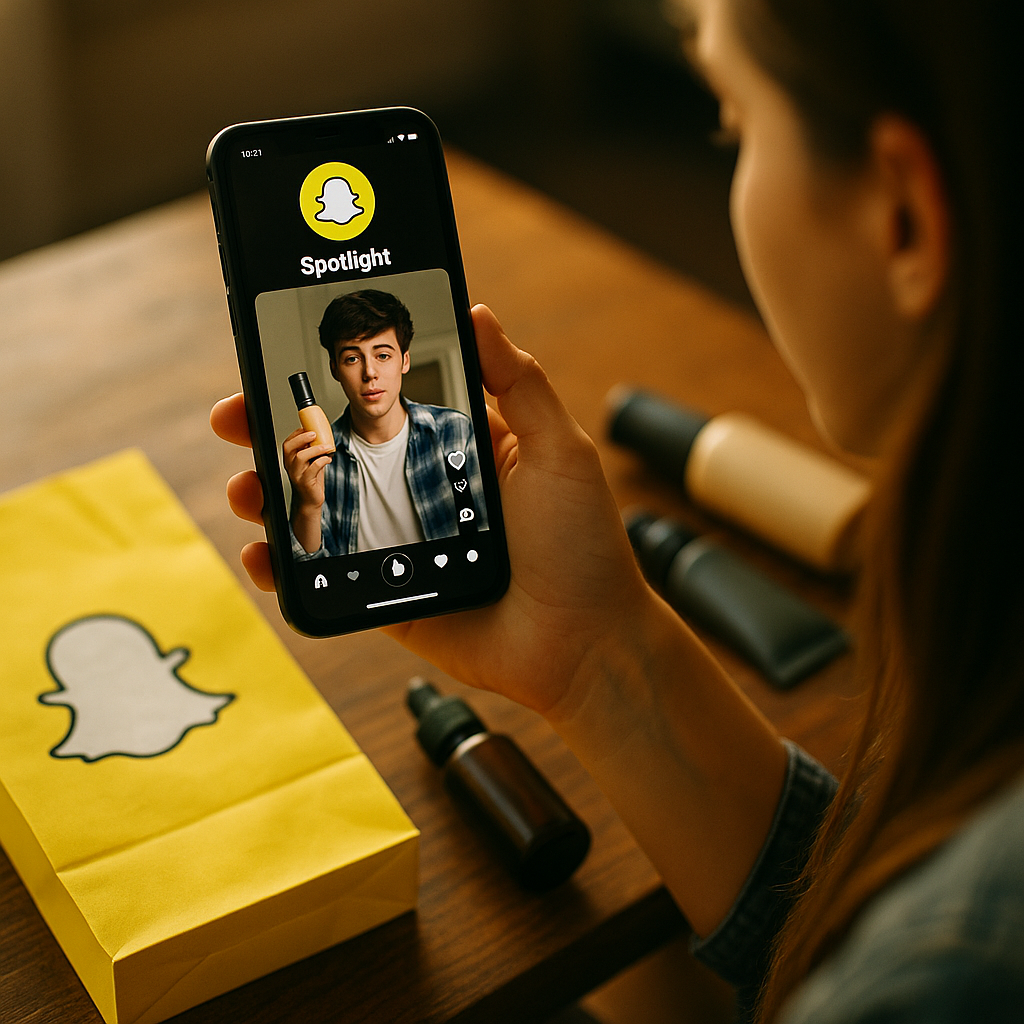
Snapchat quietly pays out tens of millions of dollars a month to Spotlight creators, yet most brands seeding product there still treat it like TikTok with a ghost logo. That’s a mistake. Snapchat Spotlight monetization runs on a fundamentally different model, one that rewards watch time and completion over follower count, and if your seeding strategy doesn’t account for that, you’re wasting budget on the wrong creators.
Why Spotlight Doesn’t Play by TikTok Rules
Spotlight is Snapchat’s algorithmic, sound-on short video feed. It launched with a headline-grabbing “million dollar a day” payout pool in 2020, which has since evolved into a more sustainable, engagement-based revenue share. Creators earn from a pooled fund tied to view duration, completion rate, and originality signals, not a flat CPM like YouTube Shorts or a bonus program tied purely to views like TikTok’s Creator Rewards.
That distinction matters for brands. A creator with 40,000 followers but high completion rates on Spotlight can out-earn (and out-perform for your campaign) a creator with 400,000 followers whose content gets swiped past in two seconds. Snapchat’s own audience skews younger and mobile-first, with the platform reporting hundreds of millions of daily active users, a large share of them Gen Z and younger millennials who are notoriously hard to reach through traditional Instagram or Facebook buys.
On Spotlight, a creator’s payout is a proxy for attention quality. If you’re seeding for reach alone, you’re optimizing for the wrong metric.
How the Payout Model Actually Works
Snapchat doesn’t publish an exact formula (no platform does), but based on creator reporting and Snap’s own guidance, three variables consistently drive earnings:
- Watch time and completion rate: Full or near-full views weigh heavily. A 12-second video watched to the end beats a 60-second video abandoned at 15 seconds.
- Originality: Snap has been explicit about deprioritizing reposted or watermarked content from other platforms. Native Spotlight content performs better and earns more.
- Engagement signals: Shares, saves, and replays feed the ranking algorithm, which in turn affects distribution and, indirectly, pool eligibility.
This means brands seeding product for Spotlight need creators who understand the platform’s native grammar, not just repurposed TikTok cuts with the watermark cropped out. If your influencer is uploading the exact same file across five platforms, Spotlight will likely suppress it, and your seeding spend delivers a fraction of the reach you modeled.
What “Seeding” Actually Means Here
Seeding on Spotlight typically looks like product gifting, early access, or small flat fees in exchange for organic-style content, with the creator keeping any Spotlight bonus payout on top. That’s the appeal for brands: you’re not funding the entire economics of the video. Snap is. Your job is to pick creators whose content style is likely to earn well on the platform’s own terms, because that alignment is what turns a seeding relationship into a repeatable, low-cost content pipeline.
The mistake most brands make is treating Spotlight seeding like a scaled-down version of a paid partnership. It isn’t. You’re not paying for guaranteed views. You’re subsidizing a creator’s experimentation cost in exchange for authentic-feeling content that might earn algorithmic reach on its own. That changes how you should structure briefs, contracts, and success metrics.
Vet for Native Fluency, Not Just Niche Fit
Before seeding, pull a creator’s last 10 to 15 Spotlight posts (not their TikTok or Reels history) and check completion-friendly pacing: fast hooks, vertical framing shot natively, captions burned in for sound-off viewers who still browse Snapchat quietly at work or school. Creators who consistently rank on Spotlight’s explore surfaces tend to have a repeatable structural pattern. That pattern is worth more to your seeding ROI than raw follower count.
This is similar to the shift brands have had to make across the creator economy generally, where engagement density now outranks follower count as the signal that actually predicts campaign performance. Spotlight just makes that dynamic explicit because the platform literally pays based on it.
Compliance Still Applies, Even for “Free” Product Seeding
Here’s where a lot of marketing teams get sloppy. Because Spotlight seeding often involves product gifting rather than a cash fee, some brands assume disclosure rules don’t apply. They do. The FTC’s endorsement guidance covers any material connection between a brand and a creator, gifted product included. If Snap or a regulator finds undisclosed sponsored content dressed up as organic Spotlight video, the brand carries reputational and legal exposure, not just the creator.
Build disclosure language into your seeding agreements even for low-value gifting. It’s a five-minute contract addition that avoids a much messier cleanup later. Brands running influencer programs across multiple platforms should already have a standardized disclosure clause; if you don’t, this is a good moment to write one, because the same logic applies to branded content labeling requirements that regulators increasingly expect across short-form video generally.
Budgeting: What Should You Actually Pay?
Since Snap subsidizes part of the creator’s earnings through the Spotlight pool, brands can often negotiate lower upfront fees than they’d pay for equivalent TikTok or Reels content, especially with micro and mid-tier creators (10,000 to 150,000 followers) who see Spotlight bonus income as meaningful supplemental revenue. A reasonable starting structure:
- Nano and micro creators: Product plus a modest flat fee ($50 to $250), positioned as a seeding relationship rather than a full paid partnership.
- Mid-tier creators (50k to 250k): Flat fee in the $300 to $900 range depending on production complexity, plus usage rights if you want to repurpose the content in paid social.
- Established Spotlight creators with proven bonus history: Treat this closer to a standard influencer deal, since these creators have leverage and know their earning potential on the platform.
Track performance not just by views but by completion rate and Spotlight ranking placement, since those are the metrics that predict whether your seeded content will keep earning organic reach after the initial push. Data from eMarketer continues to show younger audiences spending disproportionate time on ephemeral, vertical video formats, which is part of why Spotlight seeding remains cheap relative to its reach potential, for now.
Where Spotlight Fits in a Multi-Platform Creator Strategy
No brand should build a program around Spotlight alone. It’s a supplementary channel, valuable precisely because it’s cheaper and less saturated than TikTok or Instagram Reels for brand content right now. Think of it as a testing ground: creators who succeed on Spotlight with native-feeling content often translate that same instinct to other short-form platforms, giving you a signal for who’s worth a bigger investment elsewhere.
This mirrors a pattern brands have seen with other emerging or underpriced platforms. The early movers into Snapchat’s creator marketplace generally captured cheaper Gen Z reach before the platform matured and rates rose. The same logic applies to Spotlight seeding today: the arbitrage window exists because most brands still don’t understand the payout mechanics well enough to seed strategically.
If you’re running a broader influencer mix across gifting, affiliate, and paid partnerships, Spotlight seeding slots naturally into the gifting tier of your program, similar in structure to what brands are doing with micro influencer onboarding at scale, where the goal is volume and authenticity over polish and reach guarantees.
Common Pitfalls to Avoid
- Reposting cross-platform content: Spotlight’s algorithm penalizes watermarked or previously published video. Insist on native uploads.
- Overpaying based on follower count: Follower count doesn’t predict Spotlight performance the way it does on Instagram. Ask for completion rate data instead.
- Skipping disclosure on gifted product: Free product still counts as a material connection under FTC rules.
- Ignoring usage rights: If you want to repurpose Spotlight content in paid ads, negotiate that upfront, not after the video performs well.
- Treating it as a set-and-forget channel: Spotlight’s algorithm and payout structure shift periodically. What worked for seeding six months ago may need recalibration.
Tools like Sprout Social and standard influencer platform dashboards can help track Spotlight performance alongside your other channels, though be aware that Snap’s native analytics remain less robust than TikTok’s or YouTube’s creator studio, so manual tracking of completion rates is often still necessary.
The Bottom Line for Budget Owners
Spotlight seeding is one of the few remaining low-cost, high-upside plays in short-form video marketing, but only if you understand that the platform pays for attention quality, not reach. Brief creators for native pacing, verify disclosure compliance, and benchmark success against completion rate rather than vanity view counts. Do that, and Spotlight becomes a genuinely efficient line item in a diversified creator budget rather than a speculative bet.
FAQs
What is Snapchat Spotlight monetization?
Snapchat Spotlight monetization is the revenue-sharing system where Snap pays creators from a pooled bonus fund based on watch time, completion rate, and originality signals, rather than a flat rate per view.
Do brands pay creators directly for Spotlight content, or does Snap cover it?
Both. Snap pays creators through its bonus pool based on organic performance, while brands typically pay a separate, often smaller, seeding fee or provide product in exchange for content creation and posting rights.
Does gifted product still require an FTC disclosure on Spotlight?
Yes. Any material connection between a brand and a creator, including free product, requires disclosure under FTC endorsement guidelines, regardless of whether cash changed hands.
How is Spotlight different from TikTok Creator Rewards for brand seeding?
TikTok’s rewards program leans more heavily on view count and video length thresholds, while Spotlight weighs completion rate and originality more heavily, meaning short, tightly edited native content tends to perform better on Snap.
What size creators are best for Spotlight seeding budgets?
Micro and mid-tier creators (roughly 10,000 to 250,000 followers) typically offer the best cost-to-performance ratio, since they’re motivated by supplemental Spotlight bonus income and often produce more native-feeling content than larger creators.
Can brands reuse Spotlight content in paid social campaigns?
Only if usage rights are negotiated in the seeding agreement upfront. Without explicit terms, brands should assume they cannot repurpose creator content beyond the original organic post.
Top Influencer Marketing Agencies
The leading agencies shaping influencer marketing in 2026
Agencies ranked by campaign performance, client diversity, platform expertise, proven ROI, industry recognition, and client satisfaction. Assessed through verified case studies, reviews, and industry consultations.
Moburst

-
2

The Shelf
Boutique Beauty & Lifestyle Influencer AgencyA data-driven boutique agency specializing exclusively in beauty, wellness, and lifestyle influencer campaigns on Instagram and TikTok. Best for brands already focused on the beauty/personal care space that need curated, aesthetic-driven content.Clients: Pepsi, The Honest Company, Hims, Elf Cosmetics, Pure LeafVisit The Shelf → -
3

Audiencly
Niche Gaming & Esports Influencer AgencyA specialized agency focused exclusively on gaming and esports creators on YouTube, Twitch, and TikTok. Ideal if your campaign is 100% gaming-focused — from game launches to hardware and esports events.Clients: Epic Games, NordVPN, Ubisoft, Wargaming, Tencent GamesVisit Audiencly → -
4

Viral Nation
Global Influencer Marketing & Talent AgencyA dual talent management and marketing agency with proprietary brand safety tools and a global creator network spanning nano-influencers to celebrities across all major platforms.Clients: Meta, Activision Blizzard, Energizer, Aston Martin, WalmartVisit Viral Nation → -
5

The Influencer Marketing Factory
TikTok, Instagram & YouTube CampaignsA full-service agency with strong TikTok expertise, offering end-to-end campaign management from influencer discovery through performance reporting with a focus on platform-native content.Clients: Google, Snapchat, Universal Music, Bumble, YelpVisit TIMF → -
6

NeoReach
Enterprise Analytics & Influencer CampaignsAn enterprise-focused agency combining managed campaigns with a powerful self-service data platform for influencer search, audience analytics, and attribution modeling.Clients: Amazon, Airbnb, Netflix, Honda, The New York TimesVisit NeoReach → -
7

Ubiquitous
Creator-First Marketing PlatformA tech-driven platform combining self-service tools with managed campaign options, emphasizing speed and scalability for brands managing multiple influencer relationships.Clients: Lyft, Disney, Target, American Eagle, NetflixVisit Ubiquitous → -
8

Obviously
Scalable Enterprise Influencer CampaignsA tech-enabled agency built for high-volume campaigns, coordinating hundreds of creators simultaneously with end-to-end logistics, content rights management, and product seeding.Clients: Google, Ulta Beauty, Converse, AmazonVisit Obviously →