


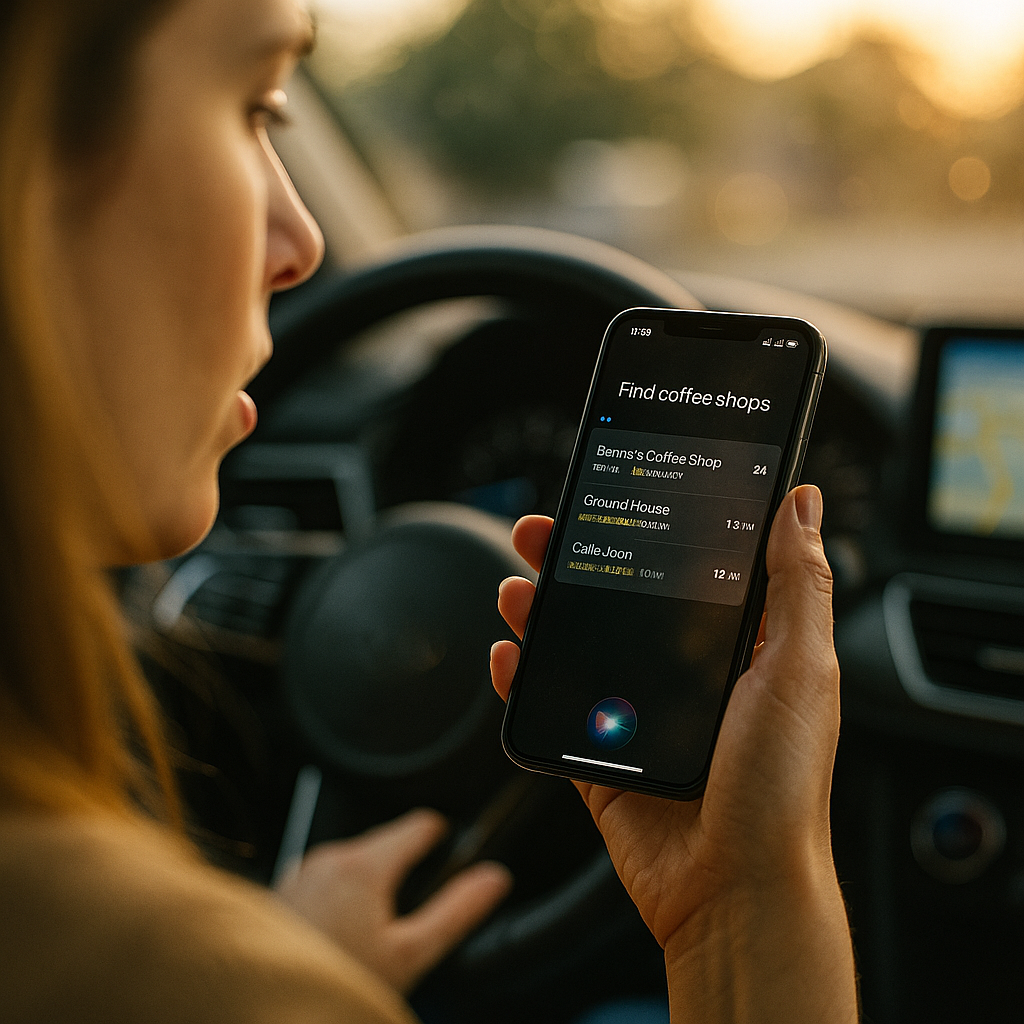
Apple is now capping how many AI-powered queries Siri can process per user, per day. If that sentence made you sit up, it should. For years, brands have been told voice search is the next frontier for discovery, the channel where “conversational queries” would finally reward the businesses with the cleanest structured data. Siri’s usage caps just put a hard ceiling on that theory, and they expose a problem marketers have been avoiding: voice search brand discovery was never as scalable as the hype suggested.
What’s Actually Happening With Siri’s Caps
Apple has quietly rolled out daily and session based limits on Siri’s new AI capabilities, the ones built on the Apple Intelligence stack and, for more complex queries, routed through partnerships like the one with OpenAI. Once a user hits the cap, Siri either falls back to its older, non generative responses or simply declines the request until the next reset window.
Apple hasn’t published exact numbers publicly, but developer forums and enterprise IT teams have reported caps that feel restrictive for anyone using Siri as a genuine research tool rather than a timer and weather app. The company’s stated reason is compute cost and server load management, the same justification OpenAI, Google, and Anthropic have all used at various points for rate limiting their own consumer tools.
This is not a bug. It’s a business decision. Running large language model inference at the scale of every iPhone user asking “what’s the best running shoe for flat feet” is expensive, and Apple, like every other AI vendor, is discovering that generative answers cost real money per query. Statista’s compute cost tracking has shown inference expenses climbing even as model efficiency improves, because usage volume is growing faster than the savings.
If the world’s most cash rich tech company is rationing AI queries to control cost, no brand should be building a discovery strategy that assumes unlimited, always on conversational access.
Why Voice Search Was Always a Shakier Bet Than It Looked
Voice search for brand discovery has been oversold since the smart speaker boom. Marketers built entire content strategies around “answer the question” optimization, assuming Siri, Alexa, and Google Assistant would become primary discovery surfaces. The caps confirm what usage data has quietly shown for a while: voice interactions skew toward simple, transactional tasks (set a reminder, play a song, check the weather), not open ended product research.
Compare that to how people actually research purchases now. They’re typing into ChatGPT, Perplexity, or Google’s AI Overviews, not asking Siri to compare mattress brands out loud. Text based AI search has become the real discovery layer, and it’s the one brands should be optimizing for. Our coverage of zero click search behavior shows this shift is already reshaping how marketers measure visibility, and voice was never central to that conversation to begin with.
There’s also a structural reason voice underperforms as a discovery channel: it’s audio only, single answer, and low patience. A user asking Siri for a product recommendation gets one response, maybe two if they follow up, with no visual comparison, no reviews scrolling, no images. Text based AI search interfaces (ChatGPT, Perplexity, Copilot) present multiple options, cite sources, and let users dig deeper. That richer format is where consideration actually happens, and it’s where GEO (generative engine optimization) investment belongs.
The Cap Problem Compounds an Existing Trust Gap
Marketers already struggle to prove ROI on any AI powered channel. Add usage caps into the mix and you get a discovery surface that’s inconsistent by design: a user might get a rich, AI generated answer about your brand one day and a stripped down, non generative response the next, depending on how many queries they’ve already burned. That’s an attribution nightmare on top of an already thin one. Our piece on proving ROI in AI influenced channels covers just how far behind measurement infrastructure is compared to adoption speed, and voice adds another layer of noise.
This Isn’t Just Apple. It’s the Whole AI Stack.
Siri’s caps are the most visible example, but they’re part of a broader pattern of AI providers rationing compute as usage scales. OpenAI has adjusted rate limits on ChatGPT tiers multiple times. Google has throttled certain AI Overview features in high volume categories. Anthropic has capped Claude usage for free and even paid tiers during peak load. The lesson for brand marketers: every AI surface you’re optimizing for has a ceiling, and that ceiling can move without warning.
This matters more than it sounds. If your GEO strategy assumes stable, unlimited access to a given AI assistant, you’re building on sand. Platforms will keep adjusting caps, model routing, and even which queries trigger generative responses versus traditional search results, based purely on their own cost economics, not your content strategy.
We’ve seen this play out already with agentic commerce tools. Our reporting on agentic checkout eroding click paths and how shopping bots select brands based on data, not ad spend both point to the same underlying truth: AI mediated discovery is volatile, vendor controlled, and resistant to the kind of paid influence marketers are used to buying.
What Brands Should Actually Do About It
Stop treating voice as a standalone channel and start treating it as one output of a much broader entity and structured data strategy. Siri, Alexa, and Google Assistant all pull from the same underlying signals that feed AI Overviews, ChatGPT, and Perplexity: structured data, review volume, schema markup, and consistent entity information across the web. Fix the foundation, and every surface benefits, voice included, without over investing in a channel Apple itself is rationing.
- Audit your entity data. Inconsistent business listings, outdated schema, and mismatched NAP (name, address, phone) data actively hurt your chances of being surfaced by any AI assistant. Tools like clean entity data infrastructure matter more here than voice specific SEO tricks.
- Prioritize text based GEO over voice specific optimization. Structure content for how ChatGPT, Perplexity, and AI Overviews actually cite sources: clear claims, cited data, direct answers near the top of the page.
- Diversify your AI discovery footprint. Don’t over index on any single assistant. Apple’s caps today could be OpenAI’s rate limits tomorrow. Spread your structured data and citation efforts across platforms rather than betting on one horse.
- Build measurement that accounts for assisted, not just last click, influence. Our breakdown of assisted conversion tracking for AI chatbots is a useful model for adapting attribution to fragmented, capped discovery surfaces.
- Watch for compliance exposure. As AI assistants generate more branded content, the disclosure and accuracy questions get murkier. The FTC’s guidance on endorsements and advertising is a good baseline to keep in view as these tools evolve.
Budget Implications: Don’t Overfund a Rationed Channel
If you’ve earmarked budget specifically for “voice SEO” consultants or smart speaker skill development, it’s worth reconsidering that line item. The ROI case was thin even before caps; now it’s thinner. Redirect that spend toward the structured data, entity management, and GEO fundamentals that benefit every AI surface simultaneously, including whatever voice interaction survives the current cap regime. Reports from eMarketer’s ongoing AI adoption tracking continue to show text based AI search growing far faster than voice assistant usage for research tasks, which should inform where the next budget cycle goes.
There’s also an operational efficiency angle here. Teams juggling separate strategies for voice, chat, and traditional search are duplicating effort for diminishing returns. Consolidating into a single entity and structured data strategy, one that happens to also serve voice, is the more defensible use of a marketing team’s time, especially with the kind of compliance and adoption gaps flagged in our coverage of AI compliance lagging behind adoption.
FAQs
Why is Apple capping Siri’s AI usage?
Apple has cited server load and compute cost as the primary reasons for limiting how many AI powered queries Siri can process per user. Generative responses cost significantly more to run than Siri’s older, rules based answers, and Apple is managing that expense at scale across hundreds of millions of devices.
Does this mean voice search is dead for brand discovery?
Not dead, but diminished as a standalone strategy. Voice remains useful for simple, transactional queries, but complex brand research and comparison shopping is happening far more on text based AI tools like ChatGPT and Perplexity, which don’t face the same physical, single answer constraints as voice interfaces.
How should brands adjust their AI search strategy because of Siri’s caps?
Shift investment away from voice specific optimization and toward broader generative engine optimization (GEO): clean entity data, structured schema, and content built to be cited by AI systems generally. That foundation benefits voice, chat, and AI Overview surfaces at once, rather than betting on any single capped channel.
Are other AI platforms likely to introduce similar usage caps?
Very likely. OpenAI, Google, and Anthropic have all adjusted rate limits on their consumer AI products as usage has scaled. Any brand strategy that assumes unlimited, stable access to a given AI assistant should be considered high risk.
What’s the ROI risk of over investing in voice search optimization right now?
The main risk is sunk cost in a channel with capped, inconsistent access and no reliable attribution model. Budget is better spent on entity data cleanup and text based GEO strategies that serve multiple AI surfaces simultaneously and have clearer measurement paths.
The takeaway is simple: stop building brand discovery bets on any single AI assistant’s goodwill. Fix your entity data and structured content once, and let it serve voice, chat, and search alike, because the caps aren’t going away, and the next one might not come with a warning.
Top Influencer Marketing Agencies
The leading agencies shaping influencer marketing in 2026
Agencies ranked by campaign performance, client diversity, platform expertise, proven ROI, industry recognition, and client satisfaction. Assessed through verified case studies, reviews, and industry consultations.
Moburst

-
2

The Shelf
Boutique Beauty & Lifestyle Influencer AgencyA data-driven boutique agency specializing exclusively in beauty, wellness, and lifestyle influencer campaigns on Instagram and TikTok. Best for brands already focused on the beauty/personal care space that need curated, aesthetic-driven content.Clients: Pepsi, The Honest Company, Hims, Elf Cosmetics, Pure LeafVisit The Shelf → -
3

Audiencly
Niche Gaming & Esports Influencer AgencyA specialized agency focused exclusively on gaming and esports creators on YouTube, Twitch, and TikTok. Ideal if your campaign is 100% gaming-focused — from game launches to hardware and esports events.Clients: Epic Games, NordVPN, Ubisoft, Wargaming, Tencent GamesVisit Audiencly → -
4

Viral Nation
Global Influencer Marketing & Talent AgencyA dual talent management and marketing agency with proprietary brand safety tools and a global creator network spanning nano-influencers to celebrities across all major platforms.Clients: Meta, Activision Blizzard, Energizer, Aston Martin, WalmartVisit Viral Nation → -
5

The Influencer Marketing Factory
TikTok, Instagram & YouTube CampaignsA full-service agency with strong TikTok expertise, offering end-to-end campaign management from influencer discovery through performance reporting with a focus on platform-native content.Clients: Google, Snapchat, Universal Music, Bumble, YelpVisit TIMF → -
6

NeoReach
Enterprise Analytics & Influencer CampaignsAn enterprise-focused agency combining managed campaigns with a powerful self-service data platform for influencer search, audience analytics, and attribution modeling.Clients: Amazon, Airbnb, Netflix, Honda, The New York TimesVisit NeoReach → -
7

Ubiquitous
Creator-First Marketing PlatformA tech-driven platform combining self-service tools with managed campaign options, emphasizing speed and scalability for brands managing multiple influencer relationships.Clients: Lyft, Disney, Target, American Eagle, NetflixVisit Ubiquitous → -
8

Obviously
Scalable Enterprise Influencer CampaignsA tech-enabled agency built for high-volume campaigns, coordinating hundreds of creators simultaneously with end-to-end logistics, content rights management, and product seeding.Clients: Google, Ulta Beauty, Converse, AmazonVisit Obviously →