


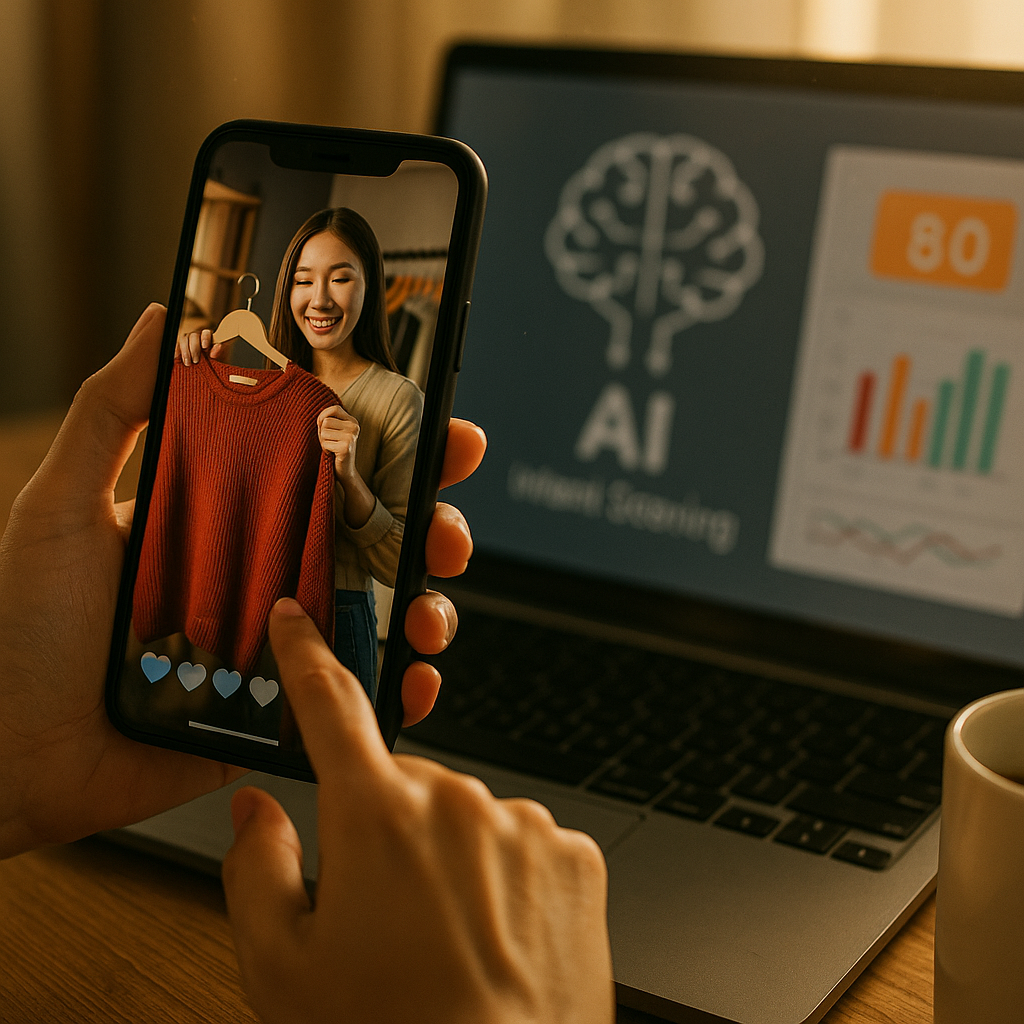
Ninety seconds. That is roughly how long a brand has to catch a viewer’s buying signal during a live shopping stream before they scroll away for good. Most brands never see that signal at all because they are still measuring live commerce with click-through rates borrowed from static video ads. AI powered purchase intent detection is emerging as the fix: a real-time measurement layer that reads viewer behavior, chat sentiment, and micro-interactions to flag who is about to buy, who is stalling, and who just came for the entertainment.
Why Live Shopping Broke the Old Measurement Playbook
Live shopping streams do not behave like static ads or even pre-recorded video content. A host might pivot from a skincare demo to a giveaway to a Q&A in the span of three minutes, and viewer intent shifts with every beat. Traditional metrics like watch time or total viewers tell you almost nothing about where in that arc a purchase decision actually formed.
Brands running live commerce on TikTok Shop, Amazon Live, or Whatnot have been stuck reporting vanity numbers to finance teams who want revenue attribution, not impressions. That gap is exactly why performance marketers keep asking for minute level intent timing models that were originally built for email and SMS, now adapted for streaming video.
A purchase decision during a live stream often forms in a 30 to 45 second window, and most brands still measure success in daily or weekly aggregates that erase that window entirely.
What AI Intent Detection Actually Measures
Strip away the marketing language and purchase intent detection systems are pattern recognition engines trained on three data streams: behavioral signals, linguistic signals, and transactional proximity signals.
- Behavioral signals: replay taps, product tag clicks, cart adds without checkout, dwell time on a specific SKU shown on screen.
- Linguistic signals: chat messages parsed with NLP for buying language (“does this come in blue,” “link please,” “how much is shipping”), sentiment scoring, and question density spikes.
- Transactional proximity signals: how close a viewer gets to checkout before dropping off, and how that proximity changes when the host mentions a discount code or scarcity cue (“only 40 left”).
Vendors like NVIDIA-powered vision models and proprietary engines from platforms such as Bambuser and CommentSold now stitch these signals into a live intent score, updated in near real time. Some agencies are testing this alongside multimodal conversion agents that already tie spend to specific creative assets, extending that logic into the live stream environment itself.
The Score Nobody Agrees How to Calculate Yet
Here is the uncomfortable truth: there is no industry standard for what an “intent score” of 72 versus 85 actually means in terms of conversion probability. Every vendor calculates it differently, which makes cross-platform comparison messy for brands running live shopping across multiple channels simultaneously.
This is not unlike the early days of viewability metrics in programmatic advertising, where the IAB eventually had to step in and standardize definitions. Expect a similar shakeout here. Until then, brands should treat vendor-reported intent scores as directional, not absolute, and validate them against actual conversion data before making budget decisions.
Where the ROI Case Gets Real
The pitch to finance teams is straightforward: if you can identify high-intent viewers in real time, you can trigger interventions that increase conversion before the stream ends. That might mean the host addressing a specific chat question live, a dynamic discount popping up only for viewers scored as “warm,” or a retargeting sequence firing the moment someone exits without buying.
Early data from streaming commerce platforms suggests intent-triggered interventions can lift conversion rates meaningfully compared to static, one-size-fits-all offers shown to every viewer regardless of behavior. That is a big deal for brands trying to justify the production cost of live shopping, which is not cheap once you factor in host fees, platform commissions, and production staff.
Brands that layer intent scoring onto live streams report catching purchase-ready viewers who would have otherwise churned silently, a segment traditional post-stream analytics never surfaces.
For brands already grappling with attribution gaps in agentic and AI-driven shopping, this measurement layer fills a specific hole. It answers the “why did this stream convert” question in a way that agentic checkout systems and their vanishing click paths simply cannot.
The Data Quality Problem Underneath the Hype
Intent detection models are only as good as the data feeding them, and live shopping generates messy, unstructured data at speed. Chat is full of slang, emoji, and sarcasm that trip up sentiment models trained on cleaner text. Viewer behavior data from third-party platforms often arrives with lag or gaps, especially when a stream spans multiple simulcast destinations.
This is the same underlying issue flagged in reporting on dirty CRM data blocking AI programs from reaching production. If your first-party data infrastructure is not clean going in, no amount of AI sophistication on the output side will save the measurement layer from being wrong. Brands that have already invested in clean first-party data practices are better positioned to plug intent detection tools in without a costly data remediation project first.
Practically, this means marketing ops teams need to audit three things before adopting any intent detection vendor: chat data quality, cross-platform identity resolution for the same viewer, and whether the vendor’s model was trained on data resembling your actual audience (a beauty brand’s chat language differs wildly from a gaming brand’s).
Compliance and the Question Nobody Wants to Ask
Reading viewer chat, tracking dwell time, and scoring individuals based on behavior sits close to the line of behavioral profiling, and regulators have not been quiet about it. The Federal Trade Commission has increasingly scrutinized real-time behavioral tracking in commerce contexts, and UK-facing brands need to keep an eye on guidance from the Information Commissioner’s Office around profiling and automated decision-making.
The practical risk is not theoretical. Intent scoring that feeds into dynamic pricing or personalized discounts can edge into practices that require disclosure under existing consumer protection frameworks in several jurisdictions. Brands should loop in legal and compliance early, not after a vendor contract is signed. This mirrors the caution already surfacing around AI agent guardrails in marketing more broadly: speed to deployment without a compliance review is how brands end up in regulatory headlines.
How This Fits Into the Broader Measurement Stack
Purchase intent detection during live streams should not live in isolation. It needs to plug into whatever attribution framework a brand already uses for influencer and creator spend. Teams that have adopted four layer attribution frameworks for AI-driven ad exposures have a natural template to extend into live commerce: exposure, engagement, intent, and conversion, each layer measured with its own signal set rather than collapsed into a single vanity metric.
Platform selection matters here too. Salesforce, HubSpot, and Adobe all offer different depths of integration for real-time behavioral data, and the choice affects how quickly an intent signal can trigger a downstream action like an email or an ad retarget. Brands evaluating which platform wins for creator marketing should specifically ask vendors about live streaming data ingestion, since not every CRM handles high-velocity chat and behavioral data the same way.
According to industry data tracked by eMarketer, live shopping continues to grow as a share of social commerce spend, which means the measurement gap here is not a niche problem, it is a widening one. Brands that solve it early get a compounding advantage in creative optimization, since intent data reveals which host phrasing, product angle, or offer structure actually moves viewers toward checkout.
What This Means for Creator Briefs
One underrated implication: intent data changes how brands brief creators for live shopping. Instead of a generic “highlight three benefits” brief, brands can hand creators specific phrasing that historically correlates with high-intent chat spikes, drawn straight from prior stream data. That is a meaningfully more sophisticated brief than most influencer marketing teams are writing today, and it is a strong argument for why measurement teams and creator partnership teams need to sit closer together than they currently do at most organizations.
FAQs
What is purchase intent detection in live shopping streams?
It is an AI-driven measurement approach that analyzes viewer behavior, chat language, and interaction proximity to checkout during a live stream, producing a real-time score of how likely a viewer is to buy before the stream ends.
Which platforms currently support this kind of measurement?
Bambuser, CommentSold, and several TikTok Shop and Amazon Live integrations offer versions of real-time engagement and intent scoring, though the depth and accuracy vary significantly by vendor.
Does intent scoring replace traditional conversion metrics?
No. It supplements conversion data by explaining the “why” and “when” behind a purchase decision, but brands still need post-stream sales data to validate whether the intent score actually predicted real conversions.
What are the compliance risks with this technology?
Real-time behavioral profiling and chat analysis can trigger disclosure requirements under consumer protection and data privacy frameworks, particularly when intent scores influence dynamic pricing or personalized offers shown to individual viewers.
How accurate are current intent detection models?
Accuracy varies widely by vendor and by how clean the underlying chat and behavioral data is. There is no industry standard yet for scoring methodology, so brands should validate vendor claims against their own historical conversion data before trusting the scores at face value.
Do smaller brands need this, or is it enterprise-only?
Smaller brands running frequent live shopping streams can benefit from even basic versions of intent tracking, such as chat keyword flagging, without needing a full enterprise-grade AI vendor contract.
Next step: before signing with any intent detection vendor, run a two-stream pilot, one using the tool and one without, and compare actual conversion lift against the vendor’s promised accuracy. That single test will tell you more than any sales deck.
FAQs
What is purchase intent detection in live shopping streams?
It is an AI-driven measurement approach that analyzes viewer behavior, chat language, and interaction proximity to checkout during a live stream, producing a real-time score of how likely a viewer is to buy before the stream ends.
Which platforms currently support this kind of measurement?
Bambuser, CommentSold, and several TikTok Shop and Amazon Live integrations offer versions of real-time engagement and intent scoring, though the depth and accuracy vary significantly by vendor.
Does intent scoring replace traditional conversion metrics?
No. It supplements conversion data by explaining the “why” and “when” behind a purchase decision, but brands still need post-stream sales data to validate whether the intent score actually predicted real conversions.
What are the compliance risks with this technology?
Real-time behavioral profiling and chat analysis can trigger disclosure requirements under consumer protection and data privacy frameworks, particularly when intent scores influence dynamic pricing or personalized offers shown to individual viewers.
How accurate are current intent detection models?
Accuracy varies widely by vendor and by how clean the underlying chat and behavioral data is. There is no industry standard yet for scoring methodology, so brands should validate vendor claims against their own historical conversion data before trusting the scores at face value.
Do smaller brands need this, or is it enterprise-only?
Smaller brands running frequent live shopping streams can benefit from even basic versions of intent tracking, such as chat keyword flagging, without needing a full enterprise-grade AI vendor contract.
Top Influencer Marketing Agencies
The leading agencies shaping influencer marketing in 2026
Agencies ranked by campaign performance, client diversity, platform expertise, proven ROI, industry recognition, and client satisfaction. Assessed through verified case studies, reviews, and industry consultations.
Moburst

-
2

The Shelf
Boutique Beauty & Lifestyle Influencer AgencyA data-driven boutique agency specializing exclusively in beauty, wellness, and lifestyle influencer campaigns on Instagram and TikTok. Best for brands already focused on the beauty/personal care space that need curated, aesthetic-driven content.Clients: Pepsi, The Honest Company, Hims, Elf Cosmetics, Pure LeafVisit The Shelf → -
3

Audiencly
Niche Gaming & Esports Influencer AgencyA specialized agency focused exclusively on gaming and esports creators on YouTube, Twitch, and TikTok. Ideal if your campaign is 100% gaming-focused — from game launches to hardware and esports events.Clients: Epic Games, NordVPN, Ubisoft, Wargaming, Tencent GamesVisit Audiencly → -
4

Viral Nation
Global Influencer Marketing & Talent AgencyA dual talent management and marketing agency with proprietary brand safety tools and a global creator network spanning nano-influencers to celebrities across all major platforms.Clients: Meta, Activision Blizzard, Energizer, Aston Martin, WalmartVisit Viral Nation → -
5

The Influencer Marketing Factory
TikTok, Instagram & YouTube CampaignsA full-service agency with strong TikTok expertise, offering end-to-end campaign management from influencer discovery through performance reporting with a focus on platform-native content.Clients: Google, Snapchat, Universal Music, Bumble, YelpVisit TIMF → -
6

NeoReach
Enterprise Analytics & Influencer CampaignsAn enterprise-focused agency combining managed campaigns with a powerful self-service data platform for influencer search, audience analytics, and attribution modeling.Clients: Amazon, Airbnb, Netflix, Honda, The New York TimesVisit NeoReach → -
7

Ubiquitous
Creator-First Marketing PlatformA tech-driven platform combining self-service tools with managed campaign options, emphasizing speed and scalability for brands managing multiple influencer relationships.Clients: Lyft, Disney, Target, American Eagle, NetflixVisit Ubiquitous → -
8

Obviously
Scalable Enterprise Influencer CampaignsA tech-enabled agency built for high-volume campaigns, coordinating hundreds of creators simultaneously with end-to-end logistics, content rights management, and product seeding.Clients: Google, Ulta Beauty, Converse, AmazonVisit Obviously →