


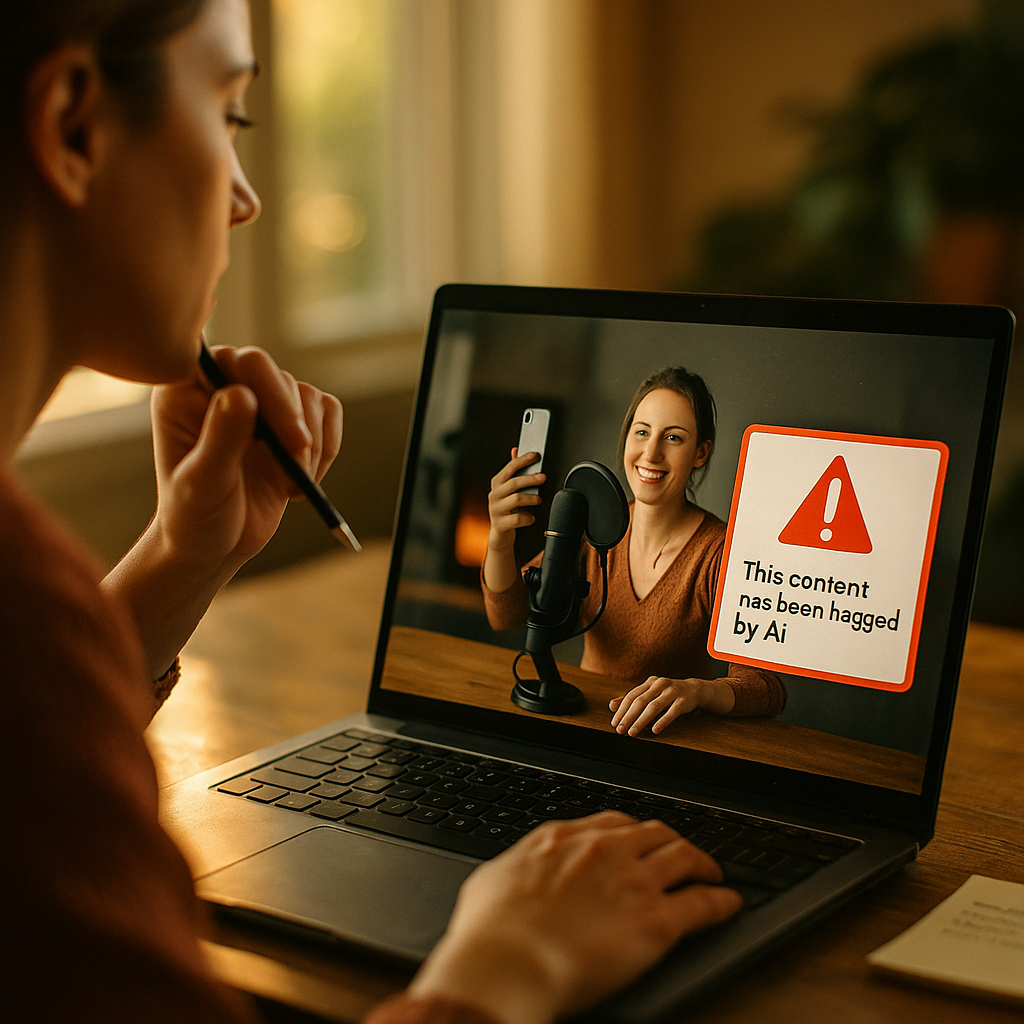
Ninety five percent of creators now use AI somewhere in their content workflow, yet most brands still discover a problem post only after a follower screenshots it. That gap between creation and review is where budgets, reputations, and FTC compliance quietly go to die. Content quality screening AI exists to close it, scanning creator drafts for brand safety, disclosure, and tone issues before a single post goes live.
Why “Just Trust the Creator” Stopped Working
There was a time when brand teams could get away with a light-touch approach to creator content. Sign the contract, send the brief, cross your fingers. That model made sense when a program had a dozen creators and a marketing manager who personally read every caption before it went out.
It does not survive contact with a program running 200, 2,000, or 20,000 creators across TikTok, Instagram, and YouTube Shorts simultaneously. Volume broke manual review a long time ago. AI generation broke it again, faster.
CreatorIQ’s research found 95% AI caption use among creators, but review processes have not caught up at anywhere near that pace. Creators are drafting captions, hooks, and even video scripts with generative tools, then publishing with minimal human editing. That’s not necessarily a quality problem on its own. It becomes one when nobody on the brand side is checking whether the AI-generated copy accidentally makes a medical claim, misstates a product spec, or drops the disclosure hashtag entirely.
The riskiest content isn’t the post a creator writes carelessly. It’s the post an AI tool writes confidently, with a factual error buried in fluent, on-brand language nobody thought to question.
What Content Quality Screening AI Actually Checks
Strip away the vendor marketing and content screening tools generally evaluate creator drafts across a handful of consistent dimensions:
- Brand safety language: profanity, controversial topics, competitor mentions, or tone that clashes with brand voice guidelines.
- Regulatory disclosure: presence and placement of #ad, #sponsored, or platform-native paid partnership tags, checked against FTC endorsement guidelines.
- Factual accuracy: flagged claims about pricing, ingredients, performance, or health benefits that need legal or product-team sign-off.
- Visual compliance: logo placement, product packaging accuracy, and prohibited imagery detected through computer vision.
- Sentiment and tone drift: whether the post’s emotional register matches the campaign brief, or whether it accidentally reads as sarcastic, negative, or off-brand.
Some platforms go further and score content against historical performance data, predicting engagement before publish. That’s a nice bonus. The core value proposition, though, is risk reduction, not performance forecasting.
The Bottleneck Nobody Budgets For
Ask any brand manager running a mid-size creator program where their time actually goes, and “reviewing content” usually tops the list, above strategy, above relationship management, above reporting. Manual review does not scale linearly. Double the creator count and you don’t just double review time, you double the coordination overhead of chasing approvals across time zones and Slack threads.
Adobe Workfront’s AI collaborators aim to speed approvals precisely because that bottleneck has become a measurable drag on campaign timelines. When a creator’s post sits in a review queue for three days waiting on a human, the moment often passes. Trending audio ages out. A news hook goes stale. The campaign misses its window not because the content was bad, but because review was slow.
This is the operational efficiency case for screening AI, and honestly it’s the stronger argument for most CMOs. Compliance matters, but speed is what gets budget approved.
How the Screening Layer Fits Into the Workflow
Most implementations follow a similar pattern, regardless of vendor:
- Creator submits draft content through a brand’s platform, portal, or direct upload.
- AI screening layer runs the draft against brand guidelines, compliance rules, and historical flag patterns.
- Content gets scored or tagged: clear to publish, needs human review, or hard block.
- Flagged content routes to a human reviewer with the specific issue highlighted, not a blank re-review.
- Approved content publishes, often with an audit trail logged for legal and reporting purposes.
The key design choice is where the human sits in that loop. Full automation, where AI approves without any human touch, is rare among brands with real regulatory exposure. Most keep a human as the final decision-maker for anything flagged, using AI purely to triage volume down to a manageable review queue.
Alchemer Iris automates a good chunk of that fix process, but even that platform’s own positioning acknowledges nuance still needs human judgment. That’s the honest state of the technology right now. AI catches the obvious stuff reliably. Sarcasm, cultural context, and brand voice subtlety still trip up automated systems more often than vendors like to admit.
Where the Technology Still Falls Short
Let’s not oversell this. Screening AI is pattern matching at scale, and patterns break down at the edges.
A creator making a joke that references a brand competitor in a clearly non-endorsing, comedic way might get auto-flagged for “competitor mention,” wasting a human reviewer’s time on a non-issue. Meanwhile, a creator who phrases a medical claim in an unusual way that the model hasn’t seen before might sail through undetected. False positives annoy creators and slow programs down. False negatives create actual legal exposure.
There’s also the disclosure problem specifically. IAB Europe found 85% AI adoption among marketing teams, with compliance processes still lagging noticeably behind that usage curve. Screening tools can detect whether a disclosure tag is present. They’re less reliable at judging whether it’s positioned prominently enough to satisfy regulators like the ICO or the FTC, which care about visibility and placement, not just existence.
An AI tool can confirm a hashtag exists. It cannot always confirm a regulator would consider that hashtag adequately disclosed.
Choosing a Screening Tool: What Actually Matters
Vendors in this space differ more than their sales decks suggest. Before signing anything, brand teams should push on a few specifics:
- Customization depth: Can you load your specific brand guidelines, banned words, and regulatory requirements, or is it a generic profanity filter with a marketing wrapper?
- Turnaround speed: Screening that takes six hours defeats the purpose. Look for near-real-time flagging.
- False positive rate: Ask for actual numbers from existing customers, not marketing claims. A high false positive rate erodes creator trust in the review process fast.
- Integration with existing stacks: Does it plug into your CRM or marketing platform cleanly, or does it require a separate portal creators have to learn?
- Audit trail quality: When legal asks “why did this post get approved,” can you produce a clean record?
Platforms like Sprout Social and enterprise suites from HubSpot have started layering content moderation features into broader social management tools, which is worth evaluating against point solutions built specifically for creator content screening. The point solutions tend to have deeper compliance logic. The suite tools tend to integrate better with everything else you’re already running.
The Compliance Argument Is Getting Louder
Regulators are not slowing down on influencer disclosure enforcement, and platforms themselves are tightening rules around AI-generated content labeling. Brands that can show a documented, consistent screening process have a materially better position if something does go wrong and a regulator comes asking questions. “We have a human review policy” is a weaker defense than “we have a logged, automated screening system with documented escalation rules.”
Full AI adoption often stalls at the compliance handoff specifically because legal teams don’t trust unaudited automated approvals. Screening AI that logs its decisions and flags its uncertainty solves that trust problem better than a black-box “approved/rejected” system ever will.
For programs that also involve paid amplification, this connects directly to broader ad compliance tracking that many brands already run for paid social. Treating organic creator content with the same rigor closes an obvious gap most audits eventually find.
Next Step
Don’t try to screen everything on day one. Pick your two highest-risk categories, likely disclosure compliance and factual product claims, and build automated screening around those first. Expand coverage once the false positive rate proves manageable and your reviewers actually trust the flags they’re getting.
FAQs
What is content quality screening AI in influencer marketing?
It’s software that automatically reviews creator drafts, videos, and captions against brand guidelines, disclosure rules, and factual accuracy before the content publishes, flagging issues for human review instead of relying on manual reading of every post.
Does screening AI replace human content reviewers?
Rarely, and not advisably for brands with real compliance exposure. Most brands use AI to triage volume, letting the tool clear obviously safe content while routing flagged posts to a human for final judgment.
Can content screening AI catch FTC disclosure violations?
It can detect whether disclosure tags like #ad are present, but it’s less reliable at judging placement prominence, which is what regulators like the FTC actually weigh in enforcement decisions.
How much does content screening AI cost for a mid-size creator program?
Pricing varies widely by vendor and typically scales with content volume or creator count. Most enterprise platforms price per seat or per content unit reviewed, so brands should request volume-based quotes rather than flat rates.
What’s the biggest risk of over-relying on screening AI?
False negatives, meaning risky content that slips through because it doesn’t match known flag patterns. Brands should audit a sample of “cleared” content periodically to confirm the tool isn’t missing edge cases.
FAQs
What is content quality screening AI in influencer marketing?
It’s software that automatically reviews creator drafts, videos, and captions against brand guidelines, disclosure rules, and factual accuracy before the content publishes, flagging issues for human review instead of relying on manual reading of every post.
Does screening AI replace human content reviewers?
Rarely, and not advisably for brands with real compliance exposure. Most brands use AI to triage volume, letting the tool clear obviously safe content while routing flagged posts to a human for final judgment.
Can content screening AI catch FTC disclosure violations?
It can detect whether disclosure tags like #ad are present, but it’s less reliable at judging placement prominence, which is what regulators like the FTC actually weigh in enforcement decisions.
How much does content screening AI cost for a mid-size creator program?
Pricing varies widely by vendor and typically scales with content volume or creator count. Most enterprise platforms price per seat or per content unit reviewed, so brands should request volume-based quotes rather than flat rates.
What’s the biggest risk of over-relying on screening AI?
False negatives, meaning risky content that slips through because it doesn’t match known flag patterns. Brands should audit a sample of “cleared” content periodically to confirm the tool isn’t missing edge cases.
Top Influencer Marketing Agencies
The leading agencies shaping influencer marketing in 2026
Agencies ranked by campaign performance, client diversity, platform expertise, proven ROI, industry recognition, and client satisfaction. Assessed through verified case studies, reviews, and industry consultations.
Moburst

-
2

The Shelf
Boutique Beauty & Lifestyle Influencer AgencyA data-driven boutique agency specializing exclusively in beauty, wellness, and lifestyle influencer campaigns on Instagram and TikTok. Best for brands already focused on the beauty/personal care space that need curated, aesthetic-driven content.Clients: Pepsi, The Honest Company, Hims, Elf Cosmetics, Pure LeafVisit The Shelf → -
3

Audiencly
Niche Gaming & Esports Influencer AgencyA specialized agency focused exclusively on gaming and esports creators on YouTube, Twitch, and TikTok. Ideal if your campaign is 100% gaming-focused — from game launches to hardware and esports events.Clients: Epic Games, NordVPN, Ubisoft, Wargaming, Tencent GamesVisit Audiencly → -
4

Viral Nation
Global Influencer Marketing & Talent AgencyA dual talent management and marketing agency with proprietary brand safety tools and a global creator network spanning nano-influencers to celebrities across all major platforms.Clients: Meta, Activision Blizzard, Energizer, Aston Martin, WalmartVisit Viral Nation → -
5

The Influencer Marketing Factory
TikTok, Instagram & YouTube CampaignsA full-service agency with strong TikTok expertise, offering end-to-end campaign management from influencer discovery through performance reporting with a focus on platform-native content.Clients: Google, Snapchat, Universal Music, Bumble, YelpVisit TIMF → -
6

NeoReach
Enterprise Analytics & Influencer CampaignsAn enterprise-focused agency combining managed campaigns with a powerful self-service data platform for influencer search, audience analytics, and attribution modeling.Clients: Amazon, Airbnb, Netflix, Honda, The New York TimesVisit NeoReach → -
7

Ubiquitous
Creator-First Marketing PlatformA tech-driven platform combining self-service tools with managed campaign options, emphasizing speed and scalability for brands managing multiple influencer relationships.Clients: Lyft, Disney, Target, American Eagle, NetflixVisit Ubiquitous → -
8

Obviously
Scalable Enterprise Influencer CampaignsA tech-enabled agency built for high-volume campaigns, coordinating hundreds of creators simultaneously with end-to-end logistics, content rights management, and product seeding.Clients: Google, Ulta Beauty, Converse, AmazonVisit Obviously →