


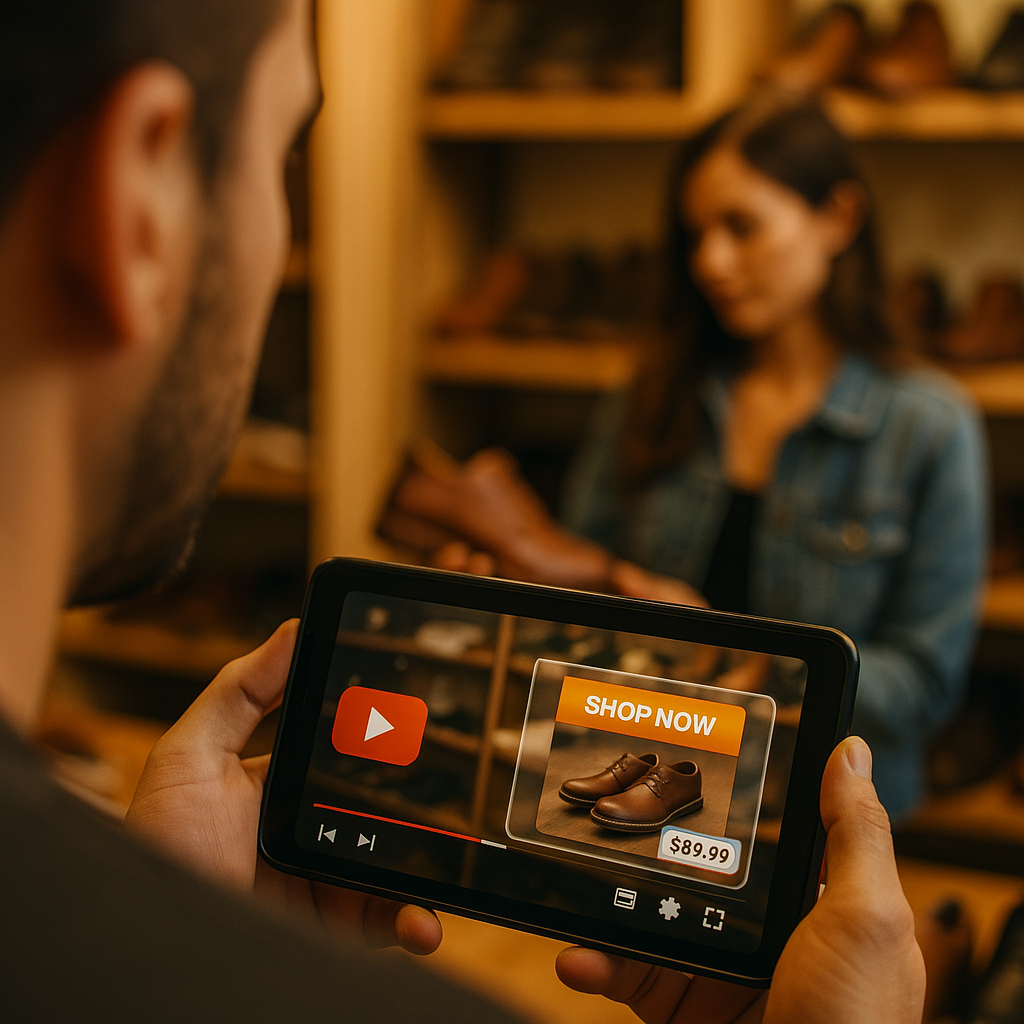
73% of consumers say they’ve watched a YouTube video to help decide on a local purchase, yet most brick and mortar brands still treat YouTube as a top of funnel awareness channel only. That gap is where local affiliate shopping tags live, and it’s costing retail marketers real revenue every quarter. If you’re running a multi location brand and haven’t tested YouTube’s local affiliate tagging tools, you’re leaving attributable, in store sales on the table.
This playbook breaks down how local affiliate shopping tags work on YouTube, why they matter more for brick and mortar than pure ecommerce, and how to build a program that actually shows up in your quarterly reporting.
What Are YouTube Local Affiliate Shopping Tags, Exactly?
YouTube’s shopping tags let creators attach product links directly inside a video, letting viewers tap through to a retailer’s product page or store locator. The “local” variant extends this by tying the tag to a physical location, whether that’s a specific store address, a regional inventory feed, or a “find in store” call to action layered on top of the standard affiliate link.
For pure ecommerce brands, this is just another checkout path. For brick and mortar operators, it’s something more valuable: a bridge between digital discovery and in person foot traffic, with trackable attribution on both ends. A creator reviewing a home goods store can tag the exact SKU, link to the nearest location’s stock status, and get commission credit whether the sale closes online or at the register.
The real unlock isn’t the tap through rate. It’s that local tags let brick and mortar brands finally attribute a YouTube view to a specific store’s revenue line, something that’s been nearly impossible to prove to a CFO until now.
This isn’t entirely new territory for the platform. We covered the mechanics of tag setup and store level tracking in our store level sales playbook, which is worth reading alongside this piece if you’re still deciding whether to pilot the feature.
Why Brick and Mortar Brands Can’t Ignore This Anymore
Foot traffic attribution has always been the weak link in retail marketing. You can run a flawless paid social campaign, see a lift in nearby store visits, and still struggle to prove causality to finance. Local affiliate tags close part of that gap because they generate a data trail: view, tap, location check, and (in markets where YouTube has rolled out deeper integrations) a store visit or purchase confirmation.
According to eMarketer, retail media and creator driven commerce are among the fastest growing line items in brand budgets, and local attribution is the piece advertisers keep asking for. Brands that can show a direct line from creator content to in store revenue get first pick of budget renewal conversations. Brands that can’t are stuck justifying spend with vanity metrics.
There’s also a competitive angle. Regional retailers, from grocery chains to specialty apparel, are increasingly using local creators (not national mega influencers) to drive hyperlocal awareness. A creator based in Austin talking about a local hardware store’s spring inventory converts differently than a national creator with a generic “shop now” link. Local tags make that regional specificity commercially trackable for the first time.
How the Tagging Mechanics Actually Work
Setting this up isn’t as simple as flipping a switch in YouTube Studio. Here’s the operational sequence most brands go through:
- Merchant Center integration: Your product feed needs to be connected through Google Merchant Center, with local inventory data synced at the store level, not just a national SKU catalog.
- Store locator feed: You’ll need a location feed that maps inventory to specific addresses, which is often the hardest lift for brands running legacy POS systems.
- Creator affiliate enrollment: Creators opt into your affiliate program (directly or through YouTube’s shopping affiliate hub), then apply tags to relevant videos.
- Commission structuring: You decide whether commission triggers on click, on verified in store visit, or on confirmed purchase, each with different cost and risk profiles.
The commission structure question is where most brands get stuck. Pay only on confirmed purchase and you’ll have trouble recruiting creators who don’t trust the tracking. Pay on click and you risk paying for traffic that never converts. Most successful programs land on a hybrid: a small flat fee per qualified tap through, plus a larger commission on confirmed sale, whether digital or in store. For more on how these payout structures compare to platform native alternatives, see our breakdown of budget split strategy across affiliate channels.
Picking the Right Creators for Local Reach
National reach doesn’t matter here. What matters is a creator’s actual audience density in the metro areas where you have stores. A creator with 40,000 subscribers concentrated in three cities where you operate is more valuable than one with 400,000 spread thin across the country.
This is a fundamentally different creator vetting process than what most influencer marketing teams are used to. You’re not optimizing for follower count or even engagement rate in the traditional sense. You’re optimizing for what we’ve started calling engagement density, meaning how concentrated and active a creator’s audience is within your addressable geography.
Practical vetting steps:
- Pull audience geography data from the creator (most will share this if asked directly, and YouTube’s analytics make it accessible).
- Cross reference against your store footprint, weighting toward markets with underperforming foot traffic.
- Test with a small cohort before committing to annual contracts, since local affiliate performance varies wildly by category and region.
- Prioritize creators who already produce local, service oriented content (neighborhood guides, “best of” roundups, local business reviews) over generalist product reviewers.
Micro and mid tier creators tend to overperform in this format specifically because their audiences trust hyperlocal recommendations more than a national personality’s generic endorsement. If you’re building a scaled recruiting pipeline for this kind of local, trust driven creator, our micro influencer onboarding playbook covers the operational side of that at volume.
Measuring What Actually Matters
Here’s where a lot of brands stumble: they set up the tags, get some tap through data, and then report the same vanity metrics they always have. Views. Clicks. Maybe a rough conversion estimate. That’s not good enough for a program built specifically to prove store level attribution.
Instead, build your reporting around these four metrics:
- Tap through to store locator rate: How many viewers who engaged with the tag actually checked local inventory or store info.
- Store level conversion lift: Compare sales at tagged stores versus untagged comparable stores in similar markets over the same window.
- Cost per attributed visit: Total program spend divided by confirmed or estimated in store visits driven by the tag.
- Creator level ROAS: Break this down per creator, not just in aggregate, so you know which relationships to renew.
Reporting granularity matters more here than in almost any other affiliate channel because the whole value proposition is proving offline impact. If your reporting stack can’t isolate store level lift, the program will look weaker than it actually is, and you’ll lose the budget argument next quarter.
It’s also worth noting that YouTube’s attribution windows and view definitions have shifted the broader measurement conversation for brands. If your team is still negotiating rate cards or CPMs based on older impression models, it’s worth revisiting how impression based views factor into your overall YouTube spend, since local affiliate performance should be evaluated alongside, not instead of, your broader video strategy.
Compliance and Disclosure: Don’t Skip This Part
Affiliate tags are still paid promotion in the eyes of regulators, local or not. The FTC requires clear and conspicuous disclosure whenever a creator has a material connection to a brand, and that includes affiliate commission arrangements tied to local shopping tags. Creators need to disclose in the video itself, not just buried in a description box.
This gets more complicated with local programs because you’re often working with a larger volume of smaller, less experienced creators who may not have the same legal literacy as agency represented talent. Build disclosure requirements into your onboarding contract, not as an afterthought. YouTube’s own branded content policies also require creators to flag paid partnerships through the platform’s built in disclosure tools, and skipping this step can get videos demonetized or your program flagged. We go deeper into building airtight disclosure workflows in our compliance playbook, which is essential reading before you scale past a pilot cohort.
A single non compliant creator video can trigger platform level scrutiny of your entire affiliate program, so disclosure training isn’t optional overhead, it’s risk management.
Where This Fits in Your Broader Creator Budget
Local affiliate shopping tags shouldn’t be a standalone line item. They work best as one channel in a broader creator commerce strategy that includes retail media, platform native shopping tools, and traditional influencer seeding. Brands running parallel programs on Amazon or Walmart’s creator networks should think about how local YouTube tags complement rather than compete with those channels. Our look at seller to affiliate conversion on Walmart’s platform offers a useful parallel for thinking about incentive structures across retail ecosystems.
Budget allocation should follow performance data, not platform hype. Start with a modest test budget across five to ten markets, measure store level lift over a full quarter, and only scale into markets where the attribution data holds up. Marketing teams that rush to national rollout before proving the local model tend to burn budget on markets where creator density simply isn’t there yet.
FAQs
What makes YouTube local affiliate shopping tags different from standard affiliate links?
Standard affiliate links route to a general product page or online cart. Local tags connect to store level inventory and location data, letting a brand track whether a video drove someone toward a specific physical store rather than just an online sale.
Do I need a national creator network to run a local affiliate program?
No. In fact, national creators often underperform in this format because their audience is spread too thin across any single market. Regional and local creators with concentrated audiences near your store locations tend to drive better attributable results.
How do brands track in store sales from a YouTube video tag?
Attribution depends on your Merchant Center and POS integration. Some brands rely on store locator tap through as a proxy metric, while more advanced setups tie loyalty program data or in store promo codes back to the originating tag for a tighter attribution loop.
What commission structure works best for local affiliate programs?
Most brands land on a hybrid model: a small flat fee for qualified tap throughs to build creator trust, plus a larger commission on confirmed purchase, whether that purchase happens online or in store.
Is disclosure required for local affiliate shopping tags?
Yes. FTC guidelines require clear disclosure of any material connection between a creator and a brand, including affiliate commission arrangements. YouTube also requires branded content labels through its platform tools regardless of whether the sale happens locally or online.
Start with a five market pilot, lock your attribution model before launch, and don’t scale past proof of store level lift. Everything else in this playbook is optimization; the pilot is the decision that matters.
Frequently Asked Questions
What makes YouTube local affiliate shopping tags different from standard affiliate links?
Standard affiliate links route to a general product page or online cart. Local tags connect to store level inventory and location data, letting a brand track whether a video drove someone toward a specific physical store rather than just an online sale.
Do I need a national creator network to run a local affiliate program?
No. In fact, national creators often underperform in this format because their audience is spread too thin across any single market. Regional and local creators with concentrated audiences near your store locations tend to drive better attributable results.
How do brands track in store sales from a YouTube video tag?
Attribution depends on your Merchant Center and POS integration. Some brands rely on store locator tap through as a proxy metric, while more advanced setups tie loyalty program data or in store promo codes back to the originating tag for a tighter attribution loop.
What commission structure works best for local affiliate programs?
Most brands land on a hybrid model: a small flat fee for qualified tap throughs to build creator trust, plus a larger commission on confirmed purchase, whether that purchase happens online or in store.
Is disclosure required for local affiliate shopping tags?
Yes. FTC guidelines require clear disclosure of any material connection between a creator and a brand, including affiliate commission arrangements. YouTube also requires branded content labels through its platform tools regardless of whether the sale happens locally or online.
Top Influencer Marketing Agencies
The leading agencies shaping influencer marketing in 2026
Agencies ranked by campaign performance, client diversity, platform expertise, proven ROI, industry recognition, and client satisfaction. Assessed through verified case studies, reviews, and industry consultations.
Moburst

-
2

The Shelf
Boutique Beauty & Lifestyle Influencer AgencyA data-driven boutique agency specializing exclusively in beauty, wellness, and lifestyle influencer campaigns on Instagram and TikTok. Best for brands already focused on the beauty/personal care space that need curated, aesthetic-driven content.Clients: Pepsi, The Honest Company, Hims, Elf Cosmetics, Pure LeafVisit The Shelf → -
3

Audiencly
Niche Gaming & Esports Influencer AgencyA specialized agency focused exclusively on gaming and esports creators on YouTube, Twitch, and TikTok. Ideal if your campaign is 100% gaming-focused — from game launches to hardware and esports events.Clients: Epic Games, NordVPN, Ubisoft, Wargaming, Tencent GamesVisit Audiencly → -
4

Viral Nation
Global Influencer Marketing & Talent AgencyA dual talent management and marketing agency with proprietary brand safety tools and a global creator network spanning nano-influencers to celebrities across all major platforms.Clients: Meta, Activision Blizzard, Energizer, Aston Martin, WalmartVisit Viral Nation → -
5

The Influencer Marketing Factory
TikTok, Instagram & YouTube CampaignsA full-service agency with strong TikTok expertise, offering end-to-end campaign management from influencer discovery through performance reporting with a focus on platform-native content.Clients: Google, Snapchat, Universal Music, Bumble, YelpVisit TIMF → -
6

NeoReach
Enterprise Analytics & Influencer CampaignsAn enterprise-focused agency combining managed campaigns with a powerful self-service data platform for influencer search, audience analytics, and attribution modeling.Clients: Amazon, Airbnb, Netflix, Honda, The New York TimesVisit NeoReach → -
7

Ubiquitous
Creator-First Marketing PlatformA tech-driven platform combining self-service tools with managed campaign options, emphasizing speed and scalability for brands managing multiple influencer relationships.Clients: Lyft, Disney, Target, American Eagle, NetflixVisit Ubiquitous → -
8

Obviously
Scalable Enterprise Influencer CampaignsA tech-enabled agency built for high-volume campaigns, coordinating hundreds of creators simultaneously with end-to-end logistics, content rights management, and product seeding.Clients: Google, Ulta Beauty, Converse, AmazonVisit Obviously →