


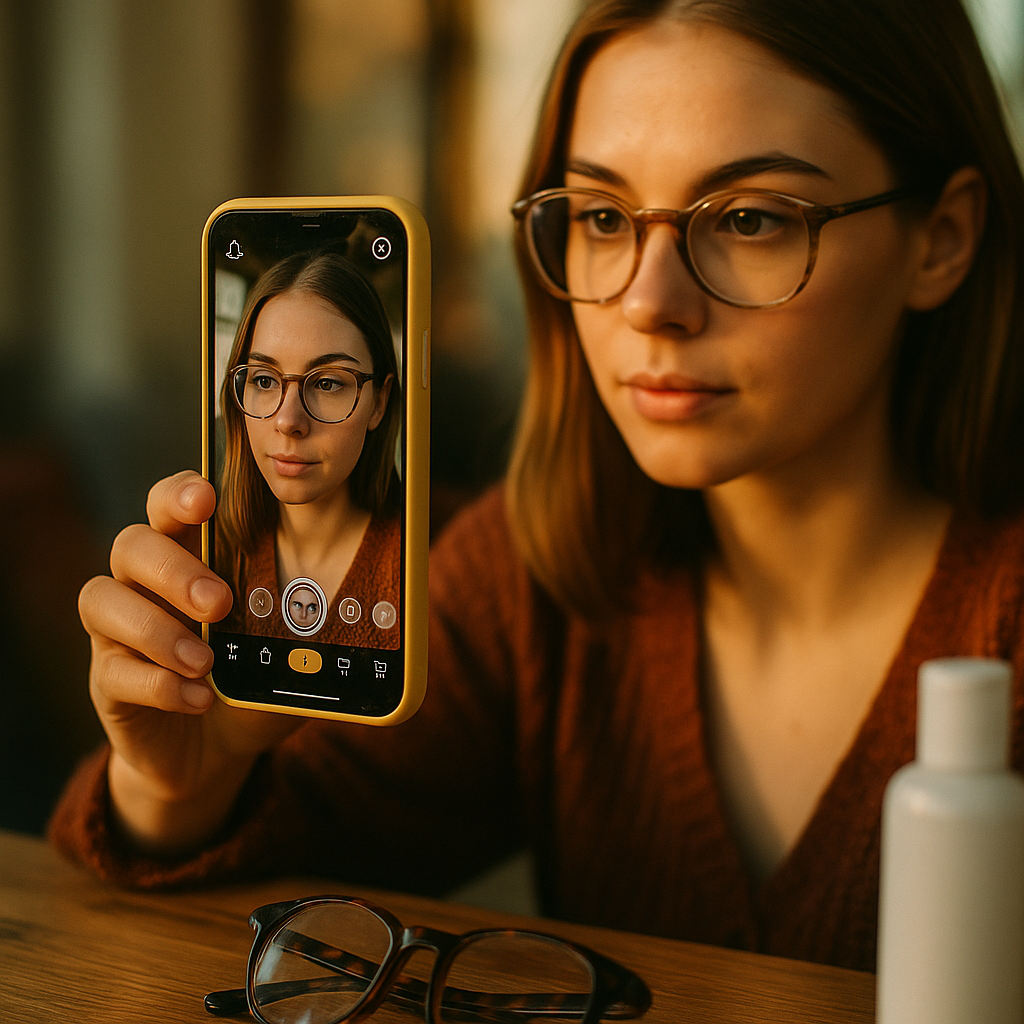
Snapchat users open AR Lenses more than six billion times a day. That’s not a typo, and it’s not a vanity metric buried in a keynote deck. It’s a daily behavior loop most brands still treat as a novelty rather than a performance channel. If your influencer program hasn’t touched Snapchat Sponsored AR Lenses yet, you’re leaving a proven try-on format on the table.
Why AR Try-Ons Are Having a Quiet Moment
Everyone’s chasing TikTok Shop and Instagram checkout right now. Fair enough, that’s where the volume is. But Snapchat’s AR infrastructure has matured into something brands underestimate: a native, low-friction try-before-you-buy layer that doesn’t require a creator to film, edit, or even be online.
Once a Sponsored Lens is built and paired with a creator, it lives independently. Fans open it, try the product virtually, screenshot it, share it. The creator’s job is distribution and credibility, not production labor. That changes the unit economics of the deal entirely.
A well-built AR Lens generates impressions for weeks after the sponsored post cycle ends, something almost no other creator format can claim.
What Sponsored AR Lenses Actually Are (And Aren’t)
A Sponsored Lens is a paid, brand-commissioned AR experience placed in Snapchat’s Lens carousel or unlocked via a creator’s Snapcode, Story, or Spotlight post. Think virtual try-on for makeup, sunglasses, sneakers, or even furniture placement, powered by Snap’s Camera Kit and Lens Studio tools.
It is not the same as a creator simply filming themselves using an existing public Lens. That’s earned or organic use, and it’s free, but it also gives you zero control over targeting, duration, or exclusivity. Sponsored placement is what buys you guaranteed reach, front-of-carousel positioning, and measurable swipe-up or shop-now attribution.
- Sponsored Lens: Paid placement, brand-owned creative, full analytics access.
- Creator-driven Lens promotion: Creator uses or references your existing Lens organically, often as an add-on to a paid content deal.
- Public Lens submission: Free, unpaid, and reliant on discovery algorithms. Useful for testing, unreliable for guaranteed reach.
Building the Creator Pairing Strategy
The mistake most brands make is treating the Lens and the creator brief as two separate workstreams. They should be built together, from day one. A beauty brand launching a foundation-shade Lens needs creators whose audience demographics match the shade range they’re pushing, not just whoever has the biggest Snapchat following.
Match creators to the Lens by use case, not just reach:
- Micro and mid-tier beauty or fashion creators for shade-match or fit try-ons, where authenticity drives conversion more than scale.
- Entertainment and lifestyle creators for novelty or gamified Lenses meant to go viral through Spotlight.
- Local or regional creators for location-triggered AR experiences tied to retail activations.
This mirrors what we’ve seen work in other creator-recruiting models, where category fit beats raw follower count, a theme we’ve broken down in our look at engagement density over follower size and again in the TikTok Shop category manager recruiting shift.
Budgeting: What This Actually Costs
Snap doesn’t publish a fixed rate card, and pricing varies heavily by market, duration, and exclusivity. But agency buyers report Sponsored Lens campaigns typically running from the low five figures for a regional, short-duration test up into six figures for national, multi-week placements with creator amplification bundled in.
Budget in three buckets:
- Production: Lens Studio development, 3D asset creation, and QA testing across device types. This is often outsourced to a Snap-certified Lens partner.
- Media: Paid placement in the carousel, plus any Snap Ads driving traffic to the Lens.
- Creator fees: Payment to creators who introduce, demo, or embed the Lens in their content, usually structured as flat fee plus performance bonus tied to Lens opens or shares.
Don’t let production costs eat your creator budget. A common failure pattern: brands spend so much on the AR build they have nothing left to pay creators who can actually drive discovery. The Lens without distribution is a tech demo, not a marketing asset.
Measurement That Actually Matters
Snap’s ad platform reports Lens opens, shares, screenshot rate, and average play time. Those are useful, but they’re vanity signals unless you tie them to downstream action. The real question every brand should be asking: did the try-on lead to a swipe-up, a coupon redemption, or an in-store visit?
Set up UTM-tagged swipe-up links inside every Sponsored Lens experience, and if you’re running a retail tie-in, use unique promo codes per creator so you can attribute foot traffic and purchases back to the specific pairing. This is the same attribution discipline brands have had to build for other local commerce formats, like the store-level tracking covered in our local affiliate tags playbook and local shopping tags guide.
If you can’t trace a Lens open to a purchase or a store visit within seven days, you’re measuring engagement theater, not ROI.
Benchmarks Worth Tracking
- Lens open rate relative to impressions served (industry-cited averages hover in the low single digits, so anything above that signals strong creative or creator fit).
- Average interaction time, which correlates with purchase intent for try-on categories like beauty and apparel.
- Share rate, since a shared Lens functions as unpaid, trusted distribution.
- Post-Lens click-through to product page or store locator.
Pull these numbers weekly, not just at campaign close. AR Lens performance often spikes and decays fast, especially when tied to a single creator moment, so mid-flight optimization (swapping creative, adjusting targeting) can rescue an underperforming buy before the budget is spent.
Compliance and Disclosure: Don’t Skip This
Because Sponsored Lenses are technically ad units, FTC disclosure rules apply the same way they do to any paid creator post. If a creator is compensated to promote or feature your Lens, that relationship needs clear disclosure per FTC guidance, and Snap’s own ad policies require sponsorship labeling on the Lens itself.
This isn’t a gray area worth testing. Brands that treat branded content labeling as optional on other platforms have already faced scrutiny, and the same enforcement logic extends to AR. We covered the operational side of this in our branded content labeling compliance guide, and the principles transfer directly to Snap’s Lens ecosystem.
For international campaigns, also check regional guidance such as the ICO’s data and advertising rules if your Lens captures facial data for try-on purposes, since biometric data handling triggers additional consent requirements in several markets.
Where AR Lenses Fit Your Broader Creator Mix
Sponsored AR Lenses shouldn’t operate in isolation. They work best as the try-on layer in a funnel that starts with awareness content on other platforms and ends in conversion. A creator might introduce a product on Instagram Reels, direct followers to try the AR Lens on Snapchat, then close the loop with a shoppable link.
This kind of cross-platform sequencing is becoming standard practice, similar to how brands are already stitching together shoppable video and podcast formats or splitting budgets across live commerce and influencer programs. AR is rarely the whole strategy. It’s the interactive middle step that other formats can’t replicate.
Industry data from eMarketer continues to show rising consumer comfort with AR shopping tools, particularly among Gen Z and younger millennial cohorts who overlap heavily with Snapchat’s core user base. If your target demo skews younger and your category is visual (beauty, apparel, eyewear, home goods), this is not a channel to keep deprioritizing.
Common Mistakes That Sink AR Lens Campaigns
- Treating the Lens as a gimmick add-on instead of a core creative asset with its own brief, budget, and success metrics.
- Skipping device testing. A Lens that lags or misfires on older devices tanks completion rates and reflects poorly on the brand.
- Ignoring creator fit for the sake of reach. A huge creator with mismatched audience demographics will drive opens but not conversions.
- Under-resourcing measurement. Without UTM tagging and unique codes, you’ll have opens and shares but no revenue story to bring back to leadership.
Marketing teams already juggling platform-specific rate negotiations elsewhere, like the shifts detailed in our creator rate renegotiation playbook, know the pattern: new formats get underfunded on measurement until a budget review forces the question. Build the tracking in from the start and skip that conversation entirely.
Next step: pick one SKU with strong visual differentiation, pair it with two or three creators whose audience actually matches your buyer, and run a four-week Sponsored Lens test with UTM tracking baked in before you commit to a full-market rollout.
FAQs
What is a Snapchat Sponsored AR Lens?
It’s a paid, brand-commissioned augmented reality experience placed in Snapchat’s Lens carousel or promoted through a creator, allowing users to virtually try on or interact with a product before purchasing.
How much does a Sponsored AR Lens campaign cost?
Costs vary by market and scope, but agency-reported ranges typically run from low five figures for a regional test to six figures for national campaigns bundled with creator amplification and extended flight dates.
Do creators need special skills to promote an AR Lens?
No. Since the Lens is pre-built, creators mainly need to introduce, demo, or embed it in their content. The creative and technical heavy lifting happens during Lens Studio development, not on the creator’s end.
How do I measure ROI on a Sponsored AR Lens?
Track Lens opens, share rate, and average interaction time inside Snap’s ad platform, but tie those numbers to UTM-tagged swipe-up links or unique promo codes so you can attribute actual purchases or store visits.
Are Sponsored AR Lenses subject to influencer disclosure rules?
Yes. If a creator is compensated to promote a Lens, standard FTC disclosure requirements apply, and Snap’s own advertising policies require sponsorship labeling on the Lens itself.
Which product categories perform best with AR try-on Lenses?
Visual, fit-dependent categories tend to perform best, including beauty, eyewear, apparel, footwear, and home goods, since AR removes a key purchase hesitation by letting users preview the product on themselves or in their space.
Top Influencer Marketing Agencies
The leading agencies shaping influencer marketing in 2026
Agencies ranked by campaign performance, client diversity, platform expertise, proven ROI, industry recognition, and client satisfaction. Assessed through verified case studies, reviews, and industry consultations.
Moburst

-
2

The Shelf
Boutique Beauty & Lifestyle Influencer AgencyA data-driven boutique agency specializing exclusively in beauty, wellness, and lifestyle influencer campaigns on Instagram and TikTok. Best for brands already focused on the beauty/personal care space that need curated, aesthetic-driven content.Clients: Pepsi, The Honest Company, Hims, Elf Cosmetics, Pure LeafVisit The Shelf → -
3

Audiencly
Niche Gaming & Esports Influencer AgencyA specialized agency focused exclusively on gaming and esports creators on YouTube, Twitch, and TikTok. Ideal if your campaign is 100% gaming-focused — from game launches to hardware and esports events.Clients: Epic Games, NordVPN, Ubisoft, Wargaming, Tencent GamesVisit Audiencly → -
4

Viral Nation
Global Influencer Marketing & Talent AgencyA dual talent management and marketing agency with proprietary brand safety tools and a global creator network spanning nano-influencers to celebrities across all major platforms.Clients: Meta, Activision Blizzard, Energizer, Aston Martin, WalmartVisit Viral Nation → -
5

The Influencer Marketing Factory
TikTok, Instagram & YouTube CampaignsA full-service agency with strong TikTok expertise, offering end-to-end campaign management from influencer discovery through performance reporting with a focus on platform-native content.Clients: Google, Snapchat, Universal Music, Bumble, YelpVisit TIMF → -
6

NeoReach
Enterprise Analytics & Influencer CampaignsAn enterprise-focused agency combining managed campaigns with a powerful self-service data platform for influencer search, audience analytics, and attribution modeling.Clients: Amazon, Airbnb, Netflix, Honda, The New York TimesVisit NeoReach → -
7

Ubiquitous
Creator-First Marketing PlatformA tech-driven platform combining self-service tools with managed campaign options, emphasizing speed and scalability for brands managing multiple influencer relationships.Clients: Lyft, Disney, Target, American Eagle, NetflixVisit Ubiquitous → -
8

Obviously
Scalable Enterprise Influencer CampaignsA tech-enabled agency built for high-volume campaigns, coordinating hundreds of creators simultaneously with end-to-end logistics, content rights management, and product seeding.Clients: Google, Ulta Beauty, Converse, AmazonVisit Obviously →