


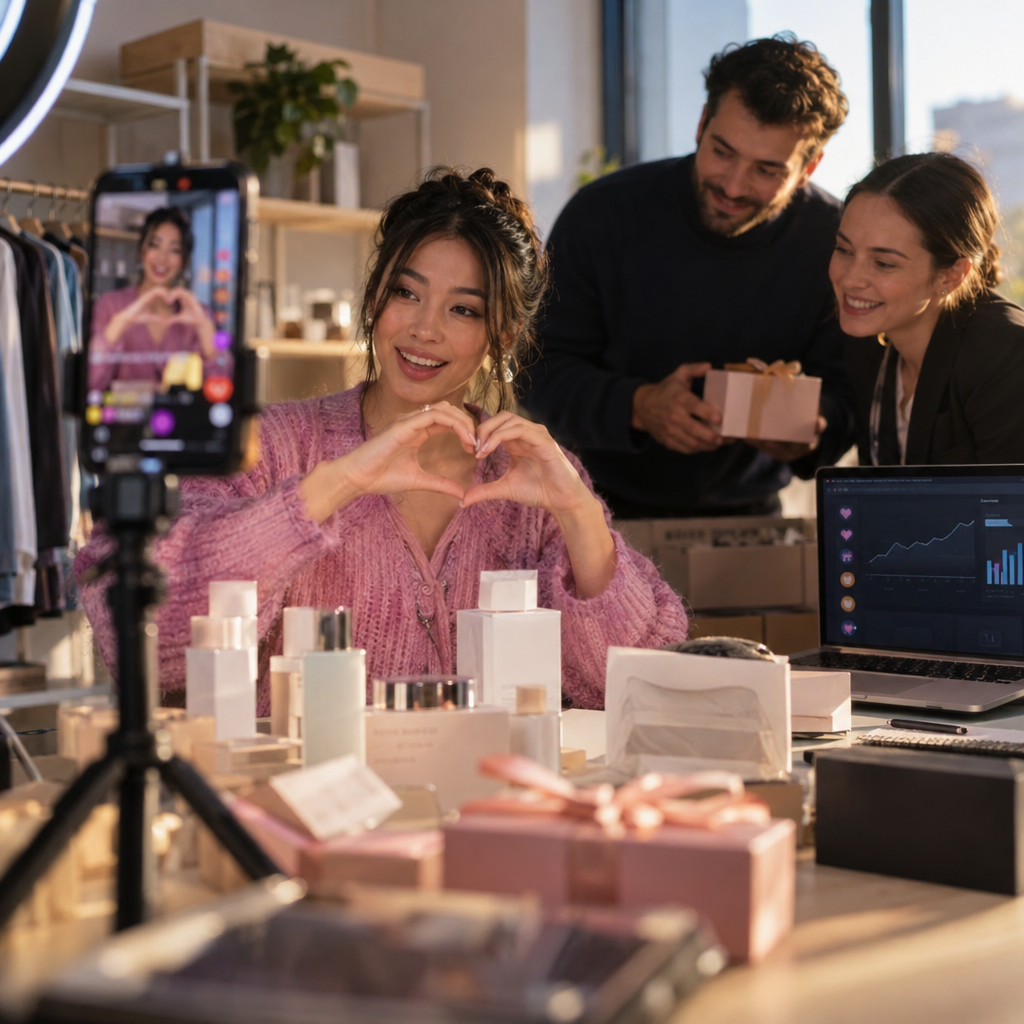
TikTok LIVE gifting moved over $6 billion in virtual gift value last year, and most brand marketers still treat it as a creator side hustle rather than a media channel. That’s a mistake. While your team debates Shop affiliate rates, creators are building entire revenue streams out of Rose gifts and Galaxy animations, often with zero brand involvement. The question isn’t whether gifting matters. It’s why your sponsorship contracts haven’t caught up.
The Gifting Economy Is Bigger Than Your Media Plan Accounts For
TikTok Shop gets the headlines because it’s easy to measure: GMV, conversion rate, affiliate commission. Gifting is messier. Viewers buy coins, send virtual gifts during LIVE streams, and creators convert those gifts into Diamonds, which TikTok pays out in cash. There’s no SKU, no attribution pixel, no neat line item for your finance team to approve.
But messy doesn’t mean small. Top LIVE hosts in categories like beauty, gaming commentary, and relationship advice are pulling six-figure monthly gifting revenue, independent of any brand deal. That tells you something important: audiences are already primed to spend money reacting to a creator in real time. Brands that ignore this are leaving an entire engagement layer untapped, the same way brands once ignored watch time incentive campaigns on Twitch before Drops went mainstream.
Gifting revenue proves audience willingness to pay in real time. That’s a signal brands should be buying into, not watching from the sidelines.
Why Sponsored Streams Need a Different Playbook Than Shop Campaigns
Shop campaigns are transactional: you pay for a link click or a completed order. Gifting is behavioral. You’re sponsoring an experience, not a storefront. That distinction changes everything about how you brief, pay, and measure.
A sponsored LIVE gifting stream typically looks like this: the brand pays a flat sponsorship fee plus a performance kicker tied to gifting volume, engagement duration, or a branded challenge completion rate. The creator runs a themed stream (a product reveal, a Q&A, a “gift to unlock” moment) where audience gifting triggers an action: the creator tries a product, answers a dare, or reveals a discount code. This isn’t new in spirit. It’s basically telethon mechanics rebuilt for vertical video and microtransactions.
- Flat sponsorship fee: Covers the creator’s time, production, and guaranteed brand mentions regardless of gifting outcome.
- Gifting volume bonus: A tiered bonus structure if the stream crosses defined gift-value thresholds.
- Engagement multiplier: Extra payout if concurrent viewers or stream duration beats a benchmark set during the pilot phase.
- Content rights clause: Clarify upfront whether clips from the LIVE can be repurposed into Spark Ads or organic cutdowns.
That last point matters more than brands realize. If you’re planning to pull highlight clips into paid media later, structure usage rights into the original gifting sponsorship, not as a separate negotiation after the stream ends.
What Makes a Gifting Stream Worth Sponsoring?
Not every creator with a LIVE badge is worth a sponsorship line item. Vet based on three things: average concurrent viewers during non-sponsored streams, historical gifting velocity (how fast gifts accumulate once a stream starts trending), and audience composition relative to your target demo. TikTok’s LIVE Creator Network and third-party tools can surface some of this data, but the most reliable method is still requesting a creator’s own analytics screenshots from their Creator Tools dashboard. Ask for at least three recent streams, not just their best one.
Also check comment sentiment during gifting moments. If viewers are gifting out of genuine affection for the creator, sponsorship integrations tend to land well. If gifting spikes feel transactional or coerced (creators explicitly begging for gifts), your brand risk goes up. Nobody wants their logo next to a “gift me or I leave the stream” moment that gets screenshotted onto X.
Budgeting for Gifting Sponsorships Without Guessing
Here’s where most brands stumble: they try to apply Shop-style CPA math to a format that doesn’t behave that way. Gifting ROI isn’t about cost per acquisition. It’s about cost per sustained attention minute, plus the downstream value of repurposed content.
A workable budgeting framework for a pilot quarter:
- Allocate 60% of the sponsorship budget to guaranteed creator fees across 4 to 6 creators in a test cohort.
- Reserve 25% for performance bonuses tied to gifting thresholds and average concurrent viewer counts.
- Keep 15% aside for paid amplification of the best-performing clips, similar to how brands handle tiered Spark Ads budgets for whitelisted content.
Run this cohort for eight to twelve weeks before scaling. You need enough stream data to separate creators who perform consistently from those who had one lucky viral night. Treat it like any new channel test: small bets, fast iteration, kill underperformers quickly.
Measurement: What to Track When There’s No Shopping Cart
This is the part that makes performance marketers nervous. Without a cart or a checkout page, you need proxy metrics that still tie back to business outcomes.
Track these at minimum:
- Peak and average concurrent viewers during sponsored segments versus the creator’s baseline.
- Gift value during branded moments compared to non-branded portions of the same stream.
- Comment sentiment and brand mention frequency, which you can pull manually or through social listening tools like Sprout Social.
- Clip performance post-stream, if you’ve negotiated repurposing rights, measured the same way you’d evaluate any organic or paid short-form asset.
- Follower growth delta for the creator’s channel in the 48 hours following the sponsored stream, a decent proxy for halo effect.
None of these replace hard sales data. But stacked together, they give you a defensible story for why gifting sponsorships deserve budget next quarter. If your CFO wants a tighter link to revenue, pair gifting sponsorships with a discount code or Shop tag embedded in the stream description, so you can at least partially bridge the attribution gap.
Compliance: The Part Everyone Skips
Virtual gifting sits in a regulatory gray zone that brands can’t afford to ignore. The FTC has been increasingly vocal about disclosure requirements for anything resembling paid influence, and a sponsored gifting stream absolutely counts. Creators need to disclose the brand partnership verbally and on-screen at the start of the stream and periodically throughout, not buried once in a caption.
There’s also a minor-protection angle that keeps surfacing in regulatory conversations globally. Gifting mechanics that pressure viewers, especially younger audiences, into spending real money raise questions under consumer protection frameworks in the UK and EU. If your brand operates internationally, check guidance from bodies like the ICO before greenlighting gifting-heavy campaigns targeting younger demographics.
A sponsored LIVE without clear, repeated disclosure isn’t a growth hack. It’s a liability sitting on your brand’s media plan.
Build disclosure language into your creator contracts as a non-negotiable clause, not a suggestion. TikTok’s own branded content tools can help enforce this, but don’t rely on platform defaults alone. Your legal team should sign off on the exact disclosure script before the stream goes live, not after a viewer complaint forces a review.
Brands dealing with past penalty issues around content reuse should also revisit how reposting rules intersect with LIVE clips; the same logic that shaped TikTok’s creator brief rewrite guidance applies when you’re clipping gifting moments for paid amplification later.
Where This Fits Against Shop and Spark Ads Spend
Gifting sponsorships shouldn’t replace your Shop or Spark Ads budget. They should sit alongside it as a mid-funnel engagement play, building affinity and attention that your performance channels later convert. Think of it as the TikTok-native version of a brand activation event, except it happens in a vertical video feed instead of a physical venue.
Brands already running strong Shop LIVE selling programs have an advantage here. You likely already have relationships with high-performing LIVE creators and internal processes for briefing, paying, and measuring live content. Extending that infrastructure to cover gifting sponsorships is a lighter lift than building a program from scratch. Data from eMarketer continues to show live commerce formats outperforming static content on engagement time, and gifting sponsorships ride that same wave without forcing a hard sell.
If you’re still deciding whether to prioritize gifting over other emerging ad formats, weigh it against your current spend on short-form budget reallocation elsewhere. Gifting sponsorships work best as a complement, not a replacement, for proven performance channels.
Next Step
Pick three creators already generating strong organic gifting volume, structure a flat-fee-plus-bonus pilot over eight weeks, and build disclosure and clip-rights language into the contract from day one. Measure concurrent viewers and gift velocity against baseline, then decide whether this earns a permanent line in next quarter’s budget.
Frequently Asked Questions
What is TikTok LIVE gifting and how does it generate revenue for creators?
TikTok LIVE gifting lets viewers purchase coins and send virtual gifts to creators during a live stream. Creators convert received gifts into Diamonds, which TikTok pays out as cash, separate from any brand sponsorship or Shop commission.
How is sponsoring a gifting stream different from a TikTok Shop campaign?
Shop campaigns are transactional, tied to clicks and completed orders. Gifting sponsorships are behavioral, paying for engagement, attention, and audience participation during a live experience, usually structured as a flat fee plus performance bonuses.
How much should a brand budget for a TikTok LIVE gifting sponsorship pilot?
Most pilots run with 4 to 6 creators over eight to twelve weeks, allocating roughly 60% to guaranteed fees, 25% to performance bonuses tied to gifting or viewership thresholds, and 15% reserved for amplifying top-performing clips as paid media.
What compliance risks come with sponsored LIVE gifting streams?
Disclosure is the biggest risk. Creators must clearly and repeatedly disclose brand partnerships during the stream, not just in a caption. Brands targeting younger audiences should also review consumer protection guidance given growing regulatory scrutiny of gifting mechanics.
How do brands measure ROI on gifting sponsorships without a direct sales link?
Track proxy metrics like peak concurrent viewers, gift value during branded segments versus baseline, comment sentiment, post-stream follower growth, and performance of repurposed clips if usage rights were negotiated in advance.
Top Influencer Marketing Agencies
The leading agencies shaping influencer marketing in 2026
Agencies ranked by campaign performance, client diversity, platform expertise, proven ROI, industry recognition, and client satisfaction. Assessed through verified case studies, reviews, and industry consultations.
Moburst

-
2

The Shelf
Boutique Beauty & Lifestyle Influencer AgencyA data-driven boutique agency specializing exclusively in beauty, wellness, and lifestyle influencer campaigns on Instagram and TikTok. Best for brands already focused on the beauty/personal care space that need curated, aesthetic-driven content.Clients: Pepsi, The Honest Company, Hims, Elf Cosmetics, Pure LeafVisit The Shelf → -
3

Audiencly
Niche Gaming & Esports Influencer AgencyA specialized agency focused exclusively on gaming and esports creators on YouTube, Twitch, and TikTok. Ideal if your campaign is 100% gaming-focused — from game launches to hardware and esports events.Clients: Epic Games, NordVPN, Ubisoft, Wargaming, Tencent GamesVisit Audiencly → -
4

Viral Nation
Global Influencer Marketing & Talent AgencyA dual talent management and marketing agency with proprietary brand safety tools and a global creator network spanning nano-influencers to celebrities across all major platforms.Clients: Meta, Activision Blizzard, Energizer, Aston Martin, WalmartVisit Viral Nation → -
5

The Influencer Marketing Factory
TikTok, Instagram & YouTube CampaignsA full-service agency with strong TikTok expertise, offering end-to-end campaign management from influencer discovery through performance reporting with a focus on platform-native content.Clients: Google, Snapchat, Universal Music, Bumble, YelpVisit TIMF → -
6

NeoReach
Enterprise Analytics & Influencer CampaignsAn enterprise-focused agency combining managed campaigns with a powerful self-service data platform for influencer search, audience analytics, and attribution modeling.Clients: Amazon, Airbnb, Netflix, Honda, The New York TimesVisit NeoReach → -
7

Ubiquitous
Creator-First Marketing PlatformA tech-driven platform combining self-service tools with managed campaign options, emphasizing speed and scalability for brands managing multiple influencer relationships.Clients: Lyft, Disney, Target, American Eagle, NetflixVisit Ubiquitous → -
8

Obviously
Scalable Enterprise Influencer CampaignsA tech-enabled agency built for high-volume campaigns, coordinating hundreds of creators simultaneously with end-to-end logistics, content rights management, and product seeding.Clients: Google, Ulta Beauty, Converse, AmazonVisit Obviously →