


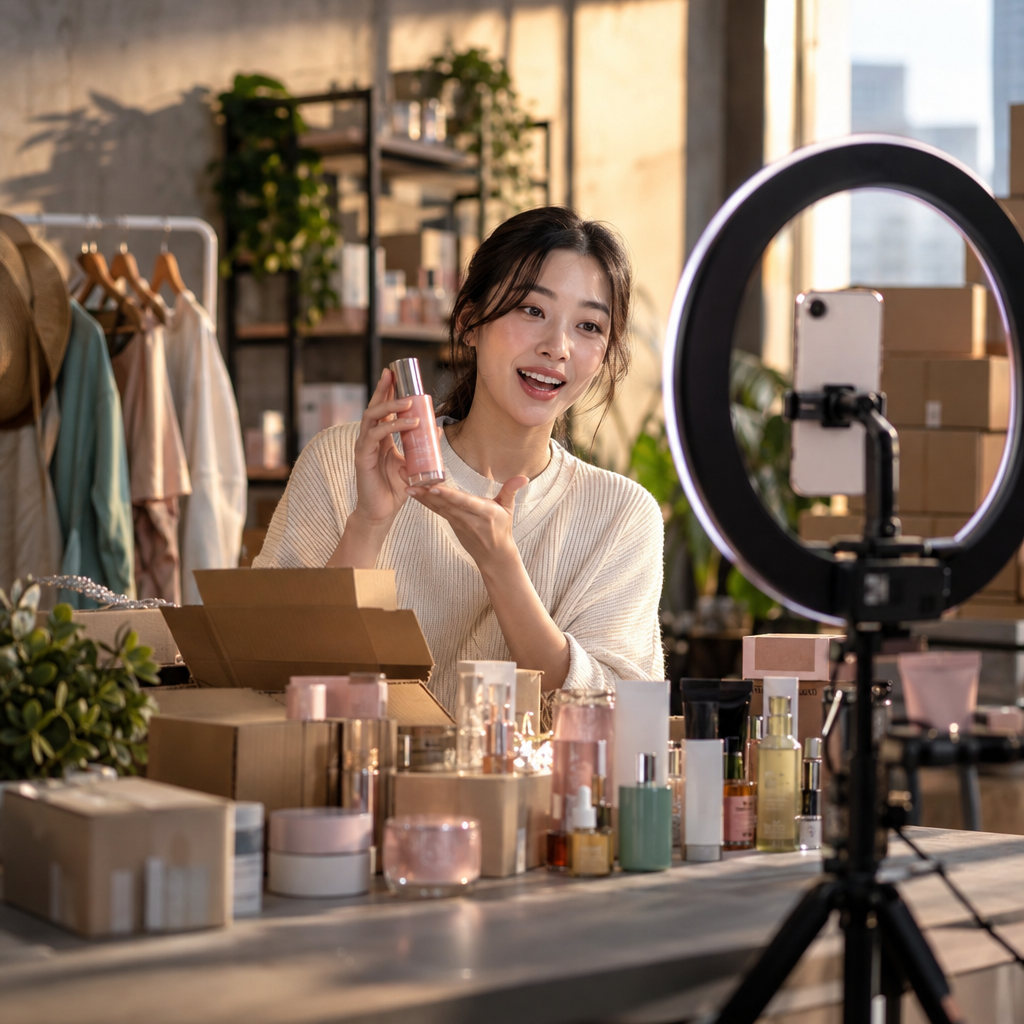
TikTok Shop live selling moved more GMV in the first two weeks of December than most brands budgeted for the entire month, and the sessions kept converting well past the holiday rush. If you assumed the live shopping spike was a Black Friday fluke, the data says otherwise. Brands that paused live commerce after Cyber Monday are now scrambling to rebuild creator slates for Q1, and the ones who didn’t pause are the ones posting the best numbers.
The Post-Cyber Monday Drop That Wasn’t
Conventional retail logic says demand craters after the Cyber Monday to Cyber Week window closes. Shoppers spent their budget, returns season begins, and brands pull back ad spend to protect margin. That pattern held for traditional e-commerce. It did not hold for TikTok Shop live selling.
Internal seller dashboards and third-party tracking tools have shown GMV from livestream sessions staying within 15 to 20 percent of peak holiday volume through late December and into January, a much shallower drop-off than the 40 percent-plus declines typical of static product listings and standard feed ads. Live selling, it turns out, doesn’t behave like a seasonal campaign. It behaves like an always-on channel that happens to spike around major shopping moments.
Brands running at least three live sessions per week into January saw average order values hold steadier than those running zero, suggesting consistency matters more than event-based bursts.
Why the resilience? Part of it is habit formation. Shoppers who discovered a brand’s livestream during Cyber Week came back in January because the format itself, not just the discount, kept them engaged. Live hosts answering questions in real time, limited-stock countdowns, and bundle deals don’t require a holiday pretext to work. They work because they compress the consideration phase into minutes.
What Q1 Momentum Actually Looks Like
Momentum isn’t just “sales kept happening.” It shows up in three specific metrics that brand teams should be tracking right now.
- Repeat viewer rate: The percentage of livestream viewers who tuned into a previous session from the same seller. Early Q1 data suggests repeat viewers convert at roughly double the rate of first-time viewers.
- Session-to-session GMV decay: How much revenue drops from one live session to the next within the same week. A shallow decay curve signals a sustainable channel, not a one-off event.
- Host attribution lift: GMV tied to specific recurring hosts versus rotating or one-off creators. Brands anchoring Q1 programming around two or three consistent hosts are outperforming those treating every session as a fresh casting call.
None of this means every category benefits equally. Beauty, apparel, and home goods continue to dominate live selling GMV, while categories with longer consideration cycles (electronics, big-ticket furniture) see smaller lifts. If you’re in one of those higher-consideration categories, live selling still works, but expect it to function more like a discovery and trust-building tool than a direct conversion engine.
Why Budgets Shouldn’t Shrink in Q1
Here’s the uncomfortable math a lot of marketing leads are facing. Finance teams typically cut influencer and live commerce budgets in January because last year’s playbook treated holiday spend as a discrete campaign with a clear end date. That logic no longer fits how TikTok Shop live selling performs.
Cutting a live selling program in January is a bit like closing a retail store the week after Christmas because foot traffic dipped from its peak. The store is still profitable. It’s just not at its single busiest moment anymore. Brands that maintained even 60 percent of their Cyber Week live selling cadence into Q1 reported GMV per session that outpaced brands that cut to zero and restarted in February, largely because algorithmic discovery and host relationships both take time to rebuild once paused.
This connects directly to how TikTok’s GMV Max system allocates budget and reach. Sellers who maintain consistent live activity tend to get more favorable distribution because the algorithm has more recent performance data to work with. For a deeper breakdown of eligibility requirements and setup mechanics, see our GMV Max eligibility guide.
The Compliance Angle Brands Keep Missing
Live selling moves fast, and that speed creates disclosure risk. Hosts improvising pricing claims, stock urgency language, or health and efficacy claims in real time are harder to pre-approve than scripted video content. As live commerce volume grows into Q1, expect increased scrutiny from the FTC around real-time disclosure practices, particularly for sponsored or affiliate-driven live sessions. Brands should be building live-specific disclosure scripts into host training now, not retrofitting them after a complaint.
If your team already has FTC disclosure protocols built for Shorts or other short-form video, much of that framework translates directly to live selling with light adaptation. Our Shorts disclosure risk guide is a useful starting template.
Creator Casting: What’s Different in Q1
Holiday casting prioritizes reach and urgency. Q1 casting should prioritize retention and credibility. The creators who crushed Cyber Week with high-energy countdown lives aren’t necessarily the same ones who’ll hold an audience in a slower sales month.
Brands seeing the strongest Q1 numbers are shifting toward hosts with genuine category expertise, think skincare chemists, stylists, or home organizers, rather than pure entertainers. The sales pitch softens, but trust deepens, and that trade-off pays off over a longer purchase cycle. This mirrors a broader shift we’ve tracked in how brands source and brief creators for sustained programs rather than single campaigns, detailed in our GMV Max signal density guide.
It’s also worth reassessing host cadence against the Open Commerce API inventory sync guide if you’re running live selling across multiple SKUs or warehouses. Stockouts mid-livestream are a conversion killer, and Q1 replenishment schedules often lag behind the demand signals live selling generates.
International Markets Are Moving Faster Than the US Realizes
While US marketing teams debate whether live selling is “still a holiday thing,” TikTok Shop live commerce in the UK, Southeast Asia, and parts of Europe has already normalized as a year-round channel. Brands expanding into markets like the UK, France, Germany, or Japan should treat live selling as core infrastructure from day one rather than a bolt-on holiday tactic. Our market expansion guide covers the operational differences brands need to plan for when launching live commerce outside the US.
For brands weighing where to prioritize limited international budget, zero-commission promotional windows in newer TikTok Shop markets can meaningfully offset the cost of building out a Q1 live program from scratch. Worth reviewing against your current market priority list, which our market entry priority guide breaks down in more detail.
How to Actually Benchmark Your Performance
Raw GMV numbers mean little without context. Before adjusting Q1 budgets, pull these four data points from your TikTok Shop seller dashboard and compare them against your Cyber Week baseline:
- Average viewers per session, week over week since Cyber Monday
- Conversion rate per session versus conversion rate on static product pages for the same SKUs
- Click-through rate from livestream to checkout versus feed ad click-through for comparable creative
- Host-level GMV attribution across your current creator roster
Cross-referencing these against third-party market data helps validate whether what you’re seeing is brand-specific or category-wide. eMarketer and Statista both publish periodic social commerce benchmarks worth checking against your internal numbers, and Sprout Social‘s social commerce reporting offers useful context on cross-platform comparisons if you’re running live selling alongside Instagram or YouTube commerce tests.
If your numbers lag the benchmarks, the issue is usually one of three things: inconsistent host cadence, inventory gaps during peak viewing windows, or creative that hasn’t been refreshed since the holiday push. Audit in that order before assuming the channel itself has cooled.
FAQs
Frequently Asked Questions
Does TikTok Shop live selling really stay strong after Cyber Monday?
Yes. Data from seller dashboards and third-party tracking tools shows GMV from live sessions dropping only 15 to 20 percent from peak holiday levels through late December and January, a much shallower decline than static listings or standard feed ads typically see.
Should brands cut live selling budgets in January?
Most data suggests no. Brands maintaining at least 60 percent of their holiday live selling cadence into Q1 saw stronger GMV per session than those who paused entirely and restarted later, largely due to algorithmic distribution favoring consistent sellers.
What metrics matter most for tracking Q1 live selling momentum?
Repeat viewer rate, session-to-session GMV decay, and host attribution lift are the three most useful indicators. They reveal whether momentum is sustainable versus whether you’re coasting on holiday leftovers.
Which product categories perform best in live selling after the holidays?
Beauty, apparel, and home goods continue to lead in GMV. Higher-consideration categories like electronics and furniture see smaller direct conversion lifts but still benefit from live selling as a trust and discovery tool.
What compliance risks should brands watch with live commerce?
Real-time disclosure is the biggest risk area. Hosts improvising claims during live sessions are harder to pre-approve than scripted content, and regulators are paying closer attention to sponsored live commerce disclosures.
How should creator casting change between holiday and Q1 campaigns?
Holiday casting favors reach and urgency, while Q1 casting should favor retention and category credibility. Hosts with genuine expertise tend to outperform pure entertainers once the holiday urgency fades.
The teams winning Q1 aren’t the ones who discovered a new tactic, they’re the ones who treated Cyber Week as the start of a program rather than the whole campaign. Pull your session-level data this week, compare it against your pre-holiday baseline, and recast around hosts who’ve proven they can hold an audience without a doorbuster discount attached.
Top Influencer Marketing Agencies
The leading agencies shaping influencer marketing in 2026
Agencies ranked by campaign performance, client diversity, platform expertise, proven ROI, industry recognition, and client satisfaction. Assessed through verified case studies, reviews, and industry consultations.
Moburst

-
2

The Shelf
Boutique Beauty & Lifestyle Influencer AgencyA data-driven boutique agency specializing exclusively in beauty, wellness, and lifestyle influencer campaigns on Instagram and TikTok. Best for brands already focused on the beauty/personal care space that need curated, aesthetic-driven content.Clients: Pepsi, The Honest Company, Hims, Elf Cosmetics, Pure LeafVisit The Shelf → -
3

Audiencly
Niche Gaming & Esports Influencer AgencyA specialized agency focused exclusively on gaming and esports creators on YouTube, Twitch, and TikTok. Ideal if your campaign is 100% gaming-focused — from game launches to hardware and esports events.Clients: Epic Games, NordVPN, Ubisoft, Wargaming, Tencent GamesVisit Audiencly → -
4

Viral Nation
Global Influencer Marketing & Talent AgencyA dual talent management and marketing agency with proprietary brand safety tools and a global creator network spanning nano-influencers to celebrities across all major platforms.Clients: Meta, Activision Blizzard, Energizer, Aston Martin, WalmartVisit Viral Nation → -
5

The Influencer Marketing Factory
TikTok, Instagram & YouTube CampaignsA full-service agency with strong TikTok expertise, offering end-to-end campaign management from influencer discovery through performance reporting with a focus on platform-native content.Clients: Google, Snapchat, Universal Music, Bumble, YelpVisit TIMF → -
6

NeoReach
Enterprise Analytics & Influencer CampaignsAn enterprise-focused agency combining managed campaigns with a powerful self-service data platform for influencer search, audience analytics, and attribution modeling.Clients: Amazon, Airbnb, Netflix, Honda, The New York TimesVisit NeoReach → -
7

Ubiquitous
Creator-First Marketing PlatformA tech-driven platform combining self-service tools with managed campaign options, emphasizing speed and scalability for brands managing multiple influencer relationships.Clients: Lyft, Disney, Target, American Eagle, NetflixVisit Ubiquitous → -
8

Obviously
Scalable Enterprise Influencer CampaignsA tech-enabled agency built for high-volume campaigns, coordinating hundreds of creators simultaneously with end-to-end logistics, content rights management, and product seeding.Clients: Google, Ulta Beauty, Converse, AmazonVisit Obviously →