


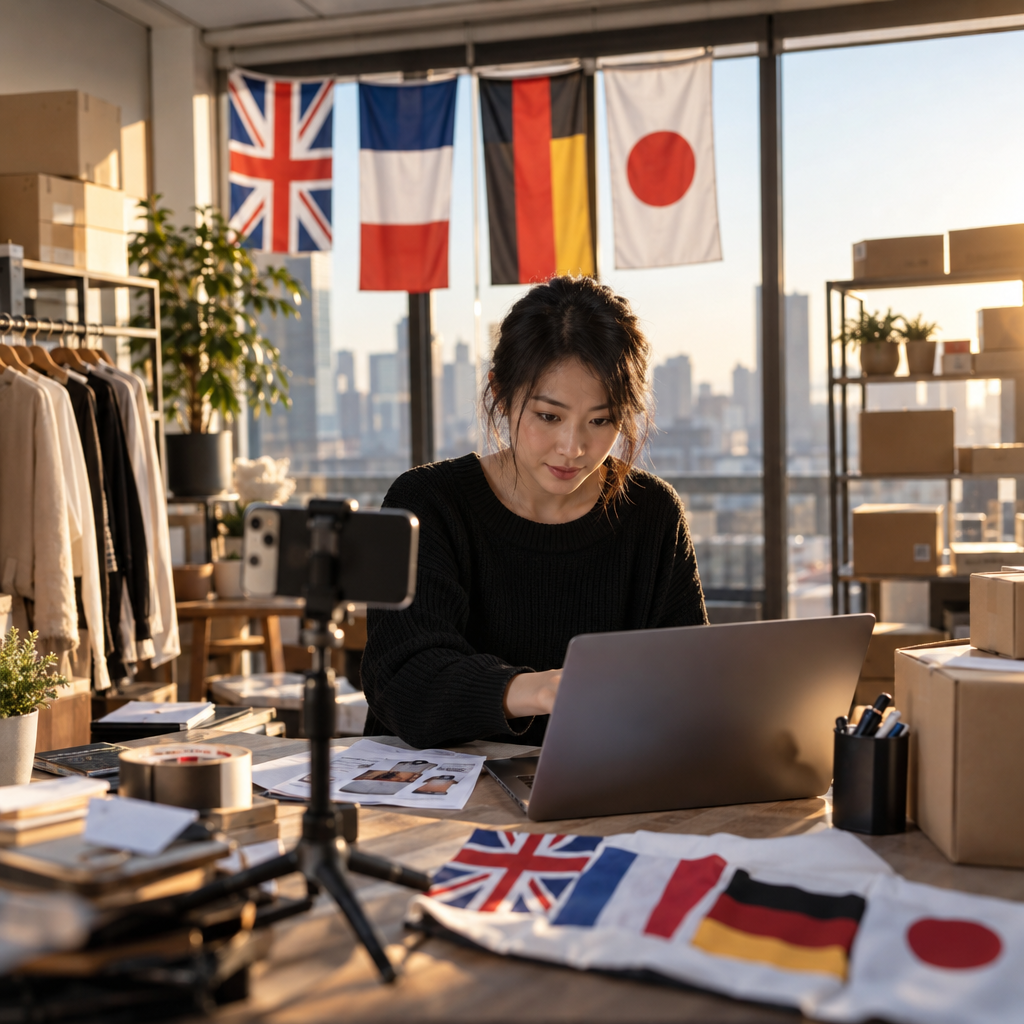
TikTok Shop crossed $33 billion in global GMV faster than almost any commerce platform in history, and now it wants Europe and Japan to carry the next leg of growth. Can brands that nailed the US playbook simply copy and paste it into London, Paris, Berlin, and Tokyo? Not even close. TikTok Shop’s global expansion demands market-by-market rebuilds of compliance, creator sourcing, and logistics, and the brands that treat it as a single rollout will burn budget fast.
Why This Expansion Matters More Than the Last One
TikTok Shop’s US launch taught brands a lot about livestream selling and affiliate marketplaces. But the US is a single regulatory zone with one language and one dominant payment rail. The UK, France, Germany, and Japan each bring their own consumer protection laws, tax regimes, and creator culture. A brand that assumes “what worked in Ohio will work in Osaka” is setting itself up for a compliance headache or, worse, a product delisting.
There’s also a timing angle. TikTok has been investing heavily in European fulfillment infrastructure and has quietly expanded its Japan seller onboarding after a slower initial rollout. That means the operational runway is finally wide enough for mid-size brands, not just enterprise retailers with dedicated regional teams.
Brands entering four markets at once without localizing compliance, creator vetting, and fulfillment separately are not running one expansion. They are running four different businesses under one platform name.
UK: The Easiest On-Ramp, But Don’t Get Lazy
The UK is the natural first stop for most Western brands because of language and existing TikTok ad infrastructure. GMV in the UK TikTok Shop ecosystem has grown steadily since launch, and creator density is high. But “easy” is relative. The UK’s Advertising Standards Authority and the Information Commissioner’s Office take affiliate disclosure and data handling seriously, and TikTok Shop’s own disclosure requirements stack on top.
- Disclosure first: UK creators must clearly label paid partnerships, and TikTok’s AI-generated content labels now apply here too if creators use synthetic voiceovers or avatars. Review the disclosure compliance guide before briefing creators.
- VAT registration is non-negotiable for cross-border sellers shipping into the UK, and TikTok Shop will flag accounts without a valid VAT number during onboarding.
- Returns expectations run higher in the UK than in the US. Brands using automated returns tools have seen conversion lifts because shoppers buy more confidently when the return path is visible at checkout, a pattern covered in the conversion lift guide.
UK creator rates also run lower than US equivalents for similar follower tiers, which means your GMV Max budget stretches further if you’re disciplined about signal density from day one. The signal density guide is worth a read before setting your first campaign live.
France Wants Proof, Not Hype
French consumers are notoriously skeptical of overt sales pitches. Livestream selling, which crushes it in the UK and US, performs differently in France where audiences respond better to demonstration-style content and creator credibility built over months, not days. Brands that parachute in with a one-off affiliate push often see underwhelming conversion.
France also enforces some of the EU’s strictest influencer marketing rules. The DGCCRF (the French consumer protection authority) has issued fines against brands and creators for undisclosed partnerships, and France was one of the first EU countries to pass dedicated influencer marketing legislation. Any brand running TikTok Shop campaigns in France needs a disclosure process that’s airtight, ideally mirroring the rigor used for FTC-style disclosure frameworks even though the regulator is different.
Practical tip: prioritize micro and mid-tier French creators (50,000 to 300,000 followers) who already have engaged, niche audiences. Macro-influencer campaigns in France tend to underperform relative to spend because audience trust skews toward smaller, more “authentic” accounts.
Germany: Slow Trust Building, Then Fast Scaling
Germany is the market where patience pays off. German shoppers research extensively before buying, favor detailed product information, and distrust flashy marketing claims. TikTok Shop’s product tag and search visibility features matter enormously here because German consumers often discover products through search-style browsing rather than impulse scrolling.
Get your listings right before you spend a single euro on creator partnerships. That means optimized titles, complete specifications, and keyword-rich descriptions that align with how product tag ranking actually surfaces items in search. Brands that skip this step and go straight to affiliate recruitment often find creators driving traffic to listings that don’t convert.
Germany’s data protection culture (the country that gave the EU its GDPR backbone) also means creators and brands need explicit consent language for any whitelisting or usage rights arrangements. If you’re running paid amplification of creator content, treat the permissions process with the same rigor outlined in the permission setup guide, adapted for TikTok’s German terms.
Japan Is Not an Afterthought Market
Here’s where most brand playbooks fall apart. Japan’s e-commerce culture runs on trust signals that look nothing like Western creator marketing. Live selling exists, but it’s slower paced and more informational than the high-energy flash-sale style that dominates US and UK TikTok Shop livestreams. Japanese consumers also show strong brand loyalty once converted, meaning the lifetime value math can justify a higher initial customer acquisition cost than in the UK or France.
Language localization goes beyond translation. Captions, product descriptions, and even color psychology in creative assets need Japan-specific treatment. A red “sale” banner that performs well in the UK can read as aggressive or even unlucky in Japan depending on context. Brands that have succeeded here typically partner with Japan-based agencies or creator management companies rather than trying to manage sourcing remotely from a US or European office.
TikTok’s Open Commerce API integration is particularly useful for Japan launches because inventory sync accuracy matters more when cross-border logistics add shipping time. Review the inventory sync guide before committing to a Japan-specific catalog, especially if you’re running separate SKUs for the Japanese market.
Japan rewards brands that show up with patience and localized trust signals. It punishes brands that treat the market as a copy-paste extension of a Western launch.
Building One Operational Backbone for Four Markets
The brands winning at multi-market TikTok Shop expansion aren’t running four disconnected teams. They’re building one operational backbone with market-specific layers on top. That means:
- A centralized GMV Max strategy with per-market budget allocation, informed by the eligibility requirements in the GMV Max setup guide.
- Regional creator pools sourced locally rather than translated from a US creator list. A French TikTok creator with 200,000 followers is not interchangeable with a UK creator of the same size.
- Shared catalog infrastructure using the Open Commerce API so inventory doesn’t go out of sync across four storefronts during a single flash sale.
- Market-specific disclosure training for every creator, since UK, French, German, and Japanese regulators each enforce disclosure differently.
According to eMarketer, social commerce in Western Europe is projected to keep outpacing overall e-commerce growth, and TikTok Shop is positioned to capture a meaningful share of that if its logistics and compliance infrastructure keep maturing. Brands that build the operational backbone now will be the ones with the creator relationships and catalog data already in place when that growth accelerates.
Don’t underestimate the affiliate marketplace either. Scaling creator partnerships across four markets simultaneously requires a system, not a spreadsheet. The approach outlined in the affiliate marketplace scaling playbook translates well to multi-market rollouts if you swap US-specific assumptions for localized creator tiers and commission benchmarks.
What a Realistic First 90 Days Looks Like
Resist the urge to launch all four markets simultaneously. Most successful brand rollouts sequence UK first (lowest friction), then France and Germany in parallel once disclosure and catalog systems are validated, then Japan last with a dedicated local partner. Trying to launch everything in month one usually means catalog errors, mismatched creator briefs, and compliance gaps that could have been caught with a slower sequence.
Budget-wise, expect Japan to require the highest upfront investment relative to GMV in the first quarter, simply because trust-building takes longer. The UK and France typically show faster payback on creator spend if your disclosure and product-market fit are solid from the start.
Frequently Asked Questions
Is TikTok Shop available in all four markets right now?
Yes, TikTok Shop operates in the UK, France, Germany, and Japan, though seller onboarding requirements, creator density, and logistics maturity vary significantly by market. The UK remains the most mature of the four for Western brands.
Do I need separate legal entities to sell in each market?
Not always, but you will need market-specific tax registration (such as VAT in the UK, Germany, and France) and compliance with local consumer protection rules. Consult a cross-border e-commerce tax advisor before onboarding sellers in multiple EU countries plus Japan.
Which market has the strictest influencer disclosure rules?
France currently enforces some of the most specific influencer marketing legislation in the group, with the DGCCRF actively fining undisclosed partnerships. Germany’s GDPR-rooted data protection culture also adds complexity around creator usage rights and whitelisting.
Should I use the same creators across UK, France, and Germany?
Generally no. Creator trust and content style vary by market, and audiences respond better to locally sourced creators who understand regional nuance. A small number of multilingual creators with genuine cross-market audiences can work, but they’re the exception, not the rule.
How long does it take to see meaningful GMV in Japan?
Most brands report a longer ramp-up period in Japan compared to the UK or France, often three to six months before GMV reaches a steady state, due to the market’s preference for trust-building before purchase.
Can I use GMV Max budgets across multiple markets at once?
Yes, but allocation should be market-specific rather than a single pooled budget. Each market has different creator rates, conversion benchmarks, and seasonal patterns that affect how GMV Max spend performs.
Next step: Pick one market, likely the UK, build your disclosure and catalog infrastructure there first, and use that validated playbook as the template for France, Germany, and Japan rather than launching all four at once.
Frequently Asked Questions
Is TikTok Shop available in all four markets right now?
Yes, TikTok Shop operates in the UK, France, Germany, and Japan, though seller onboarding requirements, creator density, and logistics maturity vary significantly by market. The UK remains the most mature of the four for Western brands.
Do I need separate legal entities to sell in each market?
Not always, but you will need market-specific tax registration (such as VAT in the UK, Germany, and France) and compliance with local consumer protection rules. Consult a cross-border e-commerce tax advisor before onboarding sellers in multiple EU countries plus Japan.
Which market has the strictest influencer disclosure rules?
France currently enforces some of the most specific influencer marketing legislation in the group, with the DGCCRF actively fining undisclosed partnerships. Germany’s GDPR-rooted data protection culture also adds complexity around creator usage rights and whitelisting.
Should I use the same creators across UK, France, and Germany?
Generally no. Creator trust and content style vary by market, and audiences respond better to locally sourced creators who understand regional nuance. A small number of multilingual creators with genuine cross-market audiences can work, but they’re the exception, not the rule.
How long does it take to see meaningful GMV in Japan?
Most brands report a longer ramp-up period in Japan compared to the UK or France, often three to six months before GMV reaches a steady state, due to the market’s preference for trust-building before purchase.
Can I use GMV Max budgets across multiple markets at once?
Yes, but allocation should be market-specific rather than a single pooled budget. Each market has different creator rates, conversion benchmarks, and seasonal patterns that affect how GMV Max spend performs.
Top Influencer Marketing Agencies
The leading agencies shaping influencer marketing in 2026
Agencies ranked by campaign performance, client diversity, platform expertise, proven ROI, industry recognition, and client satisfaction. Assessed through verified case studies, reviews, and industry consultations.
Moburst

-
2

The Shelf
Boutique Beauty & Lifestyle Influencer AgencyA data-driven boutique agency specializing exclusively in beauty, wellness, and lifestyle influencer campaigns on Instagram and TikTok. Best for brands already focused on the beauty/personal care space that need curated, aesthetic-driven content.Clients: Pepsi, The Honest Company, Hims, Elf Cosmetics, Pure LeafVisit The Shelf → -
3

Audiencly
Niche Gaming & Esports Influencer AgencyA specialized agency focused exclusively on gaming and esports creators on YouTube, Twitch, and TikTok. Ideal if your campaign is 100% gaming-focused — from game launches to hardware and esports events.Clients: Epic Games, NordVPN, Ubisoft, Wargaming, Tencent GamesVisit Audiencly → -
4

Viral Nation
Global Influencer Marketing & Talent AgencyA dual talent management and marketing agency with proprietary brand safety tools and a global creator network spanning nano-influencers to celebrities across all major platforms.Clients: Meta, Activision Blizzard, Energizer, Aston Martin, WalmartVisit Viral Nation → -
5

The Influencer Marketing Factory
TikTok, Instagram & YouTube CampaignsA full-service agency with strong TikTok expertise, offering end-to-end campaign management from influencer discovery through performance reporting with a focus on platform-native content.Clients: Google, Snapchat, Universal Music, Bumble, YelpVisit TIMF → -
6

NeoReach
Enterprise Analytics & Influencer CampaignsAn enterprise-focused agency combining managed campaigns with a powerful self-service data platform for influencer search, audience analytics, and attribution modeling.Clients: Amazon, Airbnb, Netflix, Honda, The New York TimesVisit NeoReach → -
7

Ubiquitous
Creator-First Marketing PlatformA tech-driven platform combining self-service tools with managed campaign options, emphasizing speed and scalability for brands managing multiple influencer relationships.Clients: Lyft, Disney, Target, American Eagle, NetflixVisit Ubiquitous → -
8

Obviously
Scalable Enterprise Influencer CampaignsA tech-enabled agency built for high-volume campaigns, coordinating hundreds of creators simultaneously with end-to-end logistics, content rights management, and product seeding.Clients: Google, Ulta Beauty, Converse, AmazonVisit Obviously →