


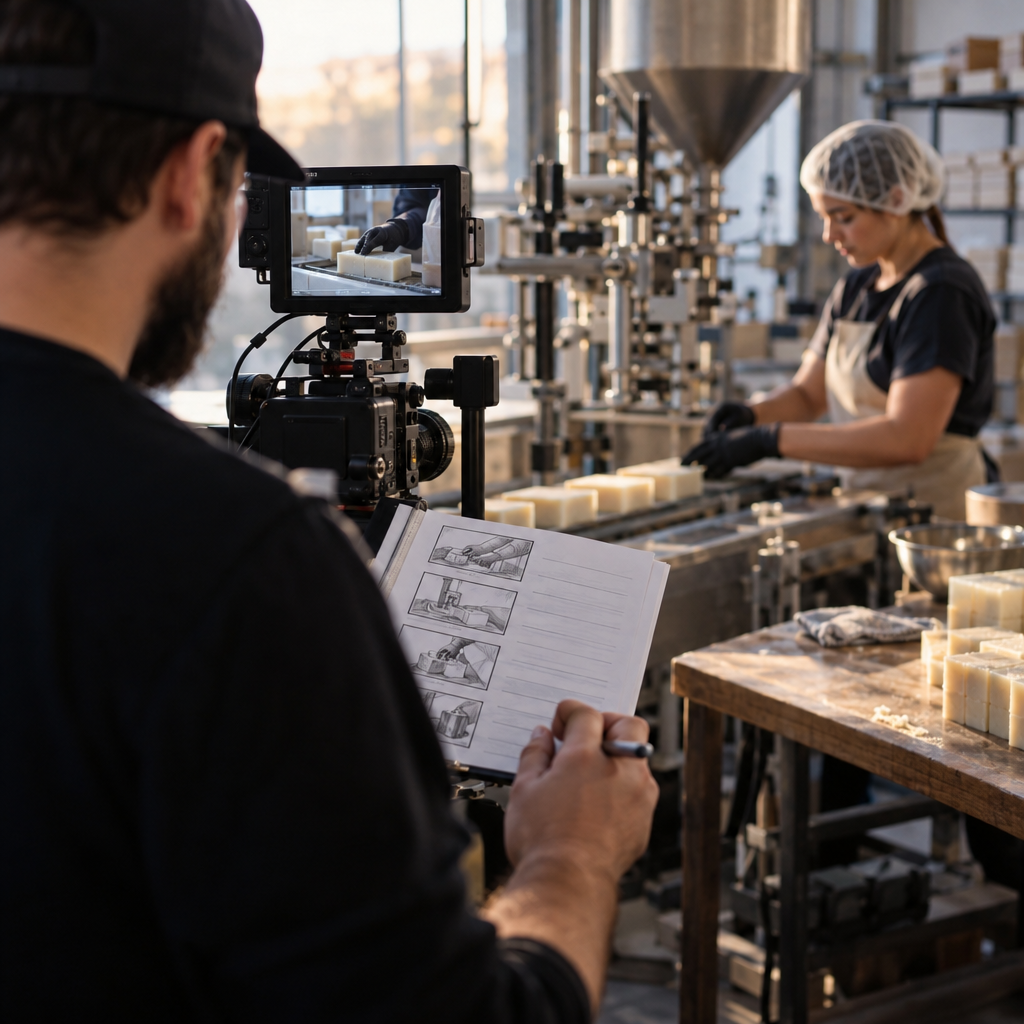
73% of consumers say they want brands to show them how products are actually made before they buy, yet most “behind the scenes” content still looks like a corporate training video shot by someone who hates their job. That gap is the opportunity. The how it’s made format, done right, is one of the highest-trust content types available to brands right now, and almost nobody scripts it with any intention. Most teams just point a camera at the production line and hope.
That’s the mistake. A factory tour is not a script. It’s a location. What you do inside that location determines whether viewers walk away trusting your supply chain or scrolling past another beige corporate video.
Why “How It’s Made” Content Outperforms Polished Brand Films
Consumers have gotten good at spotting staged authenticity. Glossy product shots and influencer testimonials still work for discovery, but they don’t answer the question that actually drives purchase hesitation for considered goods: is this thing made the way they say it’s made? Manufacturing content answers that question with evidence instead of claims.
Think about why unboxing videos and silent vlog style product videos perform so well. They work because the viewer gets to draw their own conclusions from footage rather than being told what to believe. How it’s made content does the same thing at scale, just earlier in the funnel. You’re not selling the product, you’re proving the process behind it.
Manufacturing transparency content converts skeptics differently than testimonials do. Testimonials ask viewers to trust a person. Process footage asks viewers to trust their own eyes.
There’s also a durability angle brands underrate. A good how it’s made video has a shelf life of years, not weeks. It’s not tied to a trend cycle or a seasonal hook. Brands running it well treat it as an evergreen trust asset that sits at the top of a paid funnel permanently, not a one off PR stunt filmed for a launch week.
The Five Beat Structure That Actually Holds Attention
Factory footage is inherently slower paced than a fifteen second TikTok hook, which means the script has to work harder to keep people watching. Here’s the structure that consistently keeps retention above industry benchmarks for manufacturing content:
- The claim or question (0 to 5 seconds): Open with the specific thing viewers assume is fake or automated. “You think this is machine stitched. It’s not.” That’s your hook, and it functions the same way as any three second video hook built for scroll stopping power.
- The raw material moment: Show the input before it becomes the product. Cotton bales, steel coils, unroasted beans. This grounds the viewer in something tangible before the process gets complex.
- The human hands moment: Every how it’s made video needs at least one shot of a person doing skilled, specific work. This is the single highest retention beat in the format, consistently.
- The imperfection or waste reveal: Show a reject, a trimming, a quality check that fails something. This is counterintuitive but it’s the credibility hinge. Perfect processes read as fake.
- The close, tied to a value claim: End on why the process matters to the buyer, not just that it exists. “This is why it lasts ten years” lands harder than “and that’s how it’s made.”
Notice that none of these beats require narration written by a copywriter who’s never been inside the facility. The script should be built from what’s actually happening on the floor, then shaped into beats, not the other way around.
What Goes Wrong on the Shoot Day
Most brands fail this format in production, not in concept. A few recurring issues:
Teams send a creative brief built for lifestyle content into a manufacturing environment and wonder why it doesn’t translate. Factory lighting is harsh, machinery is loud, and workers are not actors. The brief needs to account for all three before the crew shows up. This is where a tighter, operationally realistic document matters more than a polished creative deck. If you haven’t standardized this yet, the same logic behind one page creator briefs applies directly here: shorter, clearer, built for the people executing it.
Another common failure: treating the shoot as a single deliverable instead of a content bank. A full day on a production floor can realistically generate a dozen usable cuts across formats if you shoot with that in mind from the start. That’s the same principle behind multi angle creative shoots applied to a factory floor instead of a studio set.
Legal and compliance teams also get looped in too late. If you’re filming employees, international facilities, or proprietary equipment, that approval chain needs to start before the shoot is booked, not after the edit is done.
Scripting for Sound On and Sound Off Viewing
Manufacturing footage is visually dense, which makes it a strong candidate for caption driven storytelling. A lot of viewers will watch this content muted, especially on LinkedIn or in-feed placements where autoplay defaults to silent. Your script needs a text layer that carries the narrative independent of voiceover, similar to the approach covered in sound off vertical video scripting.
Write the caption track first, actually. Build the voiceover second, as reinforcement rather than the primary carrier. It forces discipline. If the captions alone can’t tell the story, the video structure is probably too reliant on narration.
Where This Format Fits the Funnel
How it’s made content is not a conversion asset in the direct response sense. It won’t outperform a discount code video on click through rate. Its job is upstream: building the trust that makes every other piece of content in your funnel work harder. Run it as always on content feeding a consideration audience, not a one off campaign tied to a product launch.
Brands getting the most value out of this format are pairing it with creator voice. Instead of a narrator reading corporate copy, they’re bringing in a creator to react to the process in real time, essentially merging manufacturing transparency with the discovery format covered in POV discovery video scripting. The creator’s genuine surprise at a production step does more credibility work than any scripted line could.
It also plays well as a localization asset. A strong process video can be re-cut for different markets without reshooting the factory footage, following the same modular logic outlined in modular UGC asset planning.
Measuring Whether It’s Working
Don’t judge manufacturing content on view count alone. Track time watched against video length, saves, and the share rate specifically, since trust content gets forwarded in private messages and group chats far more than it gets publicly shared. If you’re running it as a paid asset feeding a retargeting audience, watch for lift in add to cart rate among viewers who completed over 75% of the video versus those who dropped off early. That delta tells you whether the trust mechanism is actually converting or just entertaining.
According to eMarketer research on short form video engagement, completion rate correlates more strongly with purchase intent than raw reach for considered purchase categories, which tracks with what manufacturing brands are seeing internally. Platforms like Meta Business Suite and TikTok Ads Manager both surface video completion breakdowns that make this kind of analysis straightforward if you set up the tracking before launch, not after.
For brands with compliance sensitivities around labor claims or sourcing statements, it’s worth having legal review the final script against FTC disclosure guidance before publishing, particularly if the video makes specific claims about sourcing, labor practices, or sustainability. The FTC’s guidance on endorsements and claims applies even when no paid creator is involved, since the claims themselves are what trigger scrutiny.
FAQs
Frequently Asked Questions
How long should a how it’s made video be?
Most perform best between 45 and 90 seconds for social feed placement, with a longer two to four minute version housed on a landing page or YouTube for viewers who want the full process. Cut the short version first, then expand rather than trying to compress a long edit down.
Do we need a professional voiceover artist?
No. A real employee or plant manager narrating in their own words almost always outperforms a polished voiceover artist for this format specifically, because credibility matters more than production polish here.
What if our manufacturing process isn’t visually interesting?
Focus on the human decision points instead of the machinery. Quality checks, calibration moments, and hands-on adjustments are almost always more compelling on camera than the automated parts of any process.
Should we show mistakes or rejected products on camera?
Yes, in moderation. A single shot of a quality control rejection builds more trust than an entire video of flawless output, because it signals the process is real and monitored rather than curated for the camera.
How often should we refresh this type of content?
Once a year is usually sufficient unless your process changes materially. Unlike trend driven formats, manufacturing trust content ages slowly and can run as an evergreen asset for several consecutive quarters.
Pick one production step your customers consistently misunderstand, script a 60 second video around that single beat, and ship it before you attempt a full factory tour edit.
Top Influencer Marketing Agencies
The leading agencies shaping influencer marketing in 2026
Agencies ranked by campaign performance, client diversity, platform expertise, proven ROI, industry recognition, and client satisfaction. Assessed through verified case studies, reviews, and industry consultations.
Moburst

-
2

The Shelf
Boutique Beauty & Lifestyle Influencer AgencyA data-driven boutique agency specializing exclusively in beauty, wellness, and lifestyle influencer campaigns on Instagram and TikTok. Best for brands already focused on the beauty/personal care space that need curated, aesthetic-driven content.Clients: Pepsi, The Honest Company, Hims, Elf Cosmetics, Pure LeafVisit The Shelf → -
3

Audiencly
Niche Gaming & Esports Influencer AgencyA specialized agency focused exclusively on gaming and esports creators on YouTube, Twitch, and TikTok. Ideal if your campaign is 100% gaming-focused — from game launches to hardware and esports events.Clients: Epic Games, NordVPN, Ubisoft, Wargaming, Tencent GamesVisit Audiencly → -
4

Viral Nation
Global Influencer Marketing & Talent AgencyA dual talent management and marketing agency with proprietary brand safety tools and a global creator network spanning nano-influencers to celebrities across all major platforms.Clients: Meta, Activision Blizzard, Energizer, Aston Martin, WalmartVisit Viral Nation → -
5

The Influencer Marketing Factory
TikTok, Instagram & YouTube CampaignsA full-service agency with strong TikTok expertise, offering end-to-end campaign management from influencer discovery through performance reporting with a focus on platform-native content.Clients: Google, Snapchat, Universal Music, Bumble, YelpVisit TIMF → -
6

NeoReach
Enterprise Analytics & Influencer CampaignsAn enterprise-focused agency combining managed campaigns with a powerful self-service data platform for influencer search, audience analytics, and attribution modeling.Clients: Amazon, Airbnb, Netflix, Honda, The New York TimesVisit NeoReach → -
7

Ubiquitous
Creator-First Marketing PlatformA tech-driven platform combining self-service tools with managed campaign options, emphasizing speed and scalability for brands managing multiple influencer relationships.Clients: Lyft, Disney, Target, American Eagle, NetflixVisit Ubiquitous → -
8

Obviously
Scalable Enterprise Influencer CampaignsA tech-enabled agency built for high-volume campaigns, coordinating hundreds of creators simultaneously with end-to-end logistics, content rights management, and product seeding.Clients: Google, Ulta Beauty, Converse, AmazonVisit Obviously →