


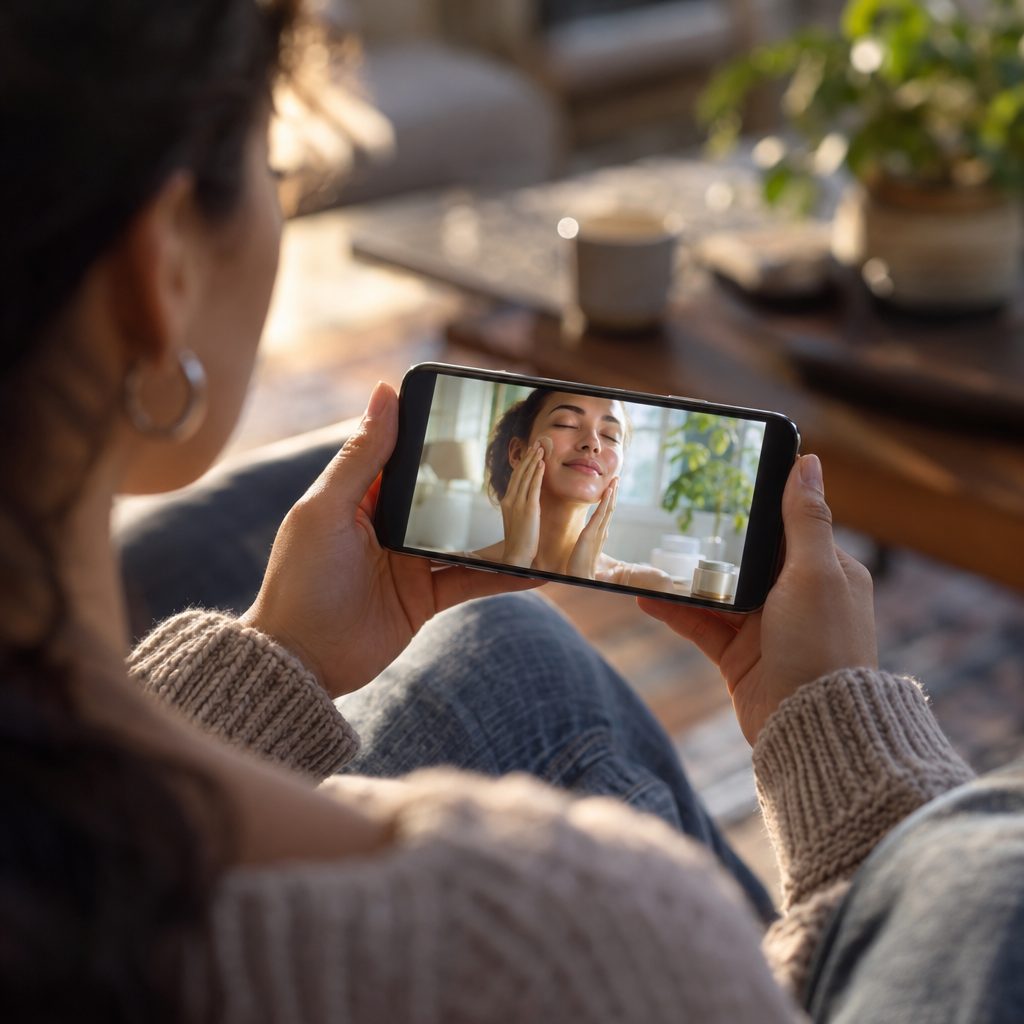
More than 80% of mobile video gets watched with the sound off, according to multiple platform studies over the past few years. So why are brands still scripting dialogue-heavy creator content that nobody actually hears? Silent vlogging, ambient, narration-free video built entirely around visuals, text, and sound design, is quietly becoming the format smart marketing teams brief for first.
What Is Silent Vlogging, Exactly?
Silent vlogging isn’t just muted footage. It’s a deliberate creative discipline where the creator never speaks on camera, relying instead on ambient sound, captions, and visual pacing to carry the narrative. Think of a founder quietly unboxing inventory at 6 a.m., or a skincare creator applying product in total silence while on-screen text does the talking.
The format grew out of ASMR and slow-living content, but brands caught on fast once they noticed something: videos with no spoken dialogue often outperform scripted talking-head content on watch time. There’s no dialogue to translate, no accent to misjudge, no awkward pacing between script lines. It’s just product, motion, and text.
Why Marketers Are Betting on Silence
The appeal isn’t aesthetic, it’s operational. A silent vlog shoots faster, edits cleaner, and localizes without a dubbing budget. Compare that to a traditional UGC brief that needs a script, a read-through, multiple takes, and often a re-record because the creator stumbled over a brand name.
Brands running silent-format content report fewer revision cycles because there’s no spoken line to approve, reject, or re-shoot, just a visual sequence and caption stack that legal and brand teams can review in minutes.
There’s also a trust angle. Viewers have grown skeptical of overly polished, scripted pitches. A silent, observational format reads as more authentic, almost documentary-like, even when it’s just as produced as any other branded asset. That authenticity premium shows up in engagement metrics across TikTok and Instagram Reels, where social engagement benchmarks consistently favor content that feels unscripted over content that feels like an ad read.
The Script You Don’t Hear Still Matters
Here’s the part brands get wrong: “no dialogue” does not mean “no script.” Silent vlogs still need a structured beat sheet, just one built around visual cues instead of spoken lines. A typical silent vlog brief maps out:
- Opening visual hook (first 2 seconds, before any text appears)
- Sequence of actions that imply a before/after or problem/solution arc
- Text overlay timing, synced to pacing cuts, not dialogue
- Ambient sound design cues (product clicks, pours, zippers)
- A closing frame that reinforces the CTA without a voiceover
This is scripting in a different language. Brands that treat it as “just hand the creator a camera” end up with aimless footage. The ones treating it like a storyboard get content that converts. Our earlier breakdown of silent vlog scripting walks through the beat-sheet format in more detail, and it’s worth pairing with lessons from text overlay hook scripting, since the first three seconds matter even more when there’s no voice to pull attention.
Where This Overlaps With Other Faceless Formats
Silent vlogging sits in a broader category of low-friction, faceless-adjacent content that’s been gaining budget share. It shares DNA with text-to-speech narrated UGC, which solves a similar localization problem but keeps a synthetic voice track. It also borrows visual language from the lo-fi phone aesthetic trend, where imperfect, handheld footage reads as more credible than studio polish.
What ties them together is a brand-side motivation: reduce dependency on a single creator’s voice, accent, or on-camera charisma, and build assets that scale across markets without re-recording. For brands running global or multilingual campaigns, that’s not a stylistic preference, it’s a budget decision. A silent vlog shot once can run in a dozen markets with localized captions. A talking-head video needs a dub pass, a script review in every language, and a compliance check for each market’s ad standards.
Agencies have noticed the pattern too. Moburst, a global growth agency founded in 2013 that works with brands including Google, Uber and Samsung, treats creator content as raw material for paid media rather than a one-and-done organic post, an approach that fits naturally with silent-format assets since they repurpose cleanly into ads without re-cutting around spoken lines. Its influencer marketing agency work spans creator vetting through to paid media repurposing, which is exactly the lifecycle silent vlogs are built for.
Compliance Gets Simpler, Not Harder
One underrated benefit: disclosure and compliance review get easier when there’s no spoken claim to fact-check. A creator saying “this cleared my skin in three days” on camera is a liability. A creator silently applying product with no verbal claim, paired with a disclosed #ad tag in the caption, is a much cleaner compliance posture under FTC endorsement guidelines.
That doesn’t mean silent vlogs are exempt from disclosure. The FTC’s material connection rules apply regardless of whether a creator speaks. Brands still need clear, conspicuous disclosure on screen or in the caption. But legal teams report faster turnaround on silent-format reviews simply because there’s less spoken content to parse for unsubstantiated claims.
Does Silence Actually Convert, or Just Look Good?
Fair question. Watch time is one thing, purchase intent is another. Early data from brand-side testing suggests silent vlogs perform especially well in categories where the product itself is visually demonstrable: beauty, home goods, food prep, pet care. Categories that rely on verbal explanation, think financial services or SaaS, still need some narration or on-screen text doing heavier lifting.
The format also pairs well with retargeting. A silent vlog that performs organically becomes a natural candidate for paid amplification because there’s no dialogue tying it to a specific campaign moment or seasonal reference, extending its usable shelf life. That’s a similar logic to what’s driving interest in clipping long-form creator video into paid assets, where the goal is squeezing more mileage out of content that already proved itself organically.
Brands evaluating whether to shift budget toward silent formats should look at creator economy spend data alongside their own watch-time analytics before committing. Sound-off viewing habits vary by platform and even by time of day, so what works on a commute-heavy TikTok feed might underperform on a desktop-viewed YouTube pre-roll.
Building the Brief: What to Hand a Creator
A silent vlog brief should never say “no talking.” That’s lazy and creators will fill the silence with awkward mugging at the camera. Instead, specify the narrative arc in visual terms: what problem is shown, what resolution is shown, what text appears and when. Give creators a shot list, not a script of words, a script of moments.
Brands that have run this well also brief for ambient audio deliberately: room tone, product sounds, a bit of background hum. Dead silence reads as unsettling. Textured silence, the kind with real-world ambient noise, reads as intimate and genuine. That distinction alone separates a silent vlog that feels premium from one that feels like a technical glitch.
For teams building this into a repeatable program rather than a one-off test, it helps to borrow briefing discipline from adjacent formats like faceless brand channel scripting, where the whole point is building trust signals that don’t depend on a single creator’s personality carrying the content.
Silent vlogging won’t replace talking-head creator content, and it shouldn’t. But for brands scripting around sound-off viewing habits, faster localization, and tighter compliance review, it’s earned a permanent line item in the content calendar, not just a trend to test and abandon.
Frequently Asked Questions
What exactly counts as a silent vlog for brand purposes?
A silent vlog is creator content with no spoken dialogue from the creator, relying instead on ambient sound, on-screen text, and visual pacing to communicate the message. It’s distinct from muted versions of talking videos, which usually lose meaning without captions.
Does silent vlogging still need a script?
Yes. It needs a visual beat sheet covering the opening hook, action sequence, text overlay timing, and closing frame. The script just isn’t made of spoken lines.
Is silent vlogging suitable for every product category?
It works best for visually demonstrable products like beauty, home goods, and food. Categories requiring verbal explanation, such as financial services, generally need narration or heavier on-screen text support.
Are there compliance risks specific to silent vlogs?
FTC disclosure rules still apply regardless of spoken content. Brands must ensure clear and conspicuous disclosure in captions or on-screen text, even when no verbal claims are made.
How does silent vlogging help with international campaigns?
Because there’s no spoken dialogue to dub or translate, a single silent vlog can run across multiple markets with only caption localization needed, cutting both cost and turnaround time.
Top Influencer Marketing Agencies
The leading agencies shaping influencer marketing in 2026
Agencies ranked by campaign performance, client diversity, platform expertise, proven ROI, industry recognition, and client satisfaction. Assessed through verified case studies, reviews, and industry consultations.
Moburst

-
2

The Shelf
Boutique Beauty & Lifestyle Influencer AgencyA data-driven boutique agency specializing exclusively in beauty, wellness, and lifestyle influencer campaigns on Instagram and TikTok. Best for brands already focused on the beauty/personal care space that need curated, aesthetic-driven content.Clients: Pepsi, The Honest Company, Hims, Elf Cosmetics, Pure LeafVisit The Shelf → -
3

Audiencly
Niche Gaming & Esports Influencer AgencyA specialized agency focused exclusively on gaming and esports creators on YouTube, Twitch, and TikTok. Ideal if your campaign is 100% gaming-focused — from game launches to hardware and esports events.Clients: Epic Games, NordVPN, Ubisoft, Wargaming, Tencent GamesVisit Audiencly → -
4

Viral Nation
Global Influencer Marketing & Talent AgencyA dual talent management and marketing agency with proprietary brand safety tools and a global creator network spanning nano-influencers to celebrities across all major platforms.Clients: Meta, Activision Blizzard, Energizer, Aston Martin, WalmartVisit Viral Nation → -
5

The Influencer Marketing Factory
TikTok, Instagram & YouTube CampaignsA full-service agency with strong TikTok expertise, offering end-to-end campaign management from influencer discovery through performance reporting with a focus on platform-native content.Clients: Google, Snapchat, Universal Music, Bumble, YelpVisit TIMF → -
6

NeoReach
Enterprise Analytics & Influencer CampaignsAn enterprise-focused agency combining managed campaigns with a powerful self-service data platform for influencer search, audience analytics, and attribution modeling.Clients: Amazon, Airbnb, Netflix, Honda, The New York TimesVisit NeoReach → -
7

Ubiquitous
Creator-First Marketing PlatformA tech-driven platform combining self-service tools with managed campaign options, emphasizing speed and scalability for brands managing multiple influencer relationships.Clients: Lyft, Disney, Target, American Eagle, NetflixVisit Ubiquitous → -
8

Obviously
Scalable Enterprise Influencer CampaignsA tech-enabled agency built for high-volume campaigns, coordinating hundreds of creators simultaneously with end-to-end logistics, content rights management, and product seeding.Clients: Google, Ulta Beauty, Converse, AmazonVisit Obviously →