


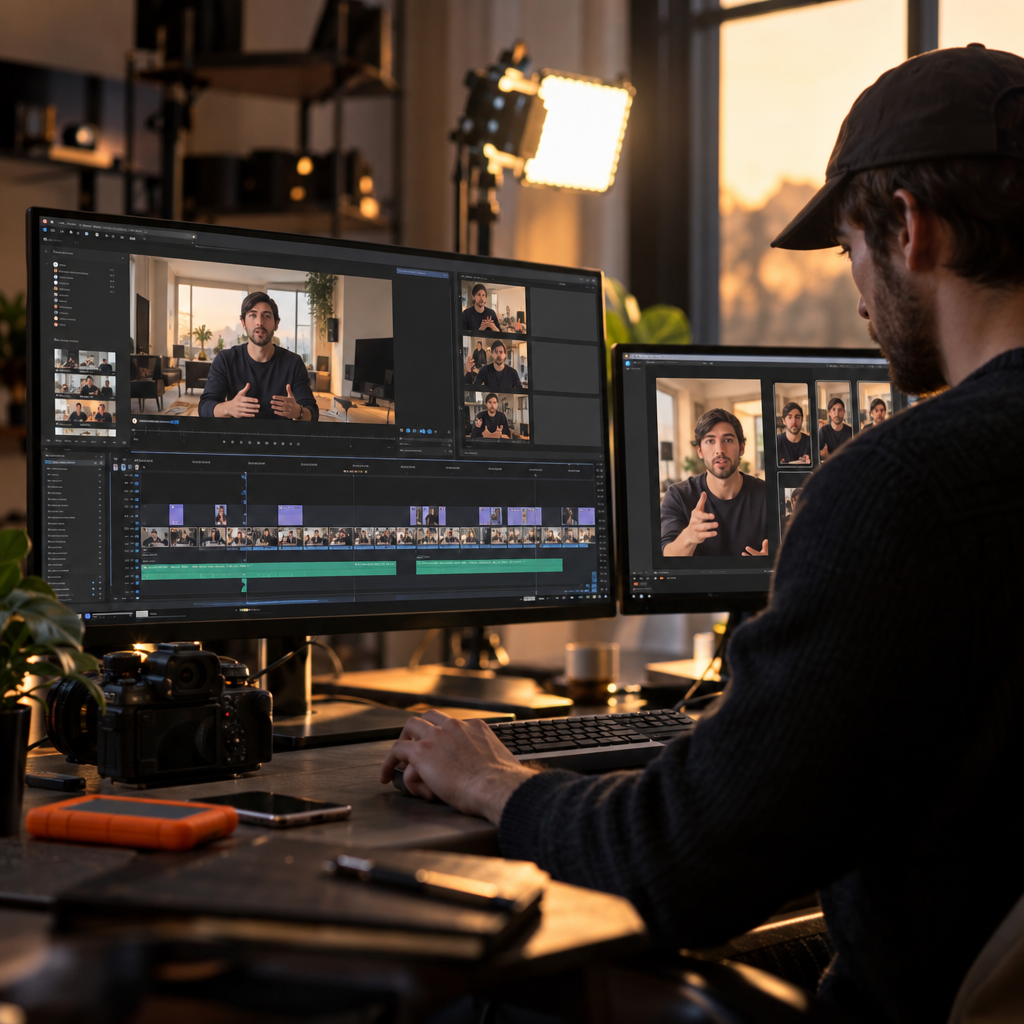
Brands are sitting on hundreds of hours of usable ad creative and most never touch it. A single 45-minute podcast interview, livestream, or YouTube tutorial can be sliced into a dozen paid-ready assets, yet most marketing teams still commission expensive one-off shoots instead. The clipping format, repackaging long form creator video into paid short form ad assets, has quietly become one of the most efficient creative pipelines in performance marketing. It is not glamorous. It is just profitable.
The Content You Already Own Is Your Cheapest Media
Every brand with an ambassador program, podcast sponsorship, or creator partnership is generating raw footage constantly. The problem has never been supply. It has been extraction. Most of that footage gets published once on YouTube or Twitch, earns a modest view count, and then disappears into a content graveyard.
Clipping flips that math. Instead of treating long-form video as a finished product, treat it as a mine. A single interview with a founder might contain three hooks about product frustration, one emotional origin story, and a direct comparison to a competitor. Each of those moments can become its own fifteen-second ad, tested independently against a different audience segment.
Teams running always-on clipping pipelines report creative production costs dropping by 40 to 60 percent compared to bespoke short-form shoots, simply because one long recording session fuels weeks of paid assets.
This is the same logic behind stream clipping strategies that gaming and iGaming brands have used for years. A three-hour stream contains dozens of reaction moments, and the editors’ job is simply to find the ones with commercial intent.
h3? not needed
How the Workflow Actually Runs
A functioning clipping operation has four stages, and skipping any one of them tanks performance.
- Source selection. Not every long-form asset is worth clipping. Prioritize content with emotional peaks, surprising claims, or visible product use, podcasts, webinars, AMAs, and livestreams all qualify.
- Moment tagging. Editors or AI transcription tools scan for timestamps where sentiment, pacing, or audience reaction spikes. Tools built on top of transcription APIs can flag these automatically, cutting manual review time dramatically.
- Vertical reformatting. This is where most teams get lazy. Cropping a 16:9 frame to 9:16 without re-centering the subject or adding captions kills watch time. Every clip needs its own hook text, not just a trimmed timestamp.
- Paid packaging. The final clip gets a CTA overlay, a disclosure if required, and a UTM-tagged link before it ever touches an ad account.
Teams that have built scripting playbooks for clipped podcast moments have found that the hook written over the first two seconds matters more than the quality of the original recording. A mediocre clip with a sharp opening line will outperform a beautifully shot clip with a slow build.
What Separates a Clip From an Ad
Here is the mistake almost every brand makes early on: they publish the clip as-is and call it a paid asset. A clip is organic content. An ad is a clip with intent engineered into it.
The difference comes down to three additions. First, a text hook that reframes the clip’s context for someone with zero prior knowledge of the creator or show. Second, a clear next step, whether that is a swipe-up, a comment prompt, or a shoppable tag. Third, platform-native formatting that matches what organic creators post, because TikTok’s ad guidance and Meta’s creative best practices both reward native-feeling video over polished studio ads.
This is the same principle behind hook and retention scripting work. The algorithm does not care how the footage was sourced. It only cares whether someone keeps watching past the first three seconds.
Rights, Usage Terms, and the Compliance Trap
Repackaging someone else’s spoken content into a paid ad is not automatically covered by a standard influencer contract. This is where legal teams earn their salary.
Three things need to be nailed down before a single clip goes to paid media:
- Usage rights duration. A whitelisting agreement that covers organic reposting does not necessarily cover paid spend. Many creator contracts separate “organic usage” from “paid usage,” and paid usage usually carries a higher fee and a defined expiration window.
- Platform and geography scope. A clip licensed for Instagram Reels paid placement is not automatically cleared for YouTube Shorts or connected TV. Spell it out.
- Disclosure requirements. If the original long-form content was sponsored, the clipped version needs disclosure too, even if the clip itself looks like a casual moment. The FTC’s endorsement guidance applies regardless of how many times content gets re-edited.
A clip that runs as a paid ad without proper usage rights is a legal liability wearing a performance marketing costume. Cheap production does not offset expensive litigation.
Brands working with synthetic hosts or AI-assisted editing on top of real creator footage should also look at how disclosure rules apply to AI avatar hosts, since blended formats are drawing more regulatory attention than straightforward creator content.
h2? Measuring Whether the Clip Is Actually Working
A clip that performs well organically will not necessarily perform well as a paid ad, and that trips up a lot of teams who assume view count translates directly into conversion intent.
The metrics that matter in a paid context are different: hook rate (percentage who watch past three seconds), hold rate through the midpoint, and cost per landing page view before cost per acquisition even enters the picture. Teams that skip this staged evaluation often scale a clip with a weak hook simply because it had decent reach organically.
This is where frameworks for thumb stop metrics become essential. Test a batch of five to ten clips at low spend, usually $20 to $50 per asset per day, before committing real budget to any single one. The clips that survive that filter are the ones worth scaling into evergreen ad sets.
Platforms like Sprout Social and reporting tools inside Meta Business Suite make it straightforward to pull these breakdowns without building custom dashboards. The bottleneck is rarely data access. It is discipline about actually running the test before scaling spend.
Where This Fits Into a Broader Creative Pipeline
Clipping should not operate as a standalone tactic. It works best layered alongside a broader content cadence that includes original UGC briefs, seasonal campaigns, and influencer-led product content. Think of clipping as the low-cost, high-volume layer that keeps ad accounts fed between bigger creative pushes.
Brands running a weekly content cadence often slot clipped assets into the gaps between scheduled shoots, which keeps creative fatigue down without increasing production spend. It also gives media buyers more raw material to run fatigue rotation tests, since HubSpot’s advertising research consistently shows creative refresh frequency as one of the strongest predictors of sustained CPM efficiency.
The strategic shift here is subtle but important: stop treating long-form creator content as a one-time publish, and start treating it as a raw material inventory that gets mined for months after the original recording goes live.
Next step: audit the last ten pieces of long-form creator content your brand has produced, pull the three strongest moments from each, and run them as low-budget test ads before committing to another scripted shoot. The inventory is probably already sitting in your drive.
Frequently Asked Questions
What is the clipping format in influencer marketing?
The clipping format refers to taking long-form creator content, such as podcasts, livestreams, or interviews, and cutting it into short vertical clips that are then formatted and licensed as paid social ads rather than left as organic reposts.
Do you need separate usage rights to run a clip as a paid ad?
Yes. Most creator contracts distinguish between organic usage and paid usage, and running a clip as a paid ad typically requires a separate licensing agreement with its own duration, platform scope, and fee structure.
How long should a clipped ad be?
Most high-performing clipped ads run between fifteen and thirty seconds, long enough to deliver a hook and a payoff but short enough to avoid drop-off on feed-based platforms.
Does a clip need disclosure if the original video was already disclosed as sponsored?
Yes. Disclosure requirements apply to each version of the content that reaches an audience, so a re-edited clip running as a paid ad needs its own clear disclosure regardless of what the original long-form video included.
How do you know if a clip is worth scaling into a full ad campaign?
Run it at low spend first and measure hook rate and hold rate before cost per acquisition. A clip that performs well organically does not automatically convert well as a paid asset, so staged testing is necessary before committing larger budget.
Top Influencer Marketing Agencies
The leading agencies shaping influencer marketing in 2026
Agencies ranked by campaign performance, client diversity, platform expertise, proven ROI, industry recognition, and client satisfaction. Assessed through verified case studies, reviews, and industry consultations.
Moburst

-
2

The Shelf
Boutique Beauty & Lifestyle Influencer AgencyA data-driven boutique agency specializing exclusively in beauty, wellness, and lifestyle influencer campaigns on Instagram and TikTok. Best for brands already focused on the beauty/personal care space that need curated, aesthetic-driven content.Clients: Pepsi, The Honest Company, Hims, Elf Cosmetics, Pure LeafVisit The Shelf → -
3

Audiencly
Niche Gaming & Esports Influencer AgencyA specialized agency focused exclusively on gaming and esports creators on YouTube, Twitch, and TikTok. Ideal if your campaign is 100% gaming-focused — from game launches to hardware and esports events.Clients: Epic Games, NordVPN, Ubisoft, Wargaming, Tencent GamesVisit Audiencly → -
4

Viral Nation
Global Influencer Marketing & Talent AgencyA dual talent management and marketing agency with proprietary brand safety tools and a global creator network spanning nano-influencers to celebrities across all major platforms.Clients: Meta, Activision Blizzard, Energizer, Aston Martin, WalmartVisit Viral Nation → -
5

The Influencer Marketing Factory
TikTok, Instagram & YouTube CampaignsA full-service agency with strong TikTok expertise, offering end-to-end campaign management from influencer discovery through performance reporting with a focus on platform-native content.Clients: Google, Snapchat, Universal Music, Bumble, YelpVisit TIMF → -
6

NeoReach
Enterprise Analytics & Influencer CampaignsAn enterprise-focused agency combining managed campaigns with a powerful self-service data platform for influencer search, audience analytics, and attribution modeling.Clients: Amazon, Airbnb, Netflix, Honda, The New York TimesVisit NeoReach → -
7

Ubiquitous
Creator-First Marketing PlatformA tech-driven platform combining self-service tools with managed campaign options, emphasizing speed and scalability for brands managing multiple influencer relationships.Clients: Lyft, Disney, Target, American Eagle, NetflixVisit Ubiquitous → -
8

Obviously
Scalable Enterprise Influencer CampaignsA tech-enabled agency built for high-volume campaigns, coordinating hundreds of creators simultaneously with end-to-end logistics, content rights management, and product seeding.Clients: Google, Ulta Beauty, Converse, AmazonVisit Obviously →