


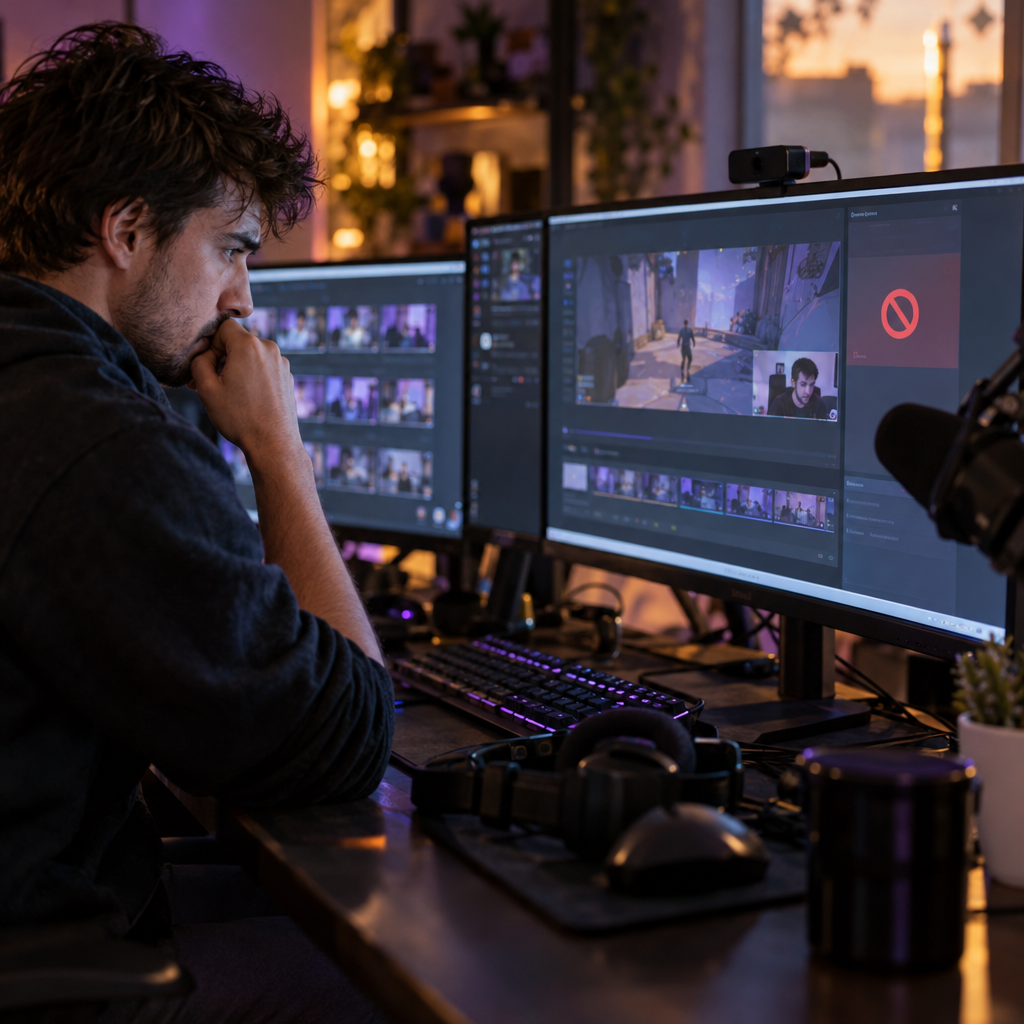
Twitch won’t take your money if you sell liquor, sportsbooks, or nicotine pouches. Its ad policy locks out entire categories, from alcohol to CBD to crypto exchanges, leaving brands with budget and no button to press. That’s exactly why Twitch stream clipping tactics have become the default growth lever for ad-restricted categories: no media buy required, just smart seeding of moments that creators and fans clip, remix, and redistribute on their own.
Why Paid Promotion Is a Dead End Here
Twitch’s advertiser policy is blunt about who’s welcome. Alcohol, gambling, tobacco, CBD, firearms, and several financial services categories face outright restrictions or heavy limitations on display and video ads. Even brands that technically qualify often get flagged during creative review, burning weeks of lead time before a campaign ever goes live.
So the brands that still want a presence on Twitch (and plenty do, because the platform’s gaming and lifestyle audience skews young, engaged, and hard to reach elsewhere) have to find reach that doesn’t route through the ad auction. Clipping is that route.
What “Clipping” Actually Means in This Context
A Twitch clip is a short, user-generated excerpt pulled from a live broadcast, typically 15 to 60 seconds. Viewers create them natively using Twitch’s built-in clip tool, then share them to X, Discord, Reddit, or TikTok. Third-party clippers (fans or paid freelancers who specialize in cutting highlight reels) often repost the best moments across YouTube Shorts and TikTok within hours of a stream ending.
For a brand that can’t run a pre-roll ad, this is the workaround: get your product, placement, or moment into the stream in a way that’s naturally clippable, then let the distribution happen organically through fans and clip networks rather than a media plan.
Clipping shifts the cost center from media spend to creative seeding: you’re not buying reach, you’re engineering moments worth stealing.
Seeding Clippable Moments Without Buying a Single Impression
The tactic works best when the brand integration itself is the content, not an interruption to it. A few patterns that consistently generate organic clip volume:
- Reaction triggers. Branded challenges, unboxings, or taste tests built into a streamer’s format tend to produce the exact spike in facial expression or chat reaction that makes a clip worth cutting.
- Timed drops. Coordinating a product reveal or giveaway announcement for a predictable moment in the stream (a boss fight, a subathon milestone) gives clippers a reason to capture that specific segment.
- Chat-driven call and response. Branded emotes, hashtags, or chat commands that spike during a sponsored segment create a visual signal in the clip itself, even without a logo on screen.
- Multi-streamer moments. Running the same light-touch integration across several creators on the same night increases the odds that at least one clip goes wide, since virality on Twitch is unpredictable and format-dependent.
None of this requires a media insertion order. It requires a creative brief that treats the live moment as the asset, and a streamer relationship built on more than a one-off invoice.
Clipper Networks: Free Labor or Hidden Risk?
Here’s where it gets interesting for ad-restricted brands. A whole secondary economy of clippers exists on Twitch and Kick, cutting highlight reels for popular streamers and reposting them across Shorts and TikTok for their own ad revenue or affiliate links. Brands can tap into this ecosystem informally (by simply creating clip-worthy moments) or formally, by paying clip networks to prioritize sponsored segments.
The formal route needs guardrails. Our clip network vetting playbook covers the due diligence most brands skip: verifying who actually owns distribution rights to a clip, whether the network’s audience overlaps with your target demo, and what happens if a clipper reposts your branded moment next to content that violates platform guidelines or your own brand safety policy. Ad-restricted categories carry extra exposure here. A liquor brand’s product showing up unedited in a clip reposted to an under-18-skewing TikTok account is a compliance headache nobody wants to explain to legal.
Unpaid distribution still carries brand risk. If you don’t control where a clip lands, you need a policy for what happens when it lands somewhere you wouldn’t have chosen.
Cross-Platform Amplification: Where the Real Reach Lives
Twitch clips rarely stay on Twitch. The real audience multiplier happens when a clip gets cut down further and reposted to YouTube Shorts or TikTok, where the algorithmic discovery engines are far more generous than Twitch’s own clip browsing feature. YouTube alone has highlighted the scale of this shift, with Shorts surpassing 200 billion daily views across the format as of recent platform disclosures.
That’s why many Twitch-first clipping strategies are really cross-platform clipping strategies in disguise. Our YouTube Shorts clipping strategy guide and clipping economy CPM compliance guide both dig into how brands structure rights and compliance when a single piece of live content gets atomized into dozens of short-form reposts, each with its own disclosure and brand safety considerations.
For ad-restricted brands specifically, this matters twice over. Not only is Twitch itself off-limits for paid promotion, but TikTok and YouTube also enforce their own restricted-category ad policies. The clip, however, travels as organic content, not an ad unit, which is precisely what makes it a viable workaround as long as disclosure rules are followed.
Compliance Still Applies, Even Without a Media Buy
Skipping the ad auction doesn’t mean skipping regulation. The FTC’s endorsement guidance applies regardless of whether a brand paid for a placement or simply gifted product and briefed a streamer on a segment. If a creator received compensation, free product, or a material connection to your brand, disclosure is required in the stream and ideally baked into any clip derived from it, per FTC endorsement guidelines.
This gets messy fast with clips, because a 30-second excerpt reposted by a third party often strips out the original disclosure that appeared in the full broadcast. Brands in alcohol, gambling, and pharma-adjacent categories carry additional regulatory exposure here, since many jurisdictions require persistent disclosure regardless of content length. Build disclosure language into the creator’s on-screen graphics or verbal read, not just a description box, so it survives the clip.
It’s also worth revisiting how Twitch’s Drops and watch-time incentive programs interact with clipping campaigns, since the same streams that generate clip volume are often the ones running Drops to boost live viewership. Our Drops campaign ROI guide breaks down how to structure watch-time incentives without tripping Twitch’s own promotional policies.
Measuring ROI When There’s No Media Line Item
Without ad spend, brands lose their easiest ROI shortcut: cost per thousand impressions pulled straight from a platform dashboard. Clipping ROI has to be reconstructed manually, tracking a few proxy metrics instead:
- Clip volume and reach. Use Twitch’s clip analytics alongside manual tracking of reposts on TikTok and YouTube Shorts to estimate total organic impressions.
- Branded term lift. Spikes in search volume or social mentions of a product name within 24 to 48 hours of a stream are a strong directional signal, even without platform-level attribution.
- Affiliate or promo code redemption. If the integration included a unique code or link, redemption rate becomes the cleanest ROI proxy available.
- Sentiment in clip comments. Chat and comment sentiment on reposted clips tells you whether the moment landed as entertainment or as an obvious ad, which matters enormously for restricted categories trying to avoid backlash.
Marketing teams accustomed to standardized ad spend benchmarks will find this reporting style unfamiliar at first. Treat it more like earned media measurement than performance marketing, because structurally, that’s what it is.
Building a Repeatable Clipping Program, Not a One-Off Stunt
The brands getting consistent value from this approach aren’t chasing a single viral clip. They’re running a cadence: regular integrations with a small roster of streamers, consistent branded visual or verbal cues that make clips instantly recognizable, and a lightweight rights agreement that lets the brand repost the best clips to its own channels without a separate negotiation each time.
That last point matters more than it sounds. A clip that performs well organically is free creative. Brands that build repurposing rights into the original creator agreement can run that same clip across owned social, email, or even out-of-home without paying a second licensing fee. For categories that can’t buy Twitch ads, this owned-channel repurposing is often where the real ROI shows up, well after the live stream has ended.
Vetting the creators themselves still matters just as much as vetting clip networks. The same due diligence principles that apply to repost arrangements on other platforms, like those outlined in our creator vetting checklist, translate directly to Twitch: confirm audience demographics, check for prior brand safety incidents, and get clarity on who owns derivative content before the first stream goes live.
Frequently Asked Questions
FAQs
Why can’t alcohol, gambling, and CBD brands buy ads directly on Twitch?
Twitch restricts or outright bans advertising in several categories, including alcohol, gambling, tobacco, CBD, and certain financial services, as part of its advertiser content policy. Brands in these verticals typically can’t get ad creative approved even if they have budget allocated.
Is Twitch clipping considered advertising under FTC rules?
If a creator received payment, free product, or any material benefit for the segment shown in a clip, FTC endorsement disclosure rules still apply, regardless of whether the content was distributed as a paid ad or an organic clip.
How do brands measure ROI from organic Twitch clips without ad analytics?
Most brands track clip volume and reposts across platforms, branded search lift, promo code redemptions, and comment sentiment as proxy metrics, since there’s no standardized impression count the way there is with paid media.
Do brands need permission to repost clips a creator or fan made?
Rights ownership varies by platform and by the original creator agreement. Brands should negotiate repurposing rights for owned-channel use before the stream airs, rather than assuming clips are free to reuse after the fact.
What’s the biggest risk with relying on third-party clip networks?
Loss of placement control. A branded clip can end up reposted alongside content that violates brand safety guidelines or reaches an unintended audience, which is a particular concern for age-restricted categories like alcohol and gambling.
Next step: audit your current streamer roster for clippable moment potential this week, then build disclosure language directly into on-screen segments so it survives repost and resizing across TikTok, YouTube Shorts, and X.
Top Influencer Marketing Agencies
The leading agencies shaping influencer marketing in 2026
Agencies ranked by campaign performance, client diversity, platform expertise, proven ROI, industry recognition, and client satisfaction. Assessed through verified case studies, reviews, and industry consultations.
Moburst

-
2

The Shelf
Boutique Beauty & Lifestyle Influencer AgencyA data-driven boutique agency specializing exclusively in beauty, wellness, and lifestyle influencer campaigns on Instagram and TikTok. Best for brands already focused on the beauty/personal care space that need curated, aesthetic-driven content.Clients: Pepsi, The Honest Company, Hims, Elf Cosmetics, Pure LeafVisit The Shelf → -
3

Audiencly
Niche Gaming & Esports Influencer AgencyA specialized agency focused exclusively on gaming and esports creators on YouTube, Twitch, and TikTok. Ideal if your campaign is 100% gaming-focused — from game launches to hardware and esports events.Clients: Epic Games, NordVPN, Ubisoft, Wargaming, Tencent GamesVisit Audiencly → -
4

Viral Nation
Global Influencer Marketing & Talent AgencyA dual talent management and marketing agency with proprietary brand safety tools and a global creator network spanning nano-influencers to celebrities across all major platforms.Clients: Meta, Activision Blizzard, Energizer, Aston Martin, WalmartVisit Viral Nation → -
5

The Influencer Marketing Factory
TikTok, Instagram & YouTube CampaignsA full-service agency with strong TikTok expertise, offering end-to-end campaign management from influencer discovery through performance reporting with a focus on platform-native content.Clients: Google, Snapchat, Universal Music, Bumble, YelpVisit TIMF → -
6

NeoReach
Enterprise Analytics & Influencer CampaignsAn enterprise-focused agency combining managed campaigns with a powerful self-service data platform for influencer search, audience analytics, and attribution modeling.Clients: Amazon, Airbnb, Netflix, Honda, The New York TimesVisit NeoReach → -
7

Ubiquitous
Creator-First Marketing PlatformA tech-driven platform combining self-service tools with managed campaign options, emphasizing speed and scalability for brands managing multiple influencer relationships.Clients: Lyft, Disney, Target, American Eagle, NetflixVisit Ubiquitous → -
8

Obviously
Scalable Enterprise Influencer CampaignsA tech-enabled agency built for high-volume campaigns, coordinating hundreds of creators simultaneously with end-to-end logistics, content rights management, and product seeding.Clients: Google, Ulta Beauty, Converse, AmazonVisit Obviously →