


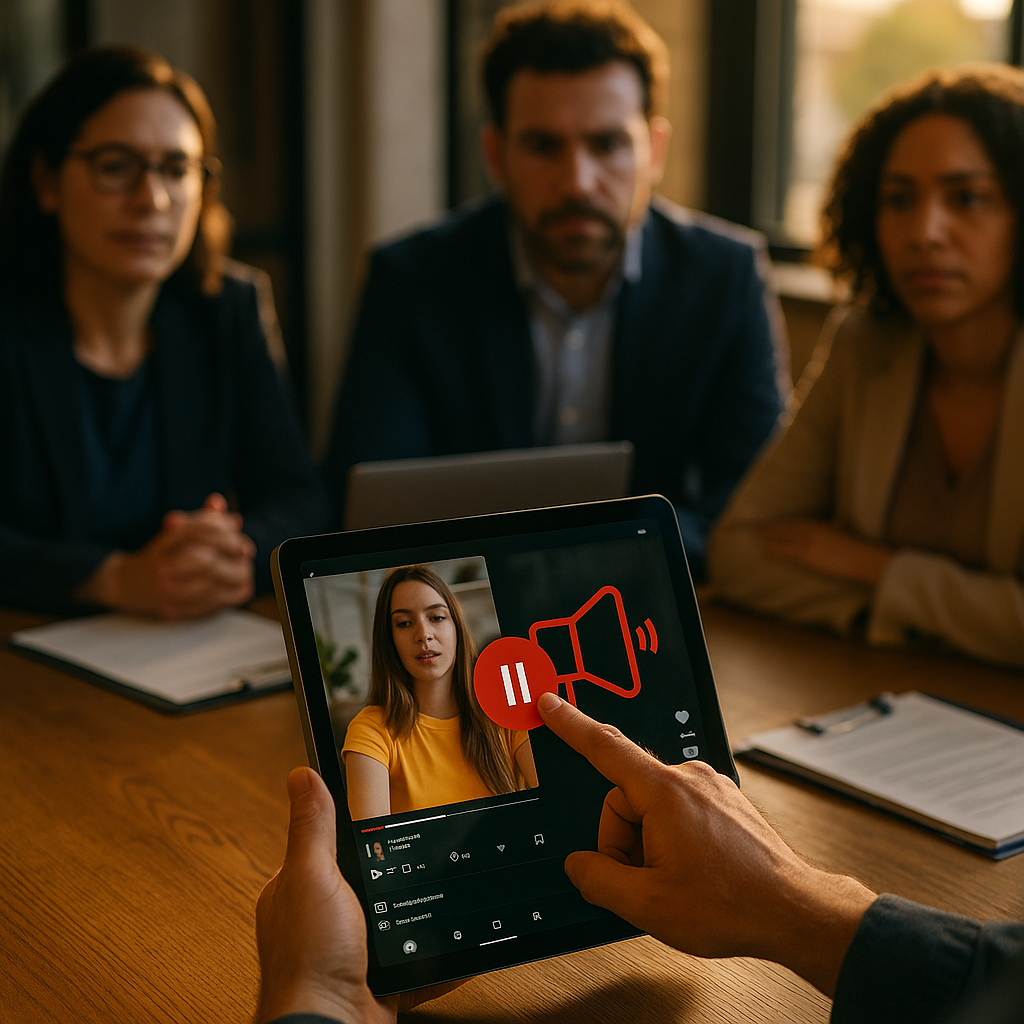
Only 34% of brands running paid amplification on creator content say they have a formal sign off process that includes legal, media buying, and the creator team in the same room. The rest are improvising. If your whitelisting spend has ever gotten frozen because nobody could confirm usage rights, you already know how expensive that improvisation gets. Building a cross functional team to govern creator licensing and paid amplification isn’t a nice to have anymore. It’s the difference between scaling a program and getting an FTC letter.
Why Licensing and Amplification Live in Different Departments (Until They Don’t)
Here’s the structural problem. Creator licensing usually sits with brand or influencer marketing. Paid amplification sits with media buying. Legal shows up only when something breaks. These teams have different KPIs, different vendors, and often different reporting lines up to the CMO. Nobody owns the handoff between “we signed this creator” and “we’re now spending $40,000 boosting their post through a branded ad account.”
That gap used to be tolerable when whitelisting was a rounding error in the budget. It isn’t anymore. Paid social platforms have made creator whitelisting (running ads through a creator’s handle) a core feature, not a workaround. Meta’s Partnership Ads and TikTok’s Spark Ads have normalized the practice, but normalization doesn’t mean the rights paperwork keeps pace. Contracts written for organic posting rarely cover paid usage duration, geographic scope, or platform specificity.
The most common licensing failure isn’t fraud or bad intent. It’s a media buyer amplifying a post whose usage rights expired two weeks earlier because nobody flagged the calendar.
The Cost of Governance Gaps
Let’s talk numbers, because that’s what gets budget approved for governance work. A single unauthorized paid usage claim can trigger creator legal fees, platform ad account holds, and in some cases a full campaign pause while rights get renegotiated under duress (which always costs more than negotiating upfront). Multiply that across a portfolio of 50 or 100 active creators and the exposure isn’t hypothetical.
There’s also the slower bleed: wasted media spend. When a creator whitelisting agreement lapses mid flight, brands either pull the ad (losing pacing and learning phase progress) or keep running it and hope nobody notices. Neither is a strategy. For teams already wrestling with attribution, this is exactly the kind of leak covered in our breakdown of creator whitelisting rights and the org structures that actually prevent chaos.
Regulatory risk compounds this. The FTC’s endorsement guidance doesn’t just cover disclosure, it extends to how paid content is represented once it enters an ad ecosystem. If your paid amplification team doesn’t know a post’s disclosure status, you’re one audit away from a problem that’s entirely avoidable.
Who Actually Belongs on This Team?
A governance team doesn’t need to be large. It needs the right seats filled, with clear decision rights attached to each one.
- Creator or influencer marketing lead: owns the relationship, understands contract terms, and knows which creators have appetite for amplification.
- Paid media strategist: flags which content is performing organically and worth boosting, before legal review starts, not after.
- Legal or contracts counsel: reviews usage rights language, sets standard licensing templates, and approves exceptions.
- Brand safety or compliance owner: tracks disclosure compliance and regional regulatory differences, especially relevant for global campaigns.
- Finance or procurement liaison: ensures licensing fees and media spend get reconciled against the same budget line, not two separate ones that never talk.
Notice legal isn’t the bottleneck here, they’re a standing member with pre approved templates for common scenarios. That’s the shift most companies miss: legal involvement should be built into the workflow at the start, not bolted on as a final gate.
Building the Approval Workflow That Doesn’t Slow You Down
Governance dies the moment it becomes a drag on campaign velocity. Media teams will route around a slow process, and then you’re back to square one. The fix is a tiered approval model based on spend and risk, not a single universal checklist.
- Tier one (low risk): boosting under $5,000, existing creator with standard licensing language already in contract. Approved by media lead alone, logged for audit.
- Tier two (moderate risk): spend between $5,000 and $50,000, or usage extending beyond the original contract window. Requires legal sign off within a 24 to 48 hour SLA.
- Tier three (high risk): six figure spend, multi region usage, or any creator flagged for prior compliance issues. Full cross functional review.
This mirrors the logic in our creator payment SLA work: speed and risk aren’t opposites if you build tiers instead of a single gate. The same tiering logic works for licensing approvals, and it keeps legal from becoming the department everyone resents.
Where Legal, Media, and Creator Ops Collide
The friction points are predictable once you’ve seen a few cycles. Media buyers want to extend a high performing ad past its original flight date. Legal sees an expired usage window. Creator ops is stuck negotiating a renewal with a creator who now has more leverage because the brand clearly needs the content.
Solve this before it happens by building auto renewal clauses into standard licensing contracts, with pre negotiated rate increases for extended usage. It costs a bit more upfront in creator fees, but it removes the mid campaign scramble entirely. Teams managing global rollouts should also read our regional breakdown on compliance requirements by market, since disclosure and licensing rules diverge sharply between the US, UK, and EU.
Platform policy also shifts underneath you. Meta’s business tools documentation and TikTok’s advertising policies both update their creator content and Spark Ads terms periodically. Assign someone on the governance team, usually the paid media strategist, to monitor these changes quarterly. Nobody else will do it, and policy drift is how compliant programs quietly become noncompliant.
If your licensing contracts don’t specify paid usage duration separately from organic posting rights, assume you have zero coverage for amplification. Silence in a contract favors the creator, not the brand.
Measuring Whether the Governance Model Works
Governance without measurement is just bureaucracy. Track a small set of operational metrics quarterly:
- Average time from amplification request to approval, by tier
- Percentage of paid amplification spend covered by valid, unexpired licensing terms
- Number of compliance flags caught pre launch versus post launch
- Creator renewal rate for whitelisting agreements (a proxy for whether your terms are fair)
If approval times are climbing, your tiering thresholds are probably miscalibrated, not your team. If compliance flags keep surfacing post launch, your intake process is missing information upfront, likely because creator ops and media aren’t sharing a shared brief template. According to eMarketer’s creator economy research, brands running structured cross functional creator programs report meaningfully faster campaign turnaround than those managing licensing ad hoc, which tracks with what most operators already sense anecdotally.
Budget accountability matters too. Reconcile licensing fees and paid media spend on the same P&L view so finance can actually evaluate ROI per creator, not per department. Our piece on vendor consolidation and audit sequencing covers how to bring fragmented spend into a single reporting line without a full platform migration. For teams still negotiating base rates, the blended rate card approach also helps separate organic and paid fee structures cleanly, which makes the governance handoff far less ambiguous.
Frequently Asked Questions
Who should own creator licensing governance if we don’t have a dedicated legal team?
Assign ownership to whoever manages contracts today, often the head of influencer marketing or a procurement lead, and build a standing relationship with outside counsel for tier two and tier three reviews. The key is having one accountable owner, not distributing responsibility so thin that nobody actually checks.
How big does a company need to be before this cross functional structure makes sense?
Any brand running paid amplification on creator content, even at $10,000 a month, benefits from at least a lightweight version: one media owner, one contracts reviewer, and a shared tracking sheet. Full tiered workflows tend to become necessary once quarterly creator spend crosses roughly six figures.
What’s the biggest mistake brands make when setting up this governance team?
Treating legal as a final approval gate instead of a standing member with pre built templates. That single change is usually what determines whether the process gets adopted or bypassed by media buyers under deadline pressure.
Do whitelisting rights need to be renegotiated for every campaign?
Not if your base contract includes clear paid usage terms with defined duration and platform scope upfront. Renegotiation should only be needed when usage extends beyond those original terms, which is why building flexible windows into initial contracts saves time later.
How often should the governance team review platform policy changes?
Quarterly at minimum. Platforms like Meta and TikTok update creator content and branded ad tools regularly, and policy drift is one of the most common causes of unintentional noncompliance in whitelisting programs.
Start small: pull your media lead, one contracts reviewer, and your creator ops owner into a single 30 minute review of your current whitelisting exposure this week. That one meeting will surface more risk than any policy document sitting unread in a shared drive.
Top Influencer Marketing Agencies
The leading agencies shaping influencer marketing in 2026
Agencies ranked by campaign performance, client diversity, platform expertise, proven ROI, industry recognition, and client satisfaction. Assessed through verified case studies, reviews, and industry consultations.
Moburst

-
2

The Shelf
Boutique Beauty & Lifestyle Influencer AgencyA data-driven boutique agency specializing exclusively in beauty, wellness, and lifestyle influencer campaigns on Instagram and TikTok. Best for brands already focused on the beauty/personal care space that need curated, aesthetic-driven content.Clients: Pepsi, The Honest Company, Hims, Elf Cosmetics, Pure LeafVisit The Shelf → -
3

Audiencly
Niche Gaming & Esports Influencer AgencyA specialized agency focused exclusively on gaming and esports creators on YouTube, Twitch, and TikTok. Ideal if your campaign is 100% gaming-focused — from game launches to hardware and esports events.Clients: Epic Games, NordVPN, Ubisoft, Wargaming, Tencent GamesVisit Audiencly → -
4

Viral Nation
Global Influencer Marketing & Talent AgencyA dual talent management and marketing agency with proprietary brand safety tools and a global creator network spanning nano-influencers to celebrities across all major platforms.Clients: Meta, Activision Blizzard, Energizer, Aston Martin, WalmartVisit Viral Nation → -
5

The Influencer Marketing Factory
TikTok, Instagram & YouTube CampaignsA full-service agency with strong TikTok expertise, offering end-to-end campaign management from influencer discovery through performance reporting with a focus on platform-native content.Clients: Google, Snapchat, Universal Music, Bumble, YelpVisit TIMF → -
6

NeoReach
Enterprise Analytics & Influencer CampaignsAn enterprise-focused agency combining managed campaigns with a powerful self-service data platform for influencer search, audience analytics, and attribution modeling.Clients: Amazon, Airbnb, Netflix, Honda, The New York TimesVisit NeoReach → -
7

Ubiquitous
Creator-First Marketing PlatformA tech-driven platform combining self-service tools with managed campaign options, emphasizing speed and scalability for brands managing multiple influencer relationships.Clients: Lyft, Disney, Target, American Eagle, NetflixVisit Ubiquitous → -
8

Obviously
Scalable Enterprise Influencer CampaignsA tech-enabled agency built for high-volume campaigns, coordinating hundreds of creators simultaneously with end-to-end logistics, content rights management, and product seeding.Clients: Google, Ulta Beauty, Converse, AmazonVisit Obviously →