


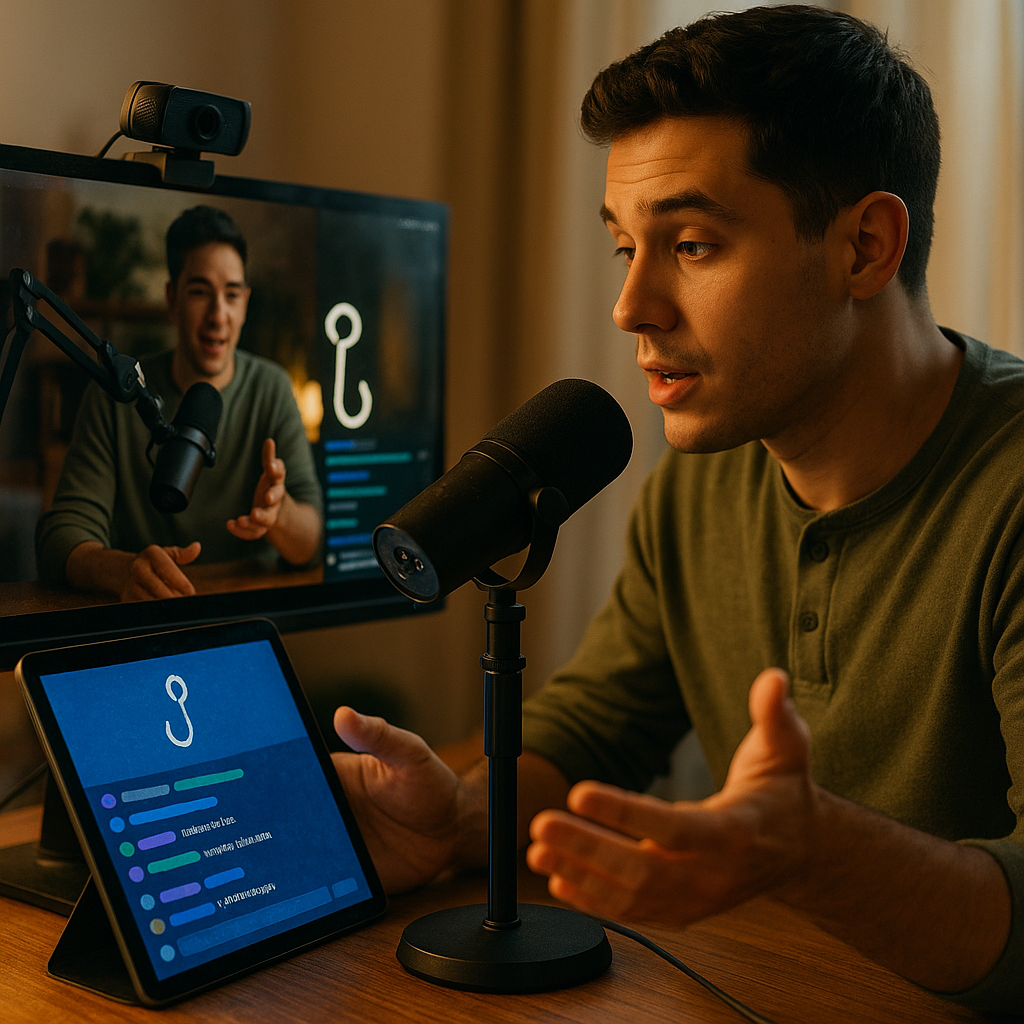
Only 23% of livestream viewers make it past the eight minute mark, according to recent emarketer research on shoppable video engagement. That means most brands are building 45 minute broadcasts for an audience that mentally checks out before the halfway point. The fix isn’t a better host or a bigger discount. It’s designing interactive livestream segments that force a decision, a click, or a reaction every few minutes, before the drop off happens.
The 90 Second Rule: Why Mid Broadcast Hooks Matter
Viewers don’t abandon livestreams because the product is boring. They leave because nothing asks anything of them. A passive viewer scrolling their feed while your host talks is one notification away from gone. The brands winning at live commerce treat every 90 seconds as a checkpoint: a poll, a flash claim, a comment prompt, something that requires input.
This isn’t a new idea in broadcast media. Radio hosts have used call in segments for decades to keep listeners tethered. Livestream shopping just digitized the mechanic and gave it a checkout button. If you’ve read our livestream shopping playbook, you already know the foundational structure. This piece goes deeper into the specific segment design that turns idle watchers into active buyers mid broadcast.
A livestream without a forced interaction every 90 to 120 seconds is just a video call with worse lighting and no conversion path.
Building the Interrupt: Poll, Prize, or Product Drop?
Not every interruption converts equally. Three formats consistently outperform in mid roll testing across beauty, fashion, and CPG verticals:
- The binary poll: “Comment A for the matte finish, B for dewy.” Low effort, high response, and it feeds the algorithm engagement signals that platforms reward with wider distribution.
- The countdown claim: A limited quantity offer that expires in 3 minutes, visible on screen with a live counter. This is the single highest converting mechanic in live commerce because it manufactures urgency without a fake discount.
- The surprise drop: An unannounced product reveal mid stream, often tied to a code only visible to active viewers. This rewards attention and trains your audience to stay tuned for the next one.
The mistake most brands make is running the same mechanic on repeat. Viewers adapt fast. If every segment is a poll, the poll becomes wallpaper. Rotate the format, but keep the rhythm identical: interrupt, respond, resolve, sell.
For the exact scripting cadence that turns a pinned comment into a checkout click, our breakdown on pinned comment checkout scripts walks through the line by line dialogue hosts use to close without sounding scripted.
Comment Prompts Are Not the Same as Comment Bait
There’s a real distinction between engineering a genuine reaction and baiting outrage for reach. Regulators and platforms are both paying closer attention to manipulative engagement tactics, and livestream hosts under pressure to hit interaction quotas sometimes cross the line into misleading claims or manufactured controversy.
Comment prompts should invite opinion, not provoke conflict. “Which color would you wear to work?” works. “Comment if you think this brand is overpriced” technically drives comments, but it also drives sentiment you can’t control on a live, unedited feed. Our guide on engineering replies without rage bait risk covers the specific phrasing patterns that keep engagement high and brand safety intact.
Where Interactive Segments Create Compliance Risk
Live commerce moves fast, and fast environments breed compliance mistakes. Hosts improvising urgency (“last one, I promise”) without an actual inventory check can trigger deceptive advertising complaints. The FTC’s endorsement guidance applies just as much to live, unscripted commerce as it does to a polished pre recorded ad. If a claim about scarcity, results, or pricing isn’t true in the moment it’s said, that’s a liability, not a marketing tactic.
Build a compliance checklist into your pre broadcast brief:
- Verify inventory counts before any countdown or scarcity claim goes live.
- Require hosts to disclose paid partnerships verbally at the start of each segment, not just in a text overlay.
- Have a moderator flagged to catch and correct any unsubstantiated product claims in real time.
Skipping this step because “it’s just a livestream” is how brands end up in a platform trust and safety review. It’s cheaper to build the checklist than to clean up after a viral clip taken out of context.
The Tech Stack Behind Seamless Interruptions
Interactive segments live or die on execution speed. If your poll takes 20 seconds to load or your discount code doesn’t auto apply, you’ve broken the exact urgency you were trying to build. Most live commerce platforms, including Meta’s live shopping tools and native TikTok Shop integrations via TikTok’s advertiser platform, now support overlay polls and pinned product cards that update in real time. The bottleneck usually isn’t the platform, it’s the production team’s rehearsal.
Run a full dry run with your host, moderator, and tech operator at least once before every broadcast. Treat it like a live sports broadcast, not a casual chat.
Poll and reaction overlays deserve their own production standard because a laggy or visually cluttered overlay does more damage than no overlay at all. Our detailed brief on poll and reaction overlay design covers placement, timing, and the exact visual hierarchy that keeps the CTA legible without blocking product shots.
The difference between a 2% and an 8% mid broadcast conversion rate is rarely the offer. It’s whether the interaction resolved in under five seconds.
What to Measure When Interruption Is the Goal
Standard livestream metrics (peak concurrent viewers, average watch time) don’t tell you whether your interactive segments are actually converting. You need a segment level scorecard:
- Response rate per interrupt: What percentage of active viewers engaged with each poll, prompt, or countdown?
- Drop off delta: Did viewer count dip or hold steady in the 60 seconds after each interruption?
- Click through to cart: Of those who engaged with the interrupt, how many tapped the product link within the same segment?
- Segment to segment retention: Are viewers who engage in segment one still present by segment four?
Most brands only look at total sales at the end of the stream. That’s like judging a TV series by its finale ratings alone. You miss which specific segment caused the audience to grow or bleed out. Platforms like Sprout Social and native platform analytics dashboards can help you pull time stamped engagement data, but you’ll likely need a manual tagging process to map spikes back to specific segment types.
Once you have three or four broadcasts worth of segment level data, patterns emerge fast. Maybe countdown claims outperform polls for your audience by a wide margin. Maybe your surprise drops cause a viewer spike but not a sales spike, which tells you the reveal is entertaining but not compelling enough to buy. That’s the difference between guessing and optimizing.
Shoppable Overlays: The Last Mile of Conversion
Even a perfectly timed interrupt fails if the path from reaction to purchase has friction. Every additional tap between “I want this” and “order confirmed” costs you buyers, especially on a live feed where attention is already fragile. Keep the checkout overlay visible, keep the product card pinned, and never make a viewer leave the stream to complete a purchase. Our checklist on keeping checkout fast is written for pre recorded video, but the same principles of visibility, tap count, and load speed apply even more urgently in a live environment where the moment passes in seconds.
Next Broadcast, Try This
Pick one interactive mechanic (a poll, a countdown, or a surprise drop) and script it into your next three broadcasts at the exact same timestamp. Measure response rate and drop off delta before adding a second mechanic. Small, measured tests beat a fully loaded broadcast you can’t diagnose.
Frequently Asked Questions
How often should I run an interactive segment during a livestream?
Aim for a checkpoint every 90 to 120 seconds. Longer gaps give viewers permission to scroll away, while shorter gaps make the interruptions feel exhausting rather than engaging.
What’s the best interactive format for a first time live commerce broadcast?
Start with a binary poll. It’s the lowest effort mechanic for viewers and gives your team clean data on response rate before you invest in more complex formats like countdown claims or surprise drops.
Do interactive livestream segments actually increase sales, or just engagement?
Both, but only if the interaction resolves into a visible product action within the same segment. Engagement without a pinned product card or checkout prompt tends to boost watch time without moving revenue.
How do I avoid compliance issues with urgency claims during a live broadcast?
Verify inventory and pricing in real time before a host says anything about limited stock or expiring offers. Build a moderator check into your production flow so unsubstantiated claims get corrected on the spot.
What metrics matter most for measuring mid broadcast conversion?
Track response rate per interrupt, the drop off delta in the 60 seconds following each segment, and click through to cart. Total end of stream sales alone won’t tell you which segments are driving or killing performance.
Top Influencer Marketing Agencies
The leading agencies shaping influencer marketing in 2026
Agencies ranked by campaign performance, client diversity, platform expertise, proven ROI, industry recognition, and client satisfaction. Assessed through verified case studies, reviews, and industry consultations.
Moburst

-
2

The Shelf
Boutique Beauty & Lifestyle Influencer AgencyA data-driven boutique agency specializing exclusively in beauty, wellness, and lifestyle influencer campaigns on Instagram and TikTok. Best for brands already focused on the beauty/personal care space that need curated, aesthetic-driven content.Clients: Pepsi, The Honest Company, Hims, Elf Cosmetics, Pure LeafVisit The Shelf → -
3

Audiencly
Niche Gaming & Esports Influencer AgencyA specialized agency focused exclusively on gaming and esports creators on YouTube, Twitch, and TikTok. Ideal if your campaign is 100% gaming-focused — from game launches to hardware and esports events.Clients: Epic Games, NordVPN, Ubisoft, Wargaming, Tencent GamesVisit Audiencly → -
4

Viral Nation
Global Influencer Marketing & Talent AgencyA dual talent management and marketing agency with proprietary brand safety tools and a global creator network spanning nano-influencers to celebrities across all major platforms.Clients: Meta, Activision Blizzard, Energizer, Aston Martin, WalmartVisit Viral Nation → -
5

The Influencer Marketing Factory
TikTok, Instagram & YouTube CampaignsA full-service agency with strong TikTok expertise, offering end-to-end campaign management from influencer discovery through performance reporting with a focus on platform-native content.Clients: Google, Snapchat, Universal Music, Bumble, YelpVisit TIMF → -
6

NeoReach
Enterprise Analytics & Influencer CampaignsAn enterprise-focused agency combining managed campaigns with a powerful self-service data platform for influencer search, audience analytics, and attribution modeling.Clients: Amazon, Airbnb, Netflix, Honda, The New York TimesVisit NeoReach → -
7

Ubiquitous
Creator-First Marketing PlatformA tech-driven platform combining self-service tools with managed campaign options, emphasizing speed and scalability for brands managing multiple influencer relationships.Clients: Lyft, Disney, Target, American Eagle, NetflixVisit Ubiquitous → -
8

Obviously
Scalable Enterprise Influencer CampaignsA tech-enabled agency built for high-volume campaigns, coordinating hundreds of creators simultaneously with end-to-end logistics, content rights management, and product seeding.Clients: Google, Ulta Beauty, Converse, AmazonVisit Obviously →