


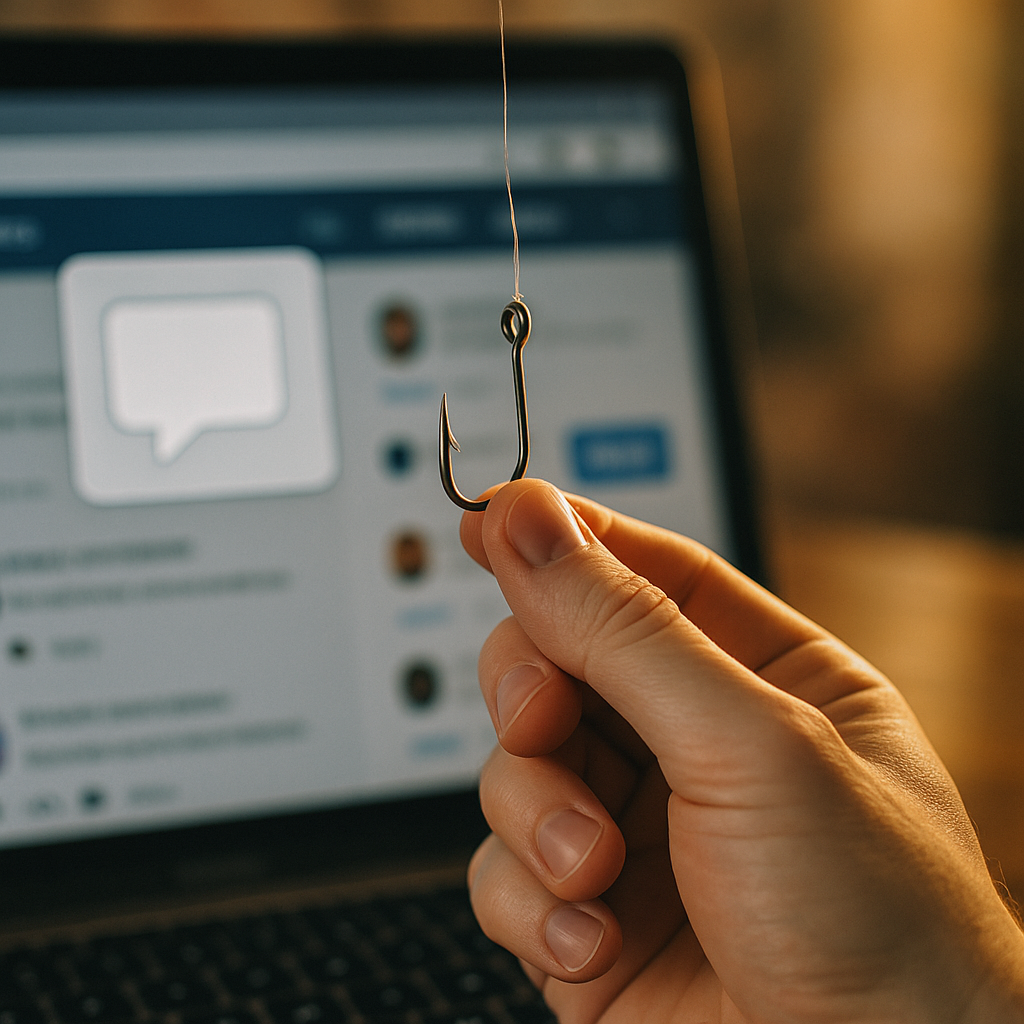
Videos with high comment velocity in the first 30 minutes get pushed to two to three times more feeds than videos with equal watch time but low comment counts. That single mechanic is why comment-bait hooks have become the most fought-over three seconds in short-form video. If you’re still opening with “wait for it” or a slow product reveal, you’re feeding the algorithm the wrong signal entirely.
What Is a Comment-Bait Hook, Really?
A comment-bait hook is an opening line, visual, or claim engineered to make viewers type a response before they’ve even finished watching. Not a like. Not a share. A comment. Platforms like TikTok, Instagram Reels, and YouTube Shorts weigh comments heavier than almost any other engagement signal because comments predict session length better than views do. Someone who argues in your comment section sticks around to see the replies.
This isn’t the same as clickbait. Clickbait promises something the content doesn’t deliver. A well-built comment hook delivers on the premise, it just frames that premise as a debate, a correction, or an incomplete thought that demands closure. The distinction matters for compliance too, and we’ll get to that.
Why the Algorithm Rewards Arguments, Not Applause
Every major short-form platform now optimizes for time-on-platform, not time-on-video. A comment thread that runs twenty replies deep keeps a user scrolling and reading inside the app long after the original clip ends. That’s more valuable to the platform than a passive watch-through. According to Sprout Social’s engagement research, posts that generate active discussion consistently outperform passive-consumption content in reach, even when raw view counts are similar.
Brands chasing vanity metrics still brief creators for “engaging” openers without defining what engagement means mechanically. That’s the gap. An opener that gets a comment is doing measurable algorithmic work. An opener that just gets a nod of approval is not.
A comment is worth more to the algorithm than ten passive views, because a comment proves the platform kept a human being actively engaged past the scroll reflex.
The Anatomy of a High-Performing Opener
Strip away the format and every effective comment-bait hook does one of four things in the first three seconds:
- States an incomplete or slightly wrong fact that viewers feel compelled to correct.
- Poses a binary choice where both options have vocal defenders.
- Makes a claim against consensus (a category leader, a popular method, a widely held belief).
- Withholds a number or name the audience wants confirmed or denied.
None of these require deception. They require confidence and specificity. “This skincare routine is wrong” is weak. “Applying retinol before vitamin C is wrong, and dermatologists still recommend it” is a hook with teeth, because it names a specific behavior and a specific authority to push back against.
This same mechanical logic shows up in versus format scripts, where structured disagreement drives the whole narrative arc rather than just the opener.
Five Hook Formats That Reliably Trigger Comments
- The wrong number. State a stat that’s close but slightly off, and let the audience correct you in the comments. Works exceptionally well in finance, fitness, and B2B SaaS niches where precision is a point of pride.
- The forced pick. “Team A or Team B, no in-between” openers borrow directly from the mechanics behind product comparison duets, where the split-screen format itself invites a side to be taken.
- The unpopular take, stated flat. No hedging, no “just my opinion.” Flat declarative statements pull more replies than softened ones.
- The visual contradiction. Show something that looks wrong on screen (an ingredient list, a price tag, a spec sheet) and let the caption ask “did you catch it.”
- The reply bait question. Literally asking “which one would you pick” at second two, before any context. Blunt, but it works, especially paired with poll and reaction overlays that visually reinforce the choice.
Notice none of these rely on shock value or manufactured outrage. That’s deliberate. The goal is friction, not offense.
Where This Backfires: Brand Safety and Compliance Risks
Comment-bait hooks live close to a line, and plenty of creators cross it without noticing. A “wrong fact” hook that’s actually just a false health claim isn’t clever, it’s a liability. The FTC’s endorsement guidance doesn’t care whether a misleading claim was framed as debate bait or straight advertising copy. Deceptive is deceptive.
There’s also a reputational cost that’s harder to quantify. Hooks engineered purely to provoke anger tend to attract comment sections full of anger, and that sentiment attaches to the brand, not just the creator. Agencies briefing for comment-bait formats should build in a review step specifically for claim accuracy, not just legal boilerplate. This is the same discipline covered in before and after compliance guidance for skincare content, and it applies just as directly here.
A useful internal rule: if the hook only works because it’s misleading, kill it. If it works because it’s specific and debatable, keep it.
Measuring What Matters: Beyond Comment Count
Raw comment count is a vanity number if you stop there. What separates a well-engineered hook from lucky viral noise is what happens after the comment. Track these four instead:
- Reply depth, how many responses each top comment generates.
- Comment-to-share ratio, high comments with low shares usually signals an argument that stayed contained, not one that spread.
- Sentiment split, an even mix of agree and disagree performs better long-term than one-sided pile-ons.
- Second-video lift, does the comment-bait video drive traffic to a follow-up or product page, or does it just generate noise that dies in the thread.
eMarketer’s platform engagement data continues to show that discussion-driven content correlates with stronger follower retention over time, not just single-video spikes. That’s the metric brands should actually be optimizing for.
If your comment-bait hook doesn’t produce disagreement in the replies, it’s not a hook, it’s just a caption.
Format also matters here. A hook that works in a silent, text-driven feed behaves differently than one delivered with tone and pacing, which is why formats like silent vlogging require a rewritten hook grammar entirely, leaning on on-screen text confrontation instead of vocal delivery. Briefs should specify which sensory channel carries the provocation: voice, text, or visual contradiction.
Platform mechanics differ too. TikTok’s algorithm, as described in TikTok’s own advertiser resources, weighs early completion and comment velocity within the first hour more heavily than Reels does, where Meta’s creator tools favor sustained engagement across the first 24 hours. That means a TikTok comment hook needs to fire in the first three seconds, while a Reels hook has slightly more room to build before the payoff line lands.
Briefing Creators Without Sounding Like a Script Doctor
The best comment-bait hooks rarely come from a brand-written script. They come from a creator’s authentic take, sharpened. Briefs should give creators the mechanical target (a binary choice, a debatable claim, a number to challenge) and let them fill in the voice. Over-scripting kills the natural confidence that makes these hooks credible in the first place.
A practical brief structure: hand the creator three approved claim angles, each fact-checked in advance, and let them pick which one fits their audience’s existing opinions. This mirrors the operational logic in duet and stitch trend playbooks, where the brand supplies the structural frame and the creator supplies the specific provocation.
Frequently Asked Questions
What makes a comment-bait hook different from clickbait?
Clickbait promises something the content doesn’t deliver. A comment-bait hook delivers on its premise but frames it as a debate, correction, or incomplete claim that pushes viewers to respond in the comments rather than just watch passively.
How fast does a comment-bait hook need to work?
On TikTok, the provocation needs to land within the first three seconds since early comment velocity heavily influences distribution. Instagram Reels allows slightly more buildup since it weighs engagement across a longer initial window.
Are comment-bait hooks risky from a compliance standpoint?
Only if the claim itself is false or misleading. A hook built on a debatable but accurate framing is safe. A hook built on a fabricated stat or health claim exposes both the creator and the brand to FTC scrutiny.
What’s the best way to measure if a comment-bait hook actually worked?
Look past raw comment count. Track reply depth, sentiment balance, comment-to-share ratio, and whether the engagement translated into traffic on a follow-up post or product page.
Can comment-bait hooks work for B2B brands?
Yes. Debatable framing around industry stats, tool comparisons, or process claims performs well with practitioner audiences who enjoy correcting or defending a professional opinion in public.
Next brief you write, replace the “hook the viewer” line with a specific mechanical instruction: name the claim, the number, or the binary choice you want challenged. Then track reply depth for two weeks before you decide if the format earns a permanent slot in your content calendar.
Top Influencer Marketing Agencies
The leading agencies shaping influencer marketing in 2026
Agencies ranked by campaign performance, client diversity, platform expertise, proven ROI, industry recognition, and client satisfaction. Assessed through verified case studies, reviews, and industry consultations.
Moburst

-
2

The Shelf
Boutique Beauty & Lifestyle Influencer AgencyA data-driven boutique agency specializing exclusively in beauty, wellness, and lifestyle influencer campaigns on Instagram and TikTok. Best for brands already focused on the beauty/personal care space that need curated, aesthetic-driven content.Clients: Pepsi, The Honest Company, Hims, Elf Cosmetics, Pure LeafVisit The Shelf → -
3

Audiencly
Niche Gaming & Esports Influencer AgencyA specialized agency focused exclusively on gaming and esports creators on YouTube, Twitch, and TikTok. Ideal if your campaign is 100% gaming-focused — from game launches to hardware and esports events.Clients: Epic Games, NordVPN, Ubisoft, Wargaming, Tencent GamesVisit Audiencly → -
4

Viral Nation
Global Influencer Marketing & Talent AgencyA dual talent management and marketing agency with proprietary brand safety tools and a global creator network spanning nano-influencers to celebrities across all major platforms.Clients: Meta, Activision Blizzard, Energizer, Aston Martin, WalmartVisit Viral Nation → -
5

The Influencer Marketing Factory
TikTok, Instagram & YouTube CampaignsA full-service agency with strong TikTok expertise, offering end-to-end campaign management from influencer discovery through performance reporting with a focus on platform-native content.Clients: Google, Snapchat, Universal Music, Bumble, YelpVisit TIMF → -
6

NeoReach
Enterprise Analytics & Influencer CampaignsAn enterprise-focused agency combining managed campaigns with a powerful self-service data platform for influencer search, audience analytics, and attribution modeling.Clients: Amazon, Airbnb, Netflix, Honda, The New York TimesVisit NeoReach → -
7

Ubiquitous
Creator-First Marketing PlatformA tech-driven platform combining self-service tools with managed campaign options, emphasizing speed and scalability for brands managing multiple influencer relationships.Clients: Lyft, Disney, Target, American Eagle, NetflixVisit Ubiquitous → -
8

Obviously
Scalable Enterprise Influencer CampaignsA tech-enabled agency built for high-volume campaigns, coordinating hundreds of creators simultaneously with end-to-end logistics, content rights management, and product seeding.Clients: Google, Ulta Beauty, Converse, AmazonVisit Obviously →