


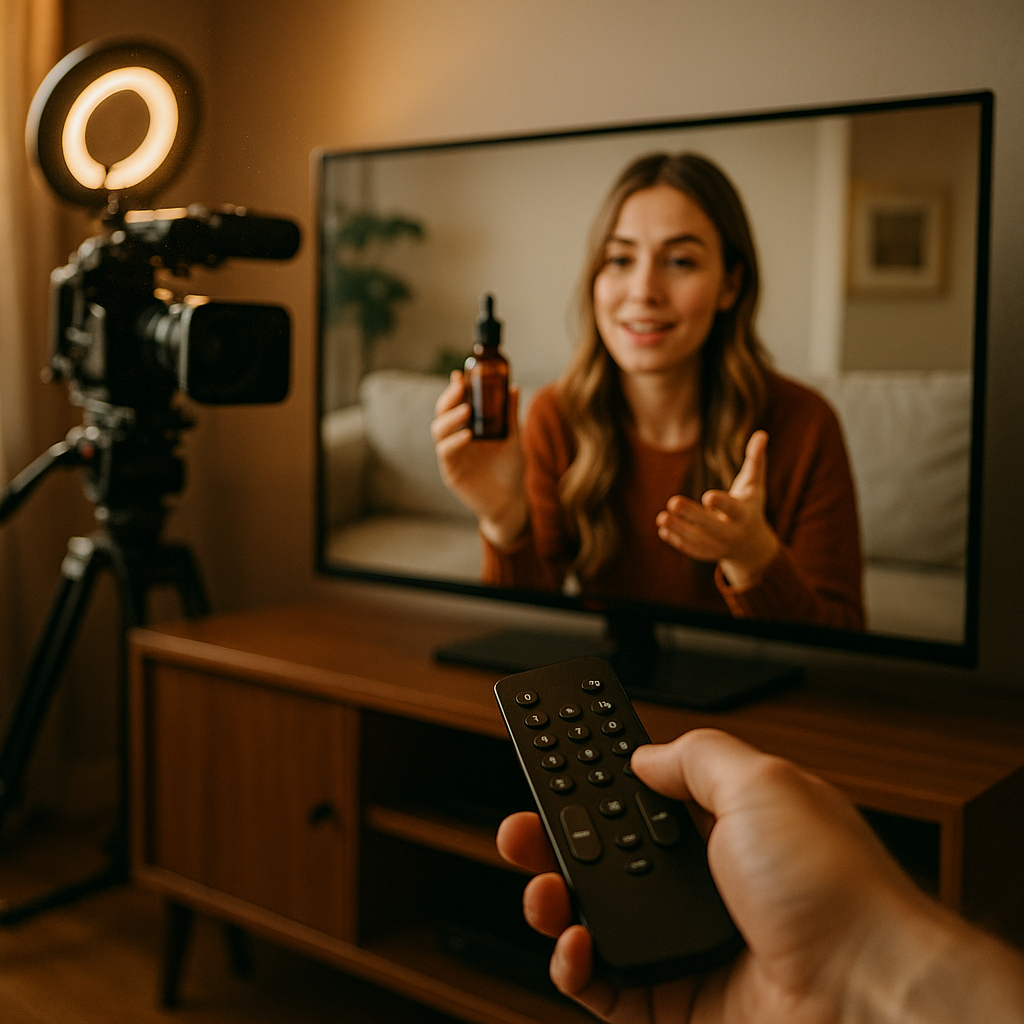
A creator says “sponsored” in a TikTok caption but never mentions it when the same 30 second spot airs during a cable news break or pops up mid stream on Hulu. That gap just became a serious liability. Creator TV commercials are now squarely on the FTC’s radar, and the disclosure rules that governed social posts are migrating straight into linear and streaming ad slots.
If your brand has started repurposing UGC style creator content into paid television buys, or you’re running the same influencer spot across CTV platforms and cable, the compliance playbook you used for Instagram won’t cut it anymore.
Why TV Suddenly Looks Like Social Media to Regulators
For years, the FTC’s disclosure guidance lived almost entirely in the world of feeds and stories. Hashtags, caption placement, “Paid Partnership” tags. Linear TV and even early streaming ads were treated as a different animal, governed more by broadcast standards than influencer marketing rules.
That separation is collapsing. Creators now shoot content once and it ends up everywhere: a YouTube pre roll, a TikTok Shop clip, and yes, a 15 second cutdown running on a connected TV app during primetime. The FTC’s position, reinforced through recent enforcement actions and updated guidance, is simple: the medium doesn’t matter. If a creator has a material connection to the brand, that connection has to be disclosed clearly, in whatever format the ad appears.
The FTC doesn’t care whether the ad ran on a phone screen or a 65 inch TV. Material connection disclosure requirements apply the same way, and unclear labeling on a linear spot carries the same enforcement risk as a missing hashtag.
This matters more now because streaming ad spend keeps climbing. According to eMarketer, connected TV advertising continues to pull budget away from traditional linear buys, and a growing share of that inventory features creator talent rather than traditional actors. Brands are essentially exporting influencer marketing risk into a channel that historically had almost no creator disclosure infrastructure.
What “Clear and Conspicuous” Means When There’s No Caption Box
Social platforms give you a caption, a tag, a comment section. TV gives you audio and a few seconds of screen time. That’s it. So how do you disclose a paid relationship on a 30 second commercial with no scroll, no click, no persistent text overlay?
The FTC’s answer, distilled from its endorsement guides, comes down to three practical tests:
- Timing: the disclosure needs to appear before or during the claim, not buried in fine print at the very end while the screen cuts to black.
- Duration: on screen text disclosures have to stay up long enough for an average viewer to actually read them, not flash for half a second.
- Modality match: if the ad relies on spoken claims, a silent text disclosure isn’t enough. If it’s primarily visual, audio disclosure alone won’t satisfy the requirement either.
In practice, that means a creator saying “I partnered with [Brand] on this” out loud, paired with a simultaneous on screen “Paid Partnership” or “Ad” label, is the safest combination for both linear and streaming placements. Anything less defensible starts to look like the exact kind of native advertising blur the FTC has spent years cracking down on.
We’ve covered similar mechanics in the context of streaming specifically in our breakdown of connected TV ad disclosures, which is worth pairing with this piece if your media mix spans both linear and CTV inventory.
Streaming Adds a Regulatory Wrinkle: Two Agencies, One Ad
Here’s where it gets genuinely messy. Broadcast and cable TV fall under the FCC’s jurisdiction for certain disclosure and sponsorship identification rules, while the FTC governs deceptive advertising and endorsement practices across all media, including streaming. When a creator commercial runs on both a cable network and a CTV app like Roku or Samsung TV Plus, you’re potentially satisfying two different regulatory frameworks at once, and they don’t always align neatly.
Legal teams that treat this as a single compliance checklist are setting themselves up for gaps. We dug into this dual agency overlap in detail in our piece on CTV creator ads, but the short version: sponsorship identification under FCC rules and material connection disclosure under FTC rules are related but not identical obligations. Meeting one doesn’t automatically satisfy the other.
Agencies buying cross channel inventory need a single disclosure script that’s been vetted against both standards, not two separate compliance passes bolted together after the fact.
The Repurposing Trap: When a Social Clip Becomes a TV Ad
A lot of brands aren’t producing dedicated creator commercials from scratch. They’re taking a high performing TikTok or Reel and cutting it down for paid television and streaming placement because it already proved it converts. Efficient? Sure. Compliant? Often not, without a second look.
The original social post might have had a perfectly adequate disclosure baked into the caption or a platform generated “Paid Partnership” tag. Strip that context away for a TV cutdown, and you’ve potentially removed the only disclosure the ad ever had. This is functionally the same failure mode we’ve written about regarding dark posting stripping disclosure labels when ads run through paid channels without the original creator handle attached. The TV version of that mistake just has a bigger media budget riding on it.
Before greenlighting any repurposed creator asset for linear or streaming, run it through a simple checklist:
- Does the disclosure survive the edit, both visually and verbally?
- Is it timed correctly for the new format’s runtime and pacing?
- Does it meet the stricter of the two applicable standards if the spot will run across both cable and CTV?
AI Generated Creator Content Raises the Stakes Further
Some brands are now using AI tools to generate synthetic versions of creator likenesses or voices for TV spots, either to scale a campaign faster or to keep using a creator’s persona after a contract ends. This introduces a second disclosure layer entirely. Viewers need to know both that the content is a paid endorsement and, increasingly under emerging state and federal guidance, that the voice or likeness may be synthetic.
We covered the mechanics of this in AI voice cloning in ads, and the same principle extends directly into television. A cloned creator voice reading a script for a national cable buy without any indication it’s synthetic is a compliance problem waiting to surface, especially as the FTC has signaled increased scrutiny of AI generated endorsements.
What Enforcement Actually Looks Like
The FTC doesn’t need a flood of consumer complaints to act. A single high visibility case, paired with a civil penalty or consent decree, tends to reset industry behavior fast. Recent actions against brands and agencies over inadequate influencer disclosures have already resulted in monetary penalties and mandated compliance monitoring, and the agency has been explicit that these standards apply “regardless of the medium used.” That phrase alone should be enough to get any brand running creator content on TV to audit its current inventory.
Full guidance is available directly from the Federal Trade Commission, and it’s worth having your legal and creative teams review the endorsement guides together rather than treating it as a document only legal reads.
Platform level enforcement adds another layer of pressure. YouTube, for instance, has its own detection systems flagging undisclosed sponsorships, a topic we explored in our advertiser audit guide. If a creator’s YouTube content feeds into a CTV placement through YouTube’s own TV app, that same detection logic can surface disclosure gaps before the FTC ever gets involved, which is arguably the faster and more embarrassing way to get caught.
Building a Compliance Workflow That Actually Scales
Most brands don’t need more policy documents. They need a workflow that catches problems before media dollars are committed. A few practical moves:
- Add a disclosure review checkpoint to the media buying process itself, not just the content approval stage, since repurposing often happens after creative sign off.
- Standardize a disclosure script (verbal plus on screen) that’s pre approved for both FCC and FTC requirements, so creative teams aren’t improvising language for every new placement.
- Loop in your agency’s traffic and buying teams so they know which creator assets are cleared for linear versus streaming versus social only use.
- Document everything. According to research from Sprout Social, brands that maintain clear influencer contract and disclosure records recover faster from platform or regulatory disputes than those relying on informal agreements.
None of this requires a massive legal overhaul. It requires treating TV placements with the same disclosure rigor you’d apply to a sponsored post, because that’s exactly what regulators now expect.
FAQs
Frequently Asked Questions
Do FTC disclosure rules apply to creator ads on cable and broadcast TV?
Yes. The FTC has made clear that endorsement disclosure requirements apply regardless of the advertising medium, including linear cable and broadcast television, not just digital and social platforms.
How is a creator supposed to disclose a paid partnership in a TV commercial?
The safest approach combines a spoken disclosure, such as stating the partnership out loud, with a simultaneous on screen text label like “Ad” or “Paid Partnership,” timed to appear during the relevant claim and held long enough for viewers to read it.
Does running the same creator content on streaming and cable create extra compliance risk?
Yes. Cable and broadcast fall partly under FCC sponsorship identification rules, while streaming and all media fall under FTC endorsement guidelines. Meeting one standard doesn’t automatically satisfy the other, so cross channel buys need disclosure language vetted against both.
What happens if a repurposed social clip loses its disclosure when cut down for TV?
That’s treated the same as any undisclosed paid endorsement. If the original caption or platform tag carried the disclosure and it’s stripped out during the TV edit, the resulting ad can be flagged as deceptive advertising under FTC guidelines.
Are AI generated or voice cloned creator ads held to a different disclosure standard?
They face an added layer. Beyond disclosing the paid relationship, brands increasingly need to indicate when a creator’s voice or likeness is synthetic, particularly as state laws and FTC guidance around AI generated endorsements continue to develop.
The fastest fix available right now: audit every creator asset currently running on linear or CTV, confirm the disclosure survives in both audio and on screen form, and standardize one script your legal and creative teams both sign off on before the next media buy goes live.
Top Influencer Marketing Agencies
The leading agencies shaping influencer marketing in 2026
Agencies ranked by campaign performance, client diversity, platform expertise, proven ROI, industry recognition, and client satisfaction. Assessed through verified case studies, reviews, and industry consultations.
Moburst

-
2

The Shelf
Boutique Beauty & Lifestyle Influencer AgencyA data-driven boutique agency specializing exclusively in beauty, wellness, and lifestyle influencer campaigns on Instagram and TikTok. Best for brands already focused on the beauty/personal care space that need curated, aesthetic-driven content.Clients: Pepsi, The Honest Company, Hims, Elf Cosmetics, Pure LeafVisit The Shelf → -
3

Audiencly
Niche Gaming & Esports Influencer AgencyA specialized agency focused exclusively on gaming and esports creators on YouTube, Twitch, and TikTok. Ideal if your campaign is 100% gaming-focused — from game launches to hardware and esports events.Clients: Epic Games, NordVPN, Ubisoft, Wargaming, Tencent GamesVisit Audiencly → -
4

Viral Nation
Global Influencer Marketing & Talent AgencyA dual talent management and marketing agency with proprietary brand safety tools and a global creator network spanning nano-influencers to celebrities across all major platforms.Clients: Meta, Activision Blizzard, Energizer, Aston Martin, WalmartVisit Viral Nation → -
5

The Influencer Marketing Factory
TikTok, Instagram & YouTube CampaignsA full-service agency with strong TikTok expertise, offering end-to-end campaign management from influencer discovery through performance reporting with a focus on platform-native content.Clients: Google, Snapchat, Universal Music, Bumble, YelpVisit TIMF → -
6

NeoReach
Enterprise Analytics & Influencer CampaignsAn enterprise-focused agency combining managed campaigns with a powerful self-service data platform for influencer search, audience analytics, and attribution modeling.Clients: Amazon, Airbnb, Netflix, Honda, The New York TimesVisit NeoReach → -
7

Ubiquitous
Creator-First Marketing PlatformA tech-driven platform combining self-service tools with managed campaign options, emphasizing speed and scalability for brands managing multiple influencer relationships.Clients: Lyft, Disney, Target, American Eagle, NetflixVisit Ubiquitous → -
8

Obviously
Scalable Enterprise Influencer CampaignsA tech-enabled agency built for high-volume campaigns, coordinating hundreds of creators simultaneously with end-to-end logistics, content rights management, and product seeding.Clients: Google, Ulta Beauty, Converse, AmazonVisit Obviously →