


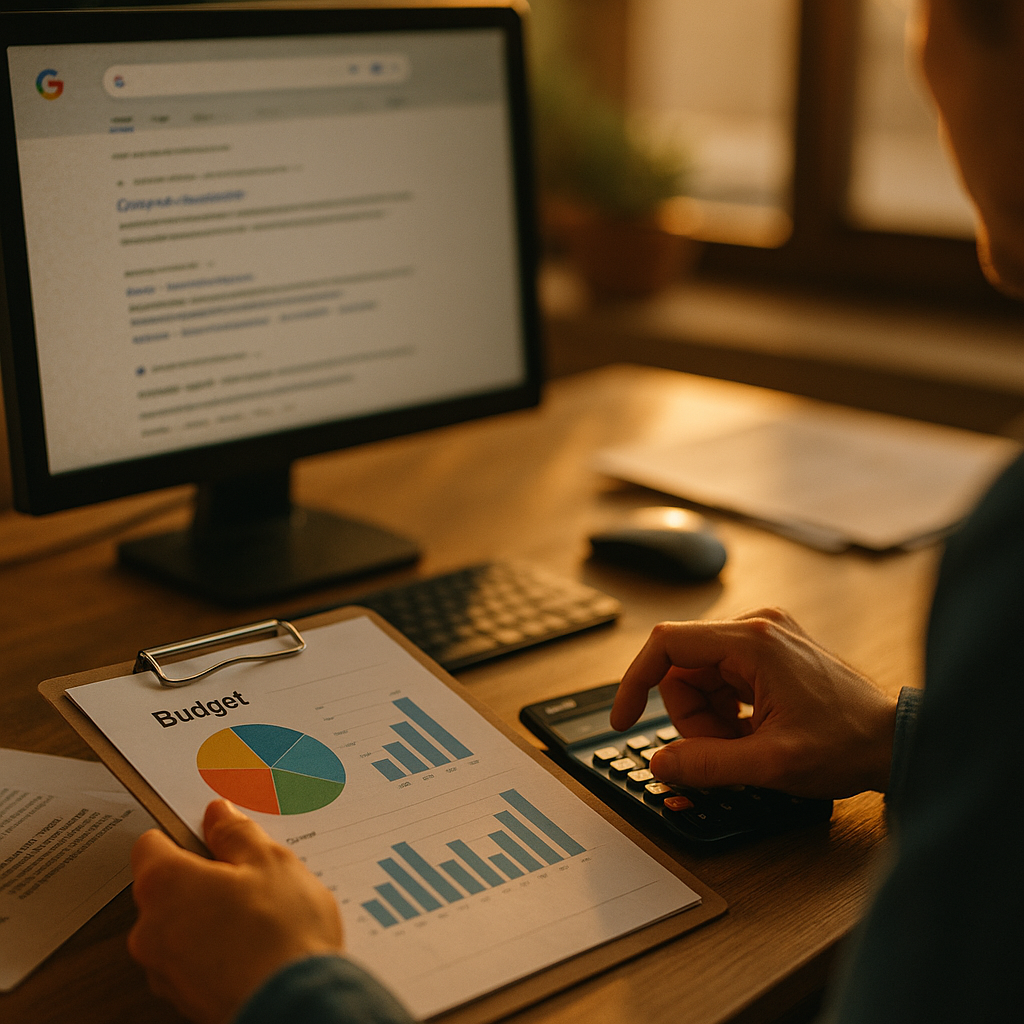
Here’s an uncomfortable number for anyone still running search the old way: Gartner has projected that traditional search engine volume could drop by roughly 25% by 2026 as users shift to AI chatbots and answer engines. Add in the accelerating adoption of ChatGPT search, Perplexity, and Google’s AI Overviews, and the question isn’t whether AI answer engines are reshaping search budgets. It’s how fast your team can catch up.
The Numbers Behind the Shift
Search budgets have been sacred cows for two decades. Paid search, SEO retainers, content teams built around keyword rankings. That whole apparatus assumed a stable premise: people type queries into Google, click a blue link, and land on your site. Answer engines break that premise in half.
Instead of ten blue links, users get a synthesized answer, often with two or three citations buried underneath. No click required. eMarketer’s forecasting work has repeatedly flagged that zero-click search behavior is accelerating, and AI answer engines make that worse, not better, for brands relying on organic traffic. If your product isn’t the one cited in the answer, you don’t just lose a ranking. You disappear from the consideration set entirely.
By 2027, industry estimates suggest AI-driven answer engines could influence a meaningful share of all commercial research queries, meaning brands not optimized for citation, not just ranking, will be functionally invisible to a growing slice of buyers.
That’s not a niche SEO problem. That’s a budget problem, a brand awareness problem, and increasingly, an influencer marketing problem too.
Why Getting Cited Matters More Than Getting Ranked
Answer engines don’t crawl the web the way Google’s classic index does, at least not exclusively. Many pull from a blend of indexed content, structured data, and increasingly, third-party mentions across forums, review sites, and yes, creator content. That’s a critical detail marketers keep underestimating.
Perplexity and ChatGPT search often cite Reddit threads, YouTube reviews, and niche publications over brand-owned pages. Why? Because those sources read as independent validation rather than marketing copy. Analyst firms have started building dedicated practices around this exact dynamic, and Influencers Time covered the shift when IDC named its first AEO lead, a move that effectively told the market: budget for citations now, or explain the gap to your CMO later.
This is where influencer and creator content quietly becomes an AEO asset. A well-reviewed product mentioned across a dozen creator posts and comment threads has a real shot at surfacing in an AI-generated answer. A polished landing page optimized purely for keyword density does not.
Where the Budget Is Actually Moving
So where does the money go? Early movers are reallocating in three directions.
- Structured content and schema investment, making sure product, review, and FAQ data is machine-readable, not just human-readable.
- Third-party validation spend, including creator partnerships, review platforms, and community seeding, because answer engines weight independent sources heavily.
- Attribution tooling that can actually track citation appearances and referral behavior from AI platforms, since classic UTM tracking wasn’t built for this.
None of this is theoretical. Brands are already shifting dollars out of pure paid search and into hybrid programs that blend SEO, digital PR, and creator seeding. Influencers Time reported on the broader attribution overhaul happening as cookie-free measurement forces brands to rebuild around consent-based data, and AEO adds another layer to that same rebuild.
It’s worth being blunt here: most marketing teams don’t have a line item for this yet. Search budgets were built for keywords, not conversational citations. That gap is exactly why 2027 is shaping up to be the year budgets either catch up or brands quietly lose share of voice to competitors who moved first.
Where Does Influencer Marketing Fit Into an AEO Budget?
This is the part most search teams miss, and most influencer teams haven’t fully claimed yet. AI answer engines favor content with breadth and independence: many voices saying similar things about a product or category, across many platforms. That’s essentially the definition of a healthy creator program.
Brands running ambassador programs, always-on creator relationships, and review-driven UGC are sitting on an asset class that AEO systems reward. Influencers Time has tracked how ambassador deals are replacing one-off gifting partly because retention-based creator relationships generate exactly the sustained, independent-sounding content that answer engines pull from.
There’s a second angle too: AI shopping agents. As more consumers delegate research and even purchasing decisions to AI agents, the pressure on CMOs to defend their creator and content strategy in the boardroom is intensifying. Influencers Time covered how AI shopping agents are forcing CMOs to justify strategy in ways that didn’t exist even two years ago. Search budgets and creator budgets are converging, whether org charts reflect that yet or not.
Risk and Compliance: The Part Nobody’s Talking About
Here’s a wrinkle. When AI answer engines synthesize brand information from creator content, disclosure and accuracy risk doesn’t disappear, it multiplies. If an AI overview pulls a factual claim from an undisclosed sponsored post, or misattributes a competitor’s product to your brand, who owns that error?
Regulators haven’t caught up fully, but the direction is clear. The FTC’s endorsement guidance already holds brands accountable for creator disclosure practices, and that accountability doesn’t stop at the platform’s edge just because an AI system repackaged the content. Compliance teams need to start asking: is our creator content accurate enough, and disclosed clearly enough, to survive being quoted by a machine with no editorial judgment?
This is also where cost pressure sneaks in from an unexpected direction. Influencers Time reported on how Chinese AI search vendors are undercutting US agencies by significant margins, which means the AEO tooling market itself is getting more competitive and more fragmented, fast. Budget planning for 2027 needs to account for vendor volatility, not just channel shift.
Building the Budget Line Before Someone Builds It For You
Practically, what should a mid-to-senior marketer do this quarter? Start small, but start now.
- Audit where your brand currently appears (or doesn’t) in ChatGPT, Perplexity, and Google AI Overviews for your top ten commercial queries.
- Map which creator and review content is already influencing those citations, and double down on the formats that work.
- Create a dedicated AEO budget line, even a modest one, separate from legacy SEO spend, so leadership can track ROI distinctly.
- Loop in legal and compliance early on disclosure standards for creator content that could be surfaced by AI systems.
Tools from HubSpot and measurement platforms tracked by Statista are starting to build AI-citation tracking into their reporting suites, which is a signal worth watching. The infrastructure is catching up to the behavior shift, slowly.
None of this means abandon paid search or SEO. It means the pie is being redrawn, and the slice going to answer-engine optimization and creator-driven validation is growing faster than most 2026 budgets currently allow for.
Frequently Asked Questions
What are AI answer engines, exactly?
AI answer engines are platforms like ChatGPT search, Perplexity, and Google’s AI Overviews that generate synthesized responses to queries instead of a list of links, often citing a small number of sources directly in the answer.
How is AEO different from traditional SEO?
Traditional SEO optimizes for ranking position on a search results page. Answer Engine Optimization (AEO) optimizes for being cited or referenced within an AI-generated answer, which depends more on structured data, independent validation, and content clarity than keyword density alone.
Why does creator content matter for AI answer engines?
Answer engines tend to weight independent, third-party sources like reviews, forum discussions, and creator content more heavily than brand-owned marketing copy, because that content reads as unbiased validation rather than promotion.
Should brands cut search budgets to fund AEO?
Not entirely. Most brands are reallocating a portion of search and content budgets toward structured data, citation tracking, and creator seeding rather than eliminating traditional SEO and paid search spend outright.
What compliance risks come with AI answer engines citing creator content?
If an AI system surfaces undisclosed sponsored content or misattributes claims, brands can still face regulatory exposure under existing endorsement guidance, even though the AI platform, not the brand, generated the final answer.
The brands that treat AEO as a 2027 problem will spend that year explaining lost share of voice. The ones who open a budget line now, and pair it with disclosed, well-managed creator content, will be the ones the machines actually quote.
Top Influencer Marketing Agencies
The leading agencies shaping influencer marketing in 2026
Agencies ranked by campaign performance, client diversity, platform expertise, proven ROI, industry recognition, and client satisfaction. Assessed through verified case studies, reviews, and industry consultations.
Moburst

-
2

The Shelf
Boutique Beauty & Lifestyle Influencer AgencyA data-driven boutique agency specializing exclusively in beauty, wellness, and lifestyle influencer campaigns on Instagram and TikTok. Best for brands already focused on the beauty/personal care space that need curated, aesthetic-driven content.Clients: Pepsi, The Honest Company, Hims, Elf Cosmetics, Pure LeafVisit The Shelf → -
3

Audiencly
Niche Gaming & Esports Influencer AgencyA specialized agency focused exclusively on gaming and esports creators on YouTube, Twitch, and TikTok. Ideal if your campaign is 100% gaming-focused — from game launches to hardware and esports events.Clients: Epic Games, NordVPN, Ubisoft, Wargaming, Tencent GamesVisit Audiencly → -
4

Viral Nation
Global Influencer Marketing & Talent AgencyA dual talent management and marketing agency with proprietary brand safety tools and a global creator network spanning nano-influencers to celebrities across all major platforms.Clients: Meta, Activision Blizzard, Energizer, Aston Martin, WalmartVisit Viral Nation → -
5

The Influencer Marketing Factory
TikTok, Instagram & YouTube CampaignsA full-service agency with strong TikTok expertise, offering end-to-end campaign management from influencer discovery through performance reporting with a focus on platform-native content.Clients: Google, Snapchat, Universal Music, Bumble, YelpVisit TIMF → -
6

NeoReach
Enterprise Analytics & Influencer CampaignsAn enterprise-focused agency combining managed campaigns with a powerful self-service data platform for influencer search, audience analytics, and attribution modeling.Clients: Amazon, Airbnb, Netflix, Honda, The New York TimesVisit NeoReach → -
7

Ubiquitous
Creator-First Marketing PlatformA tech-driven platform combining self-service tools with managed campaign options, emphasizing speed and scalability for brands managing multiple influencer relationships.Clients: Lyft, Disney, Target, American Eagle, NetflixVisit Ubiquitous → -
8

Obviously
Scalable Enterprise Influencer CampaignsA tech-enabled agency built for high-volume campaigns, coordinating hundreds of creators simultaneously with end-to-end logistics, content rights management, and product seeding.Clients: Google, Ulta Beauty, Converse, AmazonVisit Obviously →