


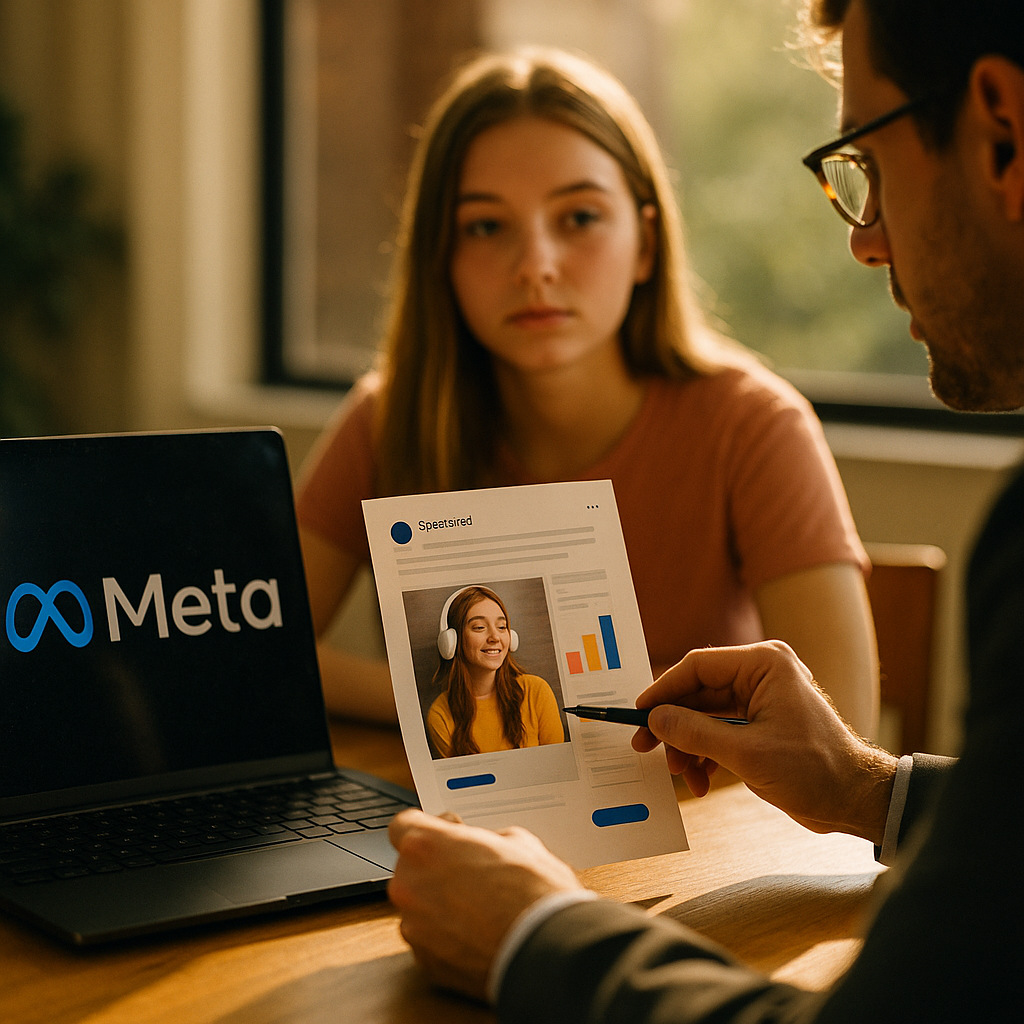
Meta just agreed to pay out one of the largest youth-safety settlements in platform history, and most brand marketers haven’t clocked what it means for them. If your Gen Z campaign strategy still leans on unverified teen audiences, engagement-bait creative, and loose data collection, you’re not just behind. You’re exposed.
The Meta teen settlement isn’t a Meta problem. It’s a signal flare for every brand running influencer campaigns aimed at anyone under 18, and honestly, for plenty targeting 18 to 24 year olds too. Regulators are done treating “the algorithm did it” as an excuse. Brands that funded the campaigns are getting pulled into the conversation, whether they like it or not.
What the Settlement Actually Changed
The settlement resolved claims that Meta’s recommendation systems knowingly exposed minors to harmful content while downplaying documented mental health risks. Part of the resolution requires stricter age verification, limits on targeted advertising to minors, and new transparency obligations around how teen data feeds ad delivery.
That last part matters most for brands. Meta has already started tightening how advertisers can target users flagged as likely minors, and it’s restricting the granularity of interest based targeting for that segment. If your media buying team built lookalike audiences off engagement data from teen-skewing creator content, that pipeline is getting narrower fast.
Brands that treated “under 18 engagement” as a vanity metric are now sitting on a compliance liability they never priced into the campaign budget.
Meta’s own business platform guidance has been updated multiple times this year to reflect the new restrictions, and agencies running paid amplification behind creator content need to check those settings on every active campaign, not just new ones.
Why Brands, Not Just Platforms, Are on the Hook
Here’s the uncomfortable part. Regulators have made clear that the platform isn’t the only liable party. Brands that direct creator briefs, approve content aimed at teen audiences, or run paid boosts against minor-skewing segments share exposure. The FTC’s endorsement guidance already establishes that advertisers can’t outsource responsibility to the influencer or the platform, and the agency has signaled it’s watching youth-targeted campaigns closely.
This lines up with a broader pattern we’ve covered before: platforms increasingly frame algorithmic amplification as protected speech, which pushes legal and reputational risk downstream onto the brands funding the content. Our earlier piece on how algorithmic speech exposes brand liability covers the legal mechanics in more detail, and the teen settlement is the clearest real-world proof point yet.
General counsel teams are now asking creative and media teams a question they never used to ask: can you prove this campaign wasn’t primarily reaching minors? If your team can’t answer that with data, you have a problem bigger than a bad campaign.
Redesigning Gen Z Campaigns: What Actually Has to Change
This isn’t about abandoning Gen Z as an audience. It’s about rebuilding the operational scaffolding around how you reach them. A few shifts are already becoming standard practice among brands that moved early:
- Age-gated briefing documents. Creator contracts now specify audience age composition thresholds, and briefs explicitly exclude content formats known to skew younger (certain TikTok trends, Roblox tie-ins, school-adjacent content).
- Consent-first data collection. Campaigns collecting emails, UGC submissions, or contest entries now require parental consent workflows for any segment likely to include under-18 users.
- Reduced reliance on algorithmic amplification for youth segments. Paid boosts behind creator content aimed at teens are getting replaced with owned-channel distribution, which is slower but far less legally exposed.
- Third-party audience verification. Brands are now requiring creators to share platform-verified audience demographics before a contract is signed, not just self-reported analytics screenshots.
None of this is cheap. Audience verification tools, legal review cycles, and consent infrastructure add real cost to campaigns that used to run on a handshake and a content calendar. But the alternative, getting named in a class action or an FTC inquiry, costs considerably more.
The Nano and Micro Creator Advantage Just Got Bigger
There’s an interesting side effect here. Smaller creators with tightly defined, verifiable audiences are becoming more attractive precisely because their audience composition is easier to document and prove. A nano creator with 8,000 highly engaged followers in a specific niche is a much cleaner compliance story than a mega influencer whose audience breakdown is a black box.
This dovetails with something we’ve already been tracking: smaller creators consistently outconvert mega influencers on cost per lead, and now they’re also lower risk from a regulatory standpoint. That’s a rare case where the performance argument and the compliance argument point the same direction.
Brands running ambassador programs are also finding that long-term, contracted relationships with vetted creators make the age-verification and consent paperwork far more manageable than one-off gifting arrangements. Our coverage of how ambassador deals are replacing gifting for retention reasons applies here too, just with a compliance angle layered on top.
Platform Differences Brands Can’t Ignore
Not every platform is responding the same way, and treating them as interchangeable is a mistake.
TikTok has leaned into stricter default privacy settings for under-18 accounts and has limited certain ad formats from reaching those users at all, according to guidance published on TikTok’s advertising platform. Meta is tightening targeting granularity but hasn’t restricted content reach as aggressively. YouTube’s existing “made for kids” designation already forces a harder line, and creators who mislabel content risk demonetization independent of any brand deal.
Then there’s Roblox, which is a different animal entirely since its core audience skews younger by design. Brands chasing Gen Alpha there are dealing with an even stricter regulatory environment, and our piece on how Gen Alpha lives in Roblox rather than traditional feeds is worth a read if your youth strategy spans multiple platforms rather than just Instagram and TikTok.
Fraud, Bots, and the Verification Problem
Age verification only works if the audience data underneath it is real. That’s where bot follower fraud becomes a compliance issue, not just a performance one. If a campaign’s youth-skewing audience is partially inflated by bot accounts, your age composition data is unreliable no matter how carefully you set up consent workflows.
Fraud detection tools that flag inauthentic engagement have become part of the legal review process at several agencies we’ve spoken with, not just the media planning process. Our research on how bot follower vetting cuts fraud losses by more than half is directly relevant here, since clean audience data is now a legal deliverable, not just a marketing nice-to-have.
Audience verification used to be a fraud prevention line item. It’s now a legal defense document.
Compliance Versus Creativity: The New Tension
Let’s be honest about the friction this creates. Consent workflows and age verification slow down creative production. Creators used to fast turnaround will chafe against brands asking for demographic proof before a contract clears legal. Some will walk away from the deal entirely.
That’s a real cost, and pretending otherwise does nobody favors. But the brands treating this as a one-time compliance sprint are going to fall behind the ones building it into their creator ops from the start. Data from eMarketer already shows youth-targeted digital ad spend growth slowing as brands recalibrate targeting parameters, and Sprout Social’s platform benchmarking increasingly flags audience age composition as a campaign health metric, not an afterthought.
UK-based brands and agencies should also be watching the Information Commissioner’s Office closely, since its children’s code enforcement has been more aggressive than US regulators on data minimization, and it often previews what US agencies do next.
What This Means for Budget Allocation
Some brands are responding by shifting spend away from teen-adjacent influencer campaigns entirely, redirecting budget toward 18 to 24 segments where verification is more straightforward. Others are investing in dedicated legal review for youth campaigns rather than folding it into general influencer marketing compliance.
Either path requires new line items: verification tooling, consent management, and legal review hours that didn’t exist in most influencer budgets two years ago. If UGC rights management already forced brands to formalize spend around rights operations inside CAC budgets, this is the next layer stacking on top: compliance ops as a formal budget category, not a legal afterthought buried in overhead.
Where This Goes Next
Expect more platforms to follow Meta’s lead voluntarily, if only to get ahead of similar litigation. Expect more brands to build internal creator vetting checklists that include audience age verification as a standard line item, right alongside FTC disclosure compliance. And expect the gap between brands that adapted early and those still running 2023-style influencer playbooks to show up in legal exposure long before it shows up in campaign performance.
The brands treating this moment as a paperwork exercise will miss the bigger shift. Gen Z campaign design isn’t just getting more regulated, it’s getting more accountable, and that accountability is going to separate serious influencer programs from the ones still running on vibes and reach numbers.
FAQs
What is the Meta teen settlement and why does it matter to brands?
It’s a legal settlement addressing claims that Meta’s algorithms exposed minors to harmful content while downplaying mental health risks. It matters to brands because it establishes new age verification and targeting restrictions that directly affect how influencer campaigns can reach Gen Z audiences.
Are brands legally liable for influencer content aimed at minors?
Regulators, including the FTC, have made clear that advertisers share responsibility with platforms and creators for content directed at minors. Brands can’t outsource that liability simply because a platform or influencer produced the content.
How should brands verify creator audience age composition?
Request platform-verified demographic data directly from creators rather than relying on self-reported analytics screenshots, and pair that with third-party fraud detection tools to confirm the audience isn’t inflated by bots.
Does this settlement affect campaigns targeting 18 to 24 year olds too?
Not directly, but many campaigns targeting that range also reach younger users due to platform crossover, so verification practices are increasingly applied to that segment as a precaution.
Will stricter age verification slow down influencer campaign timelines?
Yes, in most cases. Consent workflows and demographic verification add time to contracting and legal review, but brands are finding this cost is smaller than the risk of regulatory exposure.
Which platforms have the strictest youth targeting rules right now?
YouTube’s made for kids designation and TikTok’s under-18 privacy defaults are currently the most restrictive, while Meta is tightening targeting granularity more gradually.
FAQPage Schema
The next 90 days matter more than the announcement itself: audit your active Gen Z campaigns for age verification gaps now, before a regulator or a plaintiff’s attorney does it for you.
Top Influencer Marketing Agencies
The leading agencies shaping influencer marketing in 2026
Agencies ranked by campaign performance, client diversity, platform expertise, proven ROI, industry recognition, and client satisfaction. Assessed through verified case studies, reviews, and industry consultations.
Moburst

-
2

The Shelf
Boutique Beauty & Lifestyle Influencer AgencyA data-driven boutique agency specializing exclusively in beauty, wellness, and lifestyle influencer campaigns on Instagram and TikTok. Best for brands already focused on the beauty/personal care space that need curated, aesthetic-driven content.Clients: Pepsi, The Honest Company, Hims, Elf Cosmetics, Pure LeafVisit The Shelf → -
3

Audiencly
Niche Gaming & Esports Influencer AgencyA specialized agency focused exclusively on gaming and esports creators on YouTube, Twitch, and TikTok. Ideal if your campaign is 100% gaming-focused — from game launches to hardware and esports events.Clients: Epic Games, NordVPN, Ubisoft, Wargaming, Tencent GamesVisit Audiencly → -
4

Viral Nation
Global Influencer Marketing & Talent AgencyA dual talent management and marketing agency with proprietary brand safety tools and a global creator network spanning nano-influencers to celebrities across all major platforms.Clients: Meta, Activision Blizzard, Energizer, Aston Martin, WalmartVisit Viral Nation → -
5

The Influencer Marketing Factory
TikTok, Instagram & YouTube CampaignsA full-service agency with strong TikTok expertise, offering end-to-end campaign management from influencer discovery through performance reporting with a focus on platform-native content.Clients: Google, Snapchat, Universal Music, Bumble, YelpVisit TIMF → -
6

NeoReach
Enterprise Analytics & Influencer CampaignsAn enterprise-focused agency combining managed campaigns with a powerful self-service data platform for influencer search, audience analytics, and attribution modeling.Clients: Amazon, Airbnb, Netflix, Honda, The New York TimesVisit NeoReach → -
7

Ubiquitous
Creator-First Marketing PlatformA tech-driven platform combining self-service tools with managed campaign options, emphasizing speed and scalability for brands managing multiple influencer relationships.Clients: Lyft, Disney, Target, American Eagle, NetflixVisit Ubiquitous → -
8

Obviously
Scalable Enterprise Influencer CampaignsA tech-enabled agency built for high-volume campaigns, coordinating hundreds of creators simultaneously with end-to-end logistics, content rights management, and product seeding.Clients: Google, Ulta Beauty, Converse, AmazonVisit Obviously →