


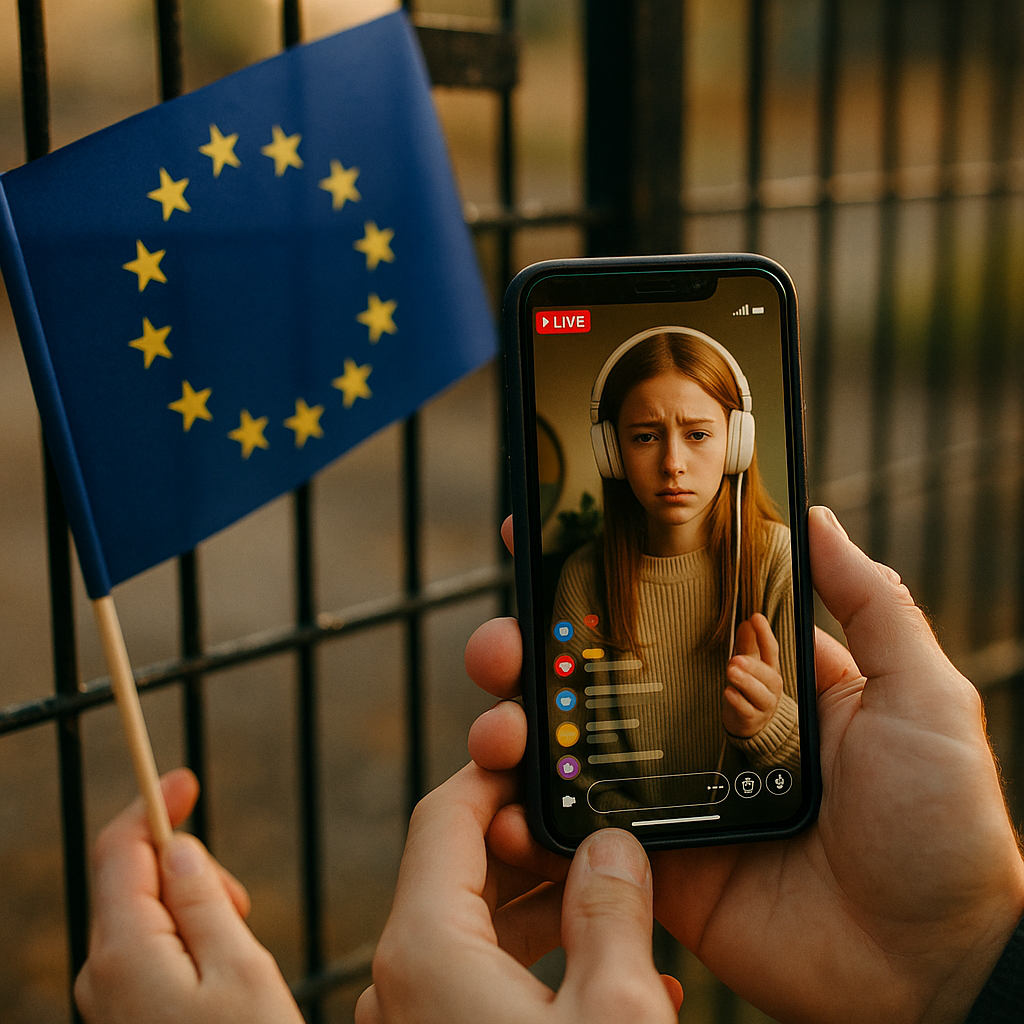
One in three Gen Alpha accounts on major platforms are already believed to misrepresent their age, according to industry estimates cited by child safety regulators. Now the EU wants to make that guesswork illegal. The proposed EU under-15 social media ban would require platforms operating across member states to verify age and restrict access for anyone under 15, a move that could upend how brands plan, target, and measure creator campaigns well beyond European borders.
What the Proposal Actually Says
The European Commission’s draft framework, building on momentum from Denmark, France, and Spain’s earlier national pushes, would mandate age verification systems on platforms like TikTok, Instagram, Snapchat, and YouTube for users in EU member states. Unlike the patchwork of parental consent rules under GDPR’s Article 8 (which set the digital consent age between 13 and 16 depending on the country), this proposal removes the parental override entirely for under-15s on mainstream social platforms.
That’s a meaningful shift. Consent-based models let a parent say yes. A hard age floor doesn’t care what the parent thinks. Platforms would need to implement verification methods that go beyond a self-reported birthdate, think government ID checks, facial age estimation, or third-party verification services.
The timeline is still fluid, but Brussels insiders expect a formal vote within the next legislative cycle, with member states given a transition window to implement technical infrastructure. Brands running pan-European campaigns should treat this as a “when,” not an “if.”
Why Brands Should Care Now, Not Later
If you’re running influencer campaigns aimed at tweens or young teens in France, Germany, or Italy, your entire targeting model just got a lot more complicated. Toy brands, gaming companies, fast fashion, and mobile app developers that lean heavily on Gen Alpha and young Gen Z creators will feel this first and hardest.
Consider the ripple effect on creator partnerships. A 14-year-old TikTok creator with 2 million followers, many of whom are also under 15, suddenly represents a legally murky audience for brand deals. Sponsored content aimed at that demographic could trigger compliance issues even if the creator themselves is old enough to work under child labor and influencer disclosure laws.
Brands that built campaign strategy around reaching under-15 audiences through creator content now need a parallel plan for platforms these users may no longer legally access.
This isn’t just a European problem. We’ve already seen how a single regulatory shift can force global replanning. The Meta teen settlement pushed brands to rebuild entire Gen Z campaign structures in a matter of months. This proposal has the potential to be bigger, because it doesn’t just restrict advertising practices, it restricts platform access outright.
Where the Audience Actually Goes
Here’s the part that should worry media planners more than the ban itself: under-15 users don’t disappear, they migrate. Roblox, Discord, and gaming-adjacent platforms have already absorbed a huge share of Gen Alpha attention. Our earlier coverage on how Gen Alpha lives in Roblox rather than the feeds brands currently fund is a preview of what happens when mainstream social apps become inaccessible to this age group. Expect that migration to accelerate sharply if the EU proposal passes.
Brands that haven’t already built a presence on gaming platforms, Discord servers, or age-appropriate alternatives are going to be scrambling to catch up. That’s not a hypothetical, it’s the exact pattern we saw when younger users started leaving Facebook a decade ago.
The Compliance Headache: Age Verification and Creator Vetting
Age verification sounds simple until you try to operationalize it across a multi-market influencer program. Which verification standard applies? Does a UK-based creator posting content visible in France need to comply with French implementation rules or EU-wide baseline? What happens to user-generated content campaigns where the audience demographic wasn’t the target but shows up anyway?
These are the kinds of questions legal and compliance teams are already raising in agency briefings. Brands running UGC programs funded through CAC budgets will need clearer rights and consent documentation, since proving an audience skews appropriately older could become part of standard campaign reporting.
Platform-side verification will likely rely on a mix of technologies, facial age estimation tools, ID document checks, and behavioral signals. None of these are foolproof, and all of them introduce friction. Expect drop-off in under-18 engagement generally, not just among the specifically targeted under-15 cohort, as verification friction pushes borderline users away from mainstream apps altogether.
There’s also a parallel liability question. If a platform’s algorithm keeps serving content to underage users despite verification failures, who’s exposed? Regulators and plaintiffs’ attorneys are already testing this terrain, as covered in our piece on how algorithm speech and product liability fights are exposing brands to new legal risk. Add an age-verification failure into that mix and the liability surface for both platforms and the brands advertising on them gets considerably wider.
Ripple Effects Beyond Europe
Regulatory contagion is real. Australia already passed its own under-16 social media restriction, and lawmakers in several US states have introduced similar bills. If the EU formalizes an under-15 threshold, expect it to become a reference point in legislative debates from Ottawa to Seoul.
Global brands don’t get the luxury of running one compliance framework for Europe and another everywhere else, not efficiently, anyway. Marketing operations teams will likely default to the strictest applicable standard across all markets, the same pattern we saw after GDPR effectively became a de facto global privacy baseline even for companies with no EU customers.
For creator agencies managing international rosters, this means age verification and audience demographic reporting need to become standard parts of the creator vetting checklist, not an afterthought bolted on for European campaigns only. According to Statista research on platform demographics, a meaningful share of daily active users across major short-form video apps still fall below the platforms’ own stated minimum age, which tells you the current honor-system model was never working well to begin with.
What Smart Brands Are Doing Right Now
The brands handling this well aren’t waiting for final legislative text. They’re building flexibility into their creator strategy now.
- Audit audience age composition. Pull demographic breakdowns for every creator partnership targeting Gen Alpha or young Gen Z, and flag any campaign where under-15 engagement exceeds a defined threshold.
- Diversify platform mix. Gaming platforms, family-oriented apps, and CTV-adjacent creator formats, like the trend covered in our report on a creator TV ad reaching 18.4 million homes, are becoming credible alternatives to short-form social for reaching younger audiences within compliant boundaries.
- Build parent-and-guardian-facing messaging. If under-15 users are gone from primary platforms, campaigns aimed at household purchase decisions need messaging that speaks to the adult in the room, not just the kid holding the phone.
- Tighten creator contracts. Add clauses requiring creators to disclose known audience demographics and confirm compliance with platform age-verification obligations in each operating market.
- Track KPI shifts. If reach among younger cohorts drops due to platform restrictions, brands need to be ready to explain that shift to stakeholders, ideally before it shows up as a surprise in quarterly reporting. This connects to the broader trend of sales lift replacing engagement as the default KPI, since raw reach numbers are about to get a lot noisier.
None of this requires a crystal ball. It requires treating regulatory risk the same way you’d treat platform algorithm risk: something you model for quarterly, not something you react to after the fact.
Compliance teams should also keep an eye on how European regulators like the UK’s Information Commissioner’s Office interpret overlapping child safety and data protection rules, since UK guidance often signals how continental regulators will eventually harmonize enforcement. On the US side, the Federal Trade Commission has shown increasing appetite for enforcement actions tied to children’s online privacy, and a European precedent will likely embolden that trend domestically.
Frequently Asked Questions
What is the EU’s proposed under-15 social media ban?
It’s a legislative proposal that would require social media platforms operating in EU member states to verify user age and block access for anyone under 15, replacing the current parental consent model with a hard access restriction.
Which platforms would be affected?
Mainstream social platforms including TikTok, Instagram, Snapchat, and YouTube are expected to fall under the proposed rules, though final scope depends on how “social media platform” is legally defined in the passed legislation.
How is this different from existing GDPR age rules?
GDPR’s Article 8 allows parental consent to lower the digital age of consent in some member states to as young as 13. The new proposal removes that parental override entirely for under-15 users on covered platforms.
Will this affect brands and creators outside the EU?
Yes. Global brands typically standardize compliance around the strictest applicable regulation, and other countries, including Australia and several US states, are already considering similar age restrictions that could align with the EU threshold.
What should brands do to prepare?
Audit current campaign audience demographics, diversify creator platform mix beyond mainstream social apps, update creator contracts to address age verification and demographic disclosure, and build reporting frameworks that account for potential reach declines among younger cohorts.
Does this impact influencer marketing budgets?
It’s likely to shift budget allocation rather than shrink it overall. Spend aimed at under-15 audiences will need to move toward gaming platforms, family-oriented content, and parent-targeted messaging rather than disappearing entirely.
Bottom line: treat the EU under-15 proposal as a planning input starting now, not a future contingency. Audit your youngest-skewing creator partnerships this quarter, diversify platform exposure, and build compliance documentation into every contract before regulators force the issue.
FAQs
What is the EU’s proposed under-15 social media ban?
It’s a legislative proposal that would require social media platforms operating in EU member states to verify user age and block access for anyone under 15, replacing the current parental consent model with a hard access restriction.
Which platforms would be affected?
Mainstream social platforms including TikTok, Instagram, Snapchat, and YouTube are expected to fall under the proposed rules, though final scope depends on how “social media platform” is legally defined in the passed legislation.
How is this different from existing GDPR age rules?
GDPR’s Article 8 allows parental consent to lower the digital age of consent in some member states to as young as 13. The new proposal removes that parental override entirely for under-15 users on covered platforms.
Will this affect brands and creators outside the EU?
Yes. Global brands typically standardize compliance around the strictest applicable regulation, and other countries, including Australia and several US states, are already considering similar age restrictions that could align with the EU threshold.
What should brands do to prepare?
Audit current campaign audience demographics, diversify creator platform mix beyond mainstream social apps, update creator contracts to address age verification and demographic disclosure, and build reporting frameworks that account for potential reach declines among younger cohorts.
Does this impact influencer marketing budgets?
It’s likely to shift budget allocation rather than shrink it overall. Spend aimed at under-15 audiences will need to move toward gaming platforms, family-oriented content, and parent-targeted messaging rather than disappearing entirely.
Top Influencer Marketing Agencies
The leading agencies shaping influencer marketing in 2026
Agencies ranked by campaign performance, client diversity, platform expertise, proven ROI, industry recognition, and client satisfaction. Assessed through verified case studies, reviews, and industry consultations.
Moburst

-
2

The Shelf
Boutique Beauty & Lifestyle Influencer AgencyA data-driven boutique agency specializing exclusively in beauty, wellness, and lifestyle influencer campaigns on Instagram and TikTok. Best for brands already focused on the beauty/personal care space that need curated, aesthetic-driven content.Clients: Pepsi, The Honest Company, Hims, Elf Cosmetics, Pure LeafVisit The Shelf → -
3

Audiencly
Niche Gaming & Esports Influencer AgencyA specialized agency focused exclusively on gaming and esports creators on YouTube, Twitch, and TikTok. Ideal if your campaign is 100% gaming-focused — from game launches to hardware and esports events.Clients: Epic Games, NordVPN, Ubisoft, Wargaming, Tencent GamesVisit Audiencly → -
4

Viral Nation
Global Influencer Marketing & Talent AgencyA dual talent management and marketing agency with proprietary brand safety tools and a global creator network spanning nano-influencers to celebrities across all major platforms.Clients: Meta, Activision Blizzard, Energizer, Aston Martin, WalmartVisit Viral Nation → -
5

The Influencer Marketing Factory
TikTok, Instagram & YouTube CampaignsA full-service agency with strong TikTok expertise, offering end-to-end campaign management from influencer discovery through performance reporting with a focus on platform-native content.Clients: Google, Snapchat, Universal Music, Bumble, YelpVisit TIMF → -
6

NeoReach
Enterprise Analytics & Influencer CampaignsAn enterprise-focused agency combining managed campaigns with a powerful self-service data platform for influencer search, audience analytics, and attribution modeling.Clients: Amazon, Airbnb, Netflix, Honda, The New York TimesVisit NeoReach → -
7

Ubiquitous
Creator-First Marketing PlatformA tech-driven platform combining self-service tools with managed campaign options, emphasizing speed and scalability for brands managing multiple influencer relationships.Clients: Lyft, Disney, Target, American Eagle, NetflixVisit Ubiquitous → -
8

Obviously
Scalable Enterprise Influencer CampaignsA tech-enabled agency built for high-volume campaigns, coordinating hundreds of creators simultaneously with end-to-end logistics, content rights management, and product seeding.Clients: Google, Ulta Beauty, Converse, AmazonVisit Obviously →