


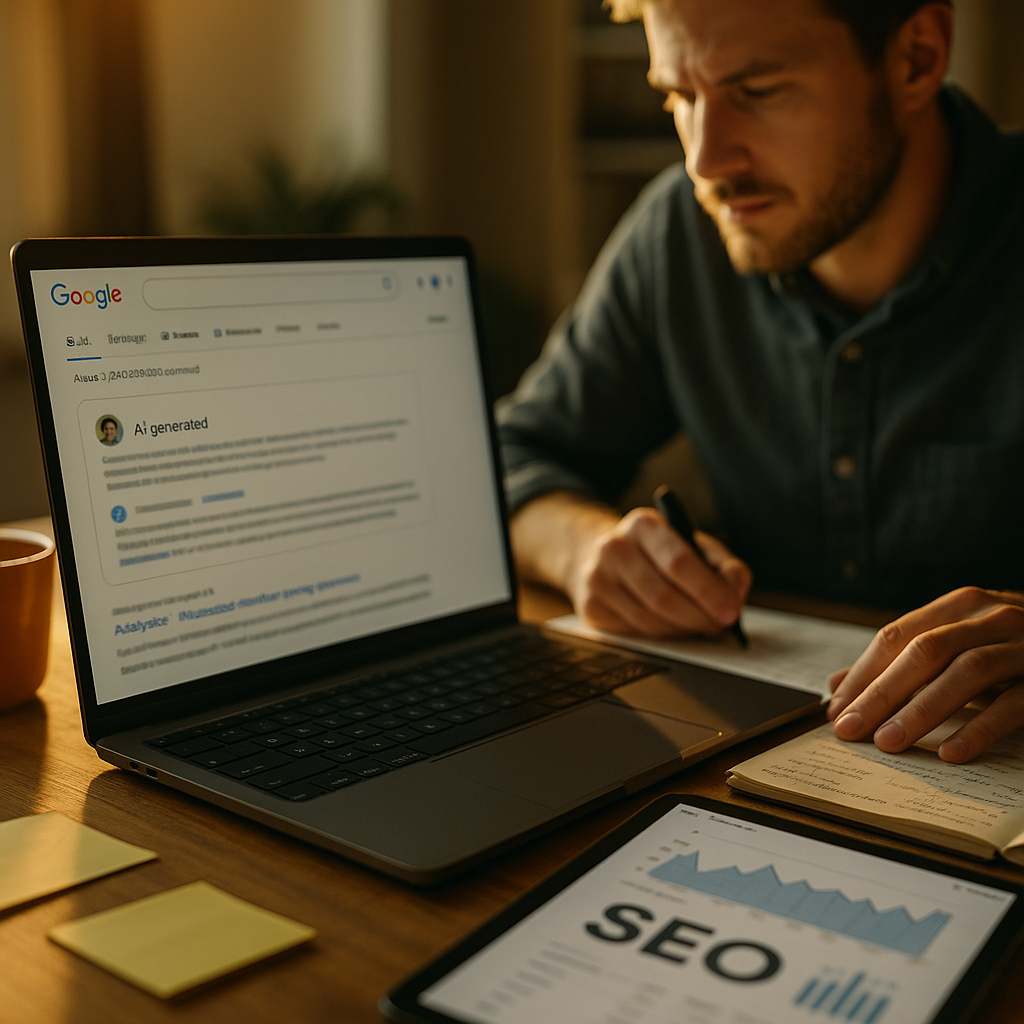
Nearly 60% of Google searches now end without a click, according to recent industry tracking, and the ones that do convert are increasingly answered by AI summaries pulling from Reddit threads, YouTube reviews, and influencer content instead of brand landing pages. Generative search isn’t tweaking the SEO playbook. It’s rerouting the entire pipeline that used to run from keyword research to content brief to influencer amplification. If your team still treats SEO and influencer marketing as separate line items, you’re already behind.
The Pipeline That Used to Work Is Broken
For a decade, the model was predictable. SEO teams identified high-intent keywords, briefed content, published it, then handed a version to influencer partners to amplify on social. Influencer content drove backlinks and social proof. SEO content captured the search demand. Two teams, two budgets, one funnel.
That funnel assumed a search results page with ten blue links. Generative search engines like Google’s AI Overviews, Perplexity, and ChatGPT’s browsing mode don’t hand back a list. They synthesize an answer, and they cite sources based on perceived trustworthiness and specificity, not keyword density or backlink count. A brand’s product page optimized for “best skincare routine for combination skin” now competes against a dermatologist’s TikTok caption and a Reddit thread with forty replies.
Generative engines don’t reward the page that ranks. They reward the source that reads as credible, specific, and human, which is exactly the lane influencer content has occupied for years.
This is why marketers researching citation based budgets are seeing a real shift in where spend needs to move. The old pipeline optimized for ranking position. The new one has to optimize for being quoted.
Why AI Engines Keep Citing Creators Over Brand Pages
Ask an AI answer engine about a product category and watch what it pulls. More often than not, it’s a creator’s comparison video, a first-person review, or a niche forum post, not a brand’s carefully SEO’d category page. There’s a structural reason for this.
- First-person specificity. Generative models are trained to favor content that reads as experiential rather than promotional. “I used this for six weeks and here’s what happened” outperforms “our formula delivers visible results.”
- Distributed corroboration. When ten creators independently mention the same product benefit, the model treats that as a consensus signal. Brand copy, no matter how well optimized, is a single voice with an obvious incentive.
- Freshness and platform diversity. AI crawlers index YouTube transcripts, TikTok captions, and creator blog posts alongside traditional web pages. A brand’s static product page updated once a quarter can’t compete with a creator ecosystem publishing daily.
This lines up with what we’ve already documented in synthetic avatars losing trust to human creators. The same trust gap that hurts AI-generated brand personas is now hurting AI-generated brand content in search. Authenticity signals aren’t a nice-to-have anymore. They’re the ranking factor.
What Marketers Are Getting Wrong
Most brands responded to generative search by asking their SEO agency to “optimize for AI Overviews.” That’s a reasonable instinct, but it misdiagnoses the problem. You can’t out-optimize a system that structurally favors third-party voices with your own first-party content. It’s like trying to win a word-of-mouth contest by talking about yourself louder.
The bigger mistake is organizational. SEO and influencer teams still report to different budget owners in most mid-market and enterprise structures. SEO sits under demand gen or content marketing. Influencer sits under social or brand. When generative search blurs the line between “ranking content” and “creator content,” that org chart becomes a liability. Nobody owns the citation strategy because the citation strategy didn’t exist as a job function two years ago.
Companies like Google, Coty, and TP-Link building creator teams in house are ahead of this curve precisely because they’ve collapsed the distance between search strategy and creator strategy into one function. That’s not a coincidence. It’s a preview of where the operating model is headed.
The New Metric: Share of Citation, Not Share of Voice
If your reporting still leads with impressions and rankings, you’re measuring a funnel that’s shrinking. The metric that matters now is share of citation: how often your brand, product, or POV gets referenced by name inside an AI-generated answer, and through which source.
Tools are emerging to track this (Profound, Otterly, and Ahrefs’ Brand Radar are early entrants), but most brands are still flying blind. That’s a problem, because IDC naming an AEO chief signals that enterprise analysts are already formalizing this as a distinct discipline with its own headcount and budget line. Waiting for your martech stack to catch up is not a strategy.
This also connects to a broader measurement shift already underway in creator programs. As covered in sales lift overtaking engagement as the default creator KPI, brands are moving away from vanity metrics across the board. Citation frequency is just the search-side version of the same discipline: stop counting attention, start counting influence on outcomes.
Rebuilding the Pipeline: A Practical Framework
You don’t need to blow up your content operation. You need to sequence it differently. Here’s the shift we’re seeing work at brands that have actually adapted, rather than just talked about adapting.
- Start with creator content, not keyword research. Identify the creators already earning organic citations in your category, then build brand content that supports and extends what’s already working, rather than competing against it.
- Brief for citation, not for rank. Ask creators and writers to include specific, verifiable claims, named comparisons, and first-person testing detail. Vague benefit language doesn’t get quoted by AI systems.
- Diversify the surface area. Generative engines pull from YouTube transcripts, podcast show notes, Reddit, and niche blogs, not just top-ranking web pages. A single influencer partnership that spans formats is worth more than five isolated blog posts.
- Fund UGC as infrastructure, not a campaign line item. The brands treating user generated content as a recurring rights-managed asset pipeline, as detailed in UGC spend moving into CAC budgets, have a structural advantage because they’re always feeding fresh, citable material into the ecosystem.
- Reassign ownership. Someone needs to own “share of citation” the way someone currently owns organic rankings. If that’s not clear internally, generative search will keep exposing the gap.
Small and Niche Creators Have a Structural Edge Here
Here’s a wrinkle a lot of brands haven’t clocked yet: this shift actually favors smaller, more specific creators over mega-influencers and celebrity talent. Generative engines are hunting for specificity and depth, not reach. A nano creator with a genuinely narrow niche often produces exactly the kind of granular, first-person content these systems prioritize.
That mirrors what’s already true on the paid media side. Research covered in small creators outconverting mega influencers on cost per lead, and separately in niche creator CPMs beating celebrity reach, points to the same underlying pattern: precision beats scale when the goal is qualified action, not raw exposure. Generative search is just applying that same logic to organic discovery.
Attribution Gets Harder Before It Gets Easier
One honest caveat: measuring the ROI of citation based visibility is messier than measuring a ranked keyword. There’s no click-through rate on an AI Overview citation in most cases, and platforms aren’t rushing to hand marketers clean attribution data. This is part of a larger identity and measurement upheaval already reshaping the industry, as outlined in identity graphs replacing cookies as the attribution backbone.
The realistic near-term approach is triangulation: track branded search lift, monitor direct traffic spikes after high-citation content goes live, and use platforms like Sprout Social or HubSpot to correlate creator publishing cadence with pipeline movement. It’s imperfect. It’s also better than pretending the old rank tracking dashboard still tells the full story.
FAQs
What is generative search and how does it differ from traditional SEO?
Generative search refers to AI powered answer engines, such as Google’s AI Overviews, Perplexity, and ChatGPT’s browsing mode, that synthesize a direct answer from multiple sources instead of returning a ranked list of links. Traditional SEO optimizes a single page to rank highly. Generative search optimizes for being cited as a trustworthy source within an AI generated summary, which favors specificity, first-person detail, and cross-source consensus over keyword targeting.
Why does influencer content get cited more often than brand website content?
AI models are trained to weight experiential, first-person language and independent corroboration more heavily than promotional brand copy. When multiple creators mention a similar product claim, generative engines treat that as consensus. A single brand page, regardless of SEO quality, reads as one incentivized voice rather than distributed evidence.
How should brands restructure their content teams for generative search?
Brands should collapse the separation between SEO and influencer functions, assigning ownership of “share of citation” the way organic rankings were once owned by a dedicated SEO lead. Content briefs should prioritize verifiable, specific claims and multi-format distribution (video, transcripts, forums) over single-page keyword optimization.
Can small businesses compete in generative search without a large content budget?
Yes, and in some ways they’re better positioned. Generative engines favor specificity and niche authority over reach, which is why smaller, highly focused creators often get cited more consistently than broad, high-budget campaigns. A tightly targeted creator partnership can outperform a large-scale SEO investment for citation purposes.
What metrics should replace keyword rankings for measuring generative search performance?
Share of citation, meaning how often a brand or product is referenced by name within AI generated answers, is becoming the primary metric. Supporting signals include branded search lift, direct traffic spikes following high-citation content, and correlation between creator publishing cadence and pipeline or sales movement.
The brands winning generative search visibility right now aren’t the ones with the biggest SEO budgets. They’re the ones who’ve already merged their creator and search strategies into a single, accountable function. Start there before you spend another dollar optimizing a page format that AI engines are quietly learning to skip.
Top Influencer Marketing Agencies
The leading agencies shaping influencer marketing in 2026
Agencies ranked by campaign performance, client diversity, platform expertise, proven ROI, industry recognition, and client satisfaction. Assessed through verified case studies, reviews, and industry consultations.
Moburst

-
2

The Shelf
Boutique Beauty & Lifestyle Influencer AgencyA data-driven boutique agency specializing exclusively in beauty, wellness, and lifestyle influencer campaigns on Instagram and TikTok. Best for brands already focused on the beauty/personal care space that need curated, aesthetic-driven content.Clients: Pepsi, The Honest Company, Hims, Elf Cosmetics, Pure LeafVisit The Shelf → -
3

Audiencly
Niche Gaming & Esports Influencer AgencyA specialized agency focused exclusively on gaming and esports creators on YouTube, Twitch, and TikTok. Ideal if your campaign is 100% gaming-focused — from game launches to hardware and esports events.Clients: Epic Games, NordVPN, Ubisoft, Wargaming, Tencent GamesVisit Audiencly → -
4

Viral Nation
Global Influencer Marketing & Talent AgencyA dual talent management and marketing agency with proprietary brand safety tools and a global creator network spanning nano-influencers to celebrities across all major platforms.Clients: Meta, Activision Blizzard, Energizer, Aston Martin, WalmartVisit Viral Nation → -
5

The Influencer Marketing Factory
TikTok, Instagram & YouTube CampaignsA full-service agency with strong TikTok expertise, offering end-to-end campaign management from influencer discovery through performance reporting with a focus on platform-native content.Clients: Google, Snapchat, Universal Music, Bumble, YelpVisit TIMF → -
6

NeoReach
Enterprise Analytics & Influencer CampaignsAn enterprise-focused agency combining managed campaigns with a powerful self-service data platform for influencer search, audience analytics, and attribution modeling.Clients: Amazon, Airbnb, Netflix, Honda, The New York TimesVisit NeoReach → -
7

Ubiquitous
Creator-First Marketing PlatformA tech-driven platform combining self-service tools with managed campaign options, emphasizing speed and scalability for brands managing multiple influencer relationships.Clients: Lyft, Disney, Target, American Eagle, NetflixVisit Ubiquitous → -
8

Obviously
Scalable Enterprise Influencer CampaignsA tech-enabled agency built for high-volume campaigns, coordinating hundreds of creators simultaneously with end-to-end logistics, content rights management, and product seeding.Clients: Google, Ulta Beauty, Converse, AmazonVisit Obviously →