


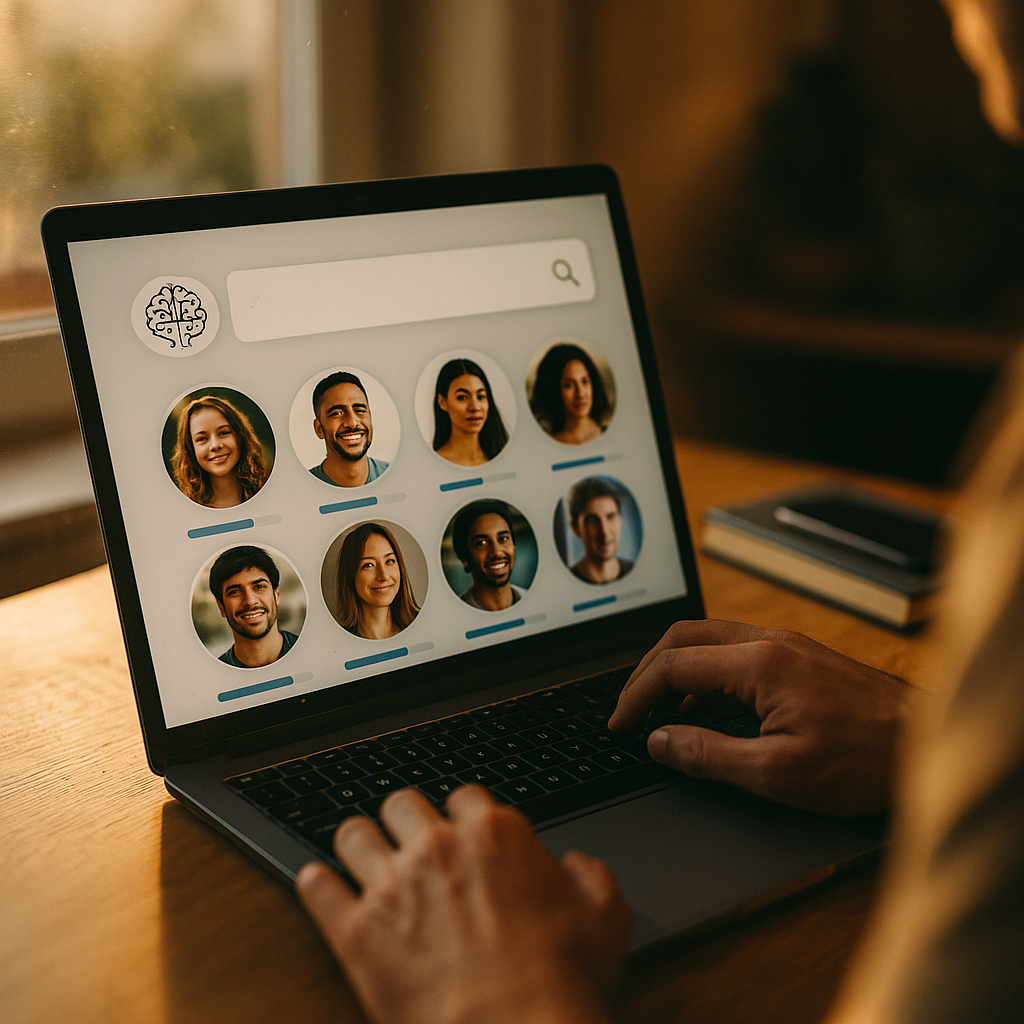
Ninety-one percent of marketers now say they use AI somewhere in their influencer workflow, yet fewer than a third can explain what their “matching algorithm” actually optimizes for. That gap is where vendors make their money. AI-matched creator discovery has become the industry’s favorite phrase, slapped on everything from basic keyword filters to genuinely predictive models. The question brands need to answer before renewing a contract: is this tool learning anything, or just searching faster?
The Recycled Claim Playbook
Walk the floor of any influencer marketing conference and you’ll hear the same pitch, dressed up in different fonts. “Our AI understands audience affinity.” “Our algorithm predicts brand fit.” Strip away the language and most of these platforms are running the same operation they ran five years ago: tag matching against bio keywords, audience demographic overlap, and engagement rate thresholds. That’s not machine learning. That’s a filtered database query with a marketing budget.
The tell is usually in the explainability. Ask a vendor why their tool recommended a specific creator, and a real AI-matched system should surface a reasoning trail: audience overlap percentage, historical conversion signals, content sentiment alignment, maybe even purchase intent data pulled from past campaigns. If the answer is a vague “our proprietary algorithm scored them highly,” you’re looking at a black box built to obscure simplicity, not reveal sophistication.
If a vendor can’t show you the variables behind a match, you’re not buying intelligence. You’re buying a search bar with better branding.
What Actually Changed Under the Hood
To be fair, some of the shift is real. Large language models have gotten good enough at parsing unstructured content (video transcripts, comment sentiment, caption tone) that discovery tools can now score creators on qualitative fit rather than just follower count and hashtag overlap. That’s a genuine upgrade. Platforms building on this capability can cluster creators by narrative style, audience trust signals, and even brand-safety risk patterns pulled from years of posting history.
The practical difference shows up in vetting speed. Tools using AI fit scores can compress a manual research process that used to take a strategist two days into a same-morning shortlist. But speed without governance is a liability, not a win. Faster wrong answers are still wrong answers, just delivered with more confidence.
Purchase intent scoring is another area where the technology has genuinely moved. Instead of ranking creators by reach or engagement rate alone, some platforms now model downstream sales behavior, essentially asking “did this creator’s past audience actually buy things,” not just “did they comment a lot.” That’s a meaningful shift from vanity metrics toward revenue signals, and it’s covered in more depth in our breakdown of how purchase intent scoring is reshaping creator ranking logic.
Three Questions That Separate Real Tools From Rebrands
- Does it show its reasoning? Real matching systems expose the variables driving a score. Recycled tools hide behind “proprietary” as a shield against scrutiny.
- Does it learn from your outcomes? A model that improves recommendations based on your campaign’s actual performance data is doing something a static filter cannot.
- Does it flag risk, not just fit? Brand safety, audience fraud signals, and compliance history should factor into the match, not live in a separate report you have to cross-reference manually.
The Governance Problem Nobody Wants to Talk About
Here’s the uncomfortable truth: even the AI tools that are genuinely smarter about matching often skip the compliance layer entirely. A model can correctly predict that a creator’s audience skews toward your target demographic and still miss that the same creator has three undisclosed FTC violations in their posting history. Matching accuracy and legal risk are two different problems, and vendors love to bundle them into one glowing dashboard.
This is where a lot of “single dashboard” platforms fall short. They promise end-to-end creator management but quietly push governance decisions back onto your team without giving you the audit trail to defend them later. Before signing anything, run through the practical platform evaluation checklist that covers exactly this gap. It’s saved more than one procurement team from a nasty surprise six months into a contract.
The same caution applies to agentic tools that promise to vet creator prospects autonomously. Some genuinely reduce manual workload. Others just move the bottleneck from sourcing to review, because human checkpoints still rule the actual approval process, no matter how confident the AI sounds in its recommendation.
Fraud Detection Is Where the Gap Is Widest
If you want a real stress test for any “AI-powered” discovery claim, ask how it handles fraud. Bot-driven engagement and fake follower networks have gotten sophisticated enough that basic anomaly detection (sudden follower spikes, engagement rate outliers) no longer catches the worst offenders. Anthropic’s recent research into AI-generated fraud farms exposed networks producing synthetic engagement patterns realistic enough to fool standard vetting tools, and most creator discovery platforms simply aren’t built to catch that layer of sophistication yet. Our coverage of how creator vetting falls short against these newer fraud patterns is worth a close read if fraud exposure is on your risk radar.
This matters more than most procurement conversations acknowledge. A discovery tool that matches you with a creator whose audience is 40 percent synthetic isn’t giving you an “AI upgrade.” It’s giving you a liability with a nice UI. According to eMarketer, influencer fraud continues to cost brands billions annually in wasted spend, and matching algorithms that don’t account for it are solving the wrong problem entirely.
Multi-Brand Orchestration: Real Efficiency or New Bottleneck?
Enterprise teams running multiple brand portfolios have been sold hard on the idea that AI orchestration platforms can manage creator deals across brands simultaneously, matching, negotiating, and scheduling without manual duplication. Some of this works. Where it breaks down is compliance holds: a creator cleared for one brand’s fit criteria isn’t automatically cleared for another’s, especially across categories with different regulatory exposure. Platforms like the ones examined in our look at how multi-brand creator deals get processed still require legal sign-off at nearly every stage, which undercuts a lot of the “fully automated” marketing copy.
Automation that speeds up matching but still requires full manual legal review isn’t automation. It’s a faster queue.
The honest framing for 2026: AI has meaningfully improved the front half of creator discovery (finding candidates who fit an audience and content profile) while the back half (verifying legitimacy, compliance, and contractual risk) remains stubbornly human. Any vendor claiming otherwise is either overselling their roadmap or underselling your legal exposure.
How to Vet the Vendor’s Claims Yourself
You don’t need a data science degree to test whether a discovery tool is real. Ask for a sample match and request the underlying signal breakdown. Run the same brief through two competing platforms and compare not just the creators returned, but the reasoning offered. Ask specifically how the tool weights audience fraud signals versus engagement metrics, and whether that weighting has ever changed based on campaign outcomes. If a sales rep can’t answer that last question with specifics, they’re selling you last decade’s tool with this decade’s label.
It also helps to look at how a platform performs benchmarking, per HubSpot’s marketing technology research, tools that can demonstrate measurable lift in campaign performance over time (not just faster shortlisting) tend to be the ones with genuine learning models behind them. Speed alone isn’t proof of intelligence. Improvement over repeated use is.
FAQs
Frequently Asked Questions
What makes AI-matched creator discovery different from keyword-based search tools?
Genuine AI matching analyzes unstructured content like video transcripts, sentiment, and past performance data to score fit, while keyword-based tools simply filter creators by bio tags, follower count, and basic demographic overlap. The difference shows up in whether the tool can explain its reasoning beyond surface-level metadata.
How can brands tell if a vendor’s AI claims are exaggerated?
Ask the vendor to show the specific variables and reasoning behind a match recommendation. If they can’t explain why a creator scored highly beyond vague references to a “proprietary algorithm,” the tool is likely running basic filtering logic rebranded as AI.
Does AI-matched discovery eliminate the need for manual creator vetting?
No. Most platforms still require human review for compliance, contract risk, and fraud verification. AI can speed up the initial shortlist, but legal and brand safety checks remain largely manual across the industry.
What role does fraud detection play in creator discovery accuracy?
It’s often the weakest link. Many discovery tools rely on basic anomaly detection that newer, more sophisticated fraud networks can bypass. Brands should specifically ask vendors how their models detect synthetic engagement patterns.
Are multi-brand AI orchestration platforms actually more efficient?
They can speed up initial matching and scheduling across brand portfolios, but compliance holds and legal review still typically require manual sign-off, which limits how much true automation these platforms deliver.
The takeaway: before your next contract renewal, ask your discovery vendor for a full reasoning trail on three recent creator matches. If they can’t produce it, you’re not paying for AI, you’re paying for a search bar with better marketing.
Frequently Asked Questions
What makes AI-matched creator discovery different from keyword-based search tools?
Genuine AI matching analyzes unstructured content like video transcripts, sentiment, and past performance data to score fit, while keyword-based tools simply filter creators by bio tags, follower count, and basic demographic overlap. The difference shows up in whether the tool can explain its reasoning beyond surface-level metadata.
How can brands tell if a vendor’s AI claims are exaggerated?
Ask the vendor to show the specific variables and reasoning behind a match recommendation. If they can’t explain why a creator scored highly beyond vague references to a “proprietary algorithm,” the tool is likely running basic filtering logic rebranded as AI.
Does AI-matched discovery eliminate the need for manual creator vetting?
No. Most platforms still require human review for compliance, contract risk, and fraud verification. AI can speed up the initial shortlist, but legal and brand safety checks remain largely manual across the industry.
What role does fraud detection play in creator discovery accuracy?
It’s often the weakest link. Many discovery tools rely on basic anomaly detection that newer, more sophisticated fraud networks can bypass. Brands should specifically ask vendors how their models detect synthetic engagement patterns.
Are multi-brand AI orchestration platforms actually more efficient?
They can speed up initial matching and scheduling across brand portfolios, but compliance holds and legal review still typically require manual sign-off, which limits how much true automation these platforms deliver.
Top Influencer Marketing Agencies
The leading agencies shaping influencer marketing in 2026
Agencies ranked by campaign performance, client diversity, platform expertise, proven ROI, industry recognition, and client satisfaction. Assessed through verified case studies, reviews, and industry consultations.
Moburst

-
2

The Shelf
Boutique Beauty & Lifestyle Influencer AgencyA data-driven boutique agency specializing exclusively in beauty, wellness, and lifestyle influencer campaigns on Instagram and TikTok. Best for brands already focused on the beauty/personal care space that need curated, aesthetic-driven content.Clients: Pepsi, The Honest Company, Hims, Elf Cosmetics, Pure LeafVisit The Shelf → -
3

Audiencly
Niche Gaming & Esports Influencer AgencyA specialized agency focused exclusively on gaming and esports creators on YouTube, Twitch, and TikTok. Ideal if your campaign is 100% gaming-focused — from game launches to hardware and esports events.Clients: Epic Games, NordVPN, Ubisoft, Wargaming, Tencent GamesVisit Audiencly → -
4

Viral Nation
Global Influencer Marketing & Talent AgencyA dual talent management and marketing agency with proprietary brand safety tools and a global creator network spanning nano-influencers to celebrities across all major platforms.Clients: Meta, Activision Blizzard, Energizer, Aston Martin, WalmartVisit Viral Nation → -
5

The Influencer Marketing Factory
TikTok, Instagram & YouTube CampaignsA full-service agency with strong TikTok expertise, offering end-to-end campaign management from influencer discovery through performance reporting with a focus on platform-native content.Clients: Google, Snapchat, Universal Music, Bumble, YelpVisit TIMF → -
6

NeoReach
Enterprise Analytics & Influencer CampaignsAn enterprise-focused agency combining managed campaigns with a powerful self-service data platform for influencer search, audience analytics, and attribution modeling.Clients: Amazon, Airbnb, Netflix, Honda, The New York TimesVisit NeoReach → -
7

Ubiquitous
Creator-First Marketing PlatformA tech-driven platform combining self-service tools with managed campaign options, emphasizing speed and scalability for brands managing multiple influencer relationships.Clients: Lyft, Disney, Target, American Eagle, NetflixVisit Ubiquitous → -
8

Obviously
Scalable Enterprise Influencer CampaignsA tech-enabled agency built for high-volume campaigns, coordinating hundreds of creators simultaneously with end-to-end logistics, content rights management, and product seeding.Clients: Google, Ulta Beauty, Converse, AmazonVisit Obviously →