


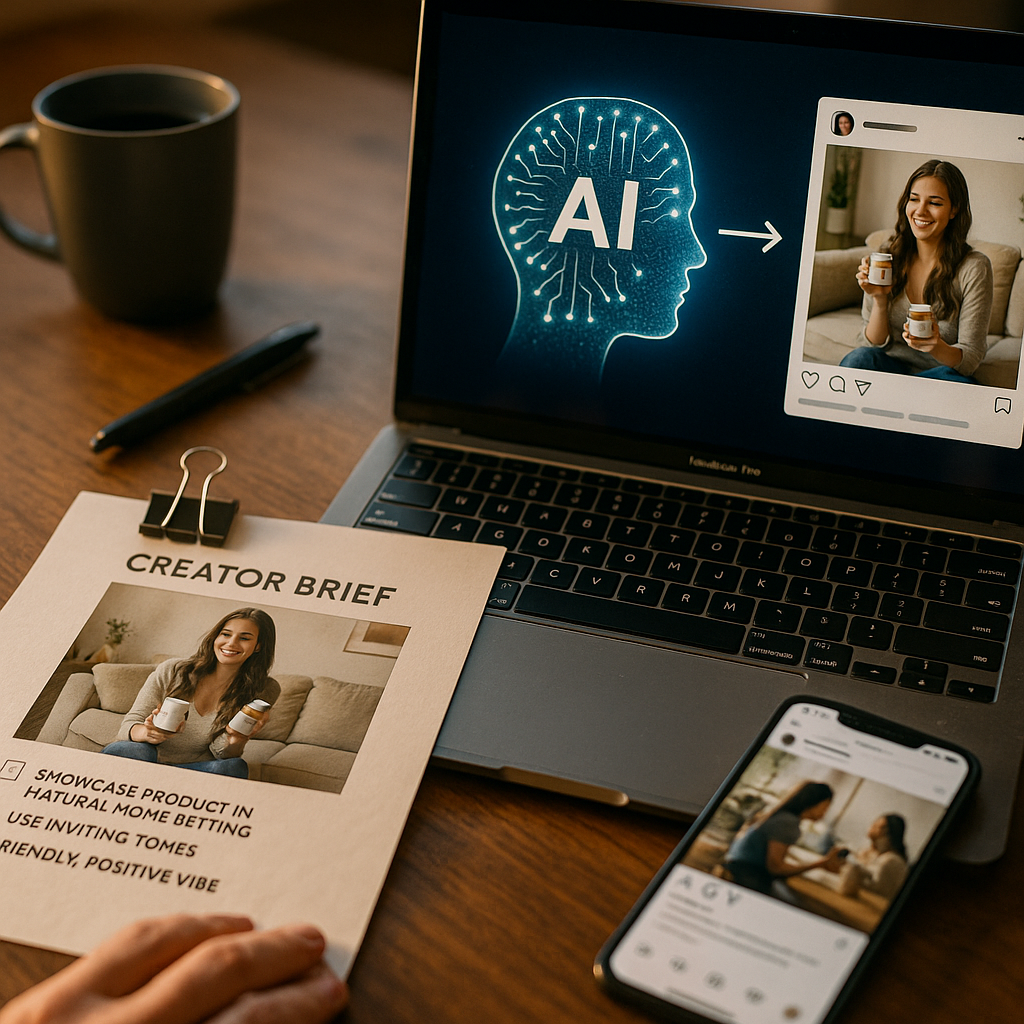
TikTok’s recommendation engine now evaluates video content within the first three seconds of upload, before a single view even happens. If your creator brief doesn’t account for that, you’re leaving distribution to chance. AI-optimized placement across short-form video isn’t a bonus feature anymore. It’s the difference between a creator post that reaches 4,000 people and one that reaches 400,000.
Most brands still brief creators like it’s 2021: hit these talking points, tag this handle, use this hashtag. Meanwhile, the platforms have quietly rebuilt their entire discovery layer around machine learning models that read video structure, audio signals, and completion curves in real time. Briefing for AI-optimized placement means writing instructions that speak the algorithm’s language, not just the audience’s.
What “AI-optimized placement” actually means
Every major short-form platform, TikTok, Instagram Reels, YouTube Shorts, now runs recommendation systems that score content before recommending it broadly. These systems weigh signals like watch-through rate, rewatch behavior, early engagement velocity, and even on-screen text density. Placement isn’t bought only through ad spend anymore; it’s earned through content structure that the model rewards.
That shifts the brief. Instead of just saying “make it authentic,” you need to specify pacing, hook timing, caption legibility, and audio choices that align with what the platform’s classifier is trained to push. Think of it less like writing a creative brief and more like writing a technical spec with creative flexibility baked in.
A brief that ignores algorithmic signals is optimizing for the creative director’s taste, not the platform’s distribution engine, and those two things rarely reward the same video.
The five signals your brief needs to address
Not every ranking factor is public, but platforms have disclosed enough (and third-party testing has confirmed enough) that brands can brief against known priorities. Here’s what actually moves the needle:
- Hook retention window: The first 1 to 3 seconds determine whether a viewer keeps watching. Brief creators to front-load the payoff or the pattern interrupt, not the brand introduction.
- Completion and rewatch rate: Loop-friendly editing, where the ending visually or narratively connects back to the opening, keeps viewers watching multiple times. This is worth studying closely; our breakdown of loop optimized reels covers the exact cut techniques that push rewatch metrics up.
- Native audio and trending sound alignment: Platforms boost content using sounds already gaining traction, but timing matters. A trend used too late signals low relevance to the model.
- On-screen text and caption structure: Auto-generated captions and burned-in text are now parsed for relevance matching. Videos without clear, readable text often get deprioritized in silent-scroll environments, a factor we dig into in no talking TikTok Shop videos.
- Engagement velocity in the first hour: Comments, shares, and saves within the initial posting window signal quality faster than total lifetime views. Briefs should include a coordinated seeding plan, not just a publish-and-hope timeline.
Skip any one of these and you’re asking the algorithm to work against you. That’s a hard way to win a distribution game.
Why generic briefs fail on AI-driven feeds
Here’s the uncomfortable truth: most creator briefs are still written for human approval, not machine discovery. Brand teams obsess over tone of voice and messaging accuracy while the platform’s recommendation model is quietly judging pacing and retention curves that nobody on the brand side even reviewed.
A creator can nail every talking point and still get a video that dies at 800 views because the hook took six seconds to land. That’s not a creative failure. It’s a briefing failure. The brief never told the creator that speed to hook matters more than brand mention placement.
This is where structured, revenue-aware briefing frameworks help. Our guide to short form video scripts outlines a scene-by-scene structure that forces hook timing, CTA placement, and pacing decisions upfront, before a creator ever hits record.
Building the brief: a practical framework
Skip the twelve-page PDF nobody reads. A brief optimized for AI placement should be tight, modular, and specific enough that a creator can self-check their draft against it before submission.
- Define the hook requirement explicitly. Don’t just say “grab attention.” Specify: “Payoff or question must appear within 2 seconds, before any brand visual.”
- Set a pacing cadence. Cut frequency matters. For platforms favoring high retention, request a scene change every 2 to 4 seconds during the first 10 seconds.
- Mandate caption and text overlay standards. Legible, high-contrast text synced to speech, not decorative fonts that auto-caption systems can’t parse well.
- Specify audio strategy. Either license-cleared original audio for brand safety, or a named trending sound with a usage window (trends decay fast, often within 5 to 7 days).
- Include a seeding and engagement plan. Who comments in the first 30 minutes? Is there a paid amplification layer ready to trigger if organic velocity looks strong?
- Add a tracking and attribution field. If you can’t measure which creative element drove performance, you can’t optimize the next brief. This is exactly the gap addressed in UGC briefs with tracking fields.
Notice what’s missing from that list: rigid script mandates. Creators still need room to execute in their own voice. The brief should constrain structure, not personality. Over-scripting kills the authenticity signals that platforms also reward, so there’s a real tension to manage here, not a simple checklist to enforce.
Format choice shapes algorithmic fit
Not every format performs equally across platforms, and the brief should reflect that reality rather than forcing one format everywhere. Split-screen and duet-style content tends to perform well on comparison-driven searches because it mirrors how viewers already browse for reviews; see our notes on split screen duet reviews for the mechanics. Multi-creator formats, meanwhile, benefit from cross-audience seeding that can trigger broader recommendation exposure, a dynamic covered in multi creator duet drops.
If your product category leans visual and comparison-heavy (beauty, tech, home goods), briefing for a versus-style structure often outperforms a straight review, and our piece on comparison versus videos breaks down why that format wins purchase decisions specifically.
The point isn’t to chase every format trend. It’s to match format to platform behavior, then brief the creator on the structural requirements that format demands.
Compliance doesn’t slow you down, it protects the placement
Brand safety teams sometimes treat FTC disclosure requirements as friction against creative freedom. That’s backwards. Clear, properly placed disclosure (using platform-native tools like TikTok’s branded content toggle or Instagram’s paid partnership label) doesn’t hurt algorithmic reach the way many marketers assume. What hurts reach is a video getting flagged, removed, or shadow-limited after the fact because disclosure was buried or missing.
Brief creators on disclosure placement the same way you brief them on hooks: specific timing, specific wording, no ambiguity. The FTC’s endorsement guidelines are the baseline; platform policies from TikTok’s ad platform and Meta’s business tools often add specific formatting requirements on top.
This matters even more as AI-generated hosts and avatars enter the creator mix. If you’re testing synthetic presenters, disclosure rules get more complex, not less. Our breakdown of AI avatar brand hosts covers what brands need to specify in the brief before a single frame gets generated.
Measuring whether the brief actually worked
Views alone don’t tell you if your brief succeeded. Track retention curves (available in TikTok Creator Marketplace and Meta’s Business Suite analytics), average watch time versus video length, and share-to-view ratio. A brief that produces high initial views but low completion is a brief that nailed the hook instruction and missed everything after it.
Compare performance across creators using the same brief. If results vary wildly, the brief probably left too much open to interpretation on the structural elements that matter to the algorithm, hook timing, pacing, caption clarity, rather than the creative elements that are supposed to vary, tone, humor, personal story.
Benchmarking data from platforms like Sprout Social and industry trend reports from eMarketer can help set realistic completion rate targets by category, since a 45% completion rate might be strong for a 60-second explainer but weak for a 15-second product demo.
FAQs
Frequently Asked Questions
What does briefing for AI-optimized placement actually change compared to a normal creator brief?
It adds specific structural requirements, hook timing, pacing cadence, caption formatting, and audio strategy, that align with what platform recommendation algorithms measure. A normal brief focuses on messaging and brand fit; an AI-optimized brief adds the technical layer that determines whether the algorithm pushes the video beyond a creator’s existing followers.
How specific should hook instructions be in a creator brief?
Very specific. Rather than “grab attention early,” specify the exact time window (typically 1 to 3 seconds) and whether the payoff, question, or visual pattern interrupt should appear before any branding. Vague hook guidance is one of the most common reasons briefed content underperforms.
Do disclosure requirements hurt algorithmic reach?
No, proper disclosure using platform-native tools doesn’t meaningfully suppress reach. What actually hurts reach is content getting flagged or removed after publishing because disclosure was missing or improperly placed. Briefing clear disclosure instructions upfront protects placement rather than limiting it.
Should the brief specify exact scripts for creators to follow?
Generally, no. Over-scripting reduces the authenticity signals that platforms also weigh in recommendation scoring. The stronger approach constrains structure (hook timing, pacing, CTA placement) while leaving tone, delivery, and personal framing to the creator.
How do I know if my creator brief is actually working?
Track retention curves and completion rates, not just view counts. If multiple creators using the same brief produce wildly different performance, the brief likely left too much ambiguity around the structural elements the algorithm evaluates, rather than the creative elements meant to vary by creator.
Start with one brief template, test it across three creators in the same category, and compare retention curves before scaling spend. The algorithm will tell you which structural instructions worked long before your engagement dashboard does.
Top Influencer Marketing Agencies
The leading agencies shaping influencer marketing in 2026
Agencies ranked by campaign performance, client diversity, platform expertise, proven ROI, industry recognition, and client satisfaction. Assessed through verified case studies, reviews, and industry consultations.
Moburst

-
2

The Shelf
Boutique Beauty & Lifestyle Influencer AgencyA data-driven boutique agency specializing exclusively in beauty, wellness, and lifestyle influencer campaigns on Instagram and TikTok. Best for brands already focused on the beauty/personal care space that need curated, aesthetic-driven content.Clients: Pepsi, The Honest Company, Hims, Elf Cosmetics, Pure LeafVisit The Shelf → -
3

Audiencly
Niche Gaming & Esports Influencer AgencyA specialized agency focused exclusively on gaming and esports creators on YouTube, Twitch, and TikTok. Ideal if your campaign is 100% gaming-focused — from game launches to hardware and esports events.Clients: Epic Games, NordVPN, Ubisoft, Wargaming, Tencent GamesVisit Audiencly → -
4

Viral Nation
Global Influencer Marketing & Talent AgencyA dual talent management and marketing agency with proprietary brand safety tools and a global creator network spanning nano-influencers to celebrities across all major platforms.Clients: Meta, Activision Blizzard, Energizer, Aston Martin, WalmartVisit Viral Nation → -
5

The Influencer Marketing Factory
TikTok, Instagram & YouTube CampaignsA full-service agency with strong TikTok expertise, offering end-to-end campaign management from influencer discovery through performance reporting with a focus on platform-native content.Clients: Google, Snapchat, Universal Music, Bumble, YelpVisit TIMF → -
6

NeoReach
Enterprise Analytics & Influencer CampaignsAn enterprise-focused agency combining managed campaigns with a powerful self-service data platform for influencer search, audience analytics, and attribution modeling.Clients: Amazon, Airbnb, Netflix, Honda, The New York TimesVisit NeoReach → -
7

Ubiquitous
Creator-First Marketing PlatformA tech-driven platform combining self-service tools with managed campaign options, emphasizing speed and scalability for brands managing multiple influencer relationships.Clients: Lyft, Disney, Target, American Eagle, NetflixVisit Ubiquitous → -
8

Obviously
Scalable Enterprise Influencer CampaignsA tech-enabled agency built for high-volume campaigns, coordinating hundreds of creators simultaneously with end-to-end logistics, content rights management, and product seeding.Clients: Google, Ulta Beauty, Converse, AmazonVisit Obviously →