


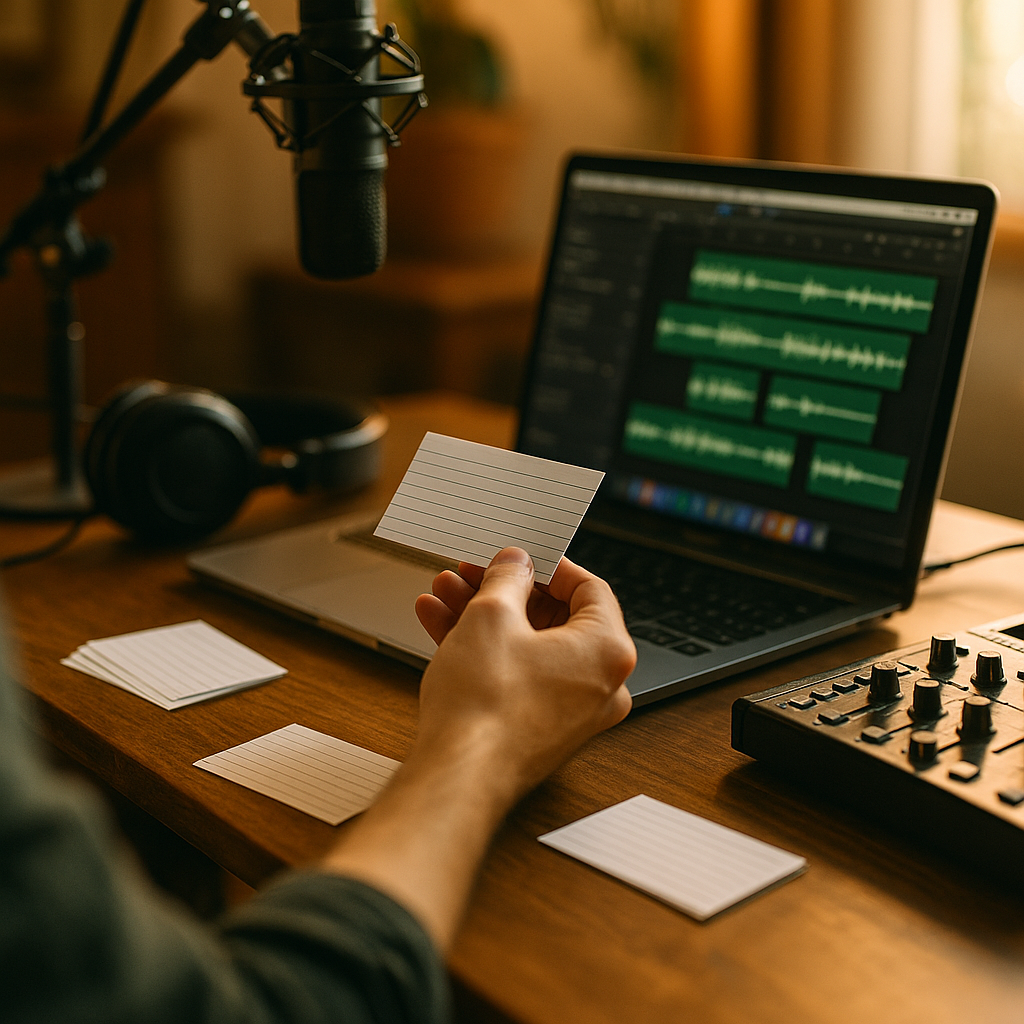
TikTok’s own data shows videos using trending audio get significantly higher completion rates than those with original voiceover alone. So why do most branded sounds die at 40 views? Because brands treat audio like an afterthought, not a creative brief. An original sound brief flips that: it treats the audio track itself as the product, engineered specifically so creators want to grab it and run.
What Is an Original Sound Brief, Exactly?
An original sound brief is a creative directive built around commissioning a piece of audio, a jingle fragment, a voice hook, a sound effect stinger, that a brand wants creators to adopt into their own content without being paid to do so on every use. The first creator gets briefed and compensated. Everyone after that grabs the sound off the platform’s audio library because it’s catchy, useful, or funny enough to serve their own video.
This is different from a standard sponsored post brief. You’re not paying for one placement. You’re paying to seed a sound that, if it works, generates hundreds of unpaid pickups. Think of it as influencer marketing’s version of a jingle strategy, except the distribution mechanic is TikTok’s “use this sound” button instead of a radio buy.
The goal isn’t a viral moment for one creator. It’s building an audio asset that strangers reuse for free because it makes their own content better.
Why Branded Audio Beats Branded Hashtags Right Now
Hashtag challenges had their moment, but discovery algorithms on TikTok, Reels, and even YouTube Shorts increasingly surface content by audio signal, not caption text. A sound gets tagged, categorized, and recommended to users who’ve engaged with similar tracks. A hashtag just sits in a caption hoping someone searches it.
There’s also a fatigue problem. Audiences have been burned by enough “dance challenge” activations that the format reads as an ad the second it appears. Audio is sneakier, in a good way. A creator using a branded sound as background for a cooking video, a get-ready-with-me, or a desk setup tour doesn’t feel like they’re doing a brand a favor. They’re just using a sound that fits the vibe.
According to eMarketer, short-form video continues to absorb the largest share of incremental social ad budget, and platforms are pushing brands toward native, in-feed formats over interruptive ones. Audio-first creative fits that shift because it’s inherently native. Nobody skips a video because they don’t like the sound design, they skip because the hook is weak.
The Anatomy of a Brief Creators Actually Want to Reuse
Most branded sounds fail because the brief was written for a single sponsored deliverable, not for reusability. If you want organic adoption, the brief needs different inputs entirely.
- Keep it under three seconds if it’s a stinger. Longer loops work for background music, but hooks need to be instantly recognizable and easy to drop into a five-second intro.
- Write it without brand-specific lyrics. “It’s giving [product name]” only works for the first creator. Sounds that reference a feeling, a punchline, or a reaction get reused across totally unrelated content categories.
- Test it against silence. Play the raw audio with no video. If it doesn’t land as a standalone joke or hook, it won’t survive as a background track either.
- Brief for versioning, not just one cut. Give the first wave of creators three different context prompts (before/after, POV, reaction) so the sound gets tagged across multiple content types on day one, which widens its discovery surface.
- Skip the CTA in the audio itself. Save conversion language for on-screen text or caption. A voice hook that says “link in bio” gets muted by every subsequent creator who reuses it.
This overlaps with a lot of what we’ve covered in meme audio trend briefs, where the goal is riding an existing sound quickly and safely. An original sound brief is the inverse: you’re trying to become the trend other creators jack later.
Seed the Sound Before You Brief the Creator
Sequencing matters more than most marketers assume. If you commission an original sound and drop it with one influencer’s post, that’s a single data point on the platform’s audio library. It needs a runway.
The playbook that’s worked for brands running these programs at scale looks something like this: commission the audio, release it quietly through two or three micro-creators in unrelated niches first, then layer in a mid-tier or macro creator once the sound has a handful of uses attached to it. Platforms weight audio discoverability partly on usage velocity, so a sound with twelve organic uses in its first 48 hours gets recommended more aggressively than one with a single high-view post and nothing else.
This is also where paid amplification earns its keep, not to push the branded post itself, but to push awareness of the sound as a trend. Some brands are running this alongside AI optimized placement strategies, letting algorithmic tools identify which creator segments are most likely to pick up a new sound organically, then targeting seeding efforts there instead of guessing.
Measuring Adoption, Not Just Views
Here’s where most reporting decks get it wrong. A brand team pulls view counts on the sponsored post and calls it a day. That’s not the metric that matters for an original sound brief. The metric that matters is unique creator adoption, how many accounts used the sound without being paid to.
Track these instead:
- Total organic uses of the sound across the platform’s audio page, checked weekly for the first month.
- Ratio of paid to unpaid posts using the sound. A healthy campaign should tip toward unpaid within two to three weeks.
- Content category spread. If the sound only shows up in beauty content when you’re a food brand, it’s not actually generalizing, it’s stuck in one niche.
- Half-life of the trend. Most branded sounds peak and decay within three to five weeks. Anything sustaining usage past that window is doing something structurally right.
Tools like Sprout Social and platform-native analytics inside TikTok’s TikTok Ads Manager can help pull sound-level performance, though most brands still end up manually checking the audio’s usage page because third-party tools lag on this specific metric.
Where This Goes Wrong
The most common failure mode isn’t a bad sound, it’s brand control creeping back in. Legal wants a disclaimer baked into the track. Marketing wants the logo sonic at the front. Every one of those additions kills reusability, because it turns a piece of audio strangers might want into an ad strangers definitely don’t.
Another failure: briefing too few creators in the seeding phase and expecting the algorithm to do the rest. Audio discovery still needs a critical mass of early uses. One influencer, however large, rarely generates enough usage signal on their own. This is the same lesson brands learned the hard way with formats like loop optimized reels, where a single polished post underperforms a wider spread of rougher, native attempts.
Finally, disclosure compliance still applies to every paid post using the sound, even after it goes organic. The FTC’s endorsement guidance doesn’t care whether the audio trended, sponsored posts still need clear disclosure regardless of how the sound spread.
A Format Note Worth Stealing
Brands running original sound briefs alongside other native formats tend to see compounding effects. Pairing a new sound with a format creators already trust, like the confessional tone in affiliate storytime videos or the low-fi feel of native, unpolished posts, gives the audio a home it can spread from. Sound alone rarely goes anywhere. Sound plus a format creators already know how to remix does.
Frequently Asked Questions
What makes a sound “brief-worthy” versus just background music?
A brief-worthy sound stands on its own without visuals, references a feeling or reaction rather than a product name, and runs short enough to work as a hook rather than a full track.
How many creators should a brand seed an original sound with initially?
Most successful seeding waves start with three to five creators across different content niches before adding a larger-audience creator, since usage variety drives discoverability more than reach alone.
Do creators need to be paid every time they use a branded sound?
No. Only the creators commissioned to produce or launch the sound need compensation and disclosure for that specific post. Organic pickups by unrelated creators generally don’t require payment, though any sponsored use still needs FTC-compliant disclosure.
How long does it typically take for an original sound to gain organic traction?
Most branded sounds that succeed show measurable organic uptake within one to three weeks of the seeding phase. If a sound hasn’t picked up unpaid uses by week three, it’s unlikely to trend further.
Can original sound briefs work outside TikTok?
Yes, though adoption mechanics differ. Instagram Reels and YouTube Shorts both support audio reuse, but TikTok’s audio discovery page still drives the fastest organic pickup for newly commissioned sounds.
Frequently Asked Questions
What makes a sound “brief-worthy” versus just background music?
A brief-worthy sound stands on its own without visuals, references a feeling or reaction rather than a product name, and runs short enough to work as a hook rather than a full track.
How many creators should a brand seed an original sound with initially?
Most successful seeding waves start with three to five creators across different content niches before adding a larger-audience creator, since usage variety drives discoverability more than reach alone.
Do creators need to be paid every time they use a branded sound?
No. Only the creators commissioned to produce or launch the sound need compensation and disclosure for that specific post. Organic pickups by unrelated creators generally don’t require payment, though any sponsored use still needs FTC-compliant disclosure.
How long does it typically take for an original sound to gain organic traction?
Most branded sounds that succeed show measurable organic uptake within one to three weeks of the seeding phase. If a sound hasn’t picked up unpaid uses by week three, it’s unlikely to trend further.
Can original sound briefs work outside TikTok?
Yes, though adoption mechanics differ. Instagram Reels and YouTube Shorts both support audio reuse, but TikTok’s audio discovery page still drives the fastest organic pickup for newly commissioned sounds.
Stop briefing sounds like they’re a one-off deliverable. Write the next audio brief for the hundredth creator who’ll use it, not just the first one you’re paying.
Top Influencer Marketing Agencies
The leading agencies shaping influencer marketing in 2026
Agencies ranked by campaign performance, client diversity, platform expertise, proven ROI, industry recognition, and client satisfaction. Assessed through verified case studies, reviews, and industry consultations.
Moburst

-
2

The Shelf
Boutique Beauty & Lifestyle Influencer AgencyA data-driven boutique agency specializing exclusively in beauty, wellness, and lifestyle influencer campaigns on Instagram and TikTok. Best for brands already focused on the beauty/personal care space that need curated, aesthetic-driven content.Clients: Pepsi, The Honest Company, Hims, Elf Cosmetics, Pure LeafVisit The Shelf → -
3

Audiencly
Niche Gaming & Esports Influencer AgencyA specialized agency focused exclusively on gaming and esports creators on YouTube, Twitch, and TikTok. Ideal if your campaign is 100% gaming-focused — from game launches to hardware and esports events.Clients: Epic Games, NordVPN, Ubisoft, Wargaming, Tencent GamesVisit Audiencly → -
4

Viral Nation
Global Influencer Marketing & Talent AgencyA dual talent management and marketing agency with proprietary brand safety tools and a global creator network spanning nano-influencers to celebrities across all major platforms.Clients: Meta, Activision Blizzard, Energizer, Aston Martin, WalmartVisit Viral Nation → -
5

The Influencer Marketing Factory
TikTok, Instagram & YouTube CampaignsA full-service agency with strong TikTok expertise, offering end-to-end campaign management from influencer discovery through performance reporting with a focus on platform-native content.Clients: Google, Snapchat, Universal Music, Bumble, YelpVisit TIMF → -
6

NeoReach
Enterprise Analytics & Influencer CampaignsAn enterprise-focused agency combining managed campaigns with a powerful self-service data platform for influencer search, audience analytics, and attribution modeling.Clients: Amazon, Airbnb, Netflix, Honda, The New York TimesVisit NeoReach → -
7

Ubiquitous
Creator-First Marketing PlatformA tech-driven platform combining self-service tools with managed campaign options, emphasizing speed and scalability for brands managing multiple influencer relationships.Clients: Lyft, Disney, Target, American Eagle, NetflixVisit Ubiquitous → -
8

Obviously
Scalable Enterprise Influencer CampaignsA tech-enabled agency built for high-volume campaigns, coordinating hundreds of creators simultaneously with end-to-end logistics, content rights management, and product seeding.Clients: Google, Ulta Beauty, Converse, AmazonVisit Obviously →