


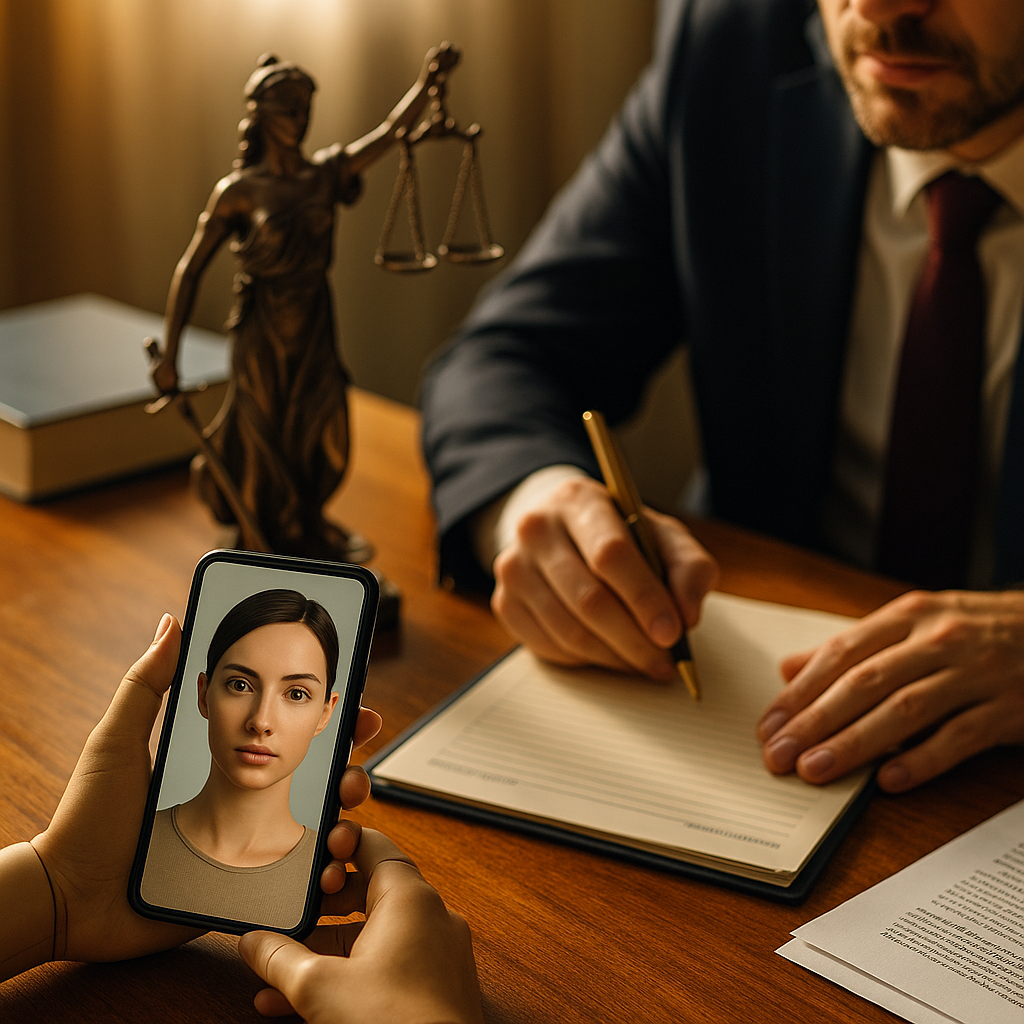
Forty two percent of consumers say they can’t reliably tell when an influencer is AI generated, according to recent survey data circulating among agency compliance teams. That gap is exactly why synthetic influencer disclosure laws are now spreading state by state instead of waiting on a single federal standard. If your brand runs virtual creators, AI-augmented UGC, or digital twins of real talent, the rules you follow depend entirely on your audience’s zip code.
Why “Synthetic Influencer” Became a Legal Category
Regulators didn’t invent this term to sound futuristic. They needed a bucket for content generated or substantially altered by AI that presents itself as a genuine human recommendation. That includes fully virtual personas like Lil Miquela style characters, AI voice clones layered over a real creator’s face, and de-aged or digitally resurrected likenesses used in endorsements.
The Federal Trade Commission set the baseline years ago with material connection disclosure rules, but synthetic content raises a second question the original guidance never anticipated: is the endorser even real? States have started answering that separately from the “was this sponsored” question, which means brands now juggle two overlapping disclosure obligations instead of one.
A single AI-generated ad running nationally can trigger three different labeling standards depending on where the viewer sits, and none of them are optional.
The State Tracker: Where Things Stand
Think of this as your working reference, not a static list. Legislative sessions move fast, and several bills sitting in committee right now could reshape requirements before the year is out. Here’s the landscape as of early 2026.
- California: Requires clear and conspicuous labeling on any commercial content featuring a synthetic or digitally cloned likeness, extending earlier deepfake election laws into the advertising space. Enforcement runs through the state attorney general and allows private right of action in some cases.
- New York: Mandates disclosure when AI is used to generate a persona’s voice, face, or body in paid promotional content, with specific rules for financial and health related endorsements carrying steeper penalties.
- Illinois: Leverages its existing biometric privacy framework to cover synthetic likenesses trained on real creator data, meaning brands using AI clones of actual influencers need documented consent on top of disclosure.
- Texas: Focuses narrowly on political and consumer fraud contexts but has signaled intent to expand into general commercial synthetic media in the next session.
- Washington: Ties synthetic influencer rules to its broader consumer protection act, giving the state’s Department of Commerce enforcement teeth similar to FTC actions.
- Florida: Requires disclosure specifically when synthetic content targets minors or appears on platforms with substantial under-18 audiences, a narrower but sharply enforced carve-out.
Roughly a dozen additional states have introduced similar bills that haven’t cleared committee. If your media buy touches a national audience, assume the strictest applicable state standard is your floor, not your ceiling.
Full Synthetic vs. AI-Augmented: The Line That Trips Up Legal Teams
Not every AI touchpoint counts as “synthetic” under these laws. A fully virtual influencer with no human counterpart is the clearest case. Murkier territory: a real creator whose video gets AI-enhanced audio, background replacement, or a de-aged filter. Several state statutes now define a materiality threshold, meaning if the alteration would change a reasonable consumer’s perception of authenticity, disclosure applies.
This is where brands get burned. A beauty brand running a “youth filter” campaign assumed cosmetic filters fell outside disclosure requirements. New York’s guidance disagreed, treating any AI-driven alteration to a person’s appearance in a commercial endorsement as reportable. The campaign got flagged within weeks of launch.
Our earlier coverage of AI generated influencer ads breaks down how legal review workflows need to catch this before creative goes live, not after a complaint lands.
Voice Cloning Adds a Whole Other Layer
Audio-only synthetic content is its own compliance headache. A cloned voice reading a script the real creator never approved raises both disclosure and right-of-publicity issues simultaneously. States with strong publicity rights statutes, California and Tennessee among them, treat unauthorized voice cloning as a separate violation from the disclosure failure itself.
If your program uses AI dubbing to localize creator content across markets, check whether the underlying talent agreement even grants voice cloning rights. Most standard influencer contracts written before AI voice tools went mainstream simply don’t address it. We covered this gap in detail in our piece on AI voice cloning in ads, and it’s worth an audit if your team hasn’t updated boilerplate language recently.
What Enforcement Actually Looks Like
Most brands assume enforcement means a lawsuit. In practice, the first contact is usually a state attorney general inquiry letter requesting documentation of disclosure practices within a set window, often 15 to 30 days. Miss that window or provide incomplete records, and penalties escalate quickly.
Recent FTC enforcement rulings have also raised the bar nationally on what counts as “adequate” disclosure, which state regulators frequently cite as persuasive authority even outside FTC jurisdiction. That cross-pollination means a weak disclosure practice can get you flagged by multiple agencies from a single campaign.
State attorneys general are increasingly using FTC enforcement language as a template, which means a disclosure gap that fails federal scrutiny will almost certainly fail state scrutiny too.
Penalty ranges vary widely: some states cap fines per violation at a few thousand dollars, others calculate per-impression penalties that scale with campaign reach. A synthetic influencer ad that runs programmatically across all fifty states without geo-fenced disclosure language could theoretically rack up violations in a dozen jurisdictions before anyone catches it.
Building a Compliance Tracker That Actually Holds Up
Spreadsheets tracking state law by hand don’t scale past a handful of campaigns. Here’s a more durable structure marketing ops teams are adopting:
- Tag content at creation. Flag anything using AI generation, voice cloning, digital doubles, or filters that alter appearance materially, before it enters the review queue.
- Map distribution against the tracker. If a campaign runs nationally, apply the strictest state standard as the default disclosure format.
- Log consent and disclosure decisions. Auditors want a paper trail showing who approved the disclosure language and when. This is the same discipline covered in our piece on consent logging audit trails, and it applies directly here.
- Review quarterly, not annually. Given how fast bills move through committee, a static annual compliance review will always be a few months behind.
- Build verification into creator contracts. If you’re working with real talent whose likeness gets synthetically altered, contract language should specify usage rights explicitly rather than relying on vague “digital rights” clauses.
Teams already running formal FTC compliance audits have a head start here. The synthetic disclosure layer slots into existing verification workflows rather than requiring an entirely new system.
Industry benchmarking from eMarketer shows AI-generated content spend climbing faster than compliance headcount at most mid-size agencies, a mismatch that’s driving a lot of the enforcement exposure we’re seeing right now. Platforms like Sprout Social and reporting tools from HubSpot have started adding synthetic content flagging into their workflow features, which is a good sign the ad tech layer is catching up.
What This Means for Budget and Vendor Selection
Procurement teams should start asking AI creator tool vendors directly whether their output includes embedded disclosure metadata or watermarking. Some tools now generate this automatically, which saves your legal team from manual tagging on every asset. If a vendor can’t answer that question clearly, treat it as a compliance risk, not just a product gap.
Budget-wise, expect a modest increase in legal review costs for any program incorporating synthetic elements, roughly 5 to 10 percent of campaign legal spend based on what agencies are reporting. That’s cheaper than a multi-state enforcement action, and it’s the kind of line item that’s easy to justify once you’ve seen a competitor get flagged publicly.
Next step: Pull your last two quarters of AI-assisted or synthetic creator content, cross-reference distribution states against the tracker above, and flag anything missing a state-compliant disclosure before your next campaign launch, not after a regulator asks first.
Frequently Asked Questions
What qualifies as a synthetic influencer under state law?
Most statutes define it as any endorser, virtual or human-based, whose voice, face, or likeness has been generated or materially altered by AI in a way that could change how a reasonable consumer perceives its authenticity.
Do federal FTC rules override state synthetic influencer laws?
No. FTC guidance sets a national baseline for material connection disclosure, but states can and do impose stricter or additional requirements specific to AI-generated content, and brands must comply with both.
Which states currently have the strictest synthetic disclosure requirements?
California, New York, and Illinois currently have the most developed frameworks, combining disclosure mandates with additional consent or biometric privacy obligations for cloned likenesses.
Does a cosmetic AI filter count as a synthetic alteration requiring disclosure?
In several states, yes, if the filter materially changes the endorser’s appearance in a way that could mislead viewers about authenticity. New York has taken an especially broad interpretation of this standard.
How should brands handle nationwide campaigns with varying state rules?
Apply the strictest applicable state standard as your campaign-wide default disclosure format rather than trying to geo-fence disclosure language, which is operationally complex and easy to get wrong.
Top Influencer Marketing Agencies
The leading agencies shaping influencer marketing in 2026
Agencies ranked by campaign performance, client diversity, platform expertise, proven ROI, industry recognition, and client satisfaction. Assessed through verified case studies, reviews, and industry consultations.
Moburst

-
2

The Shelf
Boutique Beauty & Lifestyle Influencer AgencyA data-driven boutique agency specializing exclusively in beauty, wellness, and lifestyle influencer campaigns on Instagram and TikTok. Best for brands already focused on the beauty/personal care space that need curated, aesthetic-driven content.Clients: Pepsi, The Honest Company, Hims, Elf Cosmetics, Pure LeafVisit The Shelf → -
3

Audiencly
Niche Gaming & Esports Influencer AgencyA specialized agency focused exclusively on gaming and esports creators on YouTube, Twitch, and TikTok. Ideal if your campaign is 100% gaming-focused — from game launches to hardware and esports events.Clients: Epic Games, NordVPN, Ubisoft, Wargaming, Tencent GamesVisit Audiencly → -
4

Viral Nation
Global Influencer Marketing & Talent AgencyA dual talent management and marketing agency with proprietary brand safety tools and a global creator network spanning nano-influencers to celebrities across all major platforms.Clients: Meta, Activision Blizzard, Energizer, Aston Martin, WalmartVisit Viral Nation → -
5

The Influencer Marketing Factory
TikTok, Instagram & YouTube CampaignsA full-service agency with strong TikTok expertise, offering end-to-end campaign management from influencer discovery through performance reporting with a focus on platform-native content.Clients: Google, Snapchat, Universal Music, Bumble, YelpVisit TIMF → -
6

NeoReach
Enterprise Analytics & Influencer CampaignsAn enterprise-focused agency combining managed campaigns with a powerful self-service data platform for influencer search, audience analytics, and attribution modeling.Clients: Amazon, Airbnb, Netflix, Honda, The New York TimesVisit NeoReach → -
7

Ubiquitous
Creator-First Marketing PlatformA tech-driven platform combining self-service tools with managed campaign options, emphasizing speed and scalability for brands managing multiple influencer relationships.Clients: Lyft, Disney, Target, American Eagle, NetflixVisit Ubiquitous → -
8

Obviously
Scalable Enterprise Influencer CampaignsA tech-enabled agency built for high-volume campaigns, coordinating hundreds of creators simultaneously with end-to-end logistics, content rights management, and product seeding.Clients: Google, Ulta Beauty, Converse, AmazonVisit Obviously →