


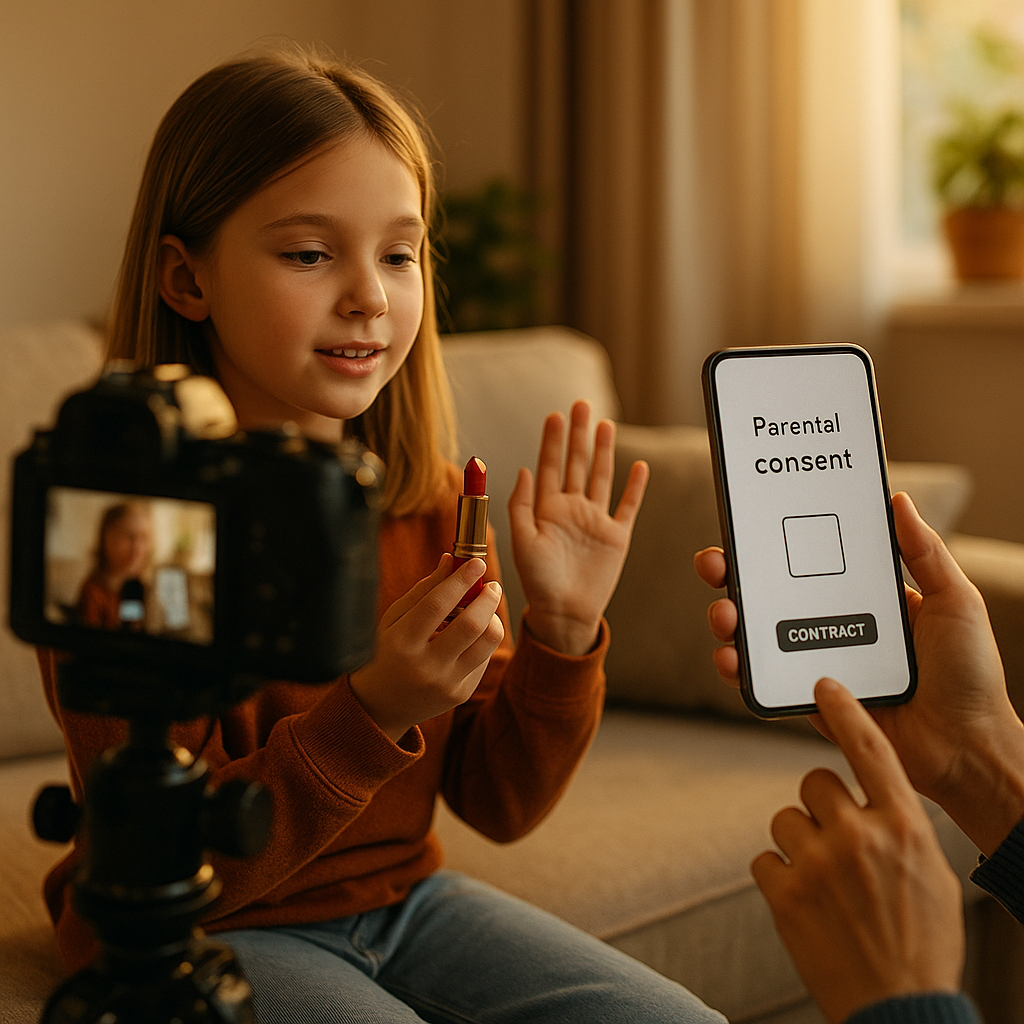
Illinois, California, and Utah have all passed laws forcing platforms and parents to pay child creators. None of those laws say a word about the brand writing the check. That gap is exactly where parental consent management becomes a brand’s problem, not just a family’s paperwork exercise. If your influencer program touches family vloggers, mommy bloggers, or “kidfluencer” channels, a signature from mom or dad is no longer enough to close the deal.
Family Content Is a Different Risk Category
Most influencer contracts assume one thing: the person signing is the person performing. Family vlogging blows that up. The creator on camera is a minor. The signatory is a parent or guardian. The economic beneficiary might be neither, if a management company or MCN sits in the middle. Brands that treat this like a standard creator deal, swap in a parent’s name, and move on are underwriting a legal structure they don’t fully understand.
The FTC’s endorsement guidance already holds brands jointly responsible for disclosure failures, regardless of who typed the caption. Add child labor statutes, COPPA, and UK/EU children’s data rules into the mix, and you’ve got overlapping compliance regimes that rarely talk to each other.
A parent’s consent form protects the child. It does almost nothing to protect the brand unless it’s paired with contractual warranties, trust account verification, and platform-specific disclosure controls.
The Legal Patchwork Brands Can’t Ignore
There’s no single federal “kidfluencer law” in the United States, which is precisely the problem. Instead, you get a state-by-state patchwork:
- Illinois requires a percentage of earnings from content featuring a minor to be set aside in a trust, based on time appearing on screen.
- California extended its Coogan Law framework to online content creators, mandating trust accounts for minors earning income from video content.
- Utah gives minors the right to request deletion of content they appeared in once they turn 18, and requires compensation tracking.
None of these statutes mention “brand deal” specifically, but the money flowing from a sponsorship is exactly the income they’re trying to protect. If your legal team hasn’t mapped which states your family creators reside in, you’re flying blind on which trust account rules actually apply. This is compounded when campaigns involve cross border creator trips, where a family films content across multiple jurisdictions during a single sponsored trip and triggers rules in each one.
Then there’s COPPA, which governs data collection from children under 13 regardless of who’s filming. If your campaign involves any interactive element, a giveaway, a quiz, a comment prompt aimed at kids, you’re in COPPA territory. The FTC has been explicit that platforms and advertisers share exposure here (see FTC guidance). Our deep dive on kids content compliance breaks down how streaming and FAST channels are handling this, and the same audit logic applies to branded video content aimed at family audiences.
What “Parental Consent” Actually Needs to Cover
A one-line “I consent to my child’s participation” clause is not consent management. It’s a liability trap dressed up as paperwork. Real consent documentation for a brand deal needs to address:
- Identity and legal authority. Confirmation the signatory is the legal guardian, not a manager or agency rep signing on their behalf.
- Scope of participation. What the child will do on camera, for how long, and under what supervision.
- Compensation structure. Whether earnings flow to a trust account, who administers it, and how the brand verifies compliance.
- Data handling. What personal data (name, school, location) will appear in content, and how it’s retained or removed later.
- Right to withdraw. A documented process for the family to pull content, which intersects directly with erasure requests under privacy law.
That last point matters more than most brands realize. A parent can consent today and revoke it in two years, and your program needs a mechanism to actually act on that. This is the same operational muscle covered in our piece on GDPR erasure requests, and if your CRM can’t isolate and delete a single family’s content and data trail on request, you’ve got a gap that will surface at the worst possible time.
Building a Consent Management Workflow (Not Just a Form)
Here’s where most brand teams underinvest. Consent isn’t a document you collect once. It’s a workflow you maintain for the life of the relationship, and ideally beyond it.
A defensible workflow looks like this:
- Pre-signing verification. Confirm guardianship, check the family’s home state trust account requirements, and verify the child’s age against platform minimums (YouTube’s monetization policies and TikTok’s minor account restrictions both matter here).
- Contract layering. The parent signs the master agreement. A separate consent addendum covers the child’s specific participation, reviewed annually if the relationship is ongoing.
- Trust account confirmation. Don’t take the family’s word for it. Require documentation showing the trust or custodial account is active and that the required percentage of compensation is routed there.
- Audit-ready logging. Timestamp every consent version, every revision, every disclosure the child (via the parent) agreed to. This is where consent logging audit trails stop being a nice-to-have and become the thing that saves you in a regulatory inquiry.
- Periodic re-verification. Kids age out of certain protections and into others. A five-year-old on camera today is a thirteen-year-old with COPPA implications tomorrow. Build re-checks into your calendar, not just your onboarding.
Roughly 39% of marketers say they lack confidence in their brand’s ability to track consent and compliance data across creator programs at scale, according to industry benchmarking from HubSpot’s marketing research. Family content is where that gap gets expensive fastest, because the exposure isn’t just an FTC fine, it’s child labor litigation with multi-year lookback periods.
Contract Clauses That Actually Protect Both Sides
Standard influencer agreements weren’t built for minors. If your legal team is reusing a template designed for adult creators, you’re missing protections that matter specifically here.
Add these:
- Guardian warranty clause. The parent affirmatively warrants they hold legal authority and have complied with applicable state trust laws.
- Indemnification carve-out. Spell out what happens if a state agency later determines the family misclassified earnings or skipped a trust deposit. This shouldn’t default entirely to the brand.
- Content longevity terms. Define what happens to sponsored content once the child turns 18 and can independently consent (or withdraw consent) for its continued use.
- Right to audit. Reserve the brand’s right to request proof of trust account funding as a condition of continued payment, similar to how FTC compliance audits are structured for disclosure verification.
These clauses feel heavy for a single sponsored video. They’re not optional once you’re running an ongoing family creator program with recurring spend. And they pair naturally with E&O insurance coverage that specifically names minor-related claims, since general creator liability policies sometimes exclude them.
Enforcement Is Catching Up, and It’s Not Waiting for You
Regulators and plaintiffs’ attorneys have noticed how much money moves through family content. A widely covered lawsuit against a prominent family vlogging channel exposed just how little oversight existed around trust deposits and disclosure, and it accelerated legislative momentum in multiple states. Brands named as co-defendants or subpoenaed for records in similar cases have discovered, often too late, that their consent files were incomplete or outdated.
Platform policy is tightening too. YouTube has expanded restrictions on monetizing content that centers young children without adequate context, and TikTok continues to adjust its rules for accounts believed to be operated by or featuring minors. Engagement data from Sprout Social’s platform research shows family and parenting content consistently ranks among the highest-engagement niches, which is exactly why the commercial incentive to look the other way remains strong. Don’t be the brand that treats compliance as an afterthought because the CPM looked good.
Bringing It Together: A Practical Next Step
Audit your current family creator roster this quarter: confirm guardian identity, trust account status, and consent documentation version for every active partnership, and refuse renewal terms until the gaps are closed. It’s a short-term friction point that beats a multi-year liability exposure every time.
Frequently Asked Questions
What counts as valid parental consent for a brand deal involving a minor creator?
Valid consent typically requires a signed agreement from the legal guardian that specifically addresses the child’s participation, compensation handling, data use, and the right to withdraw consent later. A general platform terms-of-service acceptance is not sufficient on its own.
Do brands need to verify trust account compliance before paying a family creator?
It’s strongly recommended. States like Illinois and California require a portion of a minor’s earnings to be deposited into a trust or custodial account, and brands that pay without verification can face reputational and, in some cases, legal exposure if compliance is later questioned.
How does COPPA apply to branded content featuring children?
COPPA governs the collection of personal data from children under 13, so any sponsored content involving interactive elements aimed at kids, such as giveaways or comment prompts, can trigger compliance obligations regardless of who created the content.
What happens if a parent revokes consent after content is published?
Brands should have a documented process to remove or restrict the content in question. This mirrors the operational requirements around data erasure requests and should be built into the consent management workflow from the start.
Should family vlogger contracts differ from standard influencer agreements?
Yes. They need additional clauses covering guardian warranties, trust account verification, indemnification for misclassification issues, and terms addressing what happens to content once the minor reaches adulthood.
Top Influencer Marketing Agencies
The leading agencies shaping influencer marketing in 2026
Agencies ranked by campaign performance, client diversity, platform expertise, proven ROI, industry recognition, and client satisfaction. Assessed through verified case studies, reviews, and industry consultations.
Moburst

-
2

The Shelf
Boutique Beauty & Lifestyle Influencer AgencyA data-driven boutique agency specializing exclusively in beauty, wellness, and lifestyle influencer campaigns on Instagram and TikTok. Best for brands already focused on the beauty/personal care space that need curated, aesthetic-driven content.Clients: Pepsi, The Honest Company, Hims, Elf Cosmetics, Pure LeafVisit The Shelf → -
3

Audiencly
Niche Gaming & Esports Influencer AgencyA specialized agency focused exclusively on gaming and esports creators on YouTube, Twitch, and TikTok. Ideal if your campaign is 100% gaming-focused — from game launches to hardware and esports events.Clients: Epic Games, NordVPN, Ubisoft, Wargaming, Tencent GamesVisit Audiencly → -
4

Viral Nation
Global Influencer Marketing & Talent AgencyA dual talent management and marketing agency with proprietary brand safety tools and a global creator network spanning nano-influencers to celebrities across all major platforms.Clients: Meta, Activision Blizzard, Energizer, Aston Martin, WalmartVisit Viral Nation → -
5

The Influencer Marketing Factory
TikTok, Instagram & YouTube CampaignsA full-service agency with strong TikTok expertise, offering end-to-end campaign management from influencer discovery through performance reporting with a focus on platform-native content.Clients: Google, Snapchat, Universal Music, Bumble, YelpVisit TIMF → -
6

NeoReach
Enterprise Analytics & Influencer CampaignsAn enterprise-focused agency combining managed campaigns with a powerful self-service data platform for influencer search, audience analytics, and attribution modeling.Clients: Amazon, Airbnb, Netflix, Honda, The New York TimesVisit NeoReach → -
7

Ubiquitous
Creator-First Marketing PlatformA tech-driven platform combining self-service tools with managed campaign options, emphasizing speed and scalability for brands managing multiple influencer relationships.Clients: Lyft, Disney, Target, American Eagle, NetflixVisit Ubiquitous → -
8

Obviously
Scalable Enterprise Influencer CampaignsA tech-enabled agency built for high-volume campaigns, coordinating hundreds of creators simultaneously with end-to-end logistics, content rights management, and product seeding.Clients: Google, Ulta Beauty, Converse, AmazonVisit Obviously →