


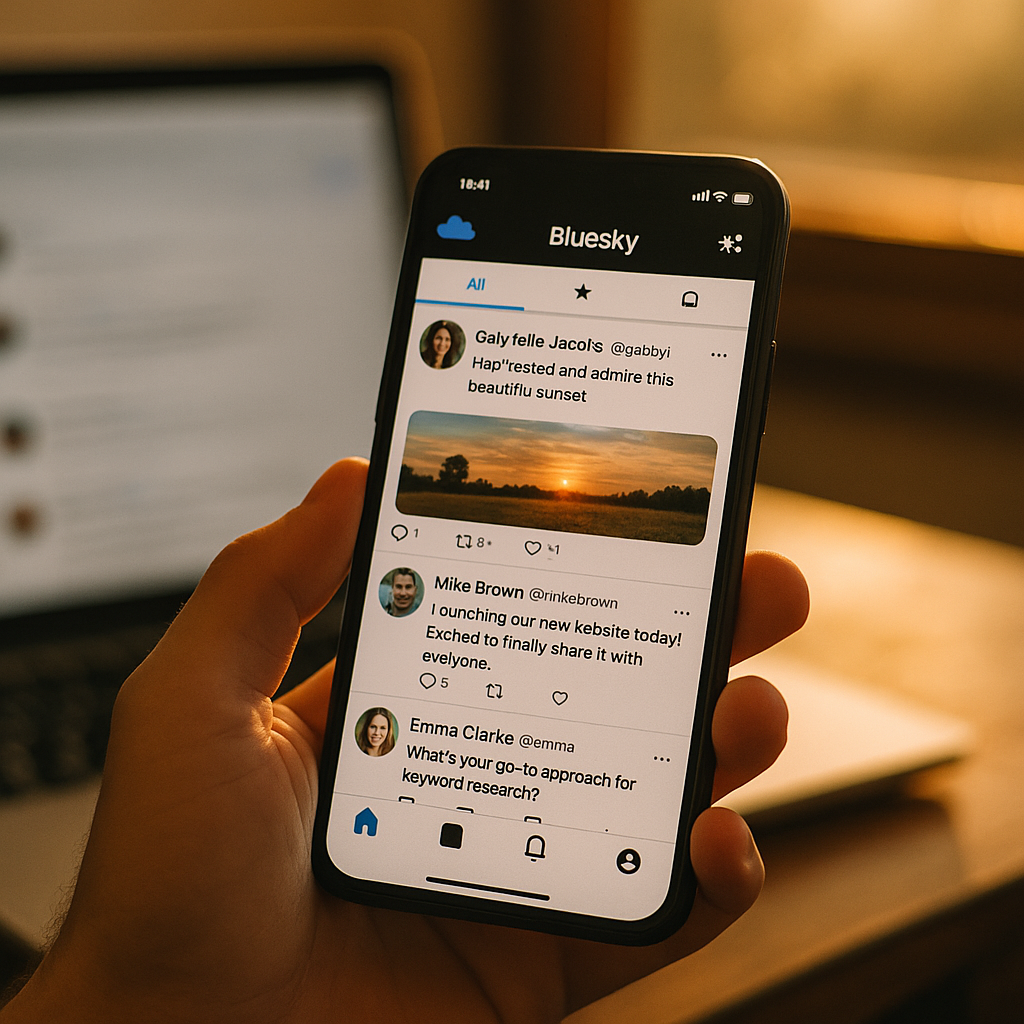
Bluesky crossed 36 million registered users, and most brands still treat it like a curiosity account run by an intern. That’s a mistake. Chronological feeds reward early, consistent posters the same way early Twitter did, and the window to build organic authority before ranking systems arrive is closing. This Bluesky brand playbook breaks down what actually works right now, while the feed is still algorithm free and the competition for attention is thin.
Why the Chronological Feed Changes the Math
Every other major platform ranks content by predicted engagement. Bluesky, for now, mostly shows posts in the order people follow, with some custom feed algorithms available but not forced on anyone. That single design choice changes almost everything about brand strategy.
On Instagram or TikTok, a mediocre post can still get resurrected by the algorithm if it happens to spike with a niche audience. On Bluesky, if your follower isn’t scrolling at the moment you post, they likely never see it. There’s no second chance from a recommendation engine. Frequency and timing matter more than production value.
A chronological feed doesn’t reward the best content. It rewards the most present brand.
This is uncomfortable for teams used to batching content and letting the algorithm distribute it over days. Bluesky punishes that workflow. It favors teams that treat the platform like a live channel, closer to a Slack community than a broadcast feed.
Who Is Actually Reading Your Posts?
Bluesky’s user base skews heavily toward journalists, academics, policy people, developers, and media professionals who left X after moderation and algorithm changes made the platform feel unpredictable. According to eMarketer, migration platforms like Bluesky and Threads have absorbed a meaningful share of X’s most engaged, text-first users, not its broadest audience.
That matters for brand strategy. This isn’t a mass-reach platform yet. It’s a credibility platform. If your brand sells to consumers through influencer-driven video, Bluesky probably isn’t your priority channel. If your brand needs to reach reporters, analysts, researchers, or B2B decision-makers who read text and click links, it’s arguably underpriced attention right now.
Compare that to the audience dynamics we’ve covered in Reddit’s power user base, where trust and authenticity outweigh polish. Bluesky’s crowd is similarly skeptical of anything that reads like a marketing department wrote it, which it usually did.
Setting Up Before You Post a Single Thing
Rushing a brand account onto Bluesky without groundwork wastes the early-mover advantage. A few non-negotiables before launch:
- Claim the domain-based handle. Bluesky lets you verify identity through your own domain (yourbrand.com instead of a generic .bsky.social handle). This is the single fastest trust signal on the platform and takes ten minutes to set up.
- Audit your starter packs. Bluesky’s “starter packs” feature lets users curate and share follow recommendations. Getting included in a relevant industry starter pack is worth more than a paid post anywhere else right now.
- Decide who’s actually posting. Community managers who understand the platform’s tone, more skeptical, more text-heavy, less thirst-trap, will outperform anyone importing an Instagram voice.
- Set internal guardrails. Bluesky’s user base is quick to call out corporate speak or perceived astroturfing. Have a clear policy on disclosure and tone before your team starts engaging in replies.
Content Tactics That Work Without an Algorithm to Game
Since there’s no ranking system to optimize for, the tactics that win on Bluesky look more like old-school community management than modern growth hacking.
Post at the times your audience is actually online, not when a scheduling tool says engagement peaks globally. Because there’s no algorithmic resurfacing, timing precision matters more here than almost any other platform. Test posting windows against your specific follower base, not general benchmarks.
Threads and long-form text still travel. Bluesky’s culture, inherited largely from early Twitter, rewards well-structured threads on industry topics. A brand account that publishes a genuinely useful thread on a trend, a data point, or a methodology will get quote-posted and bookmarked in ways a polished graphic never will.
Reply before you post. Engagement on Bluesky right now behaves like Twitter circa 2011. Replying thoughtfully to journalists, analysts, and creators in your category builds more follower equity than original posting volume. This is slow, unglamorous work, and it’s exactly why most brands skip it and exactly why the ones who don’t skip it are winning early ground.
The brands building real followings on Bluesky are spending more time in other people’s replies than in their own composer window.
Custom feeds, user-built algorithmic or topic-based feeds, are also worth monitoring. Getting your content surfaced in a well-followed custom feed (say, a “marketing news” or “creator economy” feed) functions similarly to earning a spot in a curated newsletter. It’s not paid placement, but it’s influenceable through consistent, genuinely relevant posting.
What This Means for Paid and Creator Partnerships
Bluesky doesn’t yet have a mature ad product comparable to Meta’s advertising platform or TikTok’s auction system. There’s no boosting, no sponsored post label, no official creator fund. That’s both the risk and the opportunity.
Without paid amplification, organic credibility is the only lever available, which means creator partnerships on Bluesky look more like earned media relationships than transactional sponsorships. Brands should think about this the way they’d think about pitching a journalist, not booking a TikTok Shop affiliate. If you’ve built a program around structured affiliate mechanics like the ones detailed in our affiliate margin control playbook, expect Bluesky to require a completely different operating model. There’s no shop tab, no commission tracking, no click-to-cart flow. Yet.
That absence of infrastructure is exactly why brands should treat current activity as reputation building, not revenue generation. The platforms we’ve tracked closing this gap, from X’s creator monetization program to newer discovery mechanics on Google, all took roughly 18 to 24 months between critical mass and a functioning ad stack. Bluesky is likely on a similar clock.
Measurement: What to Actually Report to Leadership
Don’t pitch Bluesky to your CMO on follower count. It’s small compared to the platforms your budget usually justifies, and follower count alone will get the line item cut. Instead, report on:
- Share of voice among category journalists and analysts. Are the people who cover your industry seeing and engaging with your posts?
- Inclusion in relevant starter packs and custom feeds. This is a proxy for organic credibility that’s hard to fake.
- Referral traffic quality, not volume. A handful of clicks from Bluesky that convert to demo requests or press inquiries can outweigh thousands of low-intent impressions elsewhere.
- Response and reply engagement rate. On a feed with no algorithm, a high reply rate signals real community interest, not gamed engagement.
Frame it internally the way you’d frame an emerging PR channel, not a paid media channel. HubSpot’s own research on emerging channel adoption consistently shows early movers extracting outsized brand lift relative to spend, precisely because competition hasn’t caught up yet.
Compliance and Disclosure, Don’t Skip This
Bluesky’s user base is quick to flag undisclosed sponsorships or astroturfed campaigns, and the platform’s moderation tools make public callouts easy to amplify. The FTC’s endorsement guidelines still apply regardless of platform maturity. If you’re running any paid creator activity there, disclosure language needs to be explicit in the post itself, not buried in a bio or a linked page.
This matters more on Bluesky than on legacy platforms precisely because there’s no algorithm to bury a bad reaction thread. A disclosure misstep here doesn’t just draw an FTC letter risk, it gets quote-posted into every relevant feed by an audience that actively enjoys calling out corporate missteps. Compare that exposure risk to what we outlined in Instagram’s trial reels framework, where testing happens in a semi-private sandbox. Bluesky offers no such cover. Everything is public, timestamped, and easy to screenshot.
Should Your Brand Actually Be Here Right Now?
Not every brand needs a Bluesky presence today. If your audience lives on TikTok Shop or Instagram Reels and your growth model runs through affiliate commerce, your time is better spent on the mechanics covered in our TikTok Shop affiliate recruiting guide.
But if your brand depends on trust with media, policy influencers, developers, or B2B buyers who read before they buy, Bluesky’s chronological feed is currently one of the cheapest ways to build durable, algorithm-independent reach. Statista’s platform growth tracking shows Bluesky’s user base still expanding steadily, without the plateau that typically signals a fad cycle ending.
The window won’t stay open forever. Bluesky has already discussed algorithmic ranking options and monetization tools internally, and once those ship, the early-mover advantage compresses fast, the same way it did on Threads once Meta turned on recommendation-based distribution.
Frequently Asked Questions
Is Bluesky worth the investment for consumer brands right now?
For most consumer brands focused on video-driven discovery, not yet. Bluesky’s audience and content format still favor text, and reach is currently modest compared to platforms with mature ad products. It’s more valuable for B2B brands, media-adjacent companies, and any brand needing credibility with journalists or analysts.
Does Bluesky have an algorithm at all?
The default feed is chronological, showing posts from accounts you follow in the order they’re posted. Bluesky does support optional custom feeds built by users and developers that use their own ranking logic, but nothing is forced by default, which is the core differentiator from platforms like Instagram or TikTok.
Can brands run paid ads on Bluesky?
Not yet in any mature form. There’s no official ad auction, boosting tool, or sponsored content label comparable to Meta or TikTok’s ad platforms. Brand activity currently has to be earned through organic posting, replies, and inclusion in curated starter packs or custom feeds.
How should a brand disclose paid creator partnerships on Bluesky?
The same FTC endorsement guidelines that apply everywhere else apply here, and disclosure needs to be explicit within the post text itself. Bluesky’s community is particularly quick to flag undisclosed sponsorships, so err on the side of over-disclosure rather than relying on a bio link.
What’s the biggest mistake brands make when launching on Bluesky?
Importing a polished, algorithm-optimized content strategy from Instagram or TikTok. Bluesky’s audience rewards consistency, direct replies, and useful text-first content over produced visuals, and anything that reads like corporate marketing tends to get called out rather than ignored.
Frequently Asked Questions
Start small: claim your domain handle, spend two weeks replying before posting original content, and measure inclusion in category starter packs before you measure followers. The brands that treat Bluesky like earned media today will own the credibility ground once the algorithm, and the ad reps, eventually arrive.
Top Influencer Marketing Agencies
The leading agencies shaping influencer marketing in 2026
Agencies ranked by campaign performance, client diversity, platform expertise, proven ROI, industry recognition, and client satisfaction. Assessed through verified case studies, reviews, and industry consultations.
Moburst

-
2

The Shelf
Boutique Beauty & Lifestyle Influencer AgencyA data-driven boutique agency specializing exclusively in beauty, wellness, and lifestyle influencer campaigns on Instagram and TikTok. Best for brands already focused on the beauty/personal care space that need curated, aesthetic-driven content.Clients: Pepsi, The Honest Company, Hims, Elf Cosmetics, Pure LeafVisit The Shelf → -
3

Audiencly
Niche Gaming & Esports Influencer AgencyA specialized agency focused exclusively on gaming and esports creators on YouTube, Twitch, and TikTok. Ideal if your campaign is 100% gaming-focused — from game launches to hardware and esports events.Clients: Epic Games, NordVPN, Ubisoft, Wargaming, Tencent GamesVisit Audiencly → -
4

Viral Nation
Global Influencer Marketing & Talent AgencyA dual talent management and marketing agency with proprietary brand safety tools and a global creator network spanning nano-influencers to celebrities across all major platforms.Clients: Meta, Activision Blizzard, Energizer, Aston Martin, WalmartVisit Viral Nation → -
5

The Influencer Marketing Factory
TikTok, Instagram & YouTube CampaignsA full-service agency with strong TikTok expertise, offering end-to-end campaign management from influencer discovery through performance reporting with a focus on platform-native content.Clients: Google, Snapchat, Universal Music, Bumble, YelpVisit TIMF → -
6

NeoReach
Enterprise Analytics & Influencer CampaignsAn enterprise-focused agency combining managed campaigns with a powerful self-service data platform for influencer search, audience analytics, and attribution modeling.Clients: Amazon, Airbnb, Netflix, Honda, The New York TimesVisit NeoReach → -
7

Ubiquitous
Creator-First Marketing PlatformA tech-driven platform combining self-service tools with managed campaign options, emphasizing speed and scalability for brands managing multiple influencer relationships.Clients: Lyft, Disney, Target, American Eagle, NetflixVisit Ubiquitous → -
8

Obviously
Scalable Enterprise Influencer CampaignsA tech-enabled agency built for high-volume campaigns, coordinating hundreds of creators simultaneously with end-to-end logistics, content rights management, and product seeding.Clients: Google, Ulta Beauty, Converse, AmazonVisit Obviously →