


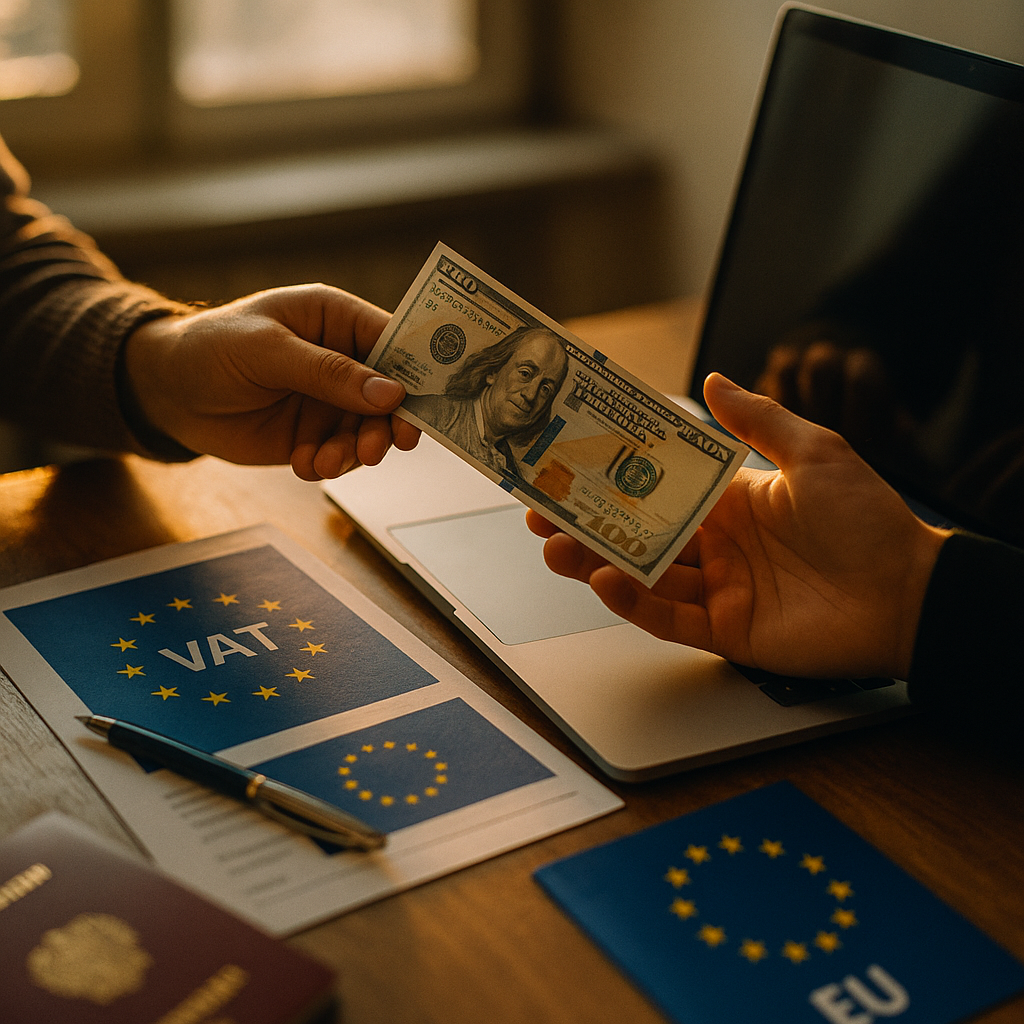
Here’s an uncomfortable number: the EU’s VAT gap, the difference between expected and collected VAT, sat near 61 billion euros in recent estimates, and tax authorities are hunting for it anywhere digital money moves. Cross-border creator payments are squarely in their sights. If your brand pays influencers in three countries and treats it like a simple invoice, you’re probably exposed. VAT rules for cross-border creator payments are messier than most finance teams assume, and the penalties land on the brand, not the creator.
Marketing teams negotiate the rate, legal reviews the usage rights, and somewhere in between, nobody asks where the creator is tax-resident or whether the platform facilitating payment has already remitted VAT on your behalf. That gap is where audits start.
Why VAT Isn’t Just a Finance Problem Anymore
Influencer payments used to be small enough to slip under the radar. Not anymore. Programs now run six and seven figures annually across dozens of markets, and tax authorities in the UK, EU, and increasingly Australia and Canada have caught up to the creator economy. VAT (or its equivalent, GST) applies to services rendered by creators, and “services” includes sponsored posts, usage rights, and licensing fees. The complication is that VAT treatment depends on where the creator is established, where the brand is established, and sometimes where the audience sits.
Marketers rarely think about tax jurisdiction when they’re chasing engagement rates. But finance and legal absolutely do, and when they find out a campaign generated unreported VAT liability, the marketing team is the one explaining it upward.
A creator invoice with no VAT line isn’t automatically VAT-free. It might mean the brand owes the tax under the reverse charge mechanism, and nobody filed it.
The Reverse Charge Mechanism, Explained Without the Jargon
In most B2B cross-border scenarios within the EU and UK, VAT gets handled through the “reverse charge” mechanism. The creator doesn’t add VAT to their invoice. Instead, the brand (the buyer) self-assesses VAT in its own country, reporting it as both a charge and a deduction on its own VAT return. Sounds tidy on paper. In practice, a lot of brands simply pay the invoice at face value and forget the self-assessment step entirely.
The result: an underreported VAT liability that sits quietly until an audit surfaces it, often years later, with interest and penalties attached. This is exactly the kind of documentation gap that comes up in creator contract audits, where finance teams reconstruct payment trails after the fact and discover nobody tracked jurisdiction at the time of payment.
Where Brands Actually Get Tripped Up
A few recurring patterns show up across brand finance teams that have been through this the hard way.
- Assuming the platform handles it. If you pay creators through a marketplace or agency network, some VAT obligations may already be handled at the platform level. Some. Not all. Brands that assume full coverage without checking the platform’s actual tax registration status often discover mid-audit that the platform only handles VAT for creators above a certain revenue threshold.
- Misclassifying digital services. A sponsored Instagram post, a YouTube integration, and a licensed photo for paid media are treated differently under VAT rules in several jurisdictions. Usage rights and whitelisting fees, in particular, often get bundled into one invoice line when they should be split for tax purposes.
- Ignoring the destination principle. Many jurisdictions tax digital services based on where the customer (in this case, the brand) is located, not where the creator is. Brands paying creators in low-VAT or VAT-exempt countries sometimes assume the transaction is tax-free. It usually isn’t. The obligation just shifts to the payer.
- No VAT number verification. If a creator claims to be VAT-registered but their number doesn’t validate against the EU’s VIES system or the UK’s equivalent, the brand can’t apply the reverse charge safely. This single missed check causes a disproportionate share of downstream problems.
None of this is exotic. It’s basic due diligence that gets skipped because influencer payments move fast and finance teams aren’t looped in early enough.
The Creator Side of the Equation
Creators aren’t tax experts either, and plenty operate as sole proprietors with no formal accounting support. That’s not a knock on them, it’s just reality. A creator based in Portugal working with a US brand may have zero idea that their invoice needs a specific VAT exemption statement to avoid triggering a withholding issue on the brand’s end. A creator in the UK working with an EU brand post-Brexit is dealing with rules that changed meaningfully from what applied before, and plenty haven’t updated their invoicing templates.
This is why standardized contract language matters so much. Brands that build VAT and tax responsibility clauses into their base creator agreements avoid a huge share of these disputes before they start. It’s the same logic behind standardized base contracts for scaling rosters: consistency reduces exposure, and one-off custom agreements for every creator relationship are where risk hides.
What Actually Belongs in the Contract
At minimum, cross-border creator agreements should specify who is responsible for VAT registration and collection, require the creator to disclose their tax residency and VAT status, and include a clause allowing the brand to withhold payment pending valid tax documentation. It sounds bureaucratic. It is bureaucratic. It’s also the difference between a clean audit and a six-month scramble through old invoices.
Brands running international ambassador programs face a related classification question, since misclassifying a creator as a contractor versus an employee carries its own tax exposure on top of VAT. That overlap is worth reviewing alongside ambassador program contract audits, because the two risks often surface together.
Platforms, Agencies, and Who Actually Owes the Tax
Payment platforms like PayPal, Stripe, and specialized creator payment tools each handle VAT differently, and “handling it” often just means generating a report, not remitting on your behalf. Brands need to ask directly: does this platform register for VAT in the relevant jurisdictions, or does it just facilitate the transfer and leave compliance to us? That answer changes your entire liability picture.
Agencies representing creator rosters add another wrinkle. If an agency invoices the brand on behalf of multiple creators across different countries, the VAT treatment can vary line by line depending on each creator’s home jurisdiction. A single consolidated invoice that doesn’t break this out is a compliance headache waiting to happen. Ask agency partners for itemized, jurisdiction-specific invoicing as a baseline requirement, not a nice-to-have.
The brand that pays the invoice is usually the brand that owes the tax authority, regardless of what the creator’s paperwork says.
This dynamic mirrors what’s playing out with multi-tier commission chains, where liability quietly passes upstream through layers of sub-agents and networks until it lands on whoever holds the primary brand relationship.
International Travel Adds Another Layer
When brands fly creators internationally for campaigns, activations, or content shoots, the VAT questions multiply. Is the trip itself a taxable benefit? Does the location of filming affect where services are considered “performed” for VAT purposes? These questions connect directly to the exposure covered in cross-border creator trip planning, where visa status and tax residency intersect in ways that catch travel and marketing teams off guard.
A creator flown from Berlin to Los Angeles for a five-day shoot isn’t just a logistics and visa question. It’s potentially a permanent establishment question, a services-performed-where question, and a VAT question all at once. Brands that treat international shoots purely as a production line item miss this entirely.
Building a Practical Compliance Checklist
You don’t need a tax department the size of a Big Four firm to manage this well. You need a repeatable process.
- Collect and verify VAT/tax registration numbers before onboarding any international creator.
- Standardize contract language on tax responsibility across every market you operate in.
- Separate invoice line items by service type (content creation, usage rights, appearance fees) since VAT treatment can differ for each.
- Confirm exactly what your payment platform or agency partner does and doesn’t handle regarding VAT remittance.
- Loop finance into campaign planning before payments go out, not after an audit flags a gap.
None of these steps require exotic expertise. They require someone owning the checklist. Right now, in most creator marketing teams, nobody does.
For deeper guidance on VAT and international digital services rules, HMRC’s guidance and the European Commission’s VAT resources are the most reliable starting points, alongside your own tax advisor who understands the specific jurisdictions your creator roster spans. Tools like HubSpot and platforms tracking creator payments increasingly offer tax documentation features, but they’re a supplement to expert review, not a replacement.
Frequently Asked Questions
Does VAT apply if a brand pays a creator through a third-party marketplace?
It depends on the marketplace’s own VAT registration and remittance practices. Some marketplaces handle VAT collection on behalf of sellers above certain thresholds, while others simply facilitate payment and leave tax compliance entirely to the brand and creator. Always confirm this directly with the platform rather than assuming coverage.
What is the reverse charge mechanism and why does it matter for influencer payments?
The reverse charge mechanism shifts VAT reporting responsibility from the seller (the creator) to the buyer (the brand) in many cross-border B2B transactions. The brand self-assesses the VAT on its own return instead of the creator adding it to the invoice. Brands that skip this step can underreport VAT liability without realizing it.
Do brands need to worry about VAT if the creator is based in a country with no VAT system?
Often yes, because the destination principle in many jurisdictions taxes digital services based on the buyer’s location, not the seller’s. Even if a creator’s home country has no VAT, the paying brand’s jurisdiction may still require VAT self-assessment on the transaction.
How can a brand tell if a creator’s VAT number is valid?
EU VAT numbers can be checked against the VIES system, and the UK has its own equivalent verification tool. Brands should verify VAT numbers before applying reverse charge treatment or exempting a payment from VAT, since an invalid number can invalidate the exemption entirely.
Should VAT responsibility be written into creator contracts?
Yes. Contracts should specify who handles VAT registration and reporting, require disclosure of the creator’s tax residency and VAT status, and give the brand the right to withhold payment until valid tax documentation is provided. This is far cheaper than resolving disputes after an audit.
Cross-border VAT compliance isn’t glamorous, but it’s a lot cheaper than an audit. Build the checklist, fix your contract templates, and get finance in the room before the campaign launches, not after the invoice clears.
Frequently Asked Questions
Does VAT apply if a brand pays a creator through a third-party marketplace?
It depends on the marketplace’s own VAT registration and remittance practices. Some marketplaces handle VAT collection on behalf of sellers above certain thresholds, while others simply facilitate payment and leave tax compliance entirely to the brand and creator. Always confirm this directly with the platform rather than assuming coverage.
What is the reverse charge mechanism and why does it matter for influencer payments?
The reverse charge mechanism shifts VAT reporting responsibility from the seller (the creator) to the buyer (the brand) in many cross-border B2B transactions. The brand self-assesses the VAT on its own return instead of the creator adding it to the invoice. Brands that skip this step can underreport VAT liability without realizing it.
Do brands need to worry about VAT if the creator is based in a country with no VAT system?
Often yes, because the destination principle in many jurisdictions taxes digital services based on the buyer’s location, not the seller’s. Even if a creator’s home country has no VAT, the paying brand’s jurisdiction may still require VAT self-assessment on the transaction.
How can a brand tell if a creator’s VAT number is valid?
EU VAT numbers can be checked against the VIES system, and the UK has its own equivalent verification tool. Brands should verify VAT numbers before applying reverse charge treatment or exempting a payment from VAT, since an invalid number can invalidate the exemption entirely.
Should VAT responsibility be written into creator contracts?
Yes. Contracts should specify who handles VAT registration and reporting, require disclosure of the creator’s tax residency and VAT status, and give the brand the right to withhold payment until valid tax documentation is provided. This is far cheaper than resolving disputes after an audit.
Top Influencer Marketing Agencies
The leading agencies shaping influencer marketing in 2026
Agencies ranked by campaign performance, client diversity, platform expertise, proven ROI, industry recognition, and client satisfaction. Assessed through verified case studies, reviews, and industry consultations.
Moburst

-
2

The Shelf
Boutique Beauty & Lifestyle Influencer AgencyA data-driven boutique agency specializing exclusively in beauty, wellness, and lifestyle influencer campaigns on Instagram and TikTok. Best for brands already focused on the beauty/personal care space that need curated, aesthetic-driven content.Clients: Pepsi, The Honest Company, Hims, Elf Cosmetics, Pure LeafVisit The Shelf → -
3

Audiencly
Niche Gaming & Esports Influencer AgencyA specialized agency focused exclusively on gaming and esports creators on YouTube, Twitch, and TikTok. Ideal if your campaign is 100% gaming-focused — from game launches to hardware and esports events.Clients: Epic Games, NordVPN, Ubisoft, Wargaming, Tencent GamesVisit Audiencly → -
4

Viral Nation
Global Influencer Marketing & Talent AgencyA dual talent management and marketing agency with proprietary brand safety tools and a global creator network spanning nano-influencers to celebrities across all major platforms.Clients: Meta, Activision Blizzard, Energizer, Aston Martin, WalmartVisit Viral Nation → -
5

The Influencer Marketing Factory
TikTok, Instagram & YouTube CampaignsA full-service agency with strong TikTok expertise, offering end-to-end campaign management from influencer discovery through performance reporting with a focus on platform-native content.Clients: Google, Snapchat, Universal Music, Bumble, YelpVisit TIMF → -
6

NeoReach
Enterprise Analytics & Influencer CampaignsAn enterprise-focused agency combining managed campaigns with a powerful self-service data platform for influencer search, audience analytics, and attribution modeling.Clients: Amazon, Airbnb, Netflix, Honda, The New York TimesVisit NeoReach → -
7

Ubiquitous
Creator-First Marketing PlatformA tech-driven platform combining self-service tools with managed campaign options, emphasizing speed and scalability for brands managing multiple influencer relationships.Clients: Lyft, Disney, Target, American Eagle, NetflixVisit Ubiquitous → -
8

Obviously
Scalable Enterprise Influencer CampaignsA tech-enabled agency built for high-volume campaigns, coordinating hundreds of creators simultaneously with end-to-end logistics, content rights management, and product seeding.Clients: Google, Ulta Beauty, Converse, AmazonVisit Obviously →