


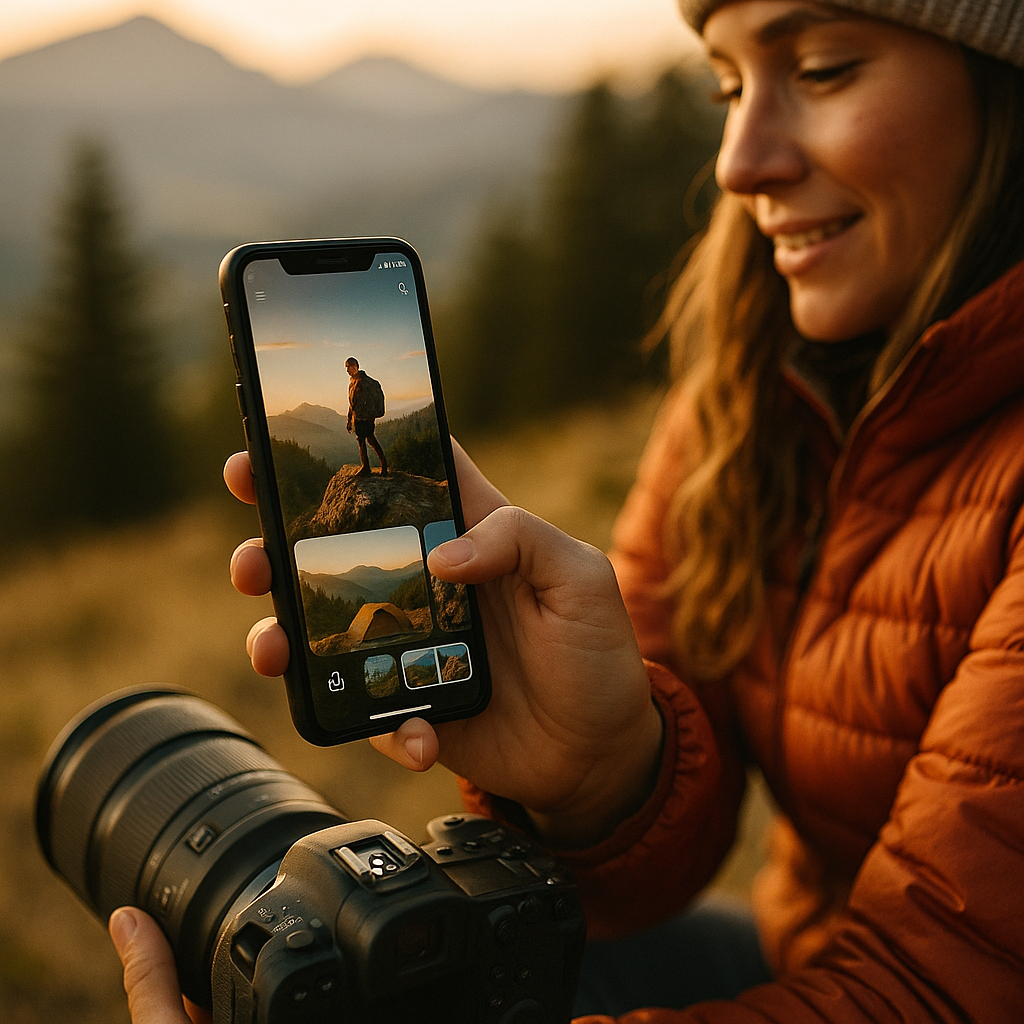
Only two Instagram formats consistently move rods, reels, and rooftop tents off shelves: Reels and Carousels. Everything else, Stories, Lives, even static single-image posts, gets treated as filler by outdoor and fishing brands that have run the numbers. If you are still spreading budget evenly across every format Instagram offers, you are likely funding a lot of content that never touches the buying decision.
This is not a trend piece. It is a pattern that shows up repeatedly across gear brands, tackle companies, and outdoor apparel labels once you look at where engagement, saves, and actual link clicks concentrate. The question worth asking is not “should we post more,” it is “why do these two formats keep winning, and what does that mean for how we brief creators?”
The Physical Product Problem Reels Solves
Fishing gear and outdoor equipment share a stubborn marketing challenge: the value is almost entirely experiential. A crankbait’s action in the water, a jacket’s performance in sideways rain, a cooler’s ice retention over three days, none of that translates through a product shot on a white background. Reels solve this because motion sells function in a way static images cannot.
Watch how brands like YETI, Simms, or smaller tackle companies structure their top-performing Reels. They almost never open with a logo or a price tag. They open with the moment: a hookset, a fish breaking the surface, a tent going up in fifteen seconds flat. The product becomes proof, not pitch. That sequencing matters more than production value. A shaky phone clip of a big catch will outperform a polished studio ad nine times out of ten in this category, because the audience is buying credibility, not aesthetics.
Outdoor and fishing audiences are skeptical of anything that looks like a commercial. Reels built around real, unscripted use consistently outperform polished brand films because they read as evidence rather than persuasion.
There is also a discovery mechanic at play. Instagram’s algorithm still favors watch time and completion rate on Reels, and outdoor content has a natural advantage there: viewers stick around to see if the fish gets landed, or if the gear survives the weather. That built-in narrative tension is free retention that a lot of other categories have to manufacture artificially.
Why Carousels Win the Consideration Stage
If Reels win attention, Carousels win the research phase. Outdoor and fishing purchases tend to be high-consideration. Nobody buys a $700 kayak or a $400 baitcasting setup on impulse from a fifteen-second clip. They want specs, comparisons, and proof it holds up over a season. Carousels give brands room to build that case without losing the swipe.
A well-built product Carousel typically follows a pattern: hook slide with the payoff (a personal best catch, a gear failure avoided), then a breakdown slide, then a use-case slide, then a comparison or “who this is for” slide, and a closing slide with a clear next step. That structure mirrors how a knowledgeable friend at the tackle shop would walk you through a decision, and it performs because it respects the buyer’s need to evaluate before committing.
Carousels also have a save-and-return advantage that Reels lack. Someone scouting a fall fishing trip might save a “10 lures for pre-spawn bass” Carousel and revisit it days later while actually shopping. Instagram’s own creator resources at Meta for Business have consistently flagged saves as a stronger long-term signal than likes, and outdoor content generates saves at a disproportionate rate compared to lifestyle or fashion niches.
What the Data Actually Shows
Benchmarking reports from Sprout Social and eMarketer have repeatedly found that Reels drive the highest reach-to-follower ratio on Instagram, while Carousels drive the highest average engagement rate per impression. Outdoor and fishing brands sit at an interesting intersection of both, because their content naturally splits into two jobs: demonstrate the moment (Reels), then justify the purchase (Carousels).
This is a smaller-budget-friendly setup too. You do not need a six-figure production budget to shoot a Reel from a boat or a trailhead. A GoPro, a decent phone gimbal, and a creator who actually fishes or hikes will outperform a studio crew that does not understand the sport. That is a meaningful cost advantage for mid-market outdoor brands competing against category giants with bigger media budgets.
There is a risk mitigation angle here too, and it is one brand marketers should not skip. Outdoor and fishing audiences are notoriously good at spotting inauthenticity, staged catches, obviously edited “personal bests,” or gear that clearly was not used the way the caption claims. That scrutiny has real consequences under FTC disclosure rules if a sponsored post misrepresents product performance. Brands running paid partnerships in this space should keep disclosure and usage rights tight, which is why frameworks like the ones covered in Meta Partnership Ads setup matter more here than in lower-scrutiny categories.
Format Fit by Funnel Stage
- Top of funnel (awareness): Reels featuring real-use moments, catch reactions, trail footage, or gear-in-action clips.
- Middle of funnel (consideration): Carousels breaking down specs, comparing models, or answering “which one do I need” questions.
- Bottom of funnel (conversion): Carousels with shoppable tags linking directly to product pages, often paired with a Reel driving traffic into them via link stickers or bio links.
Brands that map content to this structure consistently report tighter cost-per-click numbers than those posting format-agnostic content and hoping engagement translates to sales. If you want a broader view of how paid amplification changes the math on Reels specifically, the breakdown in Instagram paid boosting is worth a read before you commit spend.
Why Stories and Lives Underdeliver for This Category
Stories disappear in 24 hours, which is a poor fit for gear that requires a research window measured in days or weeks. Fishing trip planning does not happen in a single sitting. Someone researching a spring steelhead run might spend two weeks comparing rods before buying, and ephemeral content simply is not there when they come back to compare notes.
Lives, meanwhile, demand a scheduled audience that outdoor and fishing consumers rarely have. Your customer is not sitting at their desk at 2pm on a Tuesday. They are more likely to be on the water, on a trail, or off-grid entirely, which is part of the appeal of the category in the first place. Live content works better for categories with desk-bound, always-online audiences, gaming and tech being the obvious examples.
None of this means Stories and Lives are useless. They still serve internal jobs, like community polls, launch countdowns, or behind-the-scenes access for superfans. But if you are optimizing a limited content budget, Reels and Carousels earn the priority spend, and everything else becomes a supplementary layer rather than a core pillar.
Brief Creators for the Format, Not Just the Product
The most common mistake brands make is briefing a creator on the product and letting them figure out the format. That backwards approach produces mismatched content: a Reel that reads like a Carousel script read aloud, or a Carousel that tries to cram motion-dependent content into static slides.
Instead, brief the format explicitly. Tell the creator the Reel needs a hook within the first two seconds, ideally the payoff moment teased before the setup. Tell them the Carousel needs a clear “who this is for” slide because outdoor gear buyers self-select hard based on skill level and use case. This kind of format-specific direction is the same discipline covered in editing format briefing templates, and it applies just as cleanly to Instagram as it does to TikTok.
It also helps to test smaller before scaling spend. Instagram’s Trial Reels framework lets brands publish content to non-followers first, gauge performance, and only push it to the main feed or into paid amplification once it proves out. For seasonal gear with tight launch windows, hunting season openers, spring fishing derbies, that testing layer prevents wasted spend on a concept that simply does not land.
Measurement That Actually Matters
Vanity metrics are a trap in this category more than most. A Reel with two million views but no saves and no link clicks tells you almost nothing about purchase intent. Outdoor and fishing marketers should weight three signals above raw reach: save rate on Carousels, completion rate on Reels, and click-through from bio or product tags on either format.
Watch time retention curves matter too. If viewers are dropping off before the payoff moment in a Reel, the edit is too slow, not the content itself. That is a fixable production note, not a reason to abandon the format.
Brands running affiliate or shoppable programs alongside organic content should also track which format drives the affiliate link clicks that actually convert. If you are comparing payout structures across platforms for gear sales, the margin analysis in TikTok Shop vs Amazon vs LTK offers a useful benchmark, even for brands primarily selling through Instagram, because it frames the margin conversation in terms brand teams can take into vendor negotiations.
Takeaway
Stop treating every Instagram format as equally deserving of budget. Put your production dollars behind Reels for demonstration and Carousels for justification, brief creators on format-specific structure, and measure saves and click-throughs over vanity view counts. That reallocation alone will do more for outdoor and fishing gear sales than doubling your total content output.
FAQs
Why do Reels and Carousels outperform other Instagram formats for outdoor and fishing brands?
Reels demonstrate product performance through motion, which static formats cannot replicate, while Carousels give buyers the detailed comparison content they need before committing to high-consideration purchases like rods, kayaks, or apparel.
Should outdoor brands still post Stories and Lives at all?
They can serve secondary purposes like community engagement or launch countdowns, but they should not compete for the primary content budget since ephemeral and scheduled-audience formats poorly match how outdoor consumers research and shop.
What metrics should brands track beyond views and likes?
Save rate on Carousels, completion rate on Reels, and click-through rate from bio links or product tags are stronger indicators of purchase intent than raw reach or view counts.
How should brands brief creators differently for Reels versus Carousels?
Reels need a hook within the first two seconds and should lead with the payoff moment, while Carousels need a clear structural flow that includes a “who this is for” slide, since outdoor gear buyers self-select heavily based on skill level and use case.
Does paid boosting change which format performs better?
Paid amplification tends to extend the reach of whichever format already shows strong organic engagement, so brands should identify the top-performing organic Reel or Carousel first, then apply paid boosting to scale it rather than boosting unproven content.
Top Influencer Marketing Agencies
The leading agencies shaping influencer marketing in 2026
Agencies ranked by campaign performance, client diversity, platform expertise, proven ROI, industry recognition, and client satisfaction. Assessed through verified case studies, reviews, and industry consultations.
Moburst

-
2

The Shelf
Boutique Beauty & Lifestyle Influencer AgencyA data-driven boutique agency specializing exclusively in beauty, wellness, and lifestyle influencer campaigns on Instagram and TikTok. Best for brands already focused on the beauty/personal care space that need curated, aesthetic-driven content.Clients: Pepsi, The Honest Company, Hims, Elf Cosmetics, Pure LeafVisit The Shelf → -
3

Audiencly
Niche Gaming & Esports Influencer AgencyA specialized agency focused exclusively on gaming and esports creators on YouTube, Twitch, and TikTok. Ideal if your campaign is 100% gaming-focused — from game launches to hardware and esports events.Clients: Epic Games, NordVPN, Ubisoft, Wargaming, Tencent GamesVisit Audiencly → -
4

Viral Nation
Global Influencer Marketing & Talent AgencyA dual talent management and marketing agency with proprietary brand safety tools and a global creator network spanning nano-influencers to celebrities across all major platforms.Clients: Meta, Activision Blizzard, Energizer, Aston Martin, WalmartVisit Viral Nation → -
5

The Influencer Marketing Factory
TikTok, Instagram & YouTube CampaignsA full-service agency with strong TikTok expertise, offering end-to-end campaign management from influencer discovery through performance reporting with a focus on platform-native content.Clients: Google, Snapchat, Universal Music, Bumble, YelpVisit TIMF → -
6

NeoReach
Enterprise Analytics & Influencer CampaignsAn enterprise-focused agency combining managed campaigns with a powerful self-service data platform for influencer search, audience analytics, and attribution modeling.Clients: Amazon, Airbnb, Netflix, Honda, The New York TimesVisit NeoReach → -
7

Ubiquitous
Creator-First Marketing PlatformA tech-driven platform combining self-service tools with managed campaign options, emphasizing speed and scalability for brands managing multiple influencer relationships.Clients: Lyft, Disney, Target, American Eagle, NetflixVisit Ubiquitous → -
8

Obviously
Scalable Enterprise Influencer CampaignsA tech-enabled agency built for high-volume campaigns, coordinating hundreds of creators simultaneously with end-to-end logistics, content rights management, and product seeding.Clients: Google, Ulta Beauty, Converse, AmazonVisit Obviously →