


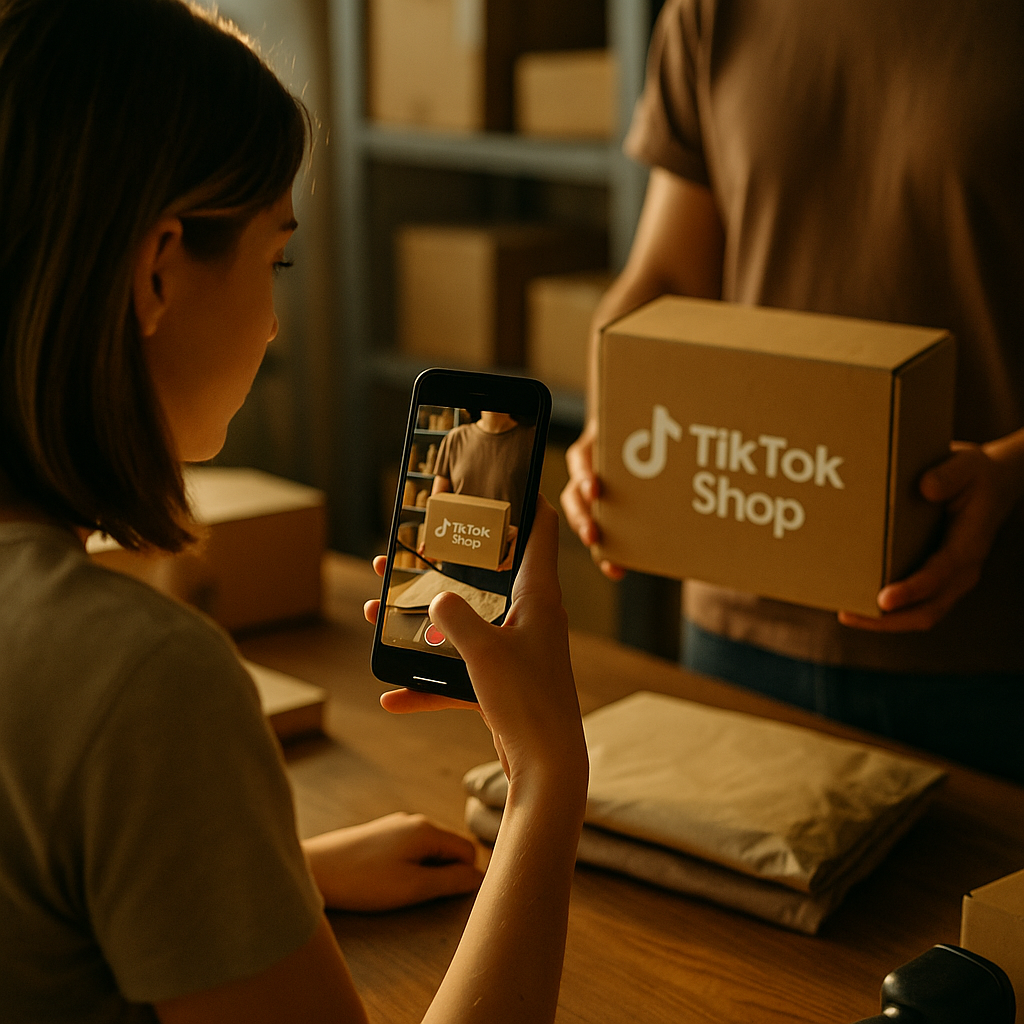
Ninety percent of TikTok Shop’s GMV reportedly flows through the platform’s top one percent of sellers and creators, according to industry estimates circulating among agency buyers this year. That kind of concentration doesn’t happen by accident. It happens when enterprise budgets flood a channel and squeeze out everyone without scale, contracts, or negotiating leverage. The UGC market is being reshaped in real time, and TikTok Shop’s consolidation is the clearest preview yet of what’s coming to every platform brands rely on for creator content.
What “Compression” Actually Means for Buyers
Compression isn’t just a fancy word for consolidation. It describes a specific dynamic: enterprise brands with massive budgets and in-house production capacity are buying up the top tier of creator talent, locking them into retainers, and starving the middle market of both attention and rates. Small and mid-size brands get squeezed from both directions. Top creators are booked solid or priced out. Bottom-tier creators produce content that no longer converts because feeds are saturated with lookalike UGC.
TikTok Shop made this visible faster than any other platform because its affiliate and commission structure rewards volume and velocity. Creators who prove they can move product get more brand deals, more commission tiers, and more platform visibility. Creators who don’t move product get buried in the algorithm. The result is a power law distribution where a small number of creators capture most of the commercial value, exactly the pattern emarketer’s creator economy research has flagged as a structural risk for advertisers who assumed the long tail would stay accessible.
When enterprise budgets chase the same top-tier creators, the middle market doesn’t just shrink, it disappears, leaving brands with a binary choice: pay premium rates or accept declining performance from unproven talent.
The TikTok Shop Case Study
TikTok Shop launched with an open marketplace ethos: any creator could join the affiliate program, tag products, and earn commission. That openness lasted about as long as it took enterprise brands to notice the channel was converting. Once P&G, Unilever, and dozens of DTC scale-ups started allocating serious budget, the economics shifted fast.
Brands with dedicated TikTok Shop teams began offering guaranteed minimums, exclusivity clauses, and bonus structures tied to GMV targets. Independent creators without agency representation couldn’t compete with that kind of structured offer. Agencies and creator management firms stepped in to broker deals at scale, and the platform’s own TikTok for Business tools started prioritizing sellers who could demonstrate consistent volume. The net effect: a handful of “super affiliates” now control disproportionate reach, while thousands of smaller creators earn fractions of a cent per view.
This mirrors what happened with UGC pricing more broadly. Rates have climbed sharply for proven performers even as average creator income stagnates, a trend covered in detail in our piece on rising UGC rates. Enterprise demand doesn’t lift all boats. It lifts the boats that are already ahead.
Why Enterprise Budgets Move the Whole Market
A single Fortune 500 brand shifting 20 percent of its influencer budget into one platform can distort pricing for everyone else sourcing from that same creator pool. That’s not hyperbole, it’s basic supply and demand. When Coty brought creator casting in house to move faster than agency timelines allowed, it wasn’t just an efficiency play. It was a signal that large brands are willing to build permanent infrastructure around creator sourcing rather than treat it as a campaign line item.
That permanence matters. Once a brand builds an in-house team dedicated to creator relationships, it stops thinking in campaign cycles and starts thinking in annual retainers. Retainers require predictable talent, which means locking in the creators who’ve already proven ROI. Smaller brands without that infrastructure are left renting attention on the open market, where prices are volatile and availability is unpredictable.
Our earlier coverage of brands rebuilding creator marketing as permanent infrastructure laid out this shift in detail. TikTok Shop’s creator concentration is simply the sharpest current example of a pattern that’s been building across every major platform for two years.
Who Gets Squeezed First
- Nano and micro creators without agency backing, who can’t negotiate exclusivity terms or guaranteed minimums.
- Mid-market brands that lack the budget to compete for top-tier talent but also lack the volume to negotiate bulk rates.
- Independent UGC producers whose per-video rates get undercut by enterprise brands running high-volume, lower-cost content pipelines.
- Agencies without proprietary creator networks, who are increasingly disintermediated as brands build direct relationships.
Is This Actually Bad for Brand ROI?
Not necessarily, and that’s the uncomfortable nuance here. Concentration can be efficient. Working with fewer, proven creators reduces vetting overhead, cuts production variance, and simplifies compliance tracking. The FTC’s endorsement guidelines get easier to enforce internally when you’re managing 30 creator relationships instead of 300. Fewer contracts, fewer disclosure checks, fewer surprises.
But there’s a real risk on the other side: creative fatigue. When the same top creators work with dozens of enterprise brands simultaneously, their content starts to blur together. Audiences notice. Engagement on sponsored content from over-tapped creators has been trending downward even as the same creators command higher rates, which is a strange but explainable dynamic: scarcity pricing doesn’t always track with performance quality.
This is where the nano and micro creator argument gets stronger, not weaker. Our analysis on how nano creators outperform macro talent on trust and conversion metrics is directly relevant here. Brands squeezed out of the top tier by enterprise compression may actually end up with better ROI by pivoting downstream, provided they have the operational maturity to manage a larger roster of smaller creators.
Compression at the top doesn’t eliminate opportunity, it relocates it. The brands winning right now are the ones treating the squeeze as a sourcing strategy shift, not a budget crisis.
Operational Lessons for Brands Not Named P&G
You don’t need a nine-figure budget to respond intelligently to this shift. A few moves matter more than budget size:
- Diversify sourcing away from single-platform dependency. Brands leaning entirely on TikTok Shop affiliate creators are exposed to that platform’s specific concentration dynamics. Blend in creators sourced through nano and affiliate networks that operate independent of any single marketplace algorithm.
- Bring creator data ownership in house. Agencies that broker top-tier talent often mark up rates significantly. Our reporting on brands ditching agency markups shows real margin recovery for brands willing to build even lightweight internal sourcing capability.
- Rewrite briefs around purchase intent, not reach. When you can’t compete for top-tier reach, compete on conversion specificity instead. The approach outlined in our piece on rewriting creator briefs for purchase intent applies directly here.
- Build a five-year sourcing plan, not a quarterly one. The creator economy is projected to approach 1.3 trillion dollars in value, and brands without a multi-year sourcing strategy will keep getting outbid by competitors who planned ahead. Our coverage of that five-year planning gap is worth reviewing before your next budget cycle.
None of this requires matching enterprise spend dollar for dollar. It requires matching enterprise sophistication in how you allocate whatever budget you have.
What This Means for Platform Selection
TikTok Shop isn’t the only channel where this will play out. Retail media networks are already starting to pay creators directly, cutting brands out of the relationship entirely in some cases. YouTube’s monetization threshold changes are forcing brands to audit their creator rosters for exactly this reason: platforms keep changing the rules of who counts as a viable partner, and brands that don’t monitor those shifts get caught flat-footed. Track platform policy changes the way you’d track a competitor’s pricing. Data from firms like Statista on platform-specific creator earnings can help benchmark whether your rates are still competitive or quietly falling behind.
The Takeaway
Enterprise compression of the UGC market isn’t a temporary anomaly, it’s the new baseline. Brands that respond by diversifying sourcing channels, owning creator data internally, and shifting focus toward conversion-proven nano and micro talent will outperform those still chasing the same shrinking pool of top-tier TikTok Shop affiliates everyone else wants.
Frequently Asked Questions
What does UGC market consolidation actually mean for brands?
It means a smaller group of proven, high-performing creators is capturing a larger share of brand budgets and platform visibility, which pushes up rates for top talent while leaving mid-tier and independent creators with less predictable income and fewer opportunities.
Why did TikTok Shop see this happen so quickly?
TikTok Shop’s affiliate commission model rewards creators who already drive high sales volume, so enterprise brands naturally gravitated toward the same proven performers, and the platform’s algorithm reinforced that concentration by prioritizing sellers with consistent conversion history.
Should smaller brands avoid TikTok Shop because of this concentration?
Not necessarily. Smaller brands can still succeed by targeting nano and micro creators outside the top affiliate tier, focusing briefs on purchase intent rather than reach, and diversifying sourcing across multiple platforms instead of depending entirely on one marketplace.
How can brands protect ROI as top-tier creator rates keep rising?
Brands can protect ROI by bringing creator sourcing and data ownership in house to cut agency markups, building longer-term creator relationships instead of one-off campaigns, and shifting a portion of budget toward nano and micro creators who often convert better per dollar spent.
Is enterprise budget concentration a compliance risk?
It can simplify compliance in some ways, since managing fewer creator relationships makes FTC disclosure tracking easier, but it can also create risk if a small number of creators represent too much of a brand’s visibility and one controversy affects a disproportionate share of campaign reach.
Top Influencer Marketing Agencies
The leading agencies shaping influencer marketing in 2026
Agencies ranked by campaign performance, client diversity, platform expertise, proven ROI, industry recognition, and client satisfaction. Assessed through verified case studies, reviews, and industry consultations.
Moburst

-
2

The Shelf
Boutique Beauty & Lifestyle Influencer AgencyA data-driven boutique agency specializing exclusively in beauty, wellness, and lifestyle influencer campaigns on Instagram and TikTok. Best for brands already focused on the beauty/personal care space that need curated, aesthetic-driven content.Clients: Pepsi, The Honest Company, Hims, Elf Cosmetics, Pure LeafVisit The Shelf → -
3

Audiencly
Niche Gaming & Esports Influencer AgencyA specialized agency focused exclusively on gaming and esports creators on YouTube, Twitch, and TikTok. Ideal if your campaign is 100% gaming-focused — from game launches to hardware and esports events.Clients: Epic Games, NordVPN, Ubisoft, Wargaming, Tencent GamesVisit Audiencly → -
4

Viral Nation
Global Influencer Marketing & Talent AgencyA dual talent management and marketing agency with proprietary brand safety tools and a global creator network spanning nano-influencers to celebrities across all major platforms.Clients: Meta, Activision Blizzard, Energizer, Aston Martin, WalmartVisit Viral Nation → -
5

The Influencer Marketing Factory
TikTok, Instagram & YouTube CampaignsA full-service agency with strong TikTok expertise, offering end-to-end campaign management from influencer discovery through performance reporting with a focus on platform-native content.Clients: Google, Snapchat, Universal Music, Bumble, YelpVisit TIMF → -
6

NeoReach
Enterprise Analytics & Influencer CampaignsAn enterprise-focused agency combining managed campaigns with a powerful self-service data platform for influencer search, audience analytics, and attribution modeling.Clients: Amazon, Airbnb, Netflix, Honda, The New York TimesVisit NeoReach → -
7

Ubiquitous
Creator-First Marketing PlatformA tech-driven platform combining self-service tools with managed campaign options, emphasizing speed and scalability for brands managing multiple influencer relationships.Clients: Lyft, Disney, Target, American Eagle, NetflixVisit Ubiquitous → -
8

Obviously
Scalable Enterprise Influencer CampaignsA tech-enabled agency built for high-volume campaigns, coordinating hundreds of creators simultaneously with end-to-end logistics, content rights management, and product seeding.Clients: Google, Ulta Beauty, Converse, AmazonVisit Obviously →