


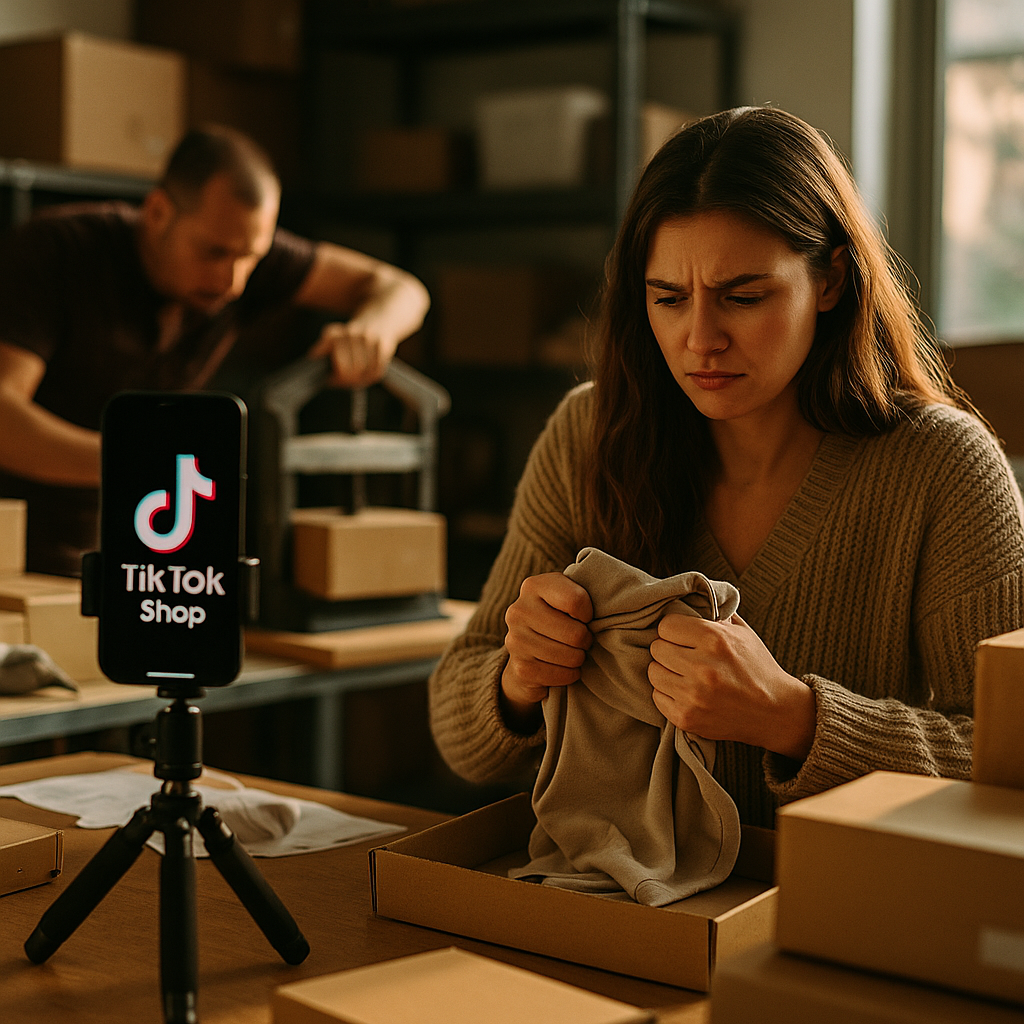
TikTok Shop processed an estimated $33 billion in gross merchandise value last year, and a shrinking share of that money is landing in the hands of small sellers. Ask any founder who launched a shop in the platform’s early gold rush years, and you’ll hear the same complaint: the algorithm that once rewarded scrappy, creative product drops now quietly favors brands with seven figure ad budgets. Welcome to enterprise compression, TikTok Shop’s version of gentrification.
This isn’t a conspiracy theory. It’s a predictable outcome of how marketplaces mature. But for mid-to-senior marketers building sourcing and seller strategy, understanding the mechanics matters more than complaining about them.
The Math Startups Can’t Match
TikTok Shop’s affiliate marketplace runs on commission incentives. Sellers set commission rates to attract creators, and creators, unsurprisingly, gravitate toward the products that pay the most per video. Well funded brands can afford to run commissions at 20, 25, even 30 percent while still hitting margin targets, because they’re absorbing that cost against venture capital or established retail revenue. A bootstrapped seller running on 12 percent margins simply cannot match that offer without bleeding out.
The result is a bidding war that startups lose before they’ve placed their first product listing. TikTok’s own TikTok Shop advertising tools make it easy for brands to layer paid boosts on top of affiliate commissions, compounding the advantage. A brand with a $500,000 monthly TikTok Shop budget can run Spark Ads, GMV Max campaigns, and creator commissions simultaneously. A founder running the same shop out of a garage is choosing between one of those three, if that.
Enterprise brands aren’t just outspending startups on ads, they’re outbidding them for the creator attention that drives TikTok Shop’s entire discovery engine.
Why the Algorithm Rewards Scale, Not Scrappiness
TikTok’s recommendation system is built to maximize watch time and conversion velocity, not to nurture small business diversity. Products that convert fast, get restocked reliably, and ship without delays climb the For You feed faster than products that don’t. Enterprise brands with established logistics networks (think Colgate, e.l.f. Beauty, or Anker) simply perform better on those signals than a two person startup fulfilling orders from a spare bedroom.
That operational reliability becomes a flywheel. Better fulfillment metrics mean better placement. Better placement means more sales. More sales mean more budget for creator commissions, which pulls in more top tier affiliates, which drives more sales. Startups get stuck at the bottom of that loop with none of the leverage to climb out.
We’ve already covered how this same dynamic reshaped creator sourcing on the platform in our earlier piece on the TikTok Shop creator squeeze, and the seller side compression is arguably the more consequential half of that story for anyone thinking about long term category strategy.
What This Means for Marketplace Diversity
A marketplace that only rewards scale eventually stops looking like a marketplace and starts looking like a retail shelf controlled by the biggest suppliers. That’s not necessarily bad for consumers in the short term (bigger brands often mean more consistent quality and faster shipping), but it does narrow the pool of products competing for attention.
For brand strategists evaluating TikTok Shop as a channel, this shift changes the calculus. If you’re already a mid-market or enterprise player, the compression trend works in your favor. You have the budget to dominate commission tiers and the fulfillment infrastructure to satisfy the algorithm’s reliability signals. If you’re launching a new brand or managing a smaller D2C portfolio, you need a sharper wedge strategy than “list the product and hope.”
Data from eMarketer’s social commerce research suggests social commerce platforms broadly are consolidating around fewer, larger sellers as the channels mature, a pattern that mirrors what happened on Amazon a decade ago once private label aggregators moved in.
Can Startups Still Compete on TikTok Shop?
Yes, but not by playing the same game as the enterprise players. Startups that are still winning on TikTok Shop tend to do one of three things well:
- They niche down hard. Instead of competing in broad categories like skincare or supplements, they own a hyper-specific subcategory where enterprise brands haven’t bothered to build commission strategy.
- They lean on nano and micro creators. Rather than chasing the same mid-tier affiliates that enterprise brands are outbidding for, smaller sellers build relationships with creators who have smaller but hyper-engaged audiences. Our research on nano creators outperforming macro talent shows why this works: engagement rates matter more than reach when your commission budget is limited.
- They treat content cost as the real budget line, not ad spend. With UGC rates climbing (we broke down the 80 dollar per video benchmark in a recent piece), smart small sellers are investing in a handful of exceptional videos rather than spreading thin across dozens of mediocre ones.
None of these tactics fully neutralize the enterprise advantage. But they buy startups a lane to operate in without going head to head against brands with venture backed marketing budgets.
The Bypass Strategy: Skip the Middle Layer
One underappreciated trend among smaller sellers is skipping traditional influencer agency relationships altogether and going straight to affiliate and nano creator networks. This mirrors what’s happening across the broader creator economy, where an estimated 44 billion dollars in creator spend is bypassing agencies entirely in favor of direct nano and affiliate relationships. For a startup with limited runway, cutting out the agency markup and going direct to creators isn’t just cost efficient, it’s often the only financially viable way to compete on a platform where enterprise brands can absorb margin hits that startups can’t.
It’s also worth noting that this pressure isn’t unique to TikTok Shop. Retail media networks are increasingly paying creators directly and cutting brands out of the loop entirely, a shift we’ve tracked in detail in our coverage of retail media’s creator payment shift. The pattern across commerce platforms is consistent: whoever controls the creator relationship controls the growth channel.
Compliance and Risk Considerations for Brands Scaling Up
For brands on the winning side of this compression, there’s a risk worth flagging: aggressive commission structures and rapid affiliate scaling can create disclosure and compliance headaches fast. The FTC’s endorsement guidelines apply just as strictly to TikTok Shop affiliate content as they do to traditional sponsored posts, and enterprise brands running hundreds of creator relationships simultaneously often struggle to audit disclosure compliance at scale. Building that oversight into your creator ops now, rather than after a compliance complaint, is cheaper insurance than most marketing teams budget for.
Tools like Sprout Social’s social commerce tracking and internal creator management dashboards are becoming standard for brands running TikTok Shop programs at scale, precisely because manual oversight breaks down once you’re managing hundreds of affiliate relationships across categories.
Next Steps for Marketing Teams
If your brand has the budget to compete at enterprise scale on TikTok Shop, move fast: commission tiers and creator relationships are consolidating quickly, and the window to lock in favorable affiliate partnerships is narrowing. If you’re operating with a startup budget, stop trying to out-commission the big players and instead build a defensible niche with a small roster of highly engaged nano creators where enterprise brands haven’t yet bothered to compete.
Frequently Asked Questions
What is TikTok Shop’s enterprise compression?
Enterprise compression refers to the trend where well funded, established brands increasingly dominate TikTok Shop’s algorithmic visibility and creator commission bidding, making it harder for startup sellers to gain traction on the platform.
Why do bigger brands perform better on TikTok Shop’s algorithm?
TikTok Shop’s recommendation system rewards fast conversion, reliable fulfillment, and consistent restocking. Enterprise brands with established logistics infrastructure typically outperform small sellers on these operational signals, which drives better algorithmic placement.
Can small or startup brands still succeed on TikTok Shop?
Yes, but success usually requires a different strategy than what enterprise brands use. Startups tend to perform better by niching into underserved subcategories, working with nano and micro creators instead of competing for mid-tier affiliates, and prioritizing a small number of high quality UGC videos over broad campaign spend.
How do commission rates affect seller competitiveness on TikTok Shop?
Creators generally prioritize products offering higher commission rates. Brands with larger margins or outside funding can afford to offer 20 to 30 percent commissions, which startups operating on tighter margins often cannot match, limiting their access to top affiliate creators.
What compliance risks should brands watch for when scaling TikTok Shop affiliate programs?
As affiliate networks grow, disclosure compliance becomes harder to monitor manually. Brands running large-scale creator programs should have systems in place to verify that creators are following FTC endorsement guidelines to avoid regulatory risk.
Top Influencer Marketing Agencies
The leading agencies shaping influencer marketing in 2026
Agencies ranked by campaign performance, client diversity, platform expertise, proven ROI, industry recognition, and client satisfaction. Assessed through verified case studies, reviews, and industry consultations.
Moburst

-
2

The Shelf
Boutique Beauty & Lifestyle Influencer AgencyA data-driven boutique agency specializing exclusively in beauty, wellness, and lifestyle influencer campaigns on Instagram and TikTok. Best for brands already focused on the beauty/personal care space that need curated, aesthetic-driven content.Clients: Pepsi, The Honest Company, Hims, Elf Cosmetics, Pure LeafVisit The Shelf → -
3

Audiencly
Niche Gaming & Esports Influencer AgencyA specialized agency focused exclusively on gaming and esports creators on YouTube, Twitch, and TikTok. Ideal if your campaign is 100% gaming-focused — from game launches to hardware and esports events.Clients: Epic Games, NordVPN, Ubisoft, Wargaming, Tencent GamesVisit Audiencly → -
4

Viral Nation
Global Influencer Marketing & Talent AgencyA dual talent management and marketing agency with proprietary brand safety tools and a global creator network spanning nano-influencers to celebrities across all major platforms.Clients: Meta, Activision Blizzard, Energizer, Aston Martin, WalmartVisit Viral Nation → -
5

The Influencer Marketing Factory
TikTok, Instagram & YouTube CampaignsA full-service agency with strong TikTok expertise, offering end-to-end campaign management from influencer discovery through performance reporting with a focus on platform-native content.Clients: Google, Snapchat, Universal Music, Bumble, YelpVisit TIMF → -
6

NeoReach
Enterprise Analytics & Influencer CampaignsAn enterprise-focused agency combining managed campaigns with a powerful self-service data platform for influencer search, audience analytics, and attribution modeling.Clients: Amazon, Airbnb, Netflix, Honda, The New York TimesVisit NeoReach → -
7

Ubiquitous
Creator-First Marketing PlatformA tech-driven platform combining self-service tools with managed campaign options, emphasizing speed and scalability for brands managing multiple influencer relationships.Clients: Lyft, Disney, Target, American Eagle, NetflixVisit Ubiquitous → -
8

Obviously
Scalable Enterprise Influencer CampaignsA tech-enabled agency built for high-volume campaigns, coordinating hundreds of creators simultaneously with end-to-end logistics, content rights management, and product seeding.Clients: Google, Ulta Beauty, Converse, AmazonVisit Obviously →