


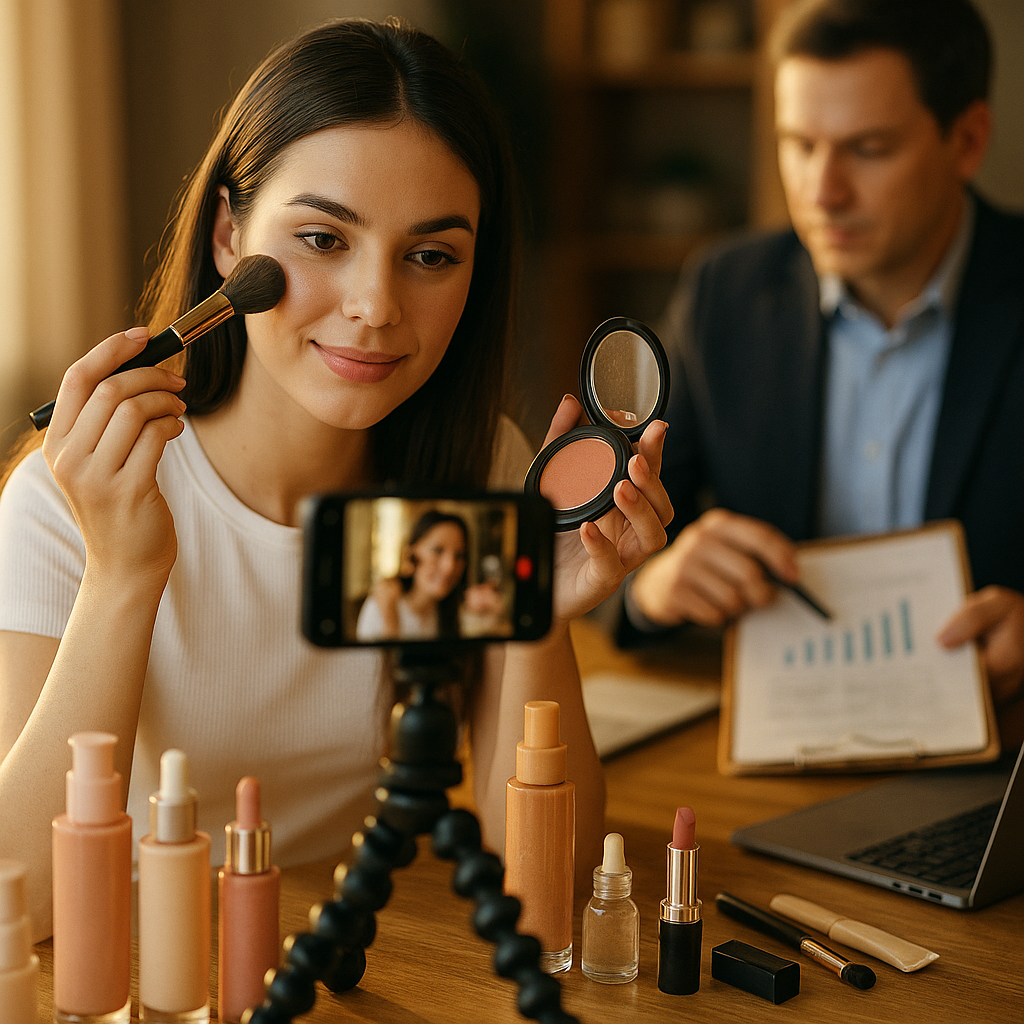
Beauty brands spent more on creators than on traditional TV and digital display combined at several major companies this year, and the shift shows no sign of reversing. Why would a category built on glossy magazine spreads and celebrity endorsements walk away from that playbook? Because creator spend converts, and conversion is the only metric CFOs still trust.
The Math That Changed the Budget Meeting
Ten years ago, a beauty brand’s media plan looked predictable: a chunk for TV, a chunk for programmatic display, a smaller test budget for “influencer” activity that lived under PR. That hierarchy has flipped. Creator spend now sits at the top of the plan, not the bottom, because it’s the only line item that reliably ties to sales.
The reason is structural, not fashionable. Traditional ads interrupt. Creator content gets invited in. A skincare routine video from a trusted creator functions like a recommendation from a friend, and beauty has always been a recommendation-driven category. Word of mouth just got scaled, timestamped, and made shoppable.
Beauty marketers aren’t choosing creators because it’s trendy. They’re choosing creators because the content converts at a lower cost per acquisition than nearly any other channel available to them right now.
Trust Is the Actual Product Being Bought
Ask any beauty CMO what they’re really purchasing when they fund a creator campaign, and most won’t say “reach.” They’ll say “credibility.” A 30-second commercial can showcase a serum’s texture, but it can’t replicate a creator applying it on camera, admitting it broke them out the first week, then showing the payoff at day 21. That kind of unscripted honesty is nearly impossible to fake at scale, and audiences have gotten very good at spotting the fakes.
This trust dividend shows up most clearly with smaller creators. Recent engagement data puts nano creator engagement well above what mid-tier and macro accounts pull, and beauty brands have taken notice. A nano creator with 8,000 followers and a niche skincare focus often drives more comment-level trust signals than a celebrity with two million. That’s forcing brand teams to rebuild how they vet and prioritize talent, moving away from follower count as the primary filter.
Where the Dollars Are Actually Moving
It’s not a simple swap of TV dollars into creator contracts. The reallocation is more granular than that, and it’s happening across a few specific lines:
- Upper-funnel awareness budgets that used to fund display and paid social are shifting into always-on creator retainers.
- Sampling and PR seeding budgets are merging with paid creator budgets into single, accountable programs.
- Agency production budgets are shrinking as brands lean on creators for both media and content creation, killing the need for separate shoot days.
- Affiliate and commission structures are absorbing dollars once reserved for traditional retail media buys.
That last point matters more than it seems. Retail media networks have started paying creators directly for on-platform content, a move that cuts brands out of the relationship unless they build their own creator infrastructure first. Beauty brands with mature in-house programs are protecting margin. Brands still routing everything through agencies are watching their creator budgets get intercepted before they even reach the talent.
Why UGC-Style Content Beats a Polished Commercial
Beauty is a visual, tactile category, which makes it uniquely suited to short-form video. A 15-second clip showing color payoff, blend, or shine does more persuasive work than a paragraph of ad copy ever could. Platforms like TikTok and Instagram have effectively become beauty’s new QVC, minus the studio lighting and the scripted host.
That said, UGC isn’t free anymore. Rates for a single branded video have climbed to roughly 80 dollars per video at the entry level, and that’s before usage rights or paid amplification. Brands running high volumes of UGC across product lines are recalculating whether traditional production still saves money once you factor in shoot days, talent fees, and post-production. Increasingly, the math favors creators, especially when the content also carries built-in audience trust that a studio shoot can’t replicate.
Niche fit compounds the effect. Data on niche-aligned creator content shows meaningfully higher view rates when the creator’s established audience already cares about the category. A dermatology-adjacent skincare creator talking about barrier repair pulls a more relevant, higher-intent audience than a generalist lifestyle account posting the same product.
The ROI Case Beauty Brands Are Making to Finance
None of this shift would matter if finance teams couldn’t see it. The good news for creator budgets: beauty is one of the few categories with clean, trackable purchase paths, thanks to affiliate links, promo codes, and shoppable video integrations on TikTok Shop and Instagram.
New attribution frameworks are giving marketers language finance actually respects. The 4 Rs framework (reach, relevance, resonance, and return) has become a common structure for beauty brands justifying creator budgets internally, replacing impressions and follower counts with numbers tied to revenue. Similarly, research from IAB Ireland’s creator ROI study gives marketing teams external benchmarking data they can use to defend spend requests without relying solely on internal case studies.
The brands winning budget approval aren’t the ones with the biggest creator rosters. They’re the ones who can show a CFO a cost-per-acquisition chart with creator spend beating paid social three quarters running.
Retention data adds another layer. Some marketing teams are now using customer retention tied to creator-driven acquisition as a bargaining chip in budget conversations, a tactic detailed in coverage of how a retention metric gives CMOs leverage over finance. If a customer acquired through a creator campaign has a higher lifetime value than one acquired through display, that’s a compelling argument for shifting more budget, not less.
The TikTok Shop Complication
Beauty brands leaning heavily into TikTok Shop have hit a snag worth flagging. As platform fees and enterprise deals tighten, smaller and mid-size sellers are finding it harder to compete for the same creator attention and shelf space. This enterprise compression trend is forcing brands, especially indie and challenger beauty labels, to rethink how they source creators and negotiate placement. Bigger brands with existing creator relationships and negotiating leverage are absorbing the squeeze better than newer entrants, which could accelerate consolidation in the category over the next few budget cycles.
Separately, sourcing itself has become more competitive as TikTok Shop’s creator marketplace matures. Brands are now being pushed to build direct creator pipelines rather than relying on the platform’s matching tools, a shift documented in reporting on how the creator squeeze forces new sourcing strategies. For beauty specifically, that means investing in creator relationship management the same way brands once invested in retail buyer relationships.
What About the Risk Side of the Ledger?
Betting bigger on creators isn’t risk-free, and any brand marketer pretending otherwise hasn’t dealt with a compliance issue yet. Beauty carries specific regulatory exposure: ingredient claims, before-and-after imagery, and disclosure requirements around sponsored content. The FTC’s disclosure guidelines apply directly to beauty influencer content, and enforcement has picked up as regulators pay closer attention to undisclosed partnerships in the space. UK brands face similar scrutiny from the Information Commissioner’s Office around data handling in affiliate and tracking arrangements tied to creator campaigns.
Operationally, the risk isn’t just regulatory. It’s also about content quality control at scale. When a brand runs 200 creators simultaneously instead of a handful of agency-vetted talent, quality assurance becomes a genuine operational challenge. Brands are responding by bringing casting in-house rather than routing everything through agencies. Coty’s move to bring creator casting in house is one example of a legacy beauty player restructuring its operations specifically to move faster and maintain tighter control over who represents the brand.
Agency fee structures are also under fresh scrutiny. A recent ANA report found that a meaningful share of influencer budgets gets absorbed by agency fees before it reaches creators, which has pushed several beauty brands to renegotiate or eliminate the middle layer entirely. If you’re paying an agency 30 percent to manage a program you could run with a two-person in-house team and a solid creator CRM, that math stops making sense fast.
What This Means for Budget Planning Going Forward
Beauty brands that treat creator spend as a permanent line item, not a test budget, are the ones pulling ahead. The category is following a broader pattern where marketers are rebuilding creator marketing as permanent infrastructure rather than a campaign-by-campaign experiment. That means dedicated headcount, standing creator relationships, and budget forecasting that treats creators the way media planning once treated TV upfronts.
For context on scale, industry projections from eMarketer and Statista both show creator economy spend growing faster than traditional digital ad spend for the third consecutive year, with beauty and personal care consistently ranked among the top three verticals driving that growth. Brands ignoring that trajectory aren’t playing it safe. They’re just delaying an inevitable reallocation.
Key Takeaway
Beauty brands aren’t abandoning traditional ads out of trend-chasing. They’re following the data on trust, conversion, and cost efficiency, and that data currently favors creators. If your beauty brand still treats creator spend as a discretionary test budget rather than a core media line, the next planning cycle is the time to fix that before competitors lock up the best-performing talent.
FAQs
Why are beauty brands shifting budget from traditional ads to creators?
Creator content converts at a lower cost per acquisition because it carries built-in audience trust that traditional advertising can’t replicate. Beauty is a visual, recommendation-driven category, which makes it especially well suited to creator-led content.
Are nano and micro creators actually more effective than celebrities for beauty brands?
Data shows nano creators often produce higher engagement rates than macro or celebrity accounts, and their audiences tend to trust their recommendations more, which translates into stronger conversion for beauty-specific products.
How do beauty brands measure creator ROI compared to traditional ad spend?
Most brands now track cost per acquisition, affiliate link conversions, and customer retention tied to creator-driven purchases, using frameworks that replace impressions and follower counts with revenue-linked metrics.
What compliance risks come with increased creator spend in beauty?
Beauty brands face specific exposure around ingredient claims, before-and-after imagery, and sponsorship disclosure requirements. Regulators including the FTC have increased scrutiny of undisclosed brand partnerships in the beauty category.
Is UGC-style content cheaper than traditional beauty ad production?
It often is, even as per-video rates rise, because UGC eliminates studio production costs while delivering content that performs better on social platforms due to its authentic, unpolished format.
Top Influencer Marketing Agencies
The leading agencies shaping influencer marketing in 2026
Agencies ranked by campaign performance, client diversity, platform expertise, proven ROI, industry recognition, and client satisfaction. Assessed through verified case studies, reviews, and industry consultations.
Moburst

-
2

The Shelf
Boutique Beauty & Lifestyle Influencer AgencyA data-driven boutique agency specializing exclusively in beauty, wellness, and lifestyle influencer campaigns on Instagram and TikTok. Best for brands already focused on the beauty/personal care space that need curated, aesthetic-driven content.Clients: Pepsi, The Honest Company, Hims, Elf Cosmetics, Pure LeafVisit The Shelf → -
3

Audiencly
Niche Gaming & Esports Influencer AgencyA specialized agency focused exclusively on gaming and esports creators on YouTube, Twitch, and TikTok. Ideal if your campaign is 100% gaming-focused — from game launches to hardware and esports events.Clients: Epic Games, NordVPN, Ubisoft, Wargaming, Tencent GamesVisit Audiencly → -
4

Viral Nation
Global Influencer Marketing & Talent AgencyA dual talent management and marketing agency with proprietary brand safety tools and a global creator network spanning nano-influencers to celebrities across all major platforms.Clients: Meta, Activision Blizzard, Energizer, Aston Martin, WalmartVisit Viral Nation → -
5

The Influencer Marketing Factory
TikTok, Instagram & YouTube CampaignsA full-service agency with strong TikTok expertise, offering end-to-end campaign management from influencer discovery through performance reporting with a focus on platform-native content.Clients: Google, Snapchat, Universal Music, Bumble, YelpVisit TIMF → -
6

NeoReach
Enterprise Analytics & Influencer CampaignsAn enterprise-focused agency combining managed campaigns with a powerful self-service data platform for influencer search, audience analytics, and attribution modeling.Clients: Amazon, Airbnb, Netflix, Honda, The New York TimesVisit NeoReach → -
7

Ubiquitous
Creator-First Marketing PlatformA tech-driven platform combining self-service tools with managed campaign options, emphasizing speed and scalability for brands managing multiple influencer relationships.Clients: Lyft, Disney, Target, American Eagle, NetflixVisit Ubiquitous → -
8

Obviously
Scalable Enterprise Influencer CampaignsA tech-enabled agency built for high-volume campaigns, coordinating hundreds of creators simultaneously with end-to-end logistics, content rights management, and product seeding.Clients: Google, Ulta Beauty, Converse, AmazonVisit Obviously →