


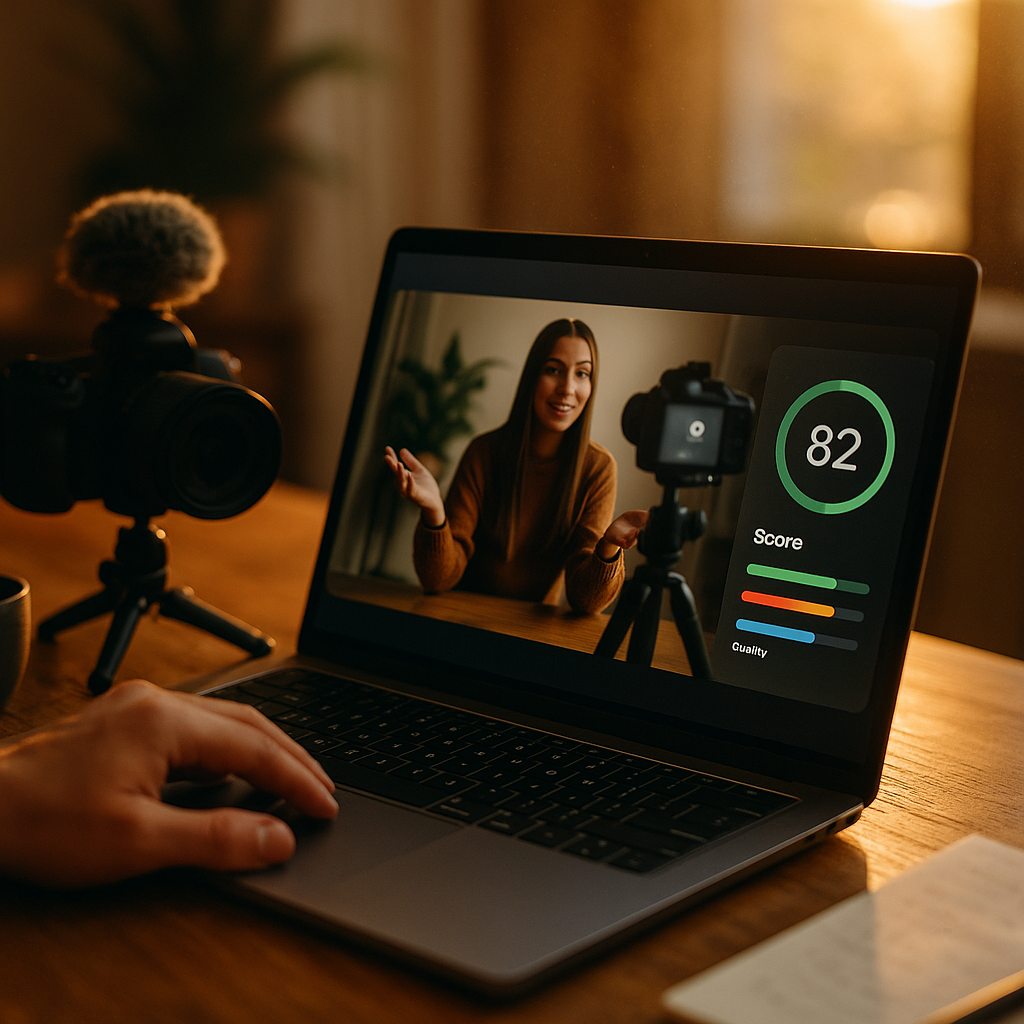
Only a sliver of creator content ever gets cited in an AI Overview, and most brands still find out which posts made the cut weeks after the fact. That lag is the problem a new crop of GEO prediction tools claims to solve. Instead of waiting for a citation report, these platforms score creator briefs, scripts, and drafts before they publish, estimating the odds an AI Overview will pull from them at all.
For teams still budgeting influencer programs like it’s 2021, that’s a fundamentally different way to think about content performance. It’s less “did this post go viral” and more “will a large language model treat this as a source.”
Why Citation Prediction Suddenly Matters
Search behavior has shifted hard toward zero-click experiences. When a shopper asks an AI assistant “what’s the best budget skincare routine,” they often get an answer synthesized from a handful of sources, not a list of blue links to click through. If your brand’s creator content isn’t one of those sources, you’re invisible at the exact moment intent peaks.
We covered this shift in depth in our piece on zero click search, and the numbers haven’t gotten friendlier since. Marketers who built KPIs around click-through rates are now stuck rebuilding entire measurement frameworks, a pain point we detailed when AI Overview clicks dropped 58 percent across several verticals.
Predicting AI Overview citations isn’t a nice-to-have anymore. It’s the closest thing brands have to a leading indicator in a search environment that no longer rewards clicks the way it used to.
What GEO Prediction Tools Actually Do
Generative Engine Optimization (GEO) prediction tools work by modeling the same signals large language models weight when selecting sources: entity clarity, citation density, structured claims, freshness, and domain authority patterns. Some tools go further and simulate the actual retrieval step, running a draft against a synthetic query set to see if it would surface in a mock AI Overview response.
Azoma is one of the more talked-about entrants here. As we reported in our breakdown of Azoma’s citation forecasting, the platform scores product pages before they go live, flagging structural gaps that would otherwise tank citation odds. Extend that same logic to creator content: a sponsored review, an unboxing script, a comparison post, and you get a preview of how these prediction tools are being repurposed for influencer workflows specifically.
Profound, meanwhile, has taken a different bet. Rather than building dashboards that report after the fact, the company has poured resources into autonomous agents that continuously test and re-test content against live AI answer engines. We unpacked that strategy in our look at Profound’s funding and roadmap. If you’re comparing vendors, it’s worth reading how Profound stacks up against Conductor for visibility tracking, since pricing and feature depth vary wildly between platforms.
The Creator Content Wrinkle
Predicting citations for a static product page is one thing. Predicting them for creator content is messier, because creator content carries voice, informal structure, and platform-native formatting that doesn’t always map cleanly to how AI models parse authority. A TikTok script with a punchy hook and jump cuts doesn’t read like a blog post, yet it might still get cited if the underlying claims are structured well.
That’s why the smartest teams are pairing prediction tools with structured scripting practices. We’ve written about how structured UGC scripts turn creator claims into citations, and the overlap with prediction tooling is obvious: if a model can’t parse the claim, it can’t cite it, no matter how good the prediction score looks on paper.
How Brands Are Actually Using This Data
Here’s where it gets practical. Brands running always-on creator programs are starting to insert a prediction check between draft approval and publish, treating it like a spell-checker for AI visibility. A few patterns we’re seeing across mid-market and enterprise teams:
- Pre-publish scoring gates. Content below a certain predicted citation threshold gets sent back for revision, usually to tighten claim structure or add missing entity references.
- Creator brief templates built around prediction inputs. Briefs now include instructions like “state the claim in a standalone sentence” because that’s what the scoring models reward.
- Budget reallocation tied to predicted visibility. Some teams are shifting spend toward creators whose content style historically scores higher on citation prediction, echoing the broader move toward intent signals outranking follower counts in deal-making.
This isn’t just theory. eMarketer and other research firms have tracked a steady decline in organic click-through rates as AI-generated answers absorb more query volume, a trend you can dig into further at eMarketer’s research hub. Brands that ignore this shift are effectively optimizing for a search environment that’s shrinking.
Where the Predictions Still Fall Short
No prediction tool is oracle-grade. Most vendors will admit, if you push them, that their models are trained on observed citation patterns from a handful of major AI Overview and answer engine implementations, which means they’re inherently backward-looking even when they’re trying to forecast forward. Google’s own systems change frequently enough that a prediction model calibrated last quarter can drift out of accuracy within weeks.
There’s also the tracking-versus-predicting distinction worth keeping straight. Tools like the ones compared in our pricing comparison of Profound, Peec AI, and Otterly are primarily built to track existing citations, not predict future ones. Prediction is a newer, riskier layer sitting on top of that tracking infrastructure, and the accuracy claims vary a lot depending on how much historical data a vendor has actually validated against.
Treat citation prediction scores as directional, not deterministic. A high score improves your odds, but it doesn’t guarantee a model will actually pull your content into an answer.
The Governance Question Nobody’s Asking Loudly Enough
If a prediction tool nudges a creator to restructure a claim so it scores better for AI citation, who’s accountable if that restructured claim turns out to be inaccurate or misleading? This isn’t a hypothetical. As brands optimize creator content specifically to be machine-readable and citation-friendly, there’s real pressure to simplify nuanced claims into the kind of flat, declarative statements that models prefer to cite. That’s a compliance risk, not just a content-quality one.
We’ve argued elsewhere that governance risk is increasingly landing on AI transformation leads rather than traditional legal or compliance teams, and citation prediction tooling adds another layer to that responsibility. The FTC has already signaled it’s watching how brands disclose sponsored content and AI-assisted claims closely, and guidance available at the FTC’s advertising resources is a reasonable starting point for any team building prediction-driven content workflows. Optimizing for citation odds should never come at the expense of accurate, substantiated claims.
Building a Workflow Without Overengineering It
You don’t need six vendors and a data science team to start benefiting from this. A lean version looks like this: pick one prediction tool, run it against your last quarter of top-performing creator content to calibrate expectations, then build a simple pre-publish checklist that flags low scores for human review. Pair that with the structured claim practices mentioned earlier, and you’ve got a repeatable process without a six-figure tooling budget.
For teams further along, this connects naturally to broader GEO strategy for creator content, which treats citation as the primary KPI rather than a side benefit of traditional SEO work. HubSpot’s content marketing benchmarks, available at HubSpot’s resource library, are also useful for framing how citation-focused content differs from click-focused content in terms of structure and depth.
None of this replaces good creative judgment. A prediction score is a signal, not a strategy. But in a search environment where the reward for a great answer might be a citation instead of a click, ignoring that signal is leaving performance data on the table.
Frequently Asked Questions
What is a GEO prediction tool?
A GEO prediction tool analyzes content before it publishes and estimates the likelihood that AI Overviews or other generative answer engines will cite it as a source, based on signals like claim structure, entity clarity, and citation density.
How is predicting AI Overview citations different from traditional SEO tracking?
Traditional SEO tracking measures rankings and clicks after content is live. Citation prediction tools try to forecast machine-readability and citation odds before publishing, letting teams revise content proactively rather than reacting to a report weeks later.
Can creator content actually be optimized for AI citations?
Yes. Structuring claims as clear, standalone statements, including specific data points, and using consistent entity references all improve the odds that a language model will treat creator content as a citable source.
Are these prediction tools reliable enough to base budget decisions on?
They’re directionally useful but not deterministic. Most models are trained on observed citation patterns and can drift out of accuracy as AI Overview systems change, so treat scores as one input alongside performance data, not a standalone budget trigger.
Does optimizing for AI citations create compliance risk?
It can, particularly if simplifying claims to be more “citation-friendly” strips out necessary nuance or context. Brands should keep legal and compliance teams involved whenever creator content is being restructured for AI visibility.
Start by running one GEO prediction tool against your best-performing creator content from last quarter, calibrate your expectations against real citation data, then build a lightweight pre-publish check before you scale spend on the assumption it works.
Frequently Asked Questions
What is a GEO prediction tool?
A GEO prediction tool analyzes content before it publishes and estimates the likelihood that AI Overviews or other generative answer engines will cite it as a source, based on signals like claim structure, entity clarity, and citation density.
How is predicting AI Overview citations different from traditional SEO tracking?
Traditional SEO tracking measures rankings and clicks after content is live. Citation prediction tools try to forecast machine-readability and citation odds before publishing, letting teams revise content proactively rather than reacting to a report weeks later.
Can creator content actually be optimized for AI citations?
Yes. Structuring claims as clear, standalone statements, including specific data points, and using consistent entity references all improve the odds that a language model will treat creator content as a citable source.
Are these prediction tools reliable enough to base budget decisions on?
They’re directionally useful but not deterministic. Most models are trained on observed citation patterns and can drift out of accuracy as AI Overview systems change, so treat scores as one input alongside performance data, not a standalone budget trigger.
Does optimizing for AI citations create compliance risk?
It can, particularly if simplifying claims to be more “citation-friendly” strips out necessary nuance or context. Brands should keep legal and compliance teams involved whenever creator content is being restructured for AI visibility.
Top Influencer Marketing Agencies
The leading agencies shaping influencer marketing in 2026
Agencies ranked by campaign performance, client diversity, platform expertise, proven ROI, industry recognition, and client satisfaction. Assessed through verified case studies, reviews, and industry consultations.
Moburst

-
2

The Shelf
Boutique Beauty & Lifestyle Influencer AgencyA data-driven boutique agency specializing exclusively in beauty, wellness, and lifestyle influencer campaigns on Instagram and TikTok. Best for brands already focused on the beauty/personal care space that need curated, aesthetic-driven content.Clients: Pepsi, The Honest Company, Hims, Elf Cosmetics, Pure LeafVisit The Shelf → -
3

Audiencly
Niche Gaming & Esports Influencer AgencyA specialized agency focused exclusively on gaming and esports creators on YouTube, Twitch, and TikTok. Ideal if your campaign is 100% gaming-focused — from game launches to hardware and esports events.Clients: Epic Games, NordVPN, Ubisoft, Wargaming, Tencent GamesVisit Audiencly → -
4

Viral Nation
Global Influencer Marketing & Talent AgencyA dual talent management and marketing agency with proprietary brand safety tools and a global creator network spanning nano-influencers to celebrities across all major platforms.Clients: Meta, Activision Blizzard, Energizer, Aston Martin, WalmartVisit Viral Nation → -
5

The Influencer Marketing Factory
TikTok, Instagram & YouTube CampaignsA full-service agency with strong TikTok expertise, offering end-to-end campaign management from influencer discovery through performance reporting with a focus on platform-native content.Clients: Google, Snapchat, Universal Music, Bumble, YelpVisit TIMF → -
6

NeoReach
Enterprise Analytics & Influencer CampaignsAn enterprise-focused agency combining managed campaigns with a powerful self-service data platform for influencer search, audience analytics, and attribution modeling.Clients: Amazon, Airbnb, Netflix, Honda, The New York TimesVisit NeoReach → -
7

Ubiquitous
Creator-First Marketing PlatformA tech-driven platform combining self-service tools with managed campaign options, emphasizing speed and scalability for brands managing multiple influencer relationships.Clients: Lyft, Disney, Target, American Eagle, NetflixVisit Ubiquitous → -
8

Obviously
Scalable Enterprise Influencer CampaignsA tech-enabled agency built for high-volume campaigns, coordinating hundreds of creators simultaneously with end-to-end logistics, content rights management, and product seeding.Clients: Google, Ulta Beauty, Converse, AmazonVisit Obviously →