


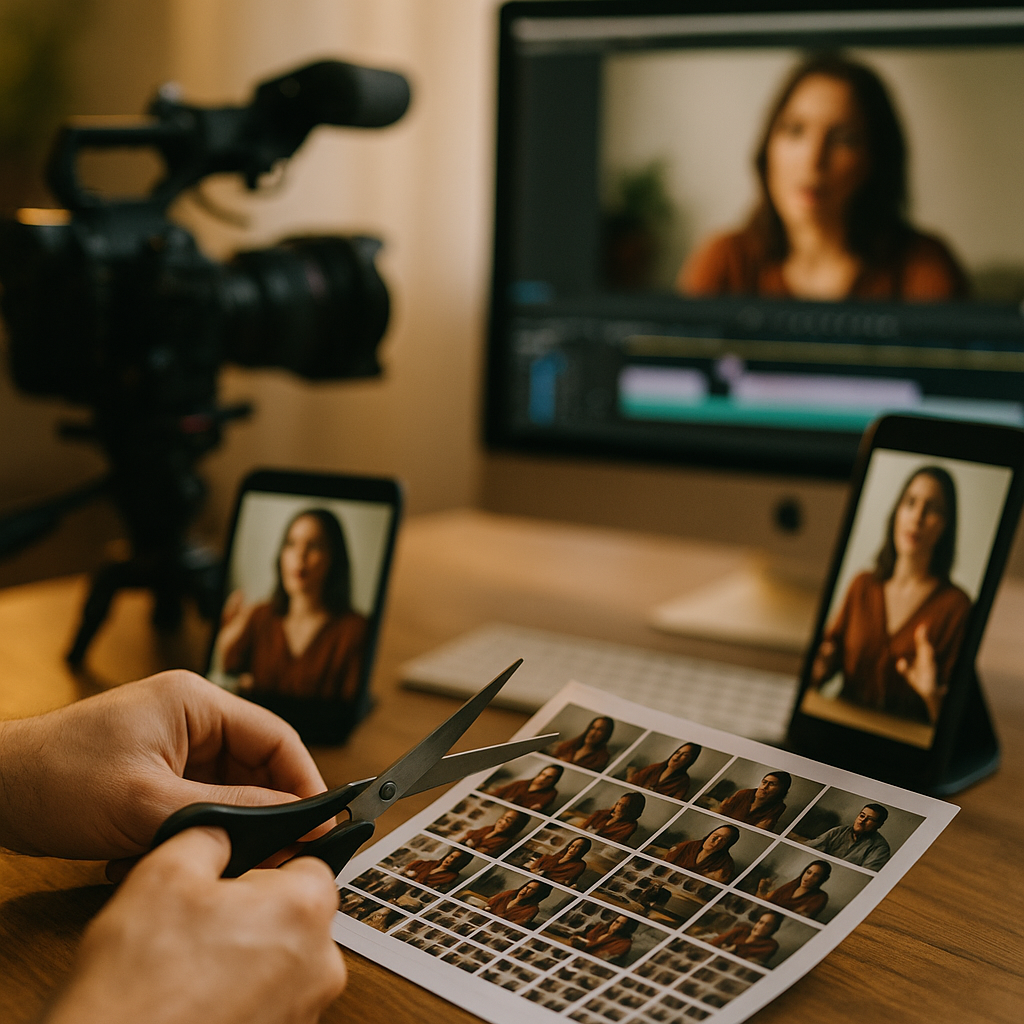
Brands still shooting separate videos for YouTube Shorts, TikTok, and Reels are burning budget on a problem that no longer exists. Format-agnostic distribution, the practice of planning a single creator asset that flexes across all three vertical feeds, is now standard operating procedure for lean marketing teams. Why pay for three shoots when one smart brief does the job?
The Myth of Platform-Specific Content
For years, agencies sold brands on the idea that TikTok needed “raw” energy, Reels needed “polished” aesthetics, and Shorts needed “informative” framing. That distinction made sense in 2020. It makes far less sense now, when all three platforms have converged on the same core mechanics: full-screen vertical video, autoplay, swipe-to-next navigation, and algorithmic ranking based on watch time and completion rate.
The audiences overlap heavily too. A 2024 eMarketer analysis found most short-form video users under 35 actively use at least two of the three platforms weekly, and many use all three. Creators know this. That’s why the smartest ones are already producing “one shoot, three cuts” content without brands even asking.
If your content strategy still treats TikTok, Reels, and Shorts as three different creative briefs, you’re paying triple for an audience that barely notices the difference.
What Format-Agnostic Actually Means (It’s Not “One Size Fits All”)
Let’s be precise, because this gets misunderstood constantly. Format-agnostic distribution does not mean uploading the exact same file to three platforms and hoping for the best. That’s lazy repurposing, and it shows. What it means is designing the source asset, the raw footage, pacing, framing, and captioning, so it can be re-edited for each platform’s specific quirks in under 30 minutes, without a reshoot.
Think of it like a modular furniture system. The frame stays the same. The finish changes based on the room.
- Framing: Shoot with safe zones that account for each platform’s UI overlays (captions, like buttons, profile info sit in different spots on TikTok versus Shorts).
- Pacing: Capture extra B-roll and alternate takes so editors can trim for platforms that reward faster hooks (TikTok) versus slightly longer dwell time (YouTube Shorts).
- Audio: Record clean dialogue separately from ambient sound so captions and trending audio can be swapped without re-recording.
- Aspect ratio discipline: Shoot native 9:16 from the start. Cropping horizontal footage after the fact is the fastest way to lose a face mid-frame.
Teams that get this right often build a shared reference doc before the shoot, similar to the approach outlined in our vertical video style guide breakdown, so every creator on a campaign knows the non-negotiables before cameras roll.
Why This Matters for Budget, Not Just Creative
Here’s the part that gets a CFO’s attention. A single-asset, multi-cut workflow can cut production costs by 40 to 60 percent compared to platform-specific shoots, based on patterns we’ve tracked across creator agency retainers. That’s not a marginal efficiency gain. That’s the difference between running one campaign a quarter and running four.
Multiply that across a roster of ten creators and the math becomes obvious. Instead of commissioning three separate assets per creator per month, brands commission one flexible asset and pay a smaller re-edit fee for the other two platforms. Agencies that have adopted split-brief models for multi-creator campaigns report similar cost compression, because the efficiency compounds with scale.
Platform Nuances That Still Matter
Format-agnostic doesn’t mean format-blind. Each platform still has quirks worth respecting, even within a shared asset system.
TikTok rewards native-feeling imperfection. Overly polished content still underperforms rougher, faster-paced cuts, which is part of why blooper and mistake cuts keep beating buttoned-up versions in watch time. TikTok’s algorithm also front-loads discovery through the For You feed more aggressively than the other two, so hook strength in the first second matters disproportionately here.
Instagram Reels sits inside a broader ecosystem of Stories, feed posts, and DMs. Viewers arrive with slightly higher aesthetic expectations because Reels lives next to curated grid content. That doesn’t mean overproduced, but it does mean captions, color grading, and thumbnail framing carry more weight than they do on TikTok.
YouTube Shorts benefits from a built-in advantage: it can link back to long-form content and channel subscriptions in ways TikTok and Reels can’t replicate as smoothly. Google’s own YouTube Creator Support documentation confirms Shorts increasingly function as a discovery funnel into a creator’s full catalog, which changes the calculus for CTAs. A Shorts version of an asset should almost always include a subtle nudge toward a full-length video or channel subscribe, something the other two platforms can’t leverage the same way.
These differences are why the “one shoot, three edits” model works better than “one shoot, one upload.” The core footage is shared. The final 10 to 15 percent (caption style, hook trim, CTA placement) is where platform-specific editing earns its keep.
Building the Brief: What to Give Creators Upfront
A format-agnostic brief needs to do more work than a standard content brief because it’s setting up three downstream edits, not one. Based on patterns we’ve seen work across creator programs, a strong brief includes:
- A shot list that specifies safe zones for text and UI overlays on all three platforms.
- Instructions to capture at least two hook variations (one fast cold-open, one slower context-setter) so editors have options.
- Guidance on capturing 15 to 20 percent extra footage as buffer for pacing differences across platforms.
- Clear direction on whether trending audio should be baked in or left flexible for platform-specific swaps.
- A note on caption style, since silent viewing rates differ across platforms and captions often carry more weight than voiceover.
Brands that have shifted toward looser, creator-driven brief structures tend to get better raw footage for this purpose, because creators naturally shoot more usable variety when they’re not locked into a rigid script. Give the creator room to improvise a second take and you’ll often get better source material for repurposing than if you’d demanded a single “perfect” version.
The Editing Layer: Where the Real Efficiency Lives
Once the source footage exists, the re-editing step is where teams either save money or lose it. This is the part brands underestimate.
A common failure mode: hiring three separate freelance editors, one per platform, who don’t talk to each other and end up producing inconsistent brand voice across the three cuts. The fix is simpler than it sounds. One editor, working from a shared pacing brief, can typically turn around all three platform cuts in a single session if the brief clearly defines hook length, caption timing, and CTA placement per platform. Our piece on pacing briefs and watch time covers how granular this can get, down to second-by-second cut timing.
AI-assisted editing tools have also changed the math here. Platforms now offer auto-reframe features that detect faces and adjust safe zones automatically when converting horizontal or square footage to vertical. These tools aren’t perfect, and they still need a human pass for hook trimming and caption sync, but they’ve cut re-edit turnaround from days to hours for teams using them well. Our coverage of AI-assisted reel editing digs into which retention signals these tools optimize for.
The bottleneck was never the shoot. It’s almost always the review and re-edit cycle, which is exactly where most format-agnostic workflows quietly break down.
Speaking of bottlenecks: if your brand’s internal approval process requires separate sign-off for each platform version, you’ve built inefficiency right back into the system you were trying to streamline. Teams that have addressed this by consolidating approval cycles into a single review pass see the biggest time savings, sometimes cutting a week off campaign turnaround.
Measuring Whether It’s Actually Working
Format-agnostic distribution isn’t a “set it and forget it” system. Track performance per platform, not just in aggregate, because a script that performs well on TikTok might underperform on YouTube Shorts even when the source asset is identical. Watch three metrics specifically: completion rate, average view duration, and shares or saves. If one platform consistently lags, that’s usually a signal the re-edit needs a heavier touch, not that the whole model is broken.
Tools like Sprout Social and native platform analytics dashboards make cross-platform comparison straightforward. The goal isn’t identical performance across all three feeds. It’s acceptable performance on all three at a fraction of the production cost of separate shoots.
Where This Breaks Down
To be fair, format-agnostic distribution isn’t universal. Highly platform-native formats like original sound briefs built around TikTok trends or meme-style native posts genuinely don’t translate across platforms without losing their point. If the entire concept depends on a platform-specific meme format or trending sound, force-fitting it onto Shorts or Reels will just produce something confusing. The rule of thumb: use format-agnostic planning for evergreen brand storytelling, product demos, and testimonial content. Reserve platform-exclusive formats for content that’s explicitly riding a native trend.
FAQs
What is format-agnostic distribution in influencer marketing?
It’s a content planning method where a single creator shoot produces raw footage flexible enough to be edited into native-feeling versions for TikTok, YouTube Shorts, and Instagram Reels, without requiring separate shoots for each platform.
Does format-agnostic content perform worse than platform-exclusive content?
Not necessarily. Performance depends on how well the source footage was shot and how carefully each platform-specific edit handles hook timing, captions, and safe zones. Poorly executed repurposing underperforms. Well-planned format-agnostic content often matches platform-native results at a fraction of the cost.
How much can brands save using this approach?
Teams using a single-asset, multi-cut workflow have reported production cost reductions in the range of 40 to 60 percent compared to commissioning separate platform-specific shoots, largely by consolidating creator fees and editing hours.
Which formats should never be treated as format-agnostic?
Content built around a platform-specific trend, such as a TikTok-native sound or meme format, usually loses its meaning when force-fitted onto Reels or Shorts. Save format-agnostic planning for evergreen content like demos, testimonials, and brand storytelling.
What’s the biggest mistake brands make with this strategy?
Uploading the identical file to all three platforms without any platform-specific adjustment. Captions, hook pacing, and CTA placement still need light customization per platform, even when the source footage is shared.
Start with your next scheduled shoot: brief the creator for one flexible asset instead of three fixed deliverables, capture the extra buffer footage, and let one editor handle all three platform cuts in a single pass. Track completion rate per platform for thirty days before deciding whether the model earns a permanent spot in your production workflow.
Top Influencer Marketing Agencies
The leading agencies shaping influencer marketing in 2026
Agencies ranked by campaign performance, client diversity, platform expertise, proven ROI, industry recognition, and client satisfaction. Assessed through verified case studies, reviews, and industry consultations.
Moburst

-
2

The Shelf
Boutique Beauty & Lifestyle Influencer AgencyA data-driven boutique agency specializing exclusively in beauty, wellness, and lifestyle influencer campaigns on Instagram and TikTok. Best for brands already focused on the beauty/personal care space that need curated, aesthetic-driven content.Clients: Pepsi, The Honest Company, Hims, Elf Cosmetics, Pure LeafVisit The Shelf → -
3

Audiencly
Niche Gaming & Esports Influencer AgencyA specialized agency focused exclusively on gaming and esports creators on YouTube, Twitch, and TikTok. Ideal if your campaign is 100% gaming-focused — from game launches to hardware and esports events.Clients: Epic Games, NordVPN, Ubisoft, Wargaming, Tencent GamesVisit Audiencly → -
4

Viral Nation
Global Influencer Marketing & Talent AgencyA dual talent management and marketing agency with proprietary brand safety tools and a global creator network spanning nano-influencers to celebrities across all major platforms.Clients: Meta, Activision Blizzard, Energizer, Aston Martin, WalmartVisit Viral Nation → -
5

The Influencer Marketing Factory
TikTok, Instagram & YouTube CampaignsA full-service agency with strong TikTok expertise, offering end-to-end campaign management from influencer discovery through performance reporting with a focus on platform-native content.Clients: Google, Snapchat, Universal Music, Bumble, YelpVisit TIMF → -
6

NeoReach
Enterprise Analytics & Influencer CampaignsAn enterprise-focused agency combining managed campaigns with a powerful self-service data platform for influencer search, audience analytics, and attribution modeling.Clients: Amazon, Airbnb, Netflix, Honda, The New York TimesVisit NeoReach → -
7

Ubiquitous
Creator-First Marketing PlatformA tech-driven platform combining self-service tools with managed campaign options, emphasizing speed and scalability for brands managing multiple influencer relationships.Clients: Lyft, Disney, Target, American Eagle, NetflixVisit Ubiquitous → -
8

Obviously
Scalable Enterprise Influencer CampaignsA tech-enabled agency built for high-volume campaigns, coordinating hundreds of creators simultaneously with end-to-end logistics, content rights management, and product seeding.Clients: Google, Ulta Beauty, Converse, AmazonVisit Obviously →