


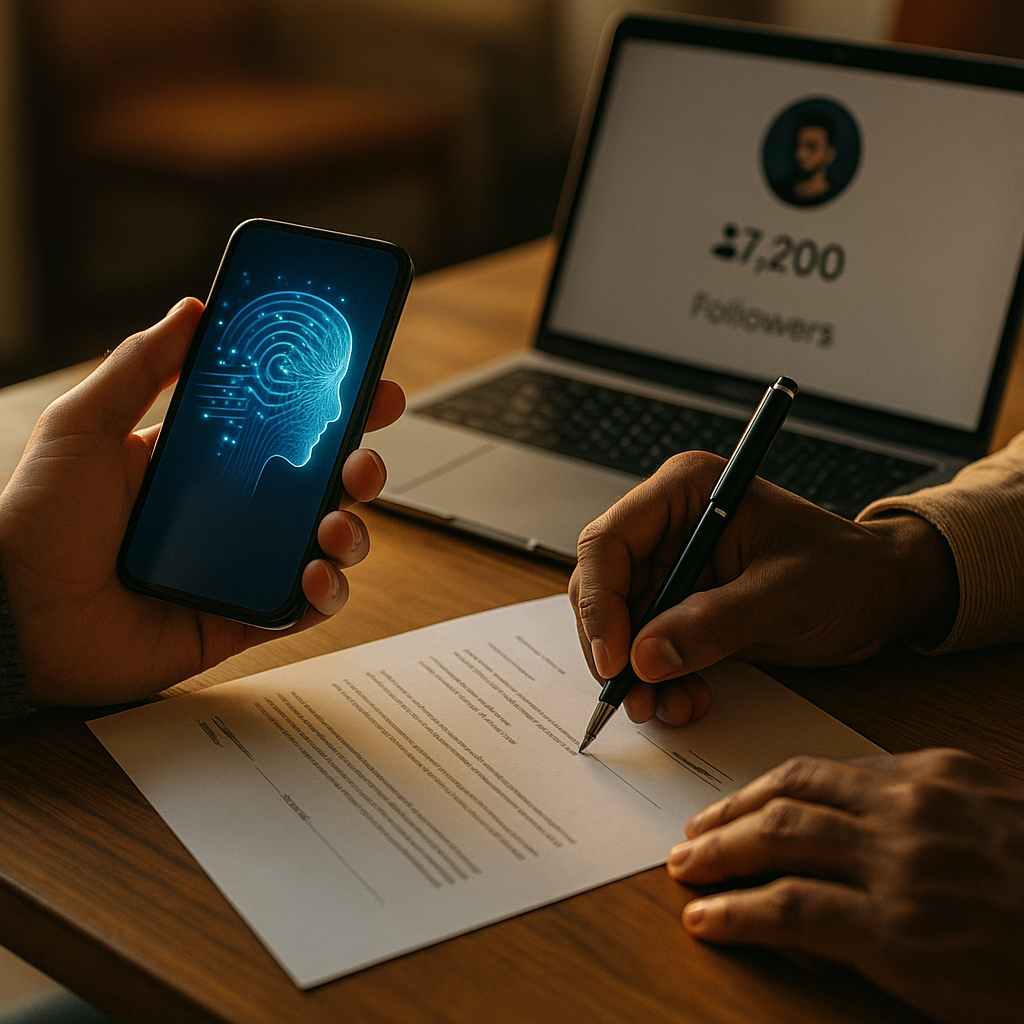
Follower count never predicted a single purchase. Neither did engagement rate, not reliably. Yet brands spent a decade treating both as gospel. Now AI intent signals are quietly rewriting the rulebook for creator selection, and the shift is happening faster than most procurement teams have adjusted their briefs.
Roughly 61% of marketers say they struggle to prove influencer ROI beyond vanity metrics, according to data cited by eMarketer. That gap is exactly what intent signal modeling is built to close.
What Are AI Intent Signals, Exactly?
Intent signals are behavioral breadcrumbs that indicate a person (or an audience segment) is closer to a purchase decision than a passive scroll. Search queries, product page dwell time, comment sentiment that references buying triggers (“does this work for oily skin?”), add-to-cart abandonment, cross-platform retargeting responses. AI models stitch these fragments together at a scale no human analyst could match.
Applied to creator selection, intent signals answer a different question than the one brands have asked for years. Instead of “how many people saw this,” the model asks “how many people who saw this were already primed to buy something like it.” That’s a fundamentally different filter, and it changes who gets the deal.
A creator with 40,000 followers and a highly transactional audience can now outrank a creator with 400,000 followers whose audience mostly lurks. Reach lost its monopoly on the selection criteria.
Why the Old Selection Model Is Breaking Down
Engagement rate was always a proxy metric, not a business outcome. It told you people clicked “like.” It never told you whether they had a credit card out. Brands accepted that tradeoff because there wasn’t a better alternative at scale.
There is now. Platforms are training models on retention and repeat purchase behavior instead of one-off engagement spikes, a shift covered in depth in AI retention tracking approaches that rank creators by whether their audiences come back and buy again. That’s a harder metric to game, and it’s forcing agencies to rebuild their vetting decks from scratch.
It’s also exposing a lot of inflated portfolios. Creators who built audiences on giveaways, engagement pods, or algorithm-friendly but commercially irrelevant content are seeing their “fit scores” collapse under intent-based scrutiny, even when their follower graphs still look healthy on paper.
From Vanity Metrics to Purchase Signals
The practical shift shows up in how brands score candidates before outreach even happens. Instead of manually skimming a creator’s last 30 posts, AI systems now ingest comment threads, saved-post rates, click-through data from affiliate links, and even sentiment around specific product attributes.
This is the same logic driving AI purchase intent scoring, where creators get ranked by downstream sales rather than surface-level reach. A creator whose audience frequently asks pricing and availability questions in the comments is signaling something a like-count never could: active shopping intent.
Marketers running performance-tied influencer programs are pairing this with dynamic creative testing too. AI dynamic creative optimization tools now test which hooks convert intent-rich audiences fastest, rather than optimizing for watch time alone. The two systems, intent scoring on the front end and creative optimization on the back end, are starting to talk to each other inside the same martech stack.
How This Changes the Brief
A creator brief built around intent signals looks different from a reach-first brief. It specifies audience purchase behavior thresholds, not just demographic overlap. It asks for access to historical conversion data, not just a media kit. And it often includes a clause requiring the creator’s platform or agency to share raw engagement exports so the brand’s own model can re-score independently.
- Minimum historical conversion rate on comparable product categories
- Audience overlap with the brand’s existing high-intent customer segments
- Sentiment analysis showing purchase-adjacent language in comments, not just praise
- Repeat purchase influence, meaning did past campaigns drive one-time buyers or loyal customers
- Cross-platform intent consistency, since a creator can look high-intent on TikTok and low-intent on Instagram
That last point trips up a lot of teams. Intent isn’t a fixed trait of a creator, it’s a trait of a specific audience on a specific platform at a specific moment. A model has to be re-run per placement, not applied once and reused across every channel.
Agentic Matchmaking Is Accelerating the Shift
None of this scales manually. That’s why intent-based selection is arriving alongside a broader move toward autonomous discovery tools. Agentic AI creator matchmaking is already replacing manual scouting in mid-market agencies, and intent signals are becoming a core input layer inside those matching engines rather than a separate add-on report.
The practical effect: a brand can now describe a target outcome (“drive repeat purchases among 25 to 34 year old parents shopping for allergy-friendly snacks”) and get a ranked creator shortlist scored on predicted intent match, not follower demographics alone.
Whether this counts as genuine machine learning or just rebranded search remains a fair question. Some vendors are stretching the definition of “AI matching,” as explored in AI matched creator discovery critiques. Buyers should ask vendors directly what training data underpins the intent scores, and how often the model retrains on fresh conversion data. If the answer is vague, treat the “AI” label with skepticism.
The Governance Gap Nobody’s Fixed Yet
Here’s the uncomfortable part. Intent scoring systems are outrunning the compliance frameworks meant to govern them. Fit scores get generated in seconds, but few agencies have a documented process for auditing how those scores were built, what data sources fed them, or whether they introduce demographic bias into creator selection.
This governance lag is well documented. AI fit scores speed up vetting considerably, but oversight hasn’t caught up, and that’s a real liability exposure for brands relying on automated shortlists without a human review layer. If a model systematically deprioritizes creators from certain communities because their audience’s purchase language doesn’t match the training set’s assumptions, that’s a discrimination risk hiding inside a spreadsheet.
Speed without an audit trail isn’t efficiency. It’s just risk you haven’t discovered yet.
Regulatory bodies are paying attention to algorithmic decision-making generally, even if creator marketing hasn’t been singled out yet. Brands operating in the EU or UK should keep an eye on guidance from the ICO, and US-based teams should track disclosure and endorsement rules from the FTC, since intent-based targeting doesn’t exempt anyone from existing transparency obligations.
Documentation matters here more than most teams realize. Keep a record of which model version produced which shortlist, and why a creator was included or excluded. That paper trail is what protects a brand when a client, a regulator, or a rejected creator’s lawyer asks for an explanation.
What This Means for Creator Relationships
Creators themselves are starting to notice they’re being scored on something they can’t see. Expect pushback. Agencies that can explain, even briefly, why a creator was or wasn’t selected will build more durable talent relationships than those treating the model as a black box.
Transparency here isn’t just an ethics play, it’s practical. Creators who understand that comment sentiment and purchase-adjacent language affect their bookings will start optimizing content toward those signals, which benefits everyone in the deal if done honestly, and creates a new category of manipulation risk if it isn’t monitored.
Operationalizing Intent Signals Without Losing the Human Layer
None of this argues for removing humans from creator selection. It argues for changing what humans spend their time doing. Instead of manually reviewing hundreds of media kits, strategists should spend their hours validating the top of an AI-generated shortlist, checking for bias, brand safety concerns, and creative fit that no intent score can quantify.
A workable process looks something like this:
- Define the specific purchase behavior you’re optimizing for, not just “engagement” as a vague catchall
- Run intent-based shortlisting through a vetted platform, cross-checking vendor claims against independent benchmarks like those from Sprout Social or HubSpot
- Have a human reviewer audit the top 15 to 20 candidates for brand safety and contextual fit
- Document the scoring rationale for compliance purposes
- Re-score post-campaign using actual conversion data to improve the model for the next cycle
That last step is the one most teams skip, and it’s the one that compounds value over time. Intent models get smarter with feedback. A brand that never closes the loop between predicted intent and actual sales is leaving most of the value of the technology on the table.
FAQs
What are AI intent signals in influencer marketing?
AI intent signals are behavioral data points, such as comment sentiment, click-through activity, and repeat purchase patterns, that AI models analyze to predict how likely a creator’s audience is to convert, rather than simply measuring reach or engagement.
How is intent-based creator selection different from engagement-based selection?
Engagement-based selection prioritizes likes, comments, and shares as a proxy for interest. Intent-based selection focuses on signals that correlate directly with purchase behavior, such as sentiment analysis, retargeting response, and historical conversion rates.
Can smaller creators benefit from intent-based scoring?
Yes. Creators with smaller but highly transactional audiences often score higher on intent metrics than larger creators with passive followings, which can shift budget toward niche and micro-creator partnerships.
What are the compliance risks with AI intent scoring?
The main risks include algorithmic bias in scoring, lack of documentation explaining why creators were included or excluded, and insufficient transparency for regulators or creators who want to understand how decisions were made.
How can brands verify that an AI matching platform’s intent scores are legitimate?
Ask vendors what training data feeds the model, how often it retrains on fresh conversion data, and whether they can produce an audit trail showing how a specific score was calculated for a specific creator.
Next step: Before your next creator campaign, ask your platform or agency for the raw data behind any “intent score” they provide, and if they can’t produce it, treat the score as a guess, not a metric.
FAQs
What are AI intent signals in influencer marketing?
AI intent signals are behavioral data points, such as comment sentiment, click-through activity, and repeat purchase patterns, that AI models analyze to predict how likely a creator’s audience is to convert, rather than simply measuring reach or engagement.
How is intent-based creator selection different from engagement-based selection?
Engagement-based selection prioritizes likes, comments, and shares as a proxy for interest. Intent-based selection focuses on signals that correlate directly with purchase behavior, such as sentiment analysis, retargeting response, and historical conversion rates.
Can smaller creators benefit from intent-based scoring?
Yes. Creators with smaller but highly transactional audiences often score higher on intent metrics than larger creators with passive followings, which can shift budget toward niche and micro-creator partnerships.
What are the compliance risks with AI intent scoring?
The main risks include algorithmic bias in scoring, lack of documentation explaining why creators were included or excluded, and insufficient transparency for regulators or creators who want to understand how decisions were made.
How can brands verify that an AI matching platform’s intent scores are legitimate?
Ask vendors what training data feeds the model, how often it retrains on fresh conversion data, and whether they can produce an audit trail showing how a specific score was calculated for a specific creator.
Top Influencer Marketing Agencies
The leading agencies shaping influencer marketing in 2026
Agencies ranked by campaign performance, client diversity, platform expertise, proven ROI, industry recognition, and client satisfaction. Assessed through verified case studies, reviews, and industry consultations.
Moburst

-
2

The Shelf
Boutique Beauty & Lifestyle Influencer AgencyA data-driven boutique agency specializing exclusively in beauty, wellness, and lifestyle influencer campaigns on Instagram and TikTok. Best for brands already focused on the beauty/personal care space that need curated, aesthetic-driven content.Clients: Pepsi, The Honest Company, Hims, Elf Cosmetics, Pure LeafVisit The Shelf → -
3

Audiencly
Niche Gaming & Esports Influencer AgencyA specialized agency focused exclusively on gaming and esports creators on YouTube, Twitch, and TikTok. Ideal if your campaign is 100% gaming-focused — from game launches to hardware and esports events.Clients: Epic Games, NordVPN, Ubisoft, Wargaming, Tencent GamesVisit Audiencly → -
4

Viral Nation
Global Influencer Marketing & Talent AgencyA dual talent management and marketing agency with proprietary brand safety tools and a global creator network spanning nano-influencers to celebrities across all major platforms.Clients: Meta, Activision Blizzard, Energizer, Aston Martin, WalmartVisit Viral Nation → -
5

The Influencer Marketing Factory
TikTok, Instagram & YouTube CampaignsA full-service agency with strong TikTok expertise, offering end-to-end campaign management from influencer discovery through performance reporting with a focus on platform-native content.Clients: Google, Snapchat, Universal Music, Bumble, YelpVisit TIMF → -
6

NeoReach
Enterprise Analytics & Influencer CampaignsAn enterprise-focused agency combining managed campaigns with a powerful self-service data platform for influencer search, audience analytics, and attribution modeling.Clients: Amazon, Airbnb, Netflix, Honda, The New York TimesVisit NeoReach → -
7

Ubiquitous
Creator-First Marketing PlatformA tech-driven platform combining self-service tools with managed campaign options, emphasizing speed and scalability for brands managing multiple influencer relationships.Clients: Lyft, Disney, Target, American Eagle, NetflixVisit Ubiquitous → -
8

Obviously
Scalable Enterprise Influencer CampaignsA tech-enabled agency built for high-volume campaigns, coordinating hundreds of creators simultaneously with end-to-end logistics, content rights management, and product seeding.Clients: Google, Ulta Beauty, Converse, AmazonVisit Obviously →