


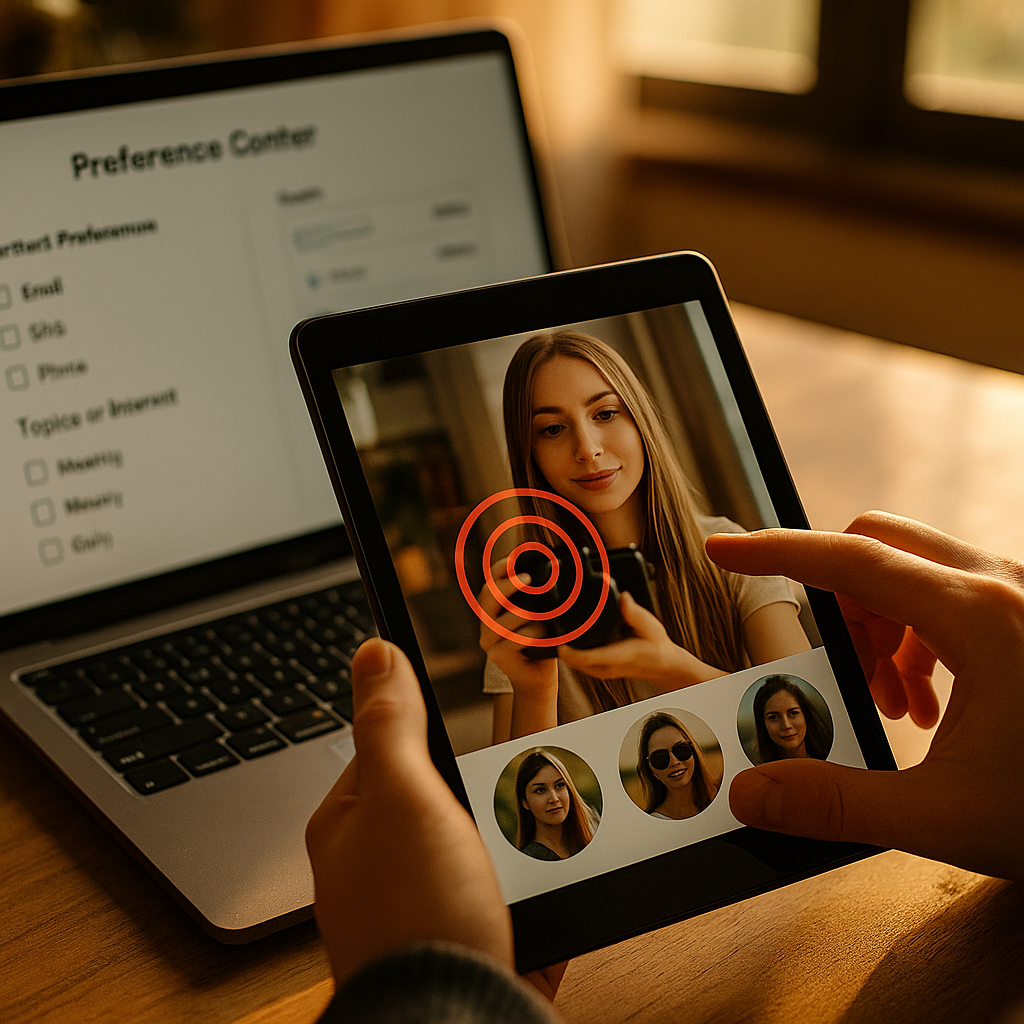
Only 34% of consumers trust brands to use their data responsibly, according to recent industry surveys, yet most marketers still can’t tell you what’s actually sitting inside their preference centers. That gap is the story of the next two years in influencer marketing. Preference center data, the stuff collected when someone unsubscribes from an email list, adjusts a notification setting, or tells a brand “show me less of this,” is quietly becoming the backbone of creator audience targeting. Cookies are gone. First-party consent is what’s left.
Why Cookie Deprecation Made Preference Centers the New Targeting Backbone
For years, preference centers were an afterthought. A compliance box. Something legal bolted onto the footer of an email so brands could claim they gave users “control.” Marketers rarely mined that data for anything beyond suppressing unwanted sends.
Then third-party cookies started dying for real, not the perpetually-delayed Chrome deprecation everyone joked about, but the broader collapse of third-party tracking across browsers, regulatory pressure, and platform-level privacy defaults. Brands that built creator targeting on lookalike audiences pulled from ad pixels found themselves with degraded signal and rising CPMs. deterministic identity graphs have started filling part of that gap, but identity resolution alone doesn’t tell you what a person actually wants to see.
Preference centers do. And they do it with explicit, documented consent, which is exactly what regulators and privacy-conscious consumers are demanding.
Preference center data isn’t a proxy for intent, it’s a direct statement of it. That distinction matters more than any lookalike model ever will.
What Preference Center Data Actually Captures
Most brands underuse the fields already sitting in their ESP or CDP. A well-built preference center typically logs:
- Content category interests (skincare vs. haircare, budget vs. premium travel)
- Frequency tolerance (weekly digest vs. daily alerts)
- Channel preference (email, SMS, push, in-app)
- Format preference (video content vs. static, long-form vs. quick-hit)
- Explicit opt-outs from specific product lines or campaign types
None of that was designed with creator matching in mind. But run it through a modern CDP and it becomes a remarkably clean signal for who should be seeing which creator, on which platform, with which kind of content. Someone who consistently opts into “video-first” communications and flags interest in “sustainable fashion” is telling you exactly which creator archetype to pair them with. No modeling required.
From Compliance Checkbox to Targeting Engine
The operational shift is straightforward to describe and genuinely hard to execute. Preference data lives in email platforms. Creator matching lives in influencer platforms or agency spreadsheets. Attribution lives somewhere else entirely. Getting these systems to talk requires the same kind of plumbing that’s already reshaping other parts of the martech stack, similar to the CDP to CRM feedback loops that are cleaning up creator payout errors.
Once that plumbing exists, preference data stops being a suppression list and becomes an audience segmentation engine. A beauty brand running a spring campaign can pull everyone who’s opted into “clean beauty” content and cross-reference it against engagement history with specific creator content styles, then build a creator roster that matches, rather than guessing based on follower demographics that may not reflect actual audience composition anymore.
This is the same logic driving the shift toward intent signals outranking follower counts in creator deal evaluation. Preference data is one of the cleanest intent signals available, because the consumer typed it in themselves.
How Brands Are Operationalizing This for Creator Matching
A handful of patterns are emerging across mid-market and enterprise brands running mature programs:
- Segment-to-creator mapping. Preference categories get tagged against a creator taxonomy (tone, format, subject matter) so campaign teams can query “who wants this” and “which creators produce this” in one pass.
- Suppression as targeting, inverted. Instead of just excluding people who opted out of promotional content, brands are using opt-out data to identify audiences who need a different creator tone entirely, lower-pressure, education-first content rather than hard sell.
- Predictive layering. Some teams are feeding preference data into scoring models similar to the ones used in predictive churn scoring, flagging when a segment’s stated preferences start drifting away from the creators currently assigned to reach them.
- Real-time reallocation. A few advanced programs route budget dynamically based on preference-segment performance, echoing the mechanics behind agentic budget reallocation tools already in market.
None of this replaces creative judgment. It sharpens the targeting so creative effort doesn’t get wasted on the wrong audience.
Is This Even Legal? The Consent Scope Question
Here’s where marketers need to slow down. Preference center data is collected for a stated purpose, usually communication frequency and content relevance. Using it to build creator targeting segments is a materially different use case, and regulators increasingly care about purpose limitation, not just whether consent was technically obtained somewhere in the funnel.
The FTC has been explicit that data collected for one purpose can’t be silently repurposed without disclosure. The UK’s ICO takes an even harder line under UK GDPR, requiring that secondary use be compatible with the original collection purpose or backed by fresh consent. If your preference center language only mentions “email frequency,” using that data to power paid creator targeting is a gray area at best.
The fix isn’t legal gymnastics, it’s rewriting preference center copy to plainly disclose that stated interests may inform personalized content and creator recommendations. Most consumers are fine with this. Most consumers are not fine finding out about it later.
Brands that skip this step are building targeting infrastructure on a foundation that could collapse under a single regulatory inquiry or a viral privacy complaint. Governance teams are already grappling with this tension, which is part of why AI transformation directors are absorbing marketing governance risk as a formal responsibility rather than an IT afterthought.
Building the Feed: A Practical Blueprint
For teams starting from scratch, the build order matters more than the tooling choice.
- Audit existing preference center language. Does it cover creator content personalization? If not, update it before you build anything downstream.
- Centralize the data. Preference signals need to land in the same CDP or data warehouse as engagement and purchase history, not stay siloed in the ESP.
- Build a creator content taxonomy. You can’t match preferences to creators without a consistent tagging system for what each creator actually produces.
- Pilot on a single segment. Test preference-driven creator matching against your current allocation method on one product line before rolling out broadly.
- Measure lift, not just engagement. Tie the pilot back to incremental sales using methods similar to incremental lift testing, not surface-level click metrics.
Platforms like HubSpot and social management tools such as Sprout Social already offer preference and audience segmentation features that most brands haven’t connected to their creator programs. The infrastructure exists. It’s the connective tissue that’s missing.
Industry data from eMarketer continues to show first-party data investment rising sharply as third-party targeting options shrink. Preference centers are one of the few first-party sources that come pre-loaded with explicit, structured consent. That’s a competitive advantage brands are leaving on the table.
Where This Is Headed
Expect preference data to merge with the identity and attribution work already underway across the industry. As real-time attribution becomes standard, preference signals will feed directly into which creators get budget on a given day, not just which segment sees which content. The brands treating this as a data governance project now, not a marketing nice-to-have, will be the ones with clean, defensible targeting when the next privacy regulation lands.
Visible FAQ
Frequently Asked Questions
What is preference center data in the context of influencer marketing?
It’s the explicit content, frequency, and channel preferences consumers set through email or app settings, now being repurposed as a consented, first-party signal for matching audiences to the right creators and content formats.
How is preference center data different from cookie-based targeting?
Cookie data infers behavior indirectly through browsing patterns. Preference center data is a direct, explicit statement from the consumer about what they want, making it more accurate and far less vulnerable to platform or regulatory disruption.
Do brands need new consent to use preference data for creator targeting?
In most cases, yes, or at minimum updated disclosure. If the original preference center language only covered email frequency, using that data for creator audience segmentation likely falls outside the original consent scope under FTC and GDPR-style frameworks.
What tools help connect preference data to creator programs?
CDPs that unify ESP, CRM, and social data are the most common bridge. Platforms like HubSpot and Sprout Social already support preference-based segmentation that can be extended into creator matching workflows with the right data pipeline.
How do brands measure whether preference-based creator targeting is working?
Incremental lift testing against a control group is the most reliable method, comparing sales or conversion outcomes for preference-matched creator campaigns versus traditional demographic or follower-based targeting.
Next step: Pull your preference center’s current consent language this week and check whether it covers creator content personalization. If it doesn’t, that’s the first fix, before a single audience segment gets built.
Frequently Asked Questions
What is preference center data in the context of influencer marketing?
It’s the explicit content, frequency, and channel preferences consumers set through email or app settings, now being repurposed as a consented, first-party signal for matching audiences to the right creators and content formats.
How is preference center data different from cookie-based targeting?
Cookie data infers behavior indirectly through browsing patterns. Preference center data is a direct, explicit statement from the consumer about what they want, making it more accurate and far less vulnerable to platform or regulatory disruption.
Do brands need new consent to use preference data for creator targeting?
In most cases, yes, or at minimum updated disclosure. If the original preference center language only covered email frequency, using that data for creator audience segmentation likely falls outside the original consent scope under FTC and GDPR-style frameworks.
What tools help connect preference data to creator programs?
CDPs that unify ESP, CRM, and social data are the most common bridge. Platforms like HubSpot and Sprout Social already support preference-based segmentation that can be extended into creator matching workflows with the right data pipeline.
How do brands measure whether preference-based creator targeting is working?
Incremental lift testing against a control group is the most reliable method, comparing sales or conversion outcomes for preference-matched creator campaigns versus traditional demographic or follower-based targeting.
Top Influencer Marketing Agencies
The leading agencies shaping influencer marketing in 2026
Agencies ranked by campaign performance, client diversity, platform expertise, proven ROI, industry recognition, and client satisfaction. Assessed through verified case studies, reviews, and industry consultations.
Moburst

-
2

The Shelf
Boutique Beauty & Lifestyle Influencer AgencyA data-driven boutique agency specializing exclusively in beauty, wellness, and lifestyle influencer campaigns on Instagram and TikTok. Best for brands already focused on the beauty/personal care space that need curated, aesthetic-driven content.Clients: Pepsi, The Honest Company, Hims, Elf Cosmetics, Pure LeafVisit The Shelf → -
3

Audiencly
Niche Gaming & Esports Influencer AgencyA specialized agency focused exclusively on gaming and esports creators on YouTube, Twitch, and TikTok. Ideal if your campaign is 100% gaming-focused — from game launches to hardware and esports events.Clients: Epic Games, NordVPN, Ubisoft, Wargaming, Tencent GamesVisit Audiencly → -
4

Viral Nation
Global Influencer Marketing & Talent AgencyA dual talent management and marketing agency with proprietary brand safety tools and a global creator network spanning nano-influencers to celebrities across all major platforms.Clients: Meta, Activision Blizzard, Energizer, Aston Martin, WalmartVisit Viral Nation → -
5

The Influencer Marketing Factory
TikTok, Instagram & YouTube CampaignsA full-service agency with strong TikTok expertise, offering end-to-end campaign management from influencer discovery through performance reporting with a focus on platform-native content.Clients: Google, Snapchat, Universal Music, Bumble, YelpVisit TIMF → -
6

NeoReach
Enterprise Analytics & Influencer CampaignsAn enterprise-focused agency combining managed campaigns with a powerful self-service data platform for influencer search, audience analytics, and attribution modeling.Clients: Amazon, Airbnb, Netflix, Honda, The New York TimesVisit NeoReach → -
7

Ubiquitous
Creator-First Marketing PlatformA tech-driven platform combining self-service tools with managed campaign options, emphasizing speed and scalability for brands managing multiple influencer relationships.Clients: Lyft, Disney, Target, American Eagle, NetflixVisit Ubiquitous → -
8

Obviously
Scalable Enterprise Influencer CampaignsA tech-enabled agency built for high-volume campaigns, coordinating hundreds of creators simultaneously with end-to-end logistics, content rights management, and product seeding.Clients: Google, Ulta Beauty, Converse, AmazonVisit Obviously →