


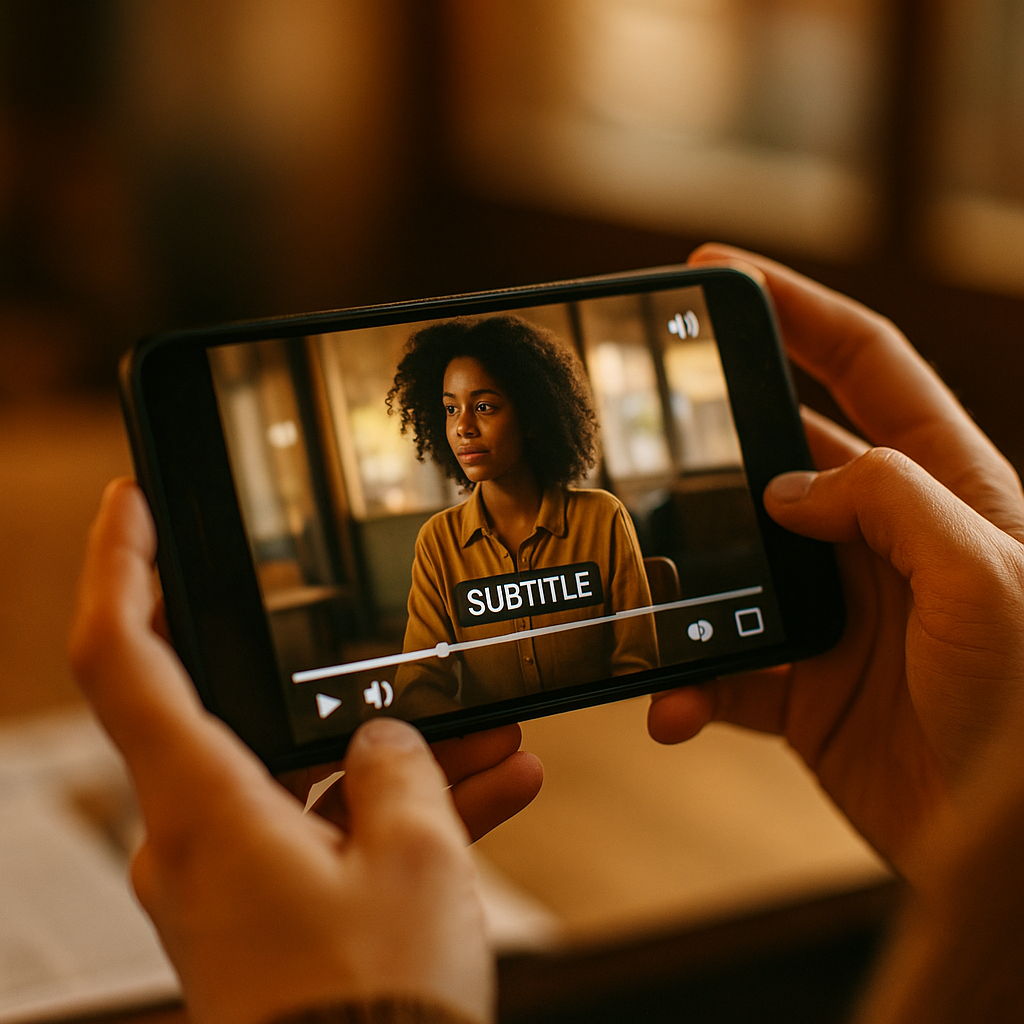
Eighty five percent of video views on social platforms start with the sound off. If your creator content still relies on a voiceover to land the pitch, you’re losing the majority of your audience before the hook even registers. Subtitle-first design is not a nice-to-have anymore. It’s the difference between a video that performs in a muted feed and one that quietly dies in the first two seconds.
This is the reality of muted autoplay: platforms default to silence, and users decide in a heartbeat whether to tap for sound. Most never do. Brands that keep briefing creators for audio-led storytelling are optimizing for a viewing behavior that barely exists anymore.
Why Muted Autoplay Changed the Rules
Instagram, TikTok, and Facebook all default to muted autoplay in-feed. YouTube Shorts follows a similar pattern on mobile. That means the first impression of almost every piece of creator content happens without sound, whether the creator scripted for that or not.
Meta has said for years that the majority of video consumption on its apps happens without audio, and Meta’s own ad guidance pushes advertisers toward captioned, visually self-sufficient video. TikTok’s creative best practices echo the same point through TikTok’s advertising resources. This isn’t a platform quirk. It’s baked into how billions of people scroll.
So the brief has to change. A script written to be heard is a different asset than a script written to be read. Confusing the two is where most influencer content briefs fall short.
If your video’s core message only lives in the voiceover, you’re designing for the 15% of viewers who tap unmute, not the 85% who scroll past silent.
What “Silent Subtitle-First” Actually Means
Subtitle-first design flips the production order. Instead of shooting a talking-head video and bolting captions on in post, the creator builds the narrative around on-screen text as the primary delivery mechanism. Audio becomes a supporting layer, not the backbone.
Practically, this looks like:
- Text overlays that carry the hook, the claim, and the call to action independently of any spoken line.
- Pacing built around reading speed, not talking speed. Text needs a beat longer on screen than spoken words do.
- Visual demonstration doing the heavy lifting, so a viewer with zero audio still understands the product benefit.
- Captions styled as a brand asset (consistent font, placement, color) rather than an auto-generated afterthought.
This isn’t the same as simply turning on TikTok’s auto-caption feature. Auto-captions are a compliance patch. Subtitle-first is a creative strategy that treats text as the primary storytelling device from the first storyboard frame.
The Cost of Ignoring It: Watch Time and Drop-Off
Marketers obsess over hook rate, but few connect it to sound design. A three-second silent gap while a creator “warms up” before saying anything useful is a guaranteed scroll-past in a muted feed. There’s no audio cue to rescue a slow visual opening.
Retention curves on subtitle-led content tend to hold flatter through the first five seconds because the viewer can absorb the message immediately, regardless of sound state. Agencies running pacing brief testing have found that text-forward opens consistently outperform voiceover-led opens in early retention, simply because they don’t ask permission to be understood.
There’s also a completion angle. Once a viewer taps unmute (and most won’t), they’ve already made a decision to invest. Subtitle-first content captures the value proposition before that decision even needs to happen. It’s front-loading comprehension, and that’s a direct lever on conversion, not just vanity watch time.
Building the Brief: What to Give Creators
Most subtitle failures aren’t a creator skill problem. They’re a briefing problem. If the brand hands a creator a script written for voice and says “just add captions,” you get clunky, delayed text that lags the spoken word by a beat or two. That mismatch is jarring and it kills comprehension.
A better brief separates the visual script from the audio script entirely. Give creators:
- The core claim or hook, written as it should appear on screen, not as it would be spoken.
- A shot list that maps text beats to visual beats (what’s happening on camera when each line of text appears).
- Style guardrails for caption placement, so text doesn’t collide with platform UI elements like the like button or comment bar.
- Freedom on tone and delivery of any spoken audio, since it’s now a secondary layer rather than the main event.
This approach pairs well with existing frameworks. Teams already using silent caption scripts or vertical video style guides can extend those systems to explicitly separate “read” content from “heard” content, rather than treating captions as a bolt-on compliance step.
Design Details That Actually Move Metrics
Small technical choices matter more than most briefs acknowledge.
Font size needs to survive a thumbnail-sized preview and a full-screen view. Test on an actual phone, not a desktop preview window. Contrast matters more than brand color fidelity. If your brand font is a thin, light gray script, it will disappear against half the backgrounds a creator shoots against. Give a fallback high-contrast style for anything shot outdoors or in bright environments.
Timing is the part briefs get wrong most often. Text needs roughly 1.5x the time it takes to say a phrase aloud, because reading comprehension under scroll conditions is slower than casual reading. If a line is on screen for exactly as long as it takes to say it, most viewers won’t finish reading before it cuts away.
Placement should account for platform chrome. TikTok, Instagram Reels, and YouTube Shorts all layer interactive UI over the bottom third and right edge of the frame. Captions placed there get clipped or obscured. Middle-third placement is safer across formats.
A caption that’s technically accurate but positioned behind the comment icon might as well not exist. Design for the UI, not just the frame.
Where This Fits Alongside Sound-On Strategy
None of this means audio is dead. Sound-on moments still matter for storytelling depth, brand personality, and platforms like YouTube long-form where sound-on viewing is the norm rather than the exception. The point isn’t to abandon audio scripting. It’s to stop assuming audio will be heard by default.
This same silence-first logic already shows up in adjacent formats brands are briefing successfully. Silent product demos prove the concept works for direct response. Text overlay testimonial reels show it works for trust-building content too. The pattern is consistent across formats: whatever the goal, the visual and text layer has to carry the full message on its own.
Smart teams are running both versions, a subtitle-first cut for cold feed placement and a sound-rich cut for retargeting audiences who’ve already engaged once. That’s not double the production cost if the brief is built correctly from the start, since most of the footage overlaps.
Measuring It: What KPIs Actually Shift
Don’t just track completion rate. Break out three-second and five-second retention separately, since that’s where subtitle-first design earns its keep. Compare identical creative with sound-on delivery versus subtitle-led delivery in A/B tests where the platform allows it.
Sprout Social and similar analytics platforms via Sprout Social’s reporting tools can help isolate hook rate by creative variant, which is the metric that tells you whether your text-first opens are actually working. If you’re seeing a jump in three-second retention paired with flat or improved conversion, the subtitle-first approach is doing its job. If retention improves but conversion stays flat, the issue usually sits in the CTA, not the caption strategy. It’s worth checking against HubSpot’s conversion benchmarking resources to see if your funnel expectations are realistic for the format.
Also watch accessibility compliance. Captions aren’t just a muted-feed tactic, they’re increasingly an expectation under accessibility guidance from bodies like the FTC around clear disclosure and comprehension in advertising. Getting subtitle design right serves two goals at once: performance and compliance.
Next Step
Audit your last ten creator briefs. If any of them describe the video primarily through what the creator will say rather than what will appear on screen, rewrite the brief with text as the lead layer and audio as support, then re-test hook rate on the next flight.
Frequently Asked Questions
What does subtitle-first video design mean?
It means building the creative around on-screen text as the primary way the message is delivered, with spoken audio treated as an optional supporting layer rather than the main storytelling device.
Why does muted autoplay matter for influencer marketing?
Most platforms default to silent video playback in-feed, so the majority of viewers see a muted version first. If the message depends entirely on voiceover, that message never reaches most of the audience.
Are auto-generated captions the same as subtitle-first design?
No. Auto-captions transcribe existing spoken audio after the fact. Subtitle-first design plans the text, pacing, and visual beats before filming, so the on-screen copy carries the narrative on its own.
How long should text stay on screen for readability?
A common rule of thumb is roughly 1.5 times the duration it takes to say the phrase aloud, since scroll-condition reading is slower than relaxed reading.
Does subtitle-first content hurt sound-on storytelling?
No, brands typically run both. A subtitle-led cut works for cold feed placement, while a sound-rich version can be reserved for retargeting audiences who already engaged with the brand once.
What metrics show if subtitle-first design is working?
Track three-second and five-second retention separately from overall completion rate, and compare subtitle-led creative against sound-on versions in A/B tests to isolate the impact on hook rate and conversion.
Top Influencer Marketing Agencies
The leading agencies shaping influencer marketing in 2026
Agencies ranked by campaign performance, client diversity, platform expertise, proven ROI, industry recognition, and client satisfaction. Assessed through verified case studies, reviews, and industry consultations.
Moburst

-
2

The Shelf
Boutique Beauty & Lifestyle Influencer AgencyA data-driven boutique agency specializing exclusively in beauty, wellness, and lifestyle influencer campaigns on Instagram and TikTok. Best for brands already focused on the beauty/personal care space that need curated, aesthetic-driven content.Clients: Pepsi, The Honest Company, Hims, Elf Cosmetics, Pure LeafVisit The Shelf → -
3

Audiencly
Niche Gaming & Esports Influencer AgencyA specialized agency focused exclusively on gaming and esports creators on YouTube, Twitch, and TikTok. Ideal if your campaign is 100% gaming-focused — from game launches to hardware and esports events.Clients: Epic Games, NordVPN, Ubisoft, Wargaming, Tencent GamesVisit Audiencly → -
4

Viral Nation
Global Influencer Marketing & Talent AgencyA dual talent management and marketing agency with proprietary brand safety tools and a global creator network spanning nano-influencers to celebrities across all major platforms.Clients: Meta, Activision Blizzard, Energizer, Aston Martin, WalmartVisit Viral Nation → -
5

The Influencer Marketing Factory
TikTok, Instagram & YouTube CampaignsA full-service agency with strong TikTok expertise, offering end-to-end campaign management from influencer discovery through performance reporting with a focus on platform-native content.Clients: Google, Snapchat, Universal Music, Bumble, YelpVisit TIMF → -
6

NeoReach
Enterprise Analytics & Influencer CampaignsAn enterprise-focused agency combining managed campaigns with a powerful self-service data platform for influencer search, audience analytics, and attribution modeling.Clients: Amazon, Airbnb, Netflix, Honda, The New York TimesVisit NeoReach → -
7

Ubiquitous
Creator-First Marketing PlatformA tech-driven platform combining self-service tools with managed campaign options, emphasizing speed and scalability for brands managing multiple influencer relationships.Clients: Lyft, Disney, Target, American Eagle, NetflixVisit Ubiquitous → -
8

Obviously
Scalable Enterprise Influencer CampaignsA tech-enabled agency built for high-volume campaigns, coordinating hundreds of creators simultaneously with end-to-end logistics, content rights management, and product seeding.Clients: Google, Ulta Beauty, Converse, AmazonVisit Obviously →