


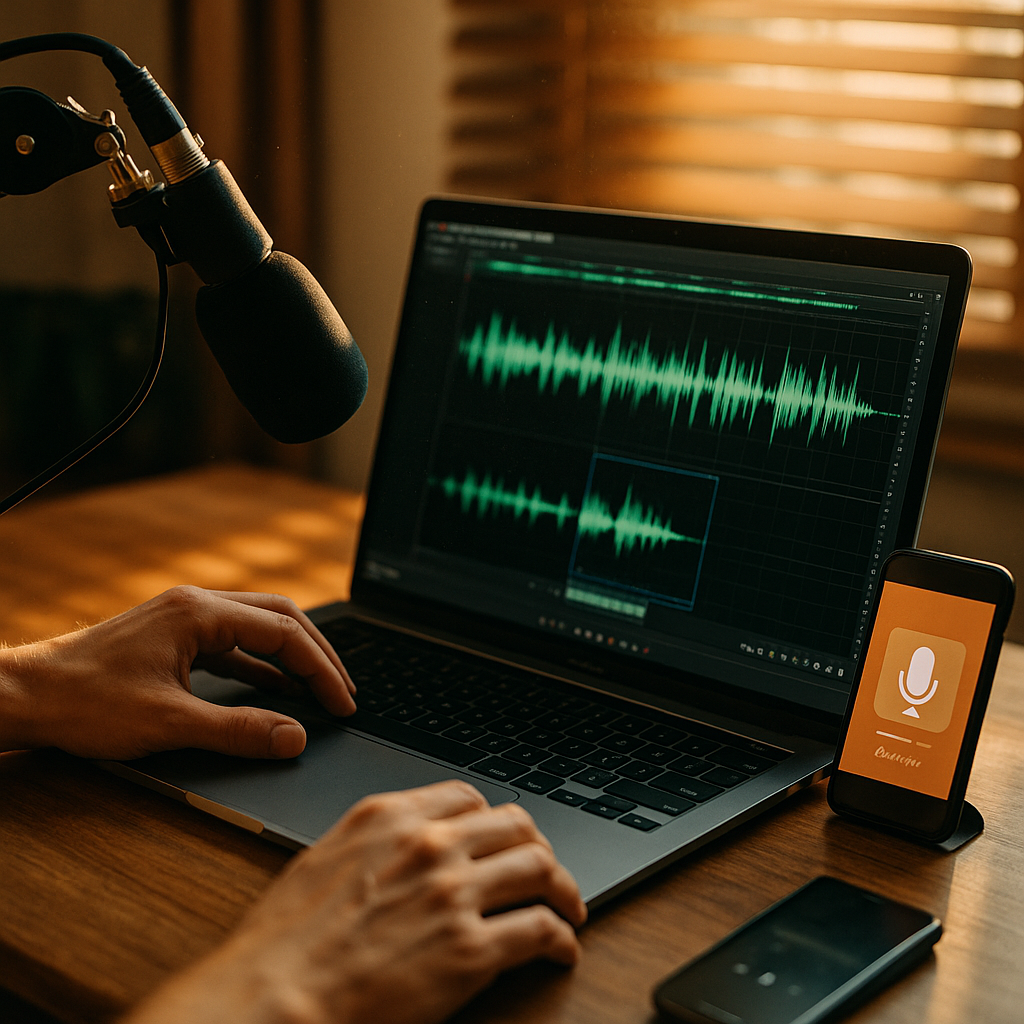
One 45 minute podcast episode can yield 15 to 20 usable social clips. Most brands still publish it once, on one platform, and call it a day. Podcast snippet clipping flips that math, turning a single recording session into a week’s worth of multi-platform creator assets without a second shoot.
If your team is still treating podcasts as a standalone channel instead of a raw footage goldmine, you’re leaving reach on the table. This isn’t a niche tactic anymore. It’s becoming the backbone of how lean marketing teams stretch limited production budgets across TikTok, Instagram, YouTube Shorts, and LinkedIn simultaneously.
Why Long-Form Audio Is the Cheapest Content You’re Not Using
Every branded podcast, founder interview, or client roundtable your company records is a library of pre-approved, on-brand commentary. Legal already cleared it. Talent already agreed to it. The audio (and often video) already exists. The only thing missing is distribution strategy.
Compare that to a typical influencer shoot, which requires briefing, scheduling, location, editing, and approval cycles before a single asset ships. Podcast clipping skips most of that. You’re not creating new content, you’re mining existing content for the moments that already have narrative tension, a strong hook, or a quotable soundbite.
A single 40 minute podcast can outproduce an entire month of scheduled social content, if someone on your team actually clips it.
This matters more now that eMarketer data continues to show short-form video eating an outsized share of total social engagement time. Podcast audio alone doesn’t win that fight. Podcast audio cut into 30 to 90 second vertical clips does.
The ROI Case Brand Leaders Actually Care About
Let’s talk numbers, because “repurposing content” is a phrase that makes CFOs suspicious of vague efficiency claims. A branded podcast episode with production and hosting might run a few thousand dollars. Clipping that same episode into 15 vertical assets, using an editor or an AI clipping tool, typically costs a few hundred dollars in labor or software fees. That’s a cost-per-asset that no standalone shoot can touch.
And the distribution math compounds. Instead of one piece of content competing for attention once, you get 15 chances to land a hook that resonates on a given platform’s algorithm that week. Some clips will flop. A few will outperform the original episode by 10x on views. You don’t know which ones until you test, which is exactly why volume matters here.
- Lower cost per asset compared to original shoots
- Faster time to publish, often same-day turnaround
- Built-in A/B testing across hooks, formats, and platforms
- Reusable talent equity, guests become recurring creator assets
What Actually Makes a Clip Worth Publishing?
Not every minute of a podcast deserves a second life. The teams doing this well have a filtering process, not a “clip everything and pray” approach. Look for moments with a clear emotional beat: disagreement, surprise, a specific number, a confident claim, or a story with a beginning and payoff inside 60 seconds.
A guest saying “engagement rates on TikTok dropped 40% for us after the algorithm update” is a clip. A guest rambling generally about “the changing landscape of social media” is not. Specificity travels. Vagueness dies in the feed.
This is where a lot of the same principles from podcast clip repurposing workflows apply directly. Editors should be briefed to hunt for hooks in the first three seconds, not just interesting mid-episode tangents that require context to land.
Platform Rules Are Not the Same
Here’s where a lot of teams get lazy and just export the same square clip everywhere. Don’t. TikTok rewards raw, minimally polished cuts with native captions. LinkedIn audiences respond better to talking-head clips with a professional framing and a text hook in the first line of the post copy. YouTube Shorts favors clips that feel like they could stand alone as mini-episodes, often with slightly longer runtimes up to 60 seconds.
If you’re publishing the exact same export across three platforms, you’re optimizing for convenience, not performance. Building platform-specific templates upfront, following the kind of system outlined in vertical video style guides, saves editors from reinventing formatting decisions on every single clip.
The Tooling Question: AI Clippers vs. Human Editors
AI-powered clipping tools like Opus Clip, Descript, and Riverside have gotten genuinely good at flagging high-energy moments in raw audio. They score segments based on speech pacing, sentiment shifts, and keyword density, then auto-generate vertical crops with captions baked in. For teams clipping dozens of episodes a month, this is close to mandatory infrastructure now.
But AI tools still miss subtlety. They’re good at spotting energy, less good at spotting strategic relevance to a current campaign or trending conversation. The strongest workflows pair AI-assisted first-pass selection with a human editor who understands brand voice and current cultural context. This mirrors the hybrid approach gaining traction in AI assisted reel editing, where retention data guides decisions but human judgment makes the final call.
AI finds the moments with energy. Humans find the moments that matter to your specific audience right now.
Don’t skip the captioning step regardless of tool choice. A large share of social video is watched muted, particularly on LinkedIn and in-feed Instagram placements. If your clip doesn’t work with sound off, it’s not finished. This is the same logic driving formats like silent caption scripts, and it applies just as directly to podcast clips as it does to scripted content.
Building a Repeatable Clipping Pipeline
One-off clipping projects don’t scale. If your team is manually rediscovering the workflow every time a new episode drops, you’re wasting the efficiency gains that made this tactic attractive in the first place. Build a repeatable pipeline instead.
- Record with clipping in mind. Brief hosts and guests to speak in complete, quotable statements rather than run-on thoughts.
- Transcribe immediately using tools like Descript or Otter.ai to make searchable text available same-day.
- Flag candidate moments using AI scoring, then have a human editor shortlist the top 8 to 12.
- Format per platform using pre-built templates for captions, aspect ratio, and branding.
- Schedule a staggered release across the week rather than dumping everything at once.
- Track performance by clip, not just by episode, so you learn what hooks actually convert attention.
This staggered approach also solves a real operational problem: content calendar gaps. Instead of scrambling for daily social content, one recording session now fuels five to seven days of scheduled posts. It’s the same cost-cutting logic behind format agnostic distribution, where a single production effort is engineered from the start to serve multiple channels.
Where This Fits Into Creator Partnerships
Brands running influencer or creator-led podcasts have an added advantage: the guest or host is already an incentivized promoter. When a creator appears on a branded podcast, clip their segments and give them the raw assets to repost natively on their own channels. This extends reach without additional spend, and it treats the creator’s appearance as a long-term content asset rather than a one-time collaboration.
Approval workflows matter here too. Clips featuring outside guests or partner creators should move through review quickly, not sit in a queue for two weeks while the moment goes stale. Slow sign-off is one of the most common reasons promising clips never get published, a problem covered in depth in creative approval bottlenecks.
Compliance and Attribution, Don’t Skip This
Clipping a podcast doesn’t exempt a brand from disclosure requirements if the content involves sponsored commentary or product mentions. The FTC’s endorsement guidelines apply to repurposed clips the same way they apply to the original episode. If a guest is discussing a paid partnership, that disclosure needs to travel with the clip, not just live in the show notes of the full episode.
Rights and usage terms matter too. Confirm upfront, in the recording agreement, that clipped segments can be published across platforms and reused by both the brand and the guest. Retroactively chasing usage rights after a clip has already gone viral is a bad position to negotiate from.
Measuring What Actually Works
Track completion rate and average watch time per clip, not just views. A clip with 50,000 views but a 20% completion rate is telling you the hook worked but the payoff didn’t. Compare that against a clip with fewer views but 70% completion, that’s a stronger candidate for a follow-up or a paid boost.
Tools like Sprout Social and native platform analytics (TikTok Creator Center, YouTube Studio, Meta Business Suite) can segment this data by clip source, letting you see which podcast episodes are consistently generating high-performing snippets versus which ones are dead weight. Over a few months, this data tells you something valuable: what topics, guests, or formats are worth doubling down on in future recordings, closing the loop between content strategy and production planning.
Frequently Asked Questions
How long should a podcast clip be for social platforms?
Most high-performing clips run between 30 and 90 seconds. TikTok and Instagram Reels perform best closer to 30 to 45 seconds, while YouTube Shorts can support slightly longer clips up to 60 seconds if the moment holds attention throughout.
What’s the difference between podcast clipping and full episode repurposing?
Podcast clipping isolates specific high-value moments (a strong quote, a surprising stat, a debate) into standalone short-form assets. Full episode repurposing usually means cutting the entire episode into a shorter highlight reel, which tends to perform worse on short-form platforms because it lacks a single sharp hook.
Do I need video to clip a podcast, or does audio-only work?
Video performs significantly better on most platforms since it supports captions, visual pacing, and thumbnail selection. Audio-only podcasts can still be clipped using waveform visualizers or static branded graphics, but expect lower engagement compared to video-recorded episodes.
How many clips can realistically come from one episode?
A well-structured 40 to 60 minute episode typically yields 10 to 20 usable clips, though not all should be published. Most teams shortlist their top 8 to 12 based on hook strength and platform fit.
Should brands use AI clipping tools or hire a human editor?
A hybrid approach works best. AI tools are efficient at flagging high-energy segments quickly, but human editors are better at judging brand relevance, cultural timing, and platform-specific formatting decisions.
The Next Step
Stop treating your podcast as a finished product and start treating it as raw material. Pick your last three episodes, run them through a clipping pass this week, and measure completion rates before you record the next one.
Top Influencer Marketing Agencies
The leading agencies shaping influencer marketing in 2026
Agencies ranked by campaign performance, client diversity, platform expertise, proven ROI, industry recognition, and client satisfaction. Assessed through verified case studies, reviews, and industry consultations.
Moburst

-
2

The Shelf
Boutique Beauty & Lifestyle Influencer AgencyA data-driven boutique agency specializing exclusively in beauty, wellness, and lifestyle influencer campaigns on Instagram and TikTok. Best for brands already focused on the beauty/personal care space that need curated, aesthetic-driven content.Clients: Pepsi, The Honest Company, Hims, Elf Cosmetics, Pure LeafVisit The Shelf → -
3

Audiencly
Niche Gaming & Esports Influencer AgencyA specialized agency focused exclusively on gaming and esports creators on YouTube, Twitch, and TikTok. Ideal if your campaign is 100% gaming-focused — from game launches to hardware and esports events.Clients: Epic Games, NordVPN, Ubisoft, Wargaming, Tencent GamesVisit Audiencly → -
4

Viral Nation
Global Influencer Marketing & Talent AgencyA dual talent management and marketing agency with proprietary brand safety tools and a global creator network spanning nano-influencers to celebrities across all major platforms.Clients: Meta, Activision Blizzard, Energizer, Aston Martin, WalmartVisit Viral Nation → -
5

The Influencer Marketing Factory
TikTok, Instagram & YouTube CampaignsA full-service agency with strong TikTok expertise, offering end-to-end campaign management from influencer discovery through performance reporting with a focus on platform-native content.Clients: Google, Snapchat, Universal Music, Bumble, YelpVisit TIMF → -
6

NeoReach
Enterprise Analytics & Influencer CampaignsAn enterprise-focused agency combining managed campaigns with a powerful self-service data platform for influencer search, audience analytics, and attribution modeling.Clients: Amazon, Airbnb, Netflix, Honda, The New York TimesVisit NeoReach → -
7

Ubiquitous
Creator-First Marketing PlatformA tech-driven platform combining self-service tools with managed campaign options, emphasizing speed and scalability for brands managing multiple influencer relationships.Clients: Lyft, Disney, Target, American Eagle, NetflixVisit Ubiquitous → -
8

Obviously
Scalable Enterprise Influencer CampaignsA tech-enabled agency built for high-volume campaigns, coordinating hundreds of creators simultaneously with end-to-end logistics, content rights management, and product seeding.Clients: Google, Ulta Beauty, Converse, AmazonVisit Obviously →