


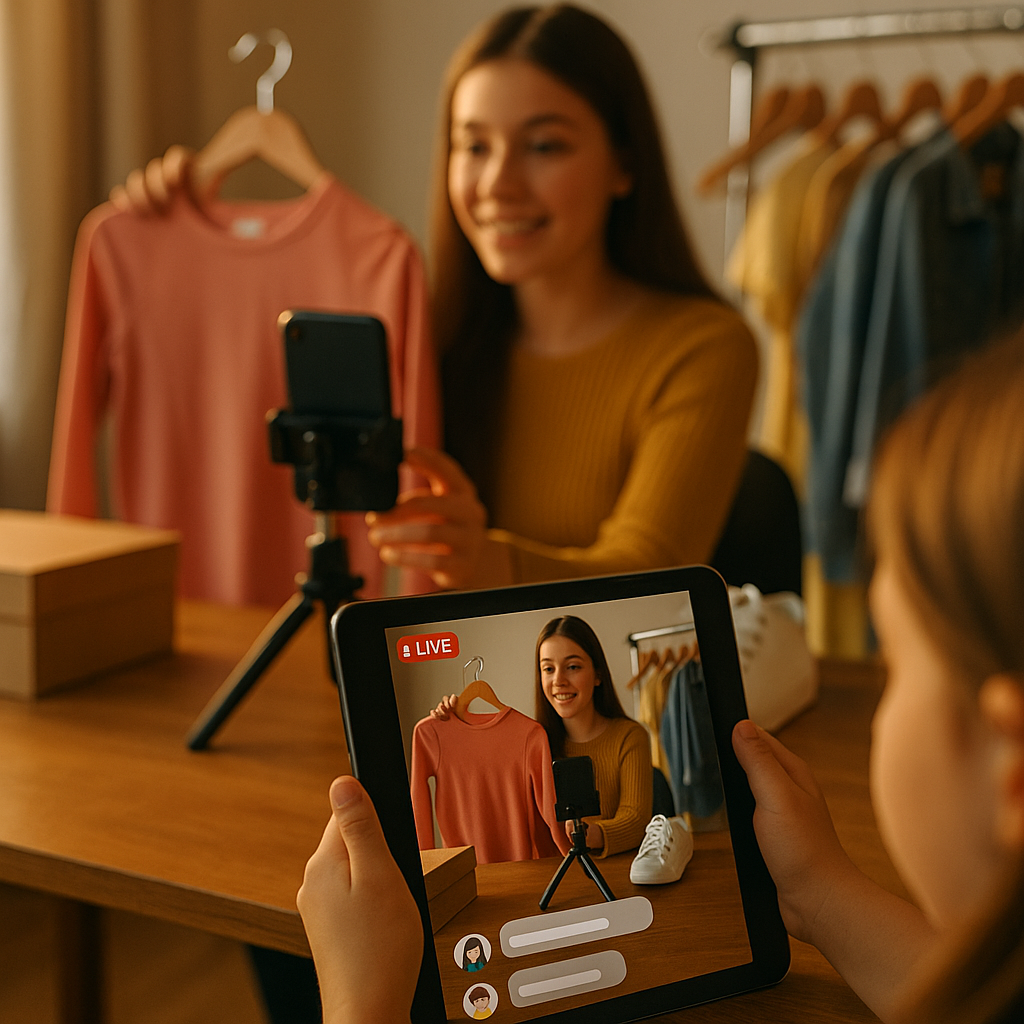
One in three live shopping viewers on platforms like TikTok Shop and Amazon Live skews under 18, according to eMarketer audience estimates. Yet almost no brand running a livestream sale has a documented process for handling that traffic. That gap is the entire problem with COPPA exposure in mixed-age live shopping streams: the format collects data, runs comment threads, and triggers checkout flows in real time, often faster than any compliance review can catch.
Live Commerce Wasn’t Built With COPPA in Mind
Live shopping exploded because it converts. Comments turn into carts, hosts answer questions on camera, and urgency drives impulse buys. None of that was designed with the Children’s Online Privacy Protection Act in mind, and it shows. The FTC’s COPPA Rule regulates any operator that knowingly collects personal information from children under 13, and “knowingly” is doing a lot of work in that sentence right now.
Livestream chat logs capture usernames, sometimes linked emails or phone numbers for checkout, and occasionally birthdate fields during account creation. If a stream is hosted on a platform with mixed-age audiences, and a meaningful share of commenters are clearly children (age-revealing usernames, school references, voice or appearance cues on video call-ins), brands can find themselves on the wrong side of “actual knowledge” standards even without asking anyone’s age.
The FTC doesn’t require proof a child lied about their age. It only requires evidence the brand had reason to know a child was participating and collected data anyway.
Who Counts as a “Child” When the Camera’s Rolling?
This is where most brand legal teams get tripped up. COPPA’s under-13 threshold feels like a narrow lane until you remember that live shopping streams for beauty, toys, gaming peripherals, and even snack brands routinely pull tween and teen audiences organically, regardless of who the campaign targeted.
A skincare brand targeting adults 25 to 45 might still see a swarm of 11-year-olds in the comments because a creator’s audience skews young. Intent doesn’t matter here. Actual audience composition does. That’s the same logic regulators have applied to kidfluencer campaigns, and live shopping is quickly becoming the next enforcement frontier.
The Real Risk Isn’t the Stream. It’s the Data Pipeline Behind It.
Brands tend to think of COPPA risk as a content problem: don’t market to kids, don’t feature kids without consent. But live shopping risk lives in the data layer, not the script. Every stream typically triggers:
- Chat platform data capture (usernames, timestamps, sometimes device IDs)
- Retargeting pixels firing on anyone who clicks a product link
- Email capture for “notify me” or giveaway entries
- Third-party analytics tools logging session behavior across the whole audience, no age filter applied
None of these systems ask “are you over 13” before they fire. That’s the exposure. It’s not that brands are deliberately marketing to children, it’s that their entire measurement stack assumes an adult audience and never checks.
This mirrors a pattern Influencers Time has covered before in the context of creator platform data agreements: brands assume the platform is handling compliance, and platforms assume the brand’s campaign brief already excluded minors. Nobody owns the gap in between.
The Brand Checklist: Six Controls to Put in Place Before the Next Stream
Here’s the practical version, the kind you can actually hand to a brand manager running next quarter’s live shopping calendar.
- Audit the creator’s historical audience demographics. Pull age-band data from the platform’s creator analytics before booking. If a creator’s audience shows a meaningful under-18 skew, treat the stream as mixed-age by default, not adult-only.
- Turn off unnecessary data capture during the stream. Disable retargeting pixels and email capture forms on any live shopping page unless there’s a clear, minimal, and age-gated purpose.
- Moderate chat in real time, not after the fact. Assign a live moderator specifically trained to flag age-revealing comments and remove personal information from public view immediately, not during a post-stream review.
- Never run sweepstakes or giveaways without age gating. Contest mechanics are one of the fastest ways to accidentally collect a birthdate or email from a minor. This overlaps heavily with the exposure covered in state sweepstakes law compliance, and live shopping giveaways need the same scrutiny.
- Set data retention limits for chat and session logs. If a child’s data slips through, the damage compounds the longer it sits in a database. Shorter retention windows shrink the blast radius, a principle explored in creator data retention audits.
- Document the decision trail. If regulators ever ask, “what did you do to prevent this,” an unwritten policy is not a defense. A dated, versioned checklist is.
A written policy that nobody follows is worse than no policy at all. It becomes evidence the brand knew the risk and didn’t act on it.
Where Brands Get This Wrong (Even With Good Intentions)
Three recurring mistakes show up in nearly every audit conversation we’ve had with brand compliance leads:
Assuming platform terms of service cover it. Most livestream shopping platforms require users to be 13 or older in their terms, but that’s a contractual disclaimer, not a compliance shield. It doesn’t stop children from joining, and it doesn’t relieve the brand of its own data collection obligations under COPPA.
Treating the creator as solely responsible. Creators run the show, but brands are frequently the data controller or joint controller when they own the checkout flow, the CRM, or the retargeting pixel. That shared responsibility is the same theme running through creator CRM data gaps, and it applies just as directly to COPPA as it does to GDPR.
Skipping the insurance conversation entirely. Standard media liability policies rarely anticipate COPPA-specific claims tied to livestream commerce. Brands should confirm whether existing creator E&O insurance coverage extends to regulatory investigations, not just third-party lawsuits.
Building the Checklist Into the Contract, Not Just the Playbook
A checklist that lives in a shared drive doesn’t protect anyone. The controls above need to show up in the influencer agreement itself, with specific language assigning responsibility for chat moderation, data handling, and age-gating during live segments. Brands running frequent live shopping programs should also build in an audit clause allowing quarterly review of the creator’s actual audience composition, not just the numbers pitched during the original media kit review.
This is also a good moment to revisit how contracts handle third-party platform risk generally. The FTC has been explicit that ignorance of an audience’s age composition is not a defense once a pattern of complaints or data exists. Brands can review the FTC’s own guidance directly at the Federal Trade Commission’s site, and UK-facing brands should check parallel obligations through the Information Commissioner’s Office, since children’s data protection standards under UK GDPR are, if anything, stricter.
Social platforms themselves have started publishing more granular safety tooling for live formats. Brands should check current settings through resources like Google’s support documentation for YouTube Live and equivalent controls on other platforms before assuming defaults are sufficient.
What to Do This Quarter
Pull the audience demographic report for every creator on your live shopping calendar, flag anyone with a meaningful under-18 following, and route those streams through the six-point checklist above before the next broadcast goes live. That single audit will surface more real risk than any policy memo you could write.
Frequently Asked Questions
Does COPPA apply if the brand isn’t specifically marketing to children?
Yes. COPPA applies based on actual knowledge of child users and the nature of the data collected, not campaign intent. A brand targeting adults can still trigger COPPA obligations if children make up a meaningful, identifiable share of the livestream audience and personal data gets collected.
Who is legally responsible for COPPA compliance in a live shopping stream, the brand or the creator?
Both can be. Regulators look at who controls the data, meaning whoever owns the checkout flow, CRM integration, or retargeting pixel is likely to be treated as a data controller with independent compliance obligations, regardless of what the creator’s own platform terms say.
What counts as “personal information” under COPPA during a livestream?
Usernames tied to a persistent identifier, email addresses, phone numbers, photos or video showing a child’s likeness, and geolocation data can all qualify. Even chat handles combined with other identifying details can trigger obligations.
Can a brand just add an age gate before letting viewers into a live shopping stream?
An age gate helps, but self-reported age checkboxes carry limited legal weight if the brand has other evidence, like chat content or creator audience data, suggesting children are still participating. Age gates should be paired with moderation and reduced data capture, not treated as a standalone fix.
How does this connect to influencer contract compliance more broadly?
COPPA exposure in live shopping is really a subset of the same data governance and disclosure issues showing up across influencer marketing, from consent management to platform data agreements. Brands that already run tight creator platform data agreements are better positioned to extend those same controls into live formats.
Top Influencer Marketing Agencies
The leading agencies shaping influencer marketing in 2026
Agencies ranked by campaign performance, client diversity, platform expertise, proven ROI, industry recognition, and client satisfaction. Assessed through verified case studies, reviews, and industry consultations.
Moburst

-
2

The Shelf
Boutique Beauty & Lifestyle Influencer AgencyA data-driven boutique agency specializing exclusively in beauty, wellness, and lifestyle influencer campaigns on Instagram and TikTok. Best for brands already focused on the beauty/personal care space that need curated, aesthetic-driven content.Clients: Pepsi, The Honest Company, Hims, Elf Cosmetics, Pure LeafVisit The Shelf → -
3

Audiencly
Niche Gaming & Esports Influencer AgencyA specialized agency focused exclusively on gaming and esports creators on YouTube, Twitch, and TikTok. Ideal if your campaign is 100% gaming-focused — from game launches to hardware and esports events.Clients: Epic Games, NordVPN, Ubisoft, Wargaming, Tencent GamesVisit Audiencly → -
4

Viral Nation
Global Influencer Marketing & Talent AgencyA dual talent management and marketing agency with proprietary brand safety tools and a global creator network spanning nano-influencers to celebrities across all major platforms.Clients: Meta, Activision Blizzard, Energizer, Aston Martin, WalmartVisit Viral Nation → -
5

The Influencer Marketing Factory
TikTok, Instagram & YouTube CampaignsA full-service agency with strong TikTok expertise, offering end-to-end campaign management from influencer discovery through performance reporting with a focus on platform-native content.Clients: Google, Snapchat, Universal Music, Bumble, YelpVisit TIMF → -
6

NeoReach
Enterprise Analytics & Influencer CampaignsAn enterprise-focused agency combining managed campaigns with a powerful self-service data platform for influencer search, audience analytics, and attribution modeling.Clients: Amazon, Airbnb, Netflix, Honda, The New York TimesVisit NeoReach → -
7

Ubiquitous
Creator-First Marketing PlatformA tech-driven platform combining self-service tools with managed campaign options, emphasizing speed and scalability for brands managing multiple influencer relationships.Clients: Lyft, Disney, Target, American Eagle, NetflixVisit Ubiquitous → -
8

Obviously
Scalable Enterprise Influencer CampaignsA tech-enabled agency built for high-volume campaigns, coordinating hundreds of creators simultaneously with end-to-end logistics, content rights management, and product seeding.Clients: Google, Ulta Beauty, Converse, AmazonVisit Obviously →