


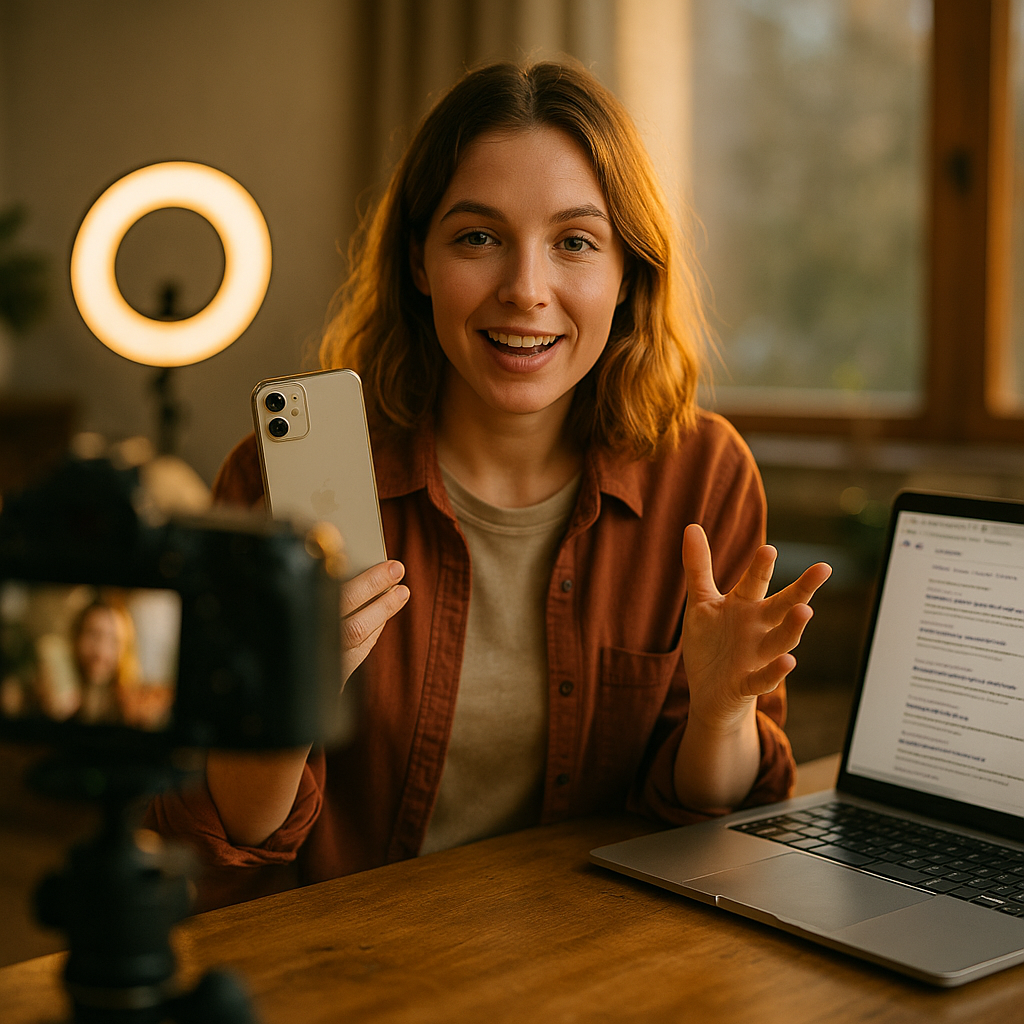
Only a fraction of brand mentions in AI-generated answers can be traced back to a deliberate content strategy. Most happen by accident. That’s the uncomfortable truth sitting underneath the AEO vs GEO debate: brands are pouring budget into creator content without knowing which optimization discipline actually gets them cited when someone asks ChatGPT or Perplexity for a recommendation.
AEO and GEO Aren’t the Same Discipline
Answer Engine Optimization (AEO) and Generative Engine Optimization (GEO) get used interchangeably in marketing decks, and that’s a problem. They’re not the same thing, and confusing them leads brands to optimize for the wrong outcome.
AEO is about structuring content to win featured snippets, voice search results, and direct answer boxes, the Google-native “position zero” logic that’s been around since 2015. GEO is newer. It’s about earning citations inside generative outputs: the paragraph ChatGPT writes when someone asks “what’s the best moisturizer for sensitive skin,” or the sourced list Perplexity generates for “top project management tools for small teams.”
The mechanics differ. AEO rewards concise, schema-marked answers to specific queries. GEO rewards content that reads as authoritative, well-sourced, and citable in the middle of a longer synthesized response. A brand can rank number one for a featured snippet and still never get mentioned by an AI answer engine, because the engine’s retrieval layer weighs different signals entirely.
Winning a featured snippet and earning an AI citation are two different games with two different scoreboards. Brands optimizing for one often lose ground in the other.
Why Creator Content Became the Battleground
Here’s the part most SEO teams miss: answer engines don’t just pull from brand websites. They pull heavily from third-party content, and creator content sits right in that zone. Product reviews, comparison videos, TikTok tutorials that get transcribed and indexed, Reddit threads seeded by creator commentary. All of it becomes training and retrieval fodder.
That’s why brands running influencer programs now have a second job description for their creator content: it has to double as a citation asset. A single unboxing video used to exist purely for engagement and conversion. Now it also needs to survive being parsed, chunked, and evaluated by a large language model deciding whether it’s a trustworthy source.
This shift is already reshaping how briefs get written. Our earlier coverage on how brands structure creator briefs to earn AI citation trust found that brands adding explicit claim structures and source attribution to briefs saw noticeably higher pickup in AI-generated answers within weeks.
How Answer Engines Actually Choose What to Cite
Generative engines don’t read content the way a human does. They chunk it, embed it into vector space, and retrieve passages that match a query’s semantic intent, then rank those passages by a mix of authority signals, freshness, and structural clarity. Vague, adjective-heavy creator captions rarely survive that process. Specific, comparative, fact-dense passages do.
This is where GEO diverges hardest from traditional SEO thinking. A creator saying “this serum changed my skin” gives an answer engine nothing to cite. A creator saying “this serum reduced visible redness within two weeks in a controlled before-and-after” gives the model a citable claim with a measurable outcome. The second version gets pulled into AI Overviews and chatbot answers. The first gets ignored entirely.
Brands that have started scoring content before it publishes are seeing the clearest gains. Tools built for exactly this purpose, covered in our piece on GEO prediction tools that score creator content before publish, are essentially running a citation probability check the same way editors once ran a plagiarism check. If the content scores low on citability, it gets rewritten before it ever reaches a creator’s feed.
The Citation Checklist: What Structurally Citable Content Looks Like
There’s a pattern emerging across brands that consistently get cited by AI answer engines. It’s not luck. It’s structure.
- Named, specific claims. Numbers, timeframes, and comparative language beat vague enthusiasm every time.
- Clear source attribution. Creator content that names the product, the brand, and the context in the first few sentences gets chunked more cleanly than content that buries the reveal.
- Consistent claims across formats. If a creator says one thing on TikTok and a different thing in a blog partnership, the engine has conflicting signals and often defaults to a competitor’s cleaner claim.
- Structured metadata and transcripts. Video without accurate captions or transcripts is largely invisible to text-based retrieval systems.
- Freshness signals. Answer engines favor recently updated or recently published sources when a query has any time sensitivity, which is most product and pricing queries.
Brands applying structured scripting to UGC, rather than leaving creators to freestyle entirely, are seeing measurably better pickup. That’s the core finding in our report on how structured UGC scripts turn creator claims into AI citations. Structure doesn’t kill authenticity here. It just gives the claim somewhere to land.
Who Gets Cited and Who Gets Ignored?
This is the question keeping brand strategists up at night. Google and OpenAI don’t publish their exact retrieval weighting, but patterns are visible if you’re watching closely. Sites and creators with consistent topical authority, meaning they’ve published multiple pieces on the same category over time rather than a single sponsored post, get cited disproportionately more often.
That’s part of a broader curation problem. Our analysis of AI preferred source curation and who Google cites found that a small set of “trusted” domains and creators account for a large share of citations in competitive categories, which means new entrants face a steeper climb than they did in traditional organic search. It’s a rich-get-richer dynamic, and it’s worth building into any influencer program’s long-term creator selection strategy rather than treating each campaign as a one-off.
According to eMarketer, consumer reliance on AI-generated answers for product research has climbed steadily, and Statista data on search behavior shows a parallel decline in traditional click-through patterns. Brands that treat AEO and GEO as a side project rather than a core discipline are effectively ceding shelf space in a channel that’s only growing.
Where Brands Get This Wrong
The most common mistake isn’t a lack of effort. It’s misallocated effort. Marketing teams pour resources into optimizing their own website copy for AEO, adding FAQ schema, tightening meta descriptions, structuring H2s around question phrasing, while completely ignoring the creator content that’s actually driving third-party citations.
The second mistake is treating GEO as a one-time audit instead of an ongoing process. Answer engines retrain and re-crawl constantly. A creator video that earned a citation last quarter can lose that placement if a competitor publishes fresher, more specific content. GEO isn’t “set it and forget it.” It’s closer to always-on reputation management.
The third mistake, and maybe the most expensive one, is failing to track any of this. Most influencer measurement dashboards still report on reach, engagement, and conversion. Almost none report on AI citation frequency. That’s a blind spot brands can’t afford heading further into a search landscape shaped by Google’s AI Overviews and competing answer engines. Our coverage on how AI Overview clicks are dropping and KPIs need rebuilding lays out exactly why legacy click-based reporting is starting to misrepresent real performance.
Building an Operational GEO Workflow (Without Blowing Up Your Creator Process)
None of this requires reinventing an influencer program from scratch. It requires layering a citation-focused checkpoint into the process that already exists.
Start at the brief. Add specific, factual claim requirements alongside the usual tone and messaging guidance. Require creators to name the product and brand clearly in the first third of any video or post, since that’s the section most likely to get chunked and retrieved. Require transcripts and captions on every video asset, not just for accessibility compliance but because text-based retrieval systems can’t parse a video they can’t read.
Then build a lightweight review step before publish, similar to a legal or compliance check, where content gets scored for citability alongside brand safety. Some teams are running this through dedicated GEO scoring platforms, others are doing it manually with a checklist. Either works, as long as it happens before content goes live rather than after a campaign has already run its course. Platforms like HubSpot and Sprout Social are already building AI-visibility reporting into their broader marketing stacks, which suggests this becomes a standard dashboard metric within the next reporting cycle, not a niche add-on.
Finally, close the loop. Track which creator assets actually get cited in AI answers, and feed that back into creator selection for future campaigns. The creators whose content structure earns consistent citations should get more budget, not just more followers.
Next Step
Stop treating AEO and GEO as the same checkbox. Audit your last three creator campaigns for citation-ready structure, specific claims, named products, clean transcripts, and if none of it shows up in AI answer engines today, rebuild the brief before you spend another dollar on reach.
Frequently Asked Questions
What’s the actual difference between AEO and GEO?
AEO focuses on winning featured snippets, voice answers, and direct response boxes within traditional search engines. GEO focuses on earning citations inside generative AI outputs like ChatGPT responses or AI Overviews. They use overlapping tactics but target different retrieval systems with different ranking logic.
Can creator content really influence what an AI chatbot recommends?
Yes. Generative engines pull heavily from third-party sources, including product reviews, creator videos with transcripts, and community discussions, when building answers to product and recommendation queries. Well-structured creator content with specific claims gets retrieved and cited far more often than vague, promotional language.
Do we need separate content for AEO versus GEO?
Not entirely separate, but the structure needs to shift. Content optimized purely for a featured snippet is often too short and too keyword-driven to survive the chunking and citation logic generative engines use. Layering specific, factual claims and clear attribution works for both.
How do we measure whether creator content is actually getting cited by AI answer engines?
Most standard influencer dashboards don’t track this yet. Brands are starting to use dedicated GEO monitoring and prediction tools, or manual query audits across ChatGPT, Perplexity, and Google AI Overviews, to check citation frequency by creator and by asset.
Does adding structure to creator briefs hurt authenticity?
Not if it’s done well. The goal isn’t scripting every word, it’s ensuring creators name the product clearly, state specific and factual claims, and keep messaging consistent across formats. That structure improves citability without making content sound corporate.
Top Influencer Marketing Agencies
The leading agencies shaping influencer marketing in 2026
Agencies ranked by campaign performance, client diversity, platform expertise, proven ROI, industry recognition, and client satisfaction. Assessed through verified case studies, reviews, and industry consultations.
Moburst

-
2

The Shelf
Boutique Beauty & Lifestyle Influencer AgencyA data-driven boutique agency specializing exclusively in beauty, wellness, and lifestyle influencer campaigns on Instagram and TikTok. Best for brands already focused on the beauty/personal care space that need curated, aesthetic-driven content.Clients: Pepsi, The Honest Company, Hims, Elf Cosmetics, Pure LeafVisit The Shelf → -
3

Audiencly
Niche Gaming & Esports Influencer AgencyA specialized agency focused exclusively on gaming and esports creators on YouTube, Twitch, and TikTok. Ideal if your campaign is 100% gaming-focused — from game launches to hardware and esports events.Clients: Epic Games, NordVPN, Ubisoft, Wargaming, Tencent GamesVisit Audiencly → -
4

Viral Nation
Global Influencer Marketing & Talent AgencyA dual talent management and marketing agency with proprietary brand safety tools and a global creator network spanning nano-influencers to celebrities across all major platforms.Clients: Meta, Activision Blizzard, Energizer, Aston Martin, WalmartVisit Viral Nation → -
5

The Influencer Marketing Factory
TikTok, Instagram & YouTube CampaignsA full-service agency with strong TikTok expertise, offering end-to-end campaign management from influencer discovery through performance reporting with a focus on platform-native content.Clients: Google, Snapchat, Universal Music, Bumble, YelpVisit TIMF → -
6

NeoReach
Enterprise Analytics & Influencer CampaignsAn enterprise-focused agency combining managed campaigns with a powerful self-service data platform for influencer search, audience analytics, and attribution modeling.Clients: Amazon, Airbnb, Netflix, Honda, The New York TimesVisit NeoReach → -
7

Ubiquitous
Creator-First Marketing PlatformA tech-driven platform combining self-service tools with managed campaign options, emphasizing speed and scalability for brands managing multiple influencer relationships.Clients: Lyft, Disney, Target, American Eagle, NetflixVisit Ubiquitous → -
8

Obviously
Scalable Enterprise Influencer CampaignsA tech-enabled agency built for high-volume campaigns, coordinating hundreds of creators simultaneously with end-to-end logistics, content rights management, and product seeding.Clients: Google, Ulta Beauty, Converse, AmazonVisit Obviously →