


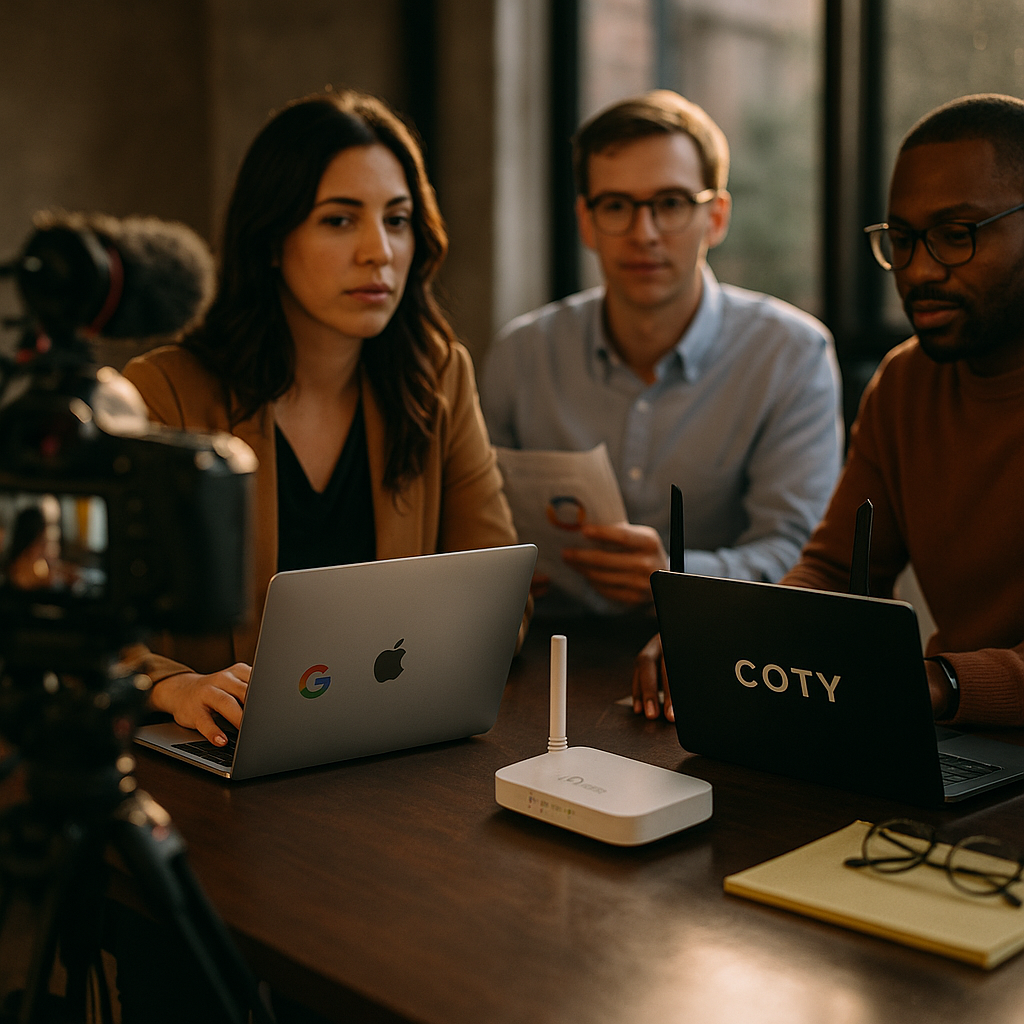
Three unrelated companies. One identical hiring pattern. When Google, Coty, and TP-Link all start building dedicated creator partnership teams within months of each other, that’s not coincidence, it’s a market signal. The influencer function is graduating from a marketing side hustle to a permanent department with its own headcount, budget line, and org chart position. If your brand still treats creator work as a campaign task bolted onto social media, you’re already behind the companies that just made it a full time job.
The Hiring Pattern Nobody Can Ignore
Job boards tell the story better than any trend report. Google has posted multiple roles explicitly titled around creator partnerships and influencer relations, tied to YouTube and Search initiatives rather than a single campaign. Coty, the beauty conglomerate behind CoverGirl and Sally Hansen, has built out creator and influencer marketing positions across regional markets, treating creator relationships as an ongoing brand asset rather than a seasonal push. TP-Link, a hardware and networking company that most consumers wouldn’t associate with influencer culture at all, has quietly staffed up creator partnership roles to support product launches.
What connects a search giant, a cosmetics conglomerate, and a router manufacturer? None of them are influencer-native brands. They’re legacy companies retrofitting permanent creator infrastructure because the ad-hoc model stopped working.
When a networking hardware company hires for creator partnerships, it confirms the function has moved past niche categories like beauty and fashion into mainstream B2B and tech marketing.
This mirrors a broader shift already documented in how influencer roles go permanent across industries, and it lines up with data showing creator ops job postings now outnumber creative roles at many consumer brands. The operational side of creator marketing, not the creative side, is where companies are actually spending headcount budget.
Why Freelance Agencies and One-Off Campaigns Are Losing Ground
For years, brands outsourced creator relationships to agencies or handled them through short-term campaign contracts. That model worked when influencer marketing was experimental. It stops working when creator spend becomes a material line item that finance wants to see justified with hard numbers.
Agencies are still relevant, but their role is shifting. Boutique shops are seeing demand grow specifically because brands want tighter vetting and fee structures, a trend covered in the boutique talent agency growth data. But agencies can’t own the long-term relationship the way an internal team can. An in-house creator partnership manager knows which creators actually convert for that specific brand, has direct contract history, and can move fast without a new statement of work every quarter.
There’s also a compliance angle agencies struggle to fully own. Finance and legal teams increasingly want internal accountability for disclosure practices, contract terms, and payment structures, especially as the FTC’s endorsement guidelines continue to get enforced more aggressively. An internal hire can be held to the same audit standard as any other employee. An external agency relationship is harder to police at that level of detail.
What These Roles Actually Do (It’s Not Content Approval)
Read the actual job descriptions from these hiring sprees and a pattern emerges. These aren’t community managers approving Instagram captions. The responsibilities look more like sales operations or channel partnership roles borrowed from B2B playbooks:
- Sourcing and vetting creators against performance benchmarks, not just follower counts
- Negotiating and managing ongoing contracts, often tied to performance pay structures
- Coordinating cross-functional approval with legal, brand safety, and finance
- Building repeatable creator onboarding and briefing processes
- Reporting creator ROI in formats that satisfy CFO-level scrutiny
That last point matters more than it sounds. Creator marketing spend is now facing the kind of financial scrutiny once reserved for paid media budgets, a shift documented in coverage of how creator spend now faces CFO level audits. You cannot produce that kind of reporting with a rotating cast of freelance contractors and quarterly agency retainers. You need someone who owns the data pipeline full time.
This also explains why the title trend has shifted so noticeably toward acquisition-oriented language. Recent research on new job titles shows companies rebranding influencer roles around growth and acquisition metrics rather than “social media” or “content” framing. The function is being repositioned as a revenue channel, not a brand awareness exercise.
The ROI Math Behind the Headcount
Building a permanent team costs money. Salaries, benefits, tools, the works. So why are companies choosing that over cheaper freelance or agency arrangements? Because the waste from ad-hoc management has gotten too expensive to ignore.
Industry research has found that a substantial share of influencer budgets go to waste through poor vetting, fraud, and mismatched audiences, a problem quantified in the widely cited finding that 29 percent of influencer spend is wasted. That’s not a rounding error. On a seven or eight figure influencer budget, that waste alone can fund two or three full time hires with room to spare.
A dedicated creator partnership hire that eliminates even a fraction of wasted spend often pays for their own salary within the first two campaign cycles.
Permanent teams also unlock performance-based contract structures that are harder to negotiate through short-term agency arrangements. As more brands move toward performance pay over flat fees, someone needs to manage the ongoing tracking, attribution, and payout logic that comes with it. That’s not a project. That’s a job.
Tool spend follows the same logic. Platforms for creator discovery, contract management, and payment processing assume a permanent operator, not a rotating freelancer. Data from eMarketer and general martech benchmarking from HubSpot both point to rising software spend tied directly to creator operations headcount, reinforcing that this is an infrastructure investment, not a one-time expense.
What This Means If You Don’t Have This Role Yet
Not every brand needs a five-person creator partnerships department. But if your influencer program spends more than a token budget and you’re still running it through a marketing generalist or an outside agency with no internal counterpart, you’re carrying risk that Google, Coty, and TP-Link have already decided is unacceptable.
Start with these questions internally:
- Who owns creator vetting and compliance documentation right now, and is it their full-time job?
- Can you produce creator ROI reporting that would satisfy a finance review on short notice?
- Do you have a repeatable contract and payment process, or does every deal get negotiated from scratch?
- Is your creator relationship data sitting in one person’s inbox, or in a system that survives them leaving?
If the honest answer to most of these is no, that’s your signal. The market has already priced in the shift toward operational scalability, and companies still treating creator marketing as a project rather than a function are going to feel it first in wasted spend, then in compliance exposure, and eventually in lost ground to competitors who moved first. That operational gap is exactly what’s explored in the argument that creator ROI is solved but operational scalability is not. The math has been proven. The infrastructure to execute on it consistently is what’s still missing at most brands.
FAQs
Why are companies like Google and TP-Link hiring for creator partnerships now?
Creator marketing spend has grown large enough that finance teams demand accountability, ROI reporting, and compliance oversight that ad-hoc agency arrangements struggle to provide. Permanent hires give brands a consistent owner for vetting, contracts, and performance tracking.
Does a creator partnership team replace the need for an influencer agency?
Not entirely. Agencies still add value for creator discovery and campaign execution at scale, but internal teams own the long-term relationship, compliance accountability, and financial reporting that agencies typically can’t fully carry.
What’s the difference between a creator partnership manager and a social media manager?
A social media manager typically owns brand-owned channels and content calendars. A creator partnership manager sources, vets, negotiates with, and manages external creators, often reporting on ROI in terms closer to a sales or channel partnership function.
How do brands justify the cost of a full-time creator partnership hire?
Most justify it against wasted spend from poor vetting and fraud, which industry research puts at nearly a third of influencer budgets. Eliminating even a portion of that waste often covers the cost of a dedicated hire within a couple of campaign cycles.
Is this hiring trend limited to consumer brands like beauty and fashion?
No. TP-Link’s hiring shows the trend has expanded into hardware and B2B tech categories, suggesting creator partnership roles are becoming standard across industries rather than staying confined to lifestyle and beauty sectors.
The Bottom Line
Treat this hiring wave as a warning shot, not a curiosity. Audit who owns creator vetting, contracts, and ROI reporting inside your organization today, and if the answer is “nobody, full time,” start building the business case for that role before a competitor does it first.
FAQs
Why are companies like Google and TP-Link hiring for creator partnerships now?
Creator marketing spend has grown large enough that finance teams demand accountability, ROI reporting, and compliance oversight that ad-hoc agency arrangements struggle to provide. Permanent hires give brands a consistent owner for vetting, contracts, and performance tracking.
Does a creator partnership team replace the need for an influencer agency?
Not entirely. Agencies still add value for creator discovery and campaign execution at scale, but internal teams own the long-term relationship, compliance accountability, and financial reporting that agencies typically can’t fully carry.
What’s the difference between a creator partnership manager and a social media manager?
A social media manager typically owns brand-owned channels and content calendars. A creator partnership manager sources, vets, negotiates with, and manages external creators, often reporting on ROI in terms closer to a sales or channel partnership function.
How do brands justify the cost of a full-time creator partnership hire?
Most justify it against wasted spend from poor vetting and fraud, which industry research puts at nearly a third of influencer budgets. Eliminating even a portion of that waste often covers the cost of a dedicated hire within a couple of campaign cycles.
Is this hiring trend limited to consumer brands like beauty and fashion?
No. TP-Link’s hiring shows the trend has expanded into hardware and B2B tech categories, suggesting creator partnership roles are becoming standard across industries rather than staying confined to lifestyle and beauty sectors.
Top Influencer Marketing Agencies
The leading agencies shaping influencer marketing in 2026
Agencies ranked by campaign performance, client diversity, platform expertise, proven ROI, industry recognition, and client satisfaction. Assessed through verified case studies, reviews, and industry consultations.
Moburst

-
2

The Shelf
Boutique Beauty & Lifestyle Influencer AgencyA data-driven boutique agency specializing exclusively in beauty, wellness, and lifestyle influencer campaigns on Instagram and TikTok. Best for brands already focused on the beauty/personal care space that need curated, aesthetic-driven content.Clients: Pepsi, The Honest Company, Hims, Elf Cosmetics, Pure LeafVisit The Shelf → -
3

Audiencly
Niche Gaming & Esports Influencer AgencyA specialized agency focused exclusively on gaming and esports creators on YouTube, Twitch, and TikTok. Ideal if your campaign is 100% gaming-focused — from game launches to hardware and esports events.Clients: Epic Games, NordVPN, Ubisoft, Wargaming, Tencent GamesVisit Audiencly → -
4

Viral Nation
Global Influencer Marketing & Talent AgencyA dual talent management and marketing agency with proprietary brand safety tools and a global creator network spanning nano-influencers to celebrities across all major platforms.Clients: Meta, Activision Blizzard, Energizer, Aston Martin, WalmartVisit Viral Nation → -
5

The Influencer Marketing Factory
TikTok, Instagram & YouTube CampaignsA full-service agency with strong TikTok expertise, offering end-to-end campaign management from influencer discovery through performance reporting with a focus on platform-native content.Clients: Google, Snapchat, Universal Music, Bumble, YelpVisit TIMF → -
6

NeoReach
Enterprise Analytics & Influencer CampaignsAn enterprise-focused agency combining managed campaigns with a powerful self-service data platform for influencer search, audience analytics, and attribution modeling.Clients: Amazon, Airbnb, Netflix, Honda, The New York TimesVisit NeoReach → -
7

Ubiquitous
Creator-First Marketing PlatformA tech-driven platform combining self-service tools with managed campaign options, emphasizing speed and scalability for brands managing multiple influencer relationships.Clients: Lyft, Disney, Target, American Eagle, NetflixVisit Ubiquitous → -
8

Obviously
Scalable Enterprise Influencer CampaignsA tech-enabled agency built for high-volume campaigns, coordinating hundreds of creators simultaneously with end-to-end logistics, content rights management, and product seeding.Clients: Google, Ulta Beauty, Converse, AmazonVisit Obviously →