


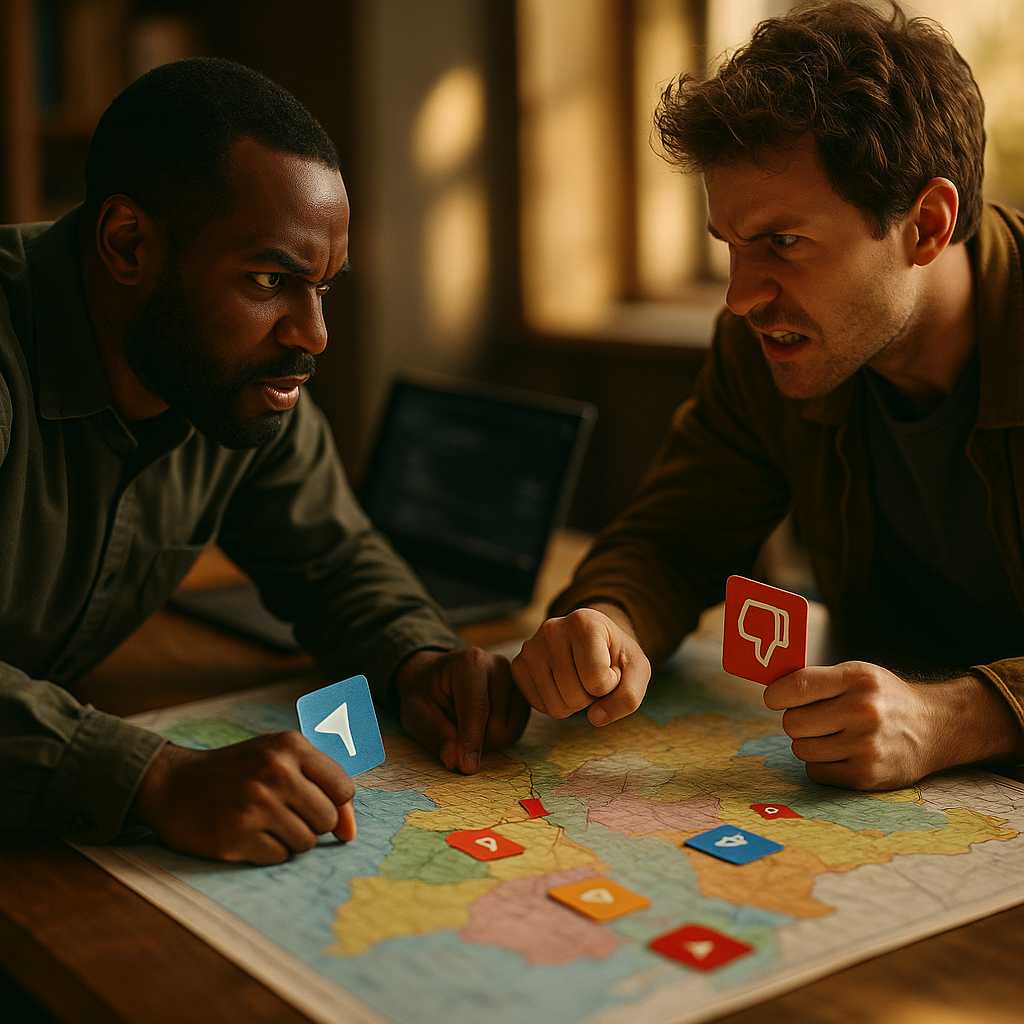
Only 12% of enterprises have named a single owner for generative engine optimization, according to recent surveys of marketing operations leaders, which means the other 88% are running GEO initiatives through committee, or not running them at all. Who owns AI visibility at your company? If the answer is “kind of everyone,” you’ve already lost ground to competitors who figured out the org chart first.
GEO ownership turf wars are quietly killing more AI visibility programs than budget cuts or bad prompts ever could. SEO wants it because it looks like search. Content wants it because it’s still writing. PR wants it because citations feel like earned media. IT and legal want a say because AI tools touch data and compliance. Nobody wins, and the brand shows up nowhere when ChatGPT or Perplexity answers a category question.
Who Actually Owns AI Visibility?
Ask five departments this question and you’ll get five confident, contradictory answers. SEO teams point to years of experience optimizing for algorithmic discovery and argue GEO is just “SEO for AI.” Content teams argue that citations depend on what gets written, so ownership belongs with them. PR teams note that generative engines often pull from third-party mentions and press coverage, which sounds a lot like their job description. Meanwhile, product marketing wants a seat because AI answers shape buyer perception before a rep ever gets on a call.
The result is a project with five stakeholders and zero accountable owner. Meetings happen. Decks get built. Nothing ships, because every function is waiting for someone else to make the call on tooling, budget, and measurement.
When four departments each own 25% of a GEO initiative, none of them own it enough to defend the budget when priorities get squeezed.
The Symptoms Are Everywhere Once You Look
You’ve probably seen these signs without naming them:
- Two teams independently pilot different GEO monitoring tools, and nobody reconciles the data.
- A competitor gets cited by AI Overviews or Perplexity for your category term, and the response is a Slack thread instead of a plan.
- Content briefs get rewritten three times because SEO wants keyword structure, PR wants quotable phrasing, and legal wants disclaimers, with no single arbiter of the final version.
- Budget requests for GEO tooling get shelved because finance can’t figure out which cost center should absorb it.
None of this is dramatic on its own. Cumulatively, it’s a slow bleed. Competitors with a clear owner move faster, publish more citable content, and show up in AI-generated answers while your team is still arguing about who drafts the brief. Our earlier piece on structuring briefs for citation trust covers the mechanics, but structure only matters if someone actually owns enforcing it.
Why SEO Teams Keep Losing This Fight
SEO leaders often assume GEO ownership defaults to them because the skill overlap looks obvious: keyword research, technical structure, authority building. But GEO isn’t SEO wearing a new hat. Traditional search rewards ranking. Generative engines reward being the source an AI model trusts enough to paraphrase or quote directly. That’s a different discipline, closer to PR and structured content than to link building.
Our earlier coverage on how AI citations overtake backlinks as a discovery metric makes this distinction concrete. Backlinks measure authority in a link graph. Citations measure whether a model chose your content as ground truth. SEO teams that keep pitching GEO as “more of the same, with AI tools bolted on” lose credibility fast when leadership realizes the KPIs, workflows, and even the content formats are different.
There’s also a structural problem: SEO teams typically report through marketing operations or demand gen, functions measured on pipeline and traffic. GEO’s payoff is harder to tie to immediate conversion, which makes it a tough sell in a budget review dominated by performance metrics. When the CFO asks for ROI on a GEO hire and the SEO lead can only point to “improved brand mentions in AI chat,” the project loses funding priority even if the underlying strategy is sound.
PR and Content Aren’t Innocent Bystanders Either
PR teams have a legitimate claim: third-party mentions, digital PR placements, and earned coverage genuinely influence which sources generative engines cite. But PR teams often lack the technical fluency to structure content for machine readability, schema markup, or the kind of answer-first formatting that AI models actually parse well. They can win the mention, but not the citation format.
Content teams, for their part, often treat GEO as a writing problem. Write better, more authoritative content and citations will follow. That’s half true. Our piece on why creator content wins AI citations makes the case that specificity, first-person experience, and structured claims outperform generic thought leadership. But content quality without technical distribution and monitoring is a tree falling in an empty forest. Someone still needs to track whether the content is actually getting cited, and pivot fast when it isn’t.
This is where confidence scoring dashboards become relevant beyond creator matching. The same logic, catching problems early with quantified signals rather than gut feel, applies to GEO performance tracking. Teams without shared dashboards end up arguing about anecdotes instead of data.
The Legal and Compliance Wildcard
Here’s the twist most turf war narratives miss: legal and compliance increasingly have a real stake in GEO, and marketing teams underestimate this at their own risk. AI models sometimes hallucinate claims and attribute them to real brands. If your GEO strategy involves feeding structured data, product claims, or pricing into AI training and retrieval pipelines, someone needs to verify accuracy before an AI answer misquotes your refund policy or a product spec.
Our coverage of AI hallucination risk landing on brands is directly relevant here. If nobody in the GEO ownership structure has compliance sign-off authority, you’re optimizing for visibility without a safety net. The same applies to internal AI audit functions: our piece on catching MarTech risk before it hits contracts outlines why audit sits closer to the center of AI initiatives than most marketing leaders assume.
GEO without a compliance checkpoint isn’t a growth strategy. It’s an unmonitored liability with good intentions.
What a Working GEO Ownership Model Actually Looks Like
The companies pulling ahead aren’t the ones with the biggest GEO budgets. They’re the ones who resolved the ownership question in a single meeting instead of a six-month turf war. A workable model usually has three components:
- A single accountable owner, not a committee. This person doesn’t do all the work, but they make the final call on tooling, priorities, and budget requests. Most organizations are landing this role inside a hybrid SEO/content function, sometimes titled “AI visibility lead” or folded into an existing head of organic growth role.
- A cross-functional working group with defined lanes. PR owns earned mentions and third-party citations. Content owns format and claims accuracy. Legal reviews structured data feeds and flags hallucination risk. IT manages any technical integration with retrieval systems or APIs.
- Shared measurement, reviewed monthly. Citation frequency, share of voice in AI answers, and referral traffic from AI-driven sessions should live on one dashboard, not three. Our analysis of how zero-click search breaks traditional attribution explains why hybrid measurement stacks matter more than ever when AI answers replace the click entirely.
Notice what’s missing from this list: a mandate that GEO must sit inside a specific department forever. The fastest-moving teams treat ownership as a decision to be revisited, not a permanent turf claim. That flexibility is itself a competitive advantage, because GEO best practices are still evolving month to month.
The Budget Conversation Nobody Wants to Have
Turf wars persist partly because nobody wants to admit GEO needs dedicated budget, not borrowed hours from an already stretched SEO or content team. According to eMarketer, marketing teams are increasingly reallocating budget toward AI-driven discovery channels, but reallocation without a named owner just creates more orphaned line items. If your GEO spend is scattered across four department budgets with no single approver, you’re not funding a strategy. You’re funding four uncoordinated experiments.
Resources like HubSpot’s marketing research and Sprout Social’s industry reports increasingly treat GEO as its own budget category, distinct from traditional SEO or content marketing line items. That’s a signal worth heeding internally before the next fiscal year planning cycle locks in the same fragmented structure.
Vendor selection compounds the problem. Teams evaluating platforms without a clear owner tend to buy redundant tools, one for citation tracking, one for content optimization, one for competitive monitoring, none of them talking to each other. Our guide on how to evaluate agentic platforms before committing budget is a useful checkpoint before any GEO tool purchase, regardless of which department is holding the credit card.
Next Step
Stop debating who “deserves” GEO ownership and instead name one accountable lead this quarter, even if the org chart isn’t perfect. Pair that person with a cross-functional working group that has clearly defined lanes for content, PR, and compliance, then revisit the structure in six months once you have real citation data to guide the next decision.
Frequently Asked Questions
What is GEO ownership and why does it cause internal conflict?
GEO ownership refers to which team or role is accountable for generative engine optimization, the practice of earning citations and mentions in AI-generated answers from tools like ChatGPT, Perplexity, and Google’s AI Overviews. Conflict arises because SEO, content, PR, and even legal teams each have partial claims to the skills and outcomes involved, and most organizations haven’t formally assigned a single decision-maker.
Should GEO sit under SEO, content, or PR?
There’s no universal answer, but GEO shouldn’t default to any one team simply because of historical adjacency. The most effective structures name a single accountable owner, often a hybrid SEO/content role, supported by a cross-functional group where PR, legal, and IT each own a defined piece of the work.
How is GEO different from traditional SEO?
Traditional SEO optimizes for ranking in a list of links. GEO optimizes for being cited or paraphrased directly inside an AI-generated answer, which rewards structured, specific, and verifiable content over keyword density or backlink volume.
What risks come from not assigning a clear GEO owner?
Without clear ownership, brands risk duplicated tooling spend, inconsistent content standards, missed AI hallucination issues, and slower response times when competitors gain visibility in AI-generated answers first.
How should legal and compliance be involved in GEO strategy?
Legal and compliance should review any structured data or claims fed into AI-facing content, since inaccurate information can be picked up and repeated by generative engines as fact. Involving compliance early reduces the risk of AI hallucinations misattributing false claims to your brand.
FAQs
Top Influencer Marketing Agencies
The leading agencies shaping influencer marketing in 2026
Agencies ranked by campaign performance, client diversity, platform expertise, proven ROI, industry recognition, and client satisfaction. Assessed through verified case studies, reviews, and industry consultations.
Moburst

-
2

The Shelf
Boutique Beauty & Lifestyle Influencer AgencyA data-driven boutique agency specializing exclusively in beauty, wellness, and lifestyle influencer campaigns on Instagram and TikTok. Best for brands already focused on the beauty/personal care space that need curated, aesthetic-driven content.Clients: Pepsi, The Honest Company, Hims, Elf Cosmetics, Pure LeafVisit The Shelf → -
3

Audiencly
Niche Gaming & Esports Influencer AgencyA specialized agency focused exclusively on gaming and esports creators on YouTube, Twitch, and TikTok. Ideal if your campaign is 100% gaming-focused — from game launches to hardware and esports events.Clients: Epic Games, NordVPN, Ubisoft, Wargaming, Tencent GamesVisit Audiencly → -
4

Viral Nation
Global Influencer Marketing & Talent AgencyA dual talent management and marketing agency with proprietary brand safety tools and a global creator network spanning nano-influencers to celebrities across all major platforms.Clients: Meta, Activision Blizzard, Energizer, Aston Martin, WalmartVisit Viral Nation → -
5

The Influencer Marketing Factory
TikTok, Instagram & YouTube CampaignsA full-service agency with strong TikTok expertise, offering end-to-end campaign management from influencer discovery through performance reporting with a focus on platform-native content.Clients: Google, Snapchat, Universal Music, Bumble, YelpVisit TIMF → -
6

NeoReach
Enterprise Analytics & Influencer CampaignsAn enterprise-focused agency combining managed campaigns with a powerful self-service data platform for influencer search, audience analytics, and attribution modeling.Clients: Amazon, Airbnb, Netflix, Honda, The New York TimesVisit NeoReach → -
7

Ubiquitous
Creator-First Marketing PlatformA tech-driven platform combining self-service tools with managed campaign options, emphasizing speed and scalability for brands managing multiple influencer relationships.Clients: Lyft, Disney, Target, American Eagle, NetflixVisit Ubiquitous → -
8

Obviously
Scalable Enterprise Influencer CampaignsA tech-enabled agency built for high-volume campaigns, coordinating hundreds of creators simultaneously with end-to-end logistics, content rights management, and product seeding.Clients: Google, Ulta Beauty, Converse, AmazonVisit Obviously →